
Having a warranty on your HVAC system feels like a safety net — until you actually need to use it. A surprising number of homeowners and property managers across Southwest Florida discover their claim is denied, often because of a small oversight made months or even years before the breakdown. Home warranty claims are denied at roughly a 10% rate industry-wide, with pre-existing conditions and inadequate maintenance topping the list of reasons. This article breaks down what HVAC warranties genuinely cover, where claims go wrong, and exactly what you need to do to keep your protection intact in Naples, Cape Coral, and Fort Myers.
Table of Contents
- What does an HVAC warranty really cover?
- Common reasons HVAC warranty claims are denied
- Essential steps to keep your HVAC warranty valid
- Special considerations for property managers and multi-unit buildings
- Why most HVAC warranty frustrations can be avoided — hard truths from the field
- Ready to maximize your HVAC protection? Partner with seasoned Southwest Florida experts
- Frequently asked questions
Key Takeaways
| Point | Details |
|---|---|
| Parts vs. labor coverage | Most HVAC warranties cover parts but exclude labor, refrigerant, and maintenance costs. |
| Documentation is vital | Detailed maintenance records and prompt registration are needed to avoid denied claims. |
| Denial rates are high | About 10 percent of HVAC warranty claims are denied, mainly due to pre-existing issues or lack of maintenance. |
| Florida transfer rules | As of 2024, most Florida HVAC warranties are transferable, important for property sales and management. |
What does an HVAC warranty really cover?
Most people assume a warranty means the manufacturer replaces whatever breaks. That is not how it works. Understanding the actual scope of your coverage is step one toward protecting your investment.
Parts coverage vs. full coverage
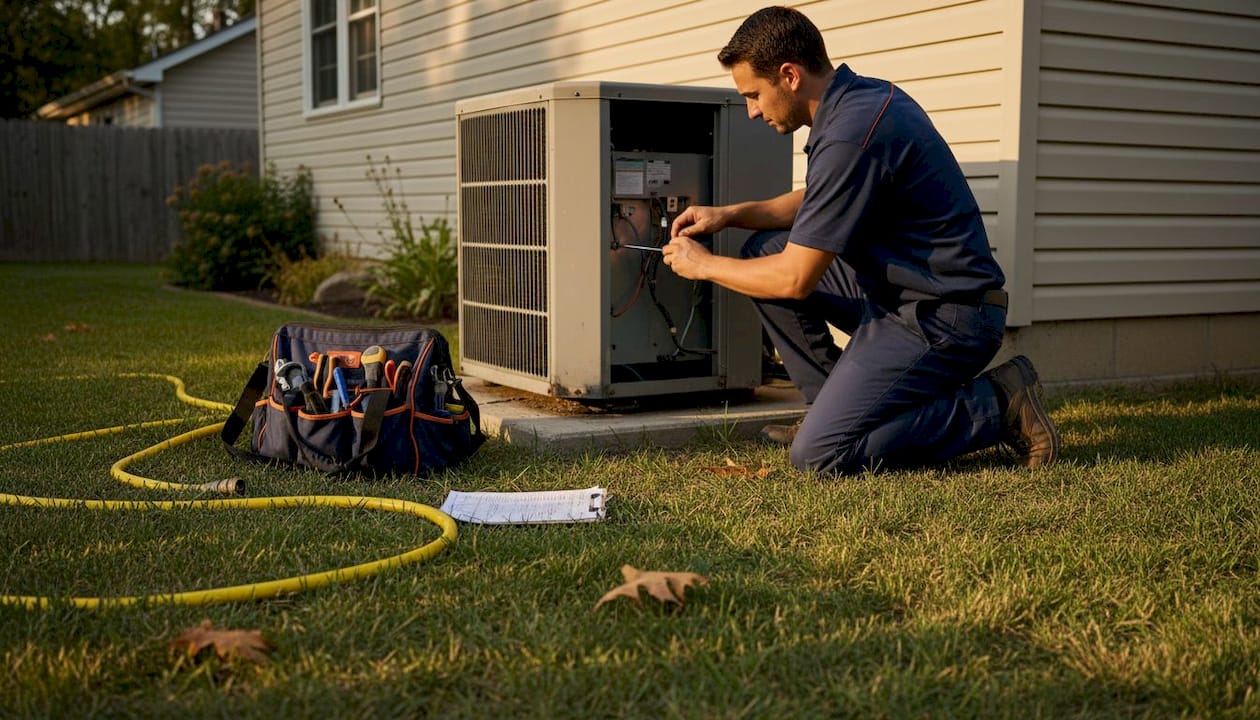
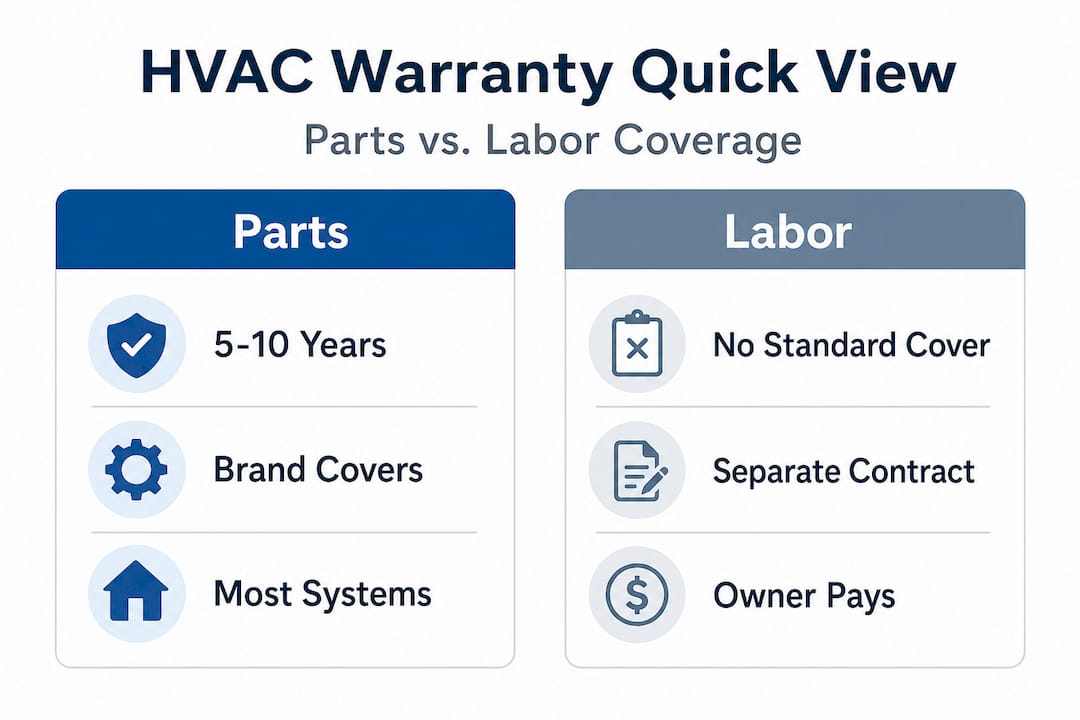
Every major manufacturer covers parts, but very few cover the labor required to install those parts. So if your compressor fails at year six, the replacement compressor may be free, but the two to four hours of labor to swap it out? That comes out of your pocket. On a complex repair, labor costs often exceed the cost of the part itself, which makes this distinction financially significant.
The standard manufacturer warranty structure looks like this: a five-year base warranty on parts with no registration, and a ten-year parts warranty when you register the system within a specified window (usually 60 to 90 days after installation). Some premium tiers go further. Major brand warranty terms show that Goodman offers lifetime compressor coverage on select premium models, while Trane extends to 12 years on certain components. Carrier, Lennox, and Rheem all follow the five-year base and ten-year registered structure. Labor is excluded across the board from manufacturer warranties.
What the warranty comparison looks like
| Brand | Base warranty (parts) | Registered warranty (parts) | Labor included? |
|---|---|---|---|
| Carrier | 5 years | 10 years | No |
| Trane | 5 years | 10 to 12 years | No |
| Lennox | 5 years | 10 years | No |
| Goodman | 5 years | 10 years (lifetime compressor on select models) | No |
| Rheem | 5 years | 10 years | No |
What most warranties exclude
Beyond labor, there is a long list of items that typical manufacturer warranties do not cover. Refrigerant recharging is not covered, even if the leak causing the low refrigerant level is a warranty-qualifying defect. Maintenance items like filters, belts, and capacitors are generally excluded after the first year. Damage caused by power surges, floods, or improper installation is also off the table. Before assuming you are protected, check three things: whether your system is registered, whether you have kept up with annual maintenance, and whether your installer is an authorized dealer for your brand.
When you register your HVAC system properly and promptly, you immediately double your parts coverage window. It takes about ten minutes and saves thousands over time. Skipping it is one of the most costly mistakes Southwest Florida homeowners make.
Common reasons HVAC warranty claims are denied
Understanding what is covered is only half the battle. Knowing why valid-looking claims still get denied gives you the real advantage.
“Only 12 to 18% of eligible parts are actually recovered through warranty claims by HVAC firms, and roughly 10% of claims are denied industry-wide, primarily due to pre-existing conditions and maintenance gaps.”
That statistic is worth sitting with. Most homeowners who get denied genuinely believed they were covered. The denial was not because of fine print buried on page forty. It was because of something that could have been prevented.
The five most preventable denial reasons
- No maintenance records. Manufacturers require evidence of regular professional maintenance. If you cannot show a service history, the claim is vulnerable.
- Unregistered system. A system that was never registered defaults to the shorter base warranty, and any claim outside that window is automatically denied.
- Pre-existing conditions. A problem that developed before the claim was filed, even if you did not know about it, can be classified as pre-existing and excluded.
- Unauthorized repairs. If someone who was not a licensed, authorized contractor touched your system, the warranty may be voided entirely.
- Missed installation deadlines. Some warranties require specific conditions at installation, like proper permits and load calculations. Systems installed improperly lose coverage.
Industry data on claim outcomes
| Denial reason | Estimated frequency |
|---|---|
| Pre-existing condition | Most common |
| Maintenance documentation missing | Very common |
| System not registered | Common |
| Unauthorized service provider used | Moderate |
| Normal wear and tear classification | Moderate |
Pro Tip: Set a calendar reminder 30 days after any HVAC installation to register the system with the manufacturer. Do not wait. Many homeowners get busy and miss the window entirely, and there is no grace period.
HVAC maintenance best practices are not just about system performance. They are your documentation trail. In Southwest Florida, the heat and humidity put HVAC systems under pressure that systems in cooler climates simply do not face. This is what SWFL owners should know before assuming their warranty works the same way it would in a mild climate.
Essential steps to keep your HVAC warranty valid
Knowing the denial traps is valuable. Acting to avoid them is what actually protects you. These steps are not complicated, but they require consistency.
Step-by-step warranty protection plan
- Register immediately after installation. Within 60 days at most, register your system on the manufacturer’s website. Save the confirmation number and email receipt in a dedicated folder.
- Schedule professional maintenance at least once a year. In Southwest Florida’s climate, twice a year is better. Your system runs harder and longer than in most of the country.
- Use only licensed, authorized contractors. Every service visit should be performed by a technician who is licensed in Florida and authorized by your manufacturer. Ask for documentation.
- Request itemized service reports. After every maintenance visit or repair, get a written report that lists what was inspected, what was done, and what was found. Verbal reports do not protect you.
- Keep digital and physical copies. Store records in at least two places: a physical folder in your home or office and a cloud-based folder. If you ever need to file a claim, documentation speed matters.
HVAC firms recover only 12 to 18% of eligible warranty parts in claims, and the primary driver of that low recovery rate is documentation gaps. Property managers especially need to build documentation systems that work across multiple units and multiple service visits per year.
Post-2024 Florida guidelines have made transferable warranties a standard expectation for HVAC systems in residential resale. That means if you are managing a property you plan to sell, your warranty documentation has direct impact on property value and negotiating power. Buyers and their inspectors will ask.
Pro Tip: Create a dedicated email folder labeled with your property address and HVAC model number. Forward every service confirmation, warranty registration, and invoice there. When it is time to file a claim or sell the property, everything is organized and searchable.
HVAC warranty best practices and AC longevity tips go hand in hand. A well-maintained system not only keeps your warranty valid, it also stretches the years between expensive repairs.
Special considerations for property managers and multi-unit buildings
Homeowners managing one system have one set of responsibilities. Property managers overseeing multiple units face compounded complexity and compounded financial exposure when warranties fail.
Why multi-unit properties need a different approach
HVAC systems in rental units and commercial buildings cycle on and off far more frequently than in owner-occupied homes. High-cycle use accelerates wear on compressors, contactors, and fan motors. Standard residential warranties may not account for this level of demand. For multi-unit or commercial properties, extended warranties and commercial-grade coverage are not optional luxuries; they are practical risk management.
Transferable warranties are now standard in Florida post-2024, which has a direct impact on property managers handling tenant turnover and property sales. Every time a unit changes hands, the warranty documentation needs to transfer cleanly. If records are missing, the new owner starts over with no coverage history, and any claim they file will be exposed.
What property managers should prioritize
- Maintain a separate service folder for every HVAC unit in every building, clearly labeled with unit number, system model, serial number, and installation date.
- Schedule staggered maintenance visits across units to avoid end-of-season backlogs when technician availability tightens.
- Use extended commercial warranties for any system in a unit that runs more than 10 hours per day on average.
- When a tenant causes damage to an HVAC system through misuse or neglect, document it immediately. This protects you from a warranty claim being denied because the damage looks like deferred maintenance.
- Before any property sale, compile a complete warranty transfer package: original purchase documents, registration confirmation, full service history, and any repair invoices.
Working with certified HVAC professionals who understand Florida’s specific requirements makes this process significantly easier. A contractor who provides detailed, itemized service reports automatically builds your warranty defense with every visit. Find someone who documents their work as thoroughly as you do.
Commercial HVAC best practices in Southwest Florida also account for salt air exposure near the coast, which accelerates corrosion on coils and electrical components. Property managers in coastal Naples or Cape Coral should ask their contractors about coil coating treatments and corrosion-resistant components, and make sure those items are logged in each unit’s service file.
Why most HVAC warranty frustrations can be avoided — hard truths from the field
Here is a perspective that does not get said often enough: manufacturers and warranty companies are not looking for reasons to deny your claim. They want the process to work. What they require is evidence that you held up your end of the agreement.
The real problem is that most warranty issues trace back to the first few weeks after installation. The system gets installed, the homeowner or property manager is satisfied it is working, and then the follow-up steps get forgotten. The registration window closes. The first maintenance visit gets skipped. The installer who did not pull a permit moves on. Six months later, everything looks fine. Three years later, when the compressor fails, the paper trail is full of holes.
We see this pattern repeatedly in Southwest Florida. A homeowner calls because their unit stopped cooling. The system is two years old. The claim is denied because the system was never registered and there is no service history. The unit costs $4,000 to repair out of pocket. The warranty would have covered most of the parts. That money was lost not because of a complicated legal loophole, but because two simple steps were never completed.
The other hard truth is that warranties are more likely to result in a repair than a full replacement. HVAC repair step-by-step coverage under warranty typically means a specific failed part is replaced, not the entire system. Managing that expectation helps you budget more accurately and avoid disappointment when a claim resolves differently than you expected.
A proactive approach always outperforms reactive warranty dependence. Spending $150 on an annual tune-up protects a $7,000 system and keeps your warranty valid. That math works every time. Documentation is not bureaucratic overhead; it is your financial protection. The homeowners and property managers who come out ahead on HVAC costs are almost always the ones who treated maintenance as non-negotiable from day one.
Ready to maximize your HVAC protection? Partner with seasoned Southwest Florida experts
Protecting your HVAC warranty takes more than good intentions. It takes consistent maintenance, proper documentation, and contractors who understand both the technical and paperwork side of the job.
At Ultra Air Heating & Cooling, we serve homeowners and property managers across Naples, Cape Coral, and Fort Myers with maintenance programs, repairs, and system installations that are designed to keep your warranty airtight. We provide itemized service reports after every visit, work as authorized dealers for leading brands, and understand exactly what Southwest Florida’s climate demands from your system. Whether you need Southwest Florida heating solutions for the cooler months or want to understand our heating repair process in more detail, our team is ready to help you stay protected, documented, and comfortable year-round.
Frequently asked questions
Does an HVAC warranty cover labor costs?
Most manufacturer warranties cover only parts, not labor; you may be able to purchase a separate labor warranty through your contractor or a third-party extended warranty provider. Labor is excluded from virtually all standard manufacturer warranties.
How can I transfer my HVAC warranty if I sell my property?
Contact your manufacturer directly with proof of original purchase, registration confirmation, and your full service history to initiate the transfer. Transferable warranties are now standard in Florida post-2024, making this process more straightforward than it used to be.
What’s the number one reason HVAC warranty claims get denied?
Pre-existing conditions and lack of documented maintenance are the most common reasons claims are denied, and both are avoidable with consistent upkeep. Claims are denied at roughly 10% industry-wide, with these two causes leading the list.
Do I need to register my HVAC system for the warranty to be valid?
Yes, registration is required to activate the full extended warranty term with most manufacturers. Without it, the base warranty of five years applies instead of the registered ten-year coverage.
Can I do my own maintenance and keep my warranty valid?
DIY maintenance typically does not satisfy manufacturer requirements; professional service with written documentation is usually what keeps your warranty intact. Documenting every service visit through a licensed contractor is the standard required to defend a claim.