
Your AC stops working on a 95-degree Naples afternoon. The repair company has a three-day wait, and the quote they give you over the phone makes your stomach drop. For homeowners in Southwest Florida, this is not a rare scenario. It happens every summer, often multiple times. The good news is that many of the most common HVAC failures are fixable without a service call. This guide walks you through the tools you need, how to spot what’s wrong, how to fix it, and how to keep it from happening again. You’ll also learn exactly when to put the screwdriver down and call a licensed tech.
Table of Contents
- Before you start: Tools, safety, and preparation
- Diagnosing common HVAC problems
- Step-by-step DIY fixes for typical issues
- After the fix: Testing and ongoing maintenance
- Expert perspective: What most DIY HVAC guides miss
- Need help? Ultra Air is your HVAC safety net
- Frequently asked questions
Key Takeaways
| Point | Details |
|---|---|
| Prioritize safety first | Always turn off power and wear proper gear before any DIY HVAC repair work. |
| Diagnose before you fix | Identify the specific issue and start with simple, symptom-based checks to increase repair success. |
| Start with easy repairs | Most common problems, like dirty filters or thermostat issues, have straightforward DIY fixes. |
| Test and maintain | After every repair, confirm system performance and adopt regular maintenance to prevent new problems. |
| Know your limits | If you encounter refrigerant leaks, electrical issues, or major part failures, contact a professional immediately. |
Before you start: Tools, safety, and preparation
No repair goes well without the right setup. Skipping the preparation step is the number one reason DIY HVAC repairs go sideways. Proper preparation reduces risks during DIY HVAC repairs, and that starts before you touch a single component.
The first rule is simple: cut the power. Go to your breaker panel and flip the switch for both the air handler and the outdoor condenser unit. Do not rely on just turning the thermostat off. Electricity stored in capacitors can still deliver a dangerous shock even after the system appears off.
Safety checklist before you start:
- Turn off power at the breaker panel, not just the thermostat
- Wear safety glasses and work gloves
- Make sure the work area is dry and well ventilated
- Keep a flashlight handy for dark cabinet spaces
- Never work alone if you’re unfamiliar with the system
Tools you’ll need for most common repairs:
| Tool | Purpose |
|---|---|
| Flathead and Phillips screwdrivers | Opening panels and access doors |
| Multimeter | Testing voltage and continuity |
| Replacement air filter | Monthly maintenance |
| Wet/dry vacuum | Clearing condensate drain lines |
| Coil cleaner spray | Cleaning evaporator and condenser coils |
| Thermostat batteries | Quick fix for unresponsive thermostats |
| Flashlight or headlamp | Inspecting dark cabinet areas |
One mistake homeowners make is skipping the breaker shut-off because they’re in a hurry. Another is forgetting to document the wiring before they disconnect anything.
Pro Tip: Before you disconnect any wires, take a clear photo of the wiring with your phone. This takes five seconds and can save you hours of confusion when reconnecting.
“Rushing into a repair without preparation is how a minor fix turns into a major problem. Treat your HVAC like any other system in your home: respect it, prepare for it, and it will reward you with reliable performance.”
Learning the regular AC maintenance benefits also helps you understand why preparation is not optional. It’s the foundation of every successful repair.
Diagnosing common HVAC problems
With your tools ready, it’s time to figure out what’s actually wrong. Guessing wastes time and money. Systematic diagnosis gets you to the answer faster.
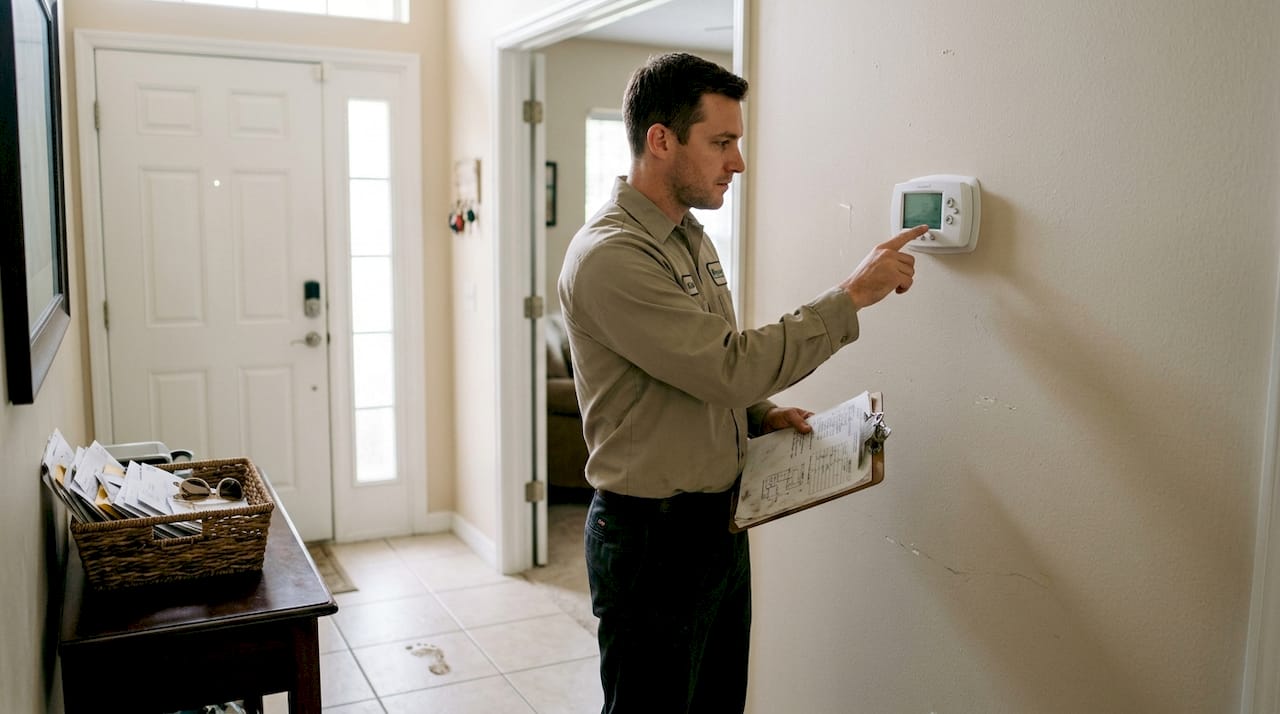
Strange noises, poor airflow, and frequent cycling are the most reported AC issues in the region. Start by asking yourself four questions: Is the system running at all? Is it blowing air but not cooling? Is it making unusual sounds? Does it smell odd?
Step-by-step indoor and outdoor diagnosis:
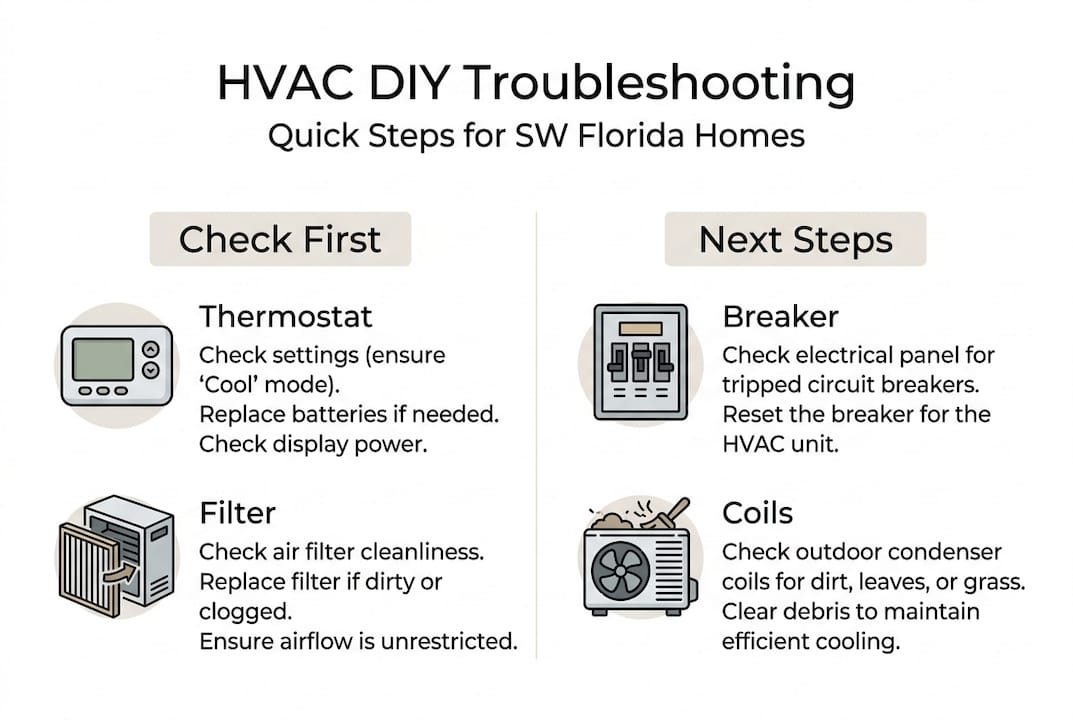
- Check the thermostat first. Confirm it’s set to “cool” and the temperature is below the current room temperature.
- Inspect the air filter. A clogged filter is behind more AC problems than most homeowners realize.
- Look at the indoor air handler for ice buildup on the coil. Ice means restricted airflow or a refrigerant issue.
- Check the condensate drain pan under the air handler for standing water. A full pan can trigger a safety shutoff.
- Go outside and listen to the condenser unit. A buzzing sound often means a failing capacitor. A rattling sound may mean debris inside the unit.
- Check that the outdoor disconnect box is switched on and the unit is not blocked by overgrown vegetation.
Common symptoms and likely causes:
| Symptom | Likely cause | DIY or pro? |
|---|---|---|
| No cool air, system running | Dirty filter or frozen coil | DIY |
| System won’t turn on | Tripped breaker or dead thermostat batteries | DIY |
| Water pooling near air handler | Clogged condensate drain | DIY |
| Loud banging or grinding noise | Loose or failing motor parts | Pro |
| Refrigerant smell or hissing | Refrigerant leak | Pro only |
Pro Tip: Most fixes start with the thermostat and air filter. Check these two things first before you open any panels or spend money on parts.
Knowing the common AC repair signs helps you act faster. For problems that go beyond basic diagnosis, the SWFL AC repair expertise at Ultra Air covers the issues that require a trained eye.
Step-by-step DIY fixes for typical issues
Many AC problems can be resolved at home with simple fixes, including cleaning, filter replacement, and thermostat resets. Here’s how to do each one correctly.
Fix 1: Replace the air filter
- Turn off the system at the thermostat.
- Locate the filter slot, usually at the return air vent or inside the air handler cabinet.
- Slide out the old filter and note the size printed on the frame.
- Insert the new filter with the airflow arrow pointing toward the air handler.
- Restart the system and confirm airflow improves within a few minutes.
Fix 2: Reset the thermostat
- Replace the batteries even if you think they’re fine. Weak batteries cause erratic behavior.
- Turn the thermostat off, wait 30 seconds, then turn it back on.
- If it’s a smart thermostat, check the app for error codes.
- If the screen is blank after fresh batteries, the thermostat may need replacement.
Fix 3: Clear the condensate drain line
- Locate the PVC drain pipe near the indoor air handler.
- Find the access port cap and remove it.
- Pour a cup of distilled white vinegar into the line to break up algae buildup.
- Wait 30 minutes, then flush with water.
- Use a wet/dry vacuum at the outdoor drain exit to pull out any remaining clog.
Fix 4: Check the breaker
- Go to your breaker panel and look for any tripped switches.
- A tripped breaker sits in the middle position, not fully on or off.
- Flip it fully off, then back on.
- If it trips again immediately, stop. A repeatedly tripping breaker signals a deeper electrical problem.
Pro Tip: Schedule filter changes every 30 days during summer in Southwest Florida. The combination of heat, humidity, and constant system runtime clogs filters faster than in cooler climates.
Safety warning: Never attempt to handle refrigerant yourself. It requires EPA certification and specialized equipment. Electrical shorts and refrigerant exposure are two repairs that belong strictly with licensed technicians.
For a broader view of Southwest Florida HVAC best practices, and to build a longer-term HVAC regular maintenance guide into your routine, those resources are worth bookmarking.
After the fix: Testing and ongoing maintenance
A repair is only complete when you’ve confirmed it actually worked. Skipping the testing phase means you might not know the problem is still there until the next hot afternoon.
After completing any repair, turn the system back on and set the thermostat five degrees below the current room temperature. Give it 15 to 20 minutes and then check these things:
- Is cool air coming from all vents?
- Is the airflow strong and consistent?
- Is the outdoor unit running without unusual sounds?
- Is the air handler free of ice or water pooling?
- Does the temperature in the room actually drop?
Preventive maintenance is key to long-term HVAC reliability and energy efficiency. Building a simple routine around your system prevents most of the problems we covered in this guide.
Ongoing maintenance checklist for Southwest Florida homeowners:
- Replace air filters every 30 days in summer, every 60 days in cooler months
- Pour vinegar down the condensate drain line monthly to prevent algae clogs
- Clear debris, leaves, and overgrowth from around the outdoor condenser unit
- Check thermostat batteries twice a year when you change smoke detector batteries
- Schedule a professional tune-up at least once a year, ideally before summer
- Inspect ductwork for visible gaps or disconnected sections every season
Southwest Florida’s climate is brutal on HVAC equipment. High humidity accelerates mold growth in drain lines. Salt air near the coast corrodes condenser coils faster than inland areas. These are not hypothetical risks. They are routine problems for homes in Naples, Cape Coral, and Fort Myers.
Pro Tip: Invest in a programmable or smart thermostat if you haven’t already. Setting it to raise the temperature a few degrees while you’re away reduces runtime by up to 10 percent and extends the life of your system.
Pairing your DIY habits with ongoing HVAC maintenance resources and an energy-efficient cooling guide gives you a full picture of how to keep costs low year-round.
Expert perspective: What most DIY HVAC guides miss
Most DIY guides focus on what you can do. We think it’s more important to be honest about what you shouldn’t do, and why.
Refrigerant handling is federally regulated. Touching it without EPA Section 608 certification is illegal, not just risky. Electrical shorts inside the air handler involve capacitors that hold charge even when the power is off. These are not “try it and see” situations.
We’ve seen homeowners spend more money fixing a botched DIY repair than the original professional service would have cost. The mistake is usually not incompetence. It’s overconfidence in a situation where the stakes are higher than they appear.
The honest truth is this: DIY HVAC work is genuinely valuable for filters, drain lines, thermostat resets, and basic diagnostics. Beyond that, the risk curve climbs fast. Knowing where your limit is protects your wallet, your equipment, and your family.
“When in doubt, your safety is worth more than a short-term savings.”
If you’re ever unsure whether a repair is within your skill set, the Cape Coral AC expert advice from our team can help you decide before you start.
Need help? Ultra Air is your HVAC safety net
Sometimes the repair is bigger than a filter swap or a drain flush. When that happens, you don’t have to figure it out alone.
Ultra Air Heating & Cooling serves Naples, Cape Coral, and Fort Myers with fast, reliable professional AC repair backed by real expertise and service warranties. If you’re noticing AC warning signs that go beyond what a DIY fix can address, our team can diagnose and resolve the issue quickly. We also offer expert heating solutions for the cooler months when your system switches roles. Whether you need a one-time repair or a full maintenance plan, we make it easy to get your home comfortable again without the stress.
Frequently asked questions
What is the first thing to check when my AC isn’t working?
Start by confirming your thermostat is set to “cool” and your circuit breakers are on, then check the air filter and replace it if it’s dirty. Most AC problems trace back to these two simple items.
How often should I change my HVAC air filter in Southwest Florida?
Change your filter every 30 days during summer or if you have pets. Frequent filter replacement is especially critical in Florida’s heat and humidity, which push systems to run almost continuously.
When should I call a professional instead of fixing my HVAC myself?
Call a licensed technician for refrigerant leaks, electrical shorts, or any failure you can’t safely identify. Complex or hazardous repairs carry real risks that outweigh the cost of a professional service call.
What are the easiest HVAC repairs for homeowners?
Changing filters, resetting the thermostat, and clearing the condensate drain line are the simplest and safest DIY repairs. Many simple HVAC tasks are well within reach for any homeowner willing to follow the steps carefully.