
Most Southwest Florida business owners think of their HVAC system the same way they think of their parking lot: it just needs to work. But that mindset is quietly costing them money, customers, and employees every single day. A failing or undersized system does not just make people uncomfortable. It drives up utility bills, damages sensitive equipment, creates liability, and chips away at your reputation. This guide walks you through why HVAC is one of the most financially significant systems in your building, how Southwest Florida’s brutal climate shapes your options, and what steps you can take right now to get more from every dollar you spend on climate control.
Table of Contents
- Why every business needs HVAC: Not just comfort, but crucial utility
- Climate control in Southwest Florida: The business case for efficient HVAC
- How HVAC drives energy savings and lowers operational costs
- Choosing the right HVAC system: Steps for business owners
- The overlooked power of HVAC: Long-term business resilience
- Next steps: Ultra Air solutions for your business HVAC needs
- Frequently asked questions
Key Takeaways
| Point | Details |
|---|---|
| Business-critical utility | HVAC systems provide more than comfort—they drive productivity, health, and compliance. |
| Florida climate demands | Local conditions call for robust and efficient HVAC solutions tailored to heat and humidity. |
| Energy savings payoff | Modern HVAC systems and routine maintenance keep operational costs down for your business. |
| Choose the right system | Evaluating your specific business needs with expert guidance ensures optimal performance and value. |
Why every business needs HVAC: Not just comfort, but crucial utility
Here is the misconception worth addressing first: HVAC is not a luxury upgrade. For any commercial property in Southwest Florida, it is core infrastructure, right alongside your electrical system and plumbing. The moment it underperforms, everything else in your operation feels it.
Let’s start with air quality. Stale, humid, or contaminated indoor air is not just unpleasant. It is a measurable health risk. Proper HVAC improves air quality and directly reduces employee absenteeism, which means fewer sick days and more consistent productivity from your team. For customer-facing businesses, poor air quality is often the first thing people notice, even if they cannot name it. They just know they want to leave.
Employee performance is also closely tied to thermal comfort. Studies consistently show that workers in properly cooled environments make fewer errors and stay focused longer. In an office, a retail floor, or a restaurant kitchen, that difference compounds over time into real revenue impact.
Beyond people, your equipment and inventory are at risk. Humidity extremes cause corrosion, mold growth, and electronic failure. A server room, a medical office, or a food storage area without reliable climate control is an insurance claim waiting to happen.
There is also a compliance angle that many business owners overlook. Building codes and occupational safety standards in Florida set requirements for indoor temperature and ventilation. Falling short is not just uncomfortable. It can mean fines, failed inspections, or worse.
Here is a quick look at what a properly functioning commercial HVAC system protects:
- Employee health and attendance: Cleaner air means fewer respiratory issues and sick days
- Customer experience: Comfortable spaces keep people longer and bring them back
- Equipment longevity: Stable temperature and humidity prevent premature wear
- Inventory integrity: Especially critical for food, pharmaceuticals, and electronics
- Code compliance: Avoid regulatory penalties and failed inspections
Proactive HVAC maintenance for businesses is the single most effective way to protect all of the above. Waiting for a breakdown is always the more expensive choice.
Climate control in Southwest Florida: The business case for efficient HVAC
Southwest Florida is not a forgiving environment for HVAC systems. Naples, Cape Coral, and Fort Myers average over 260 sunny days per year, with summer temperatures regularly pushing into the mid-90s and humidity levels that make outdoor air feel like a wet towel. Your system is not running occasionally. It is running almost constantly for eight or more months of the year.
That sustained demand is why choosing the right Florida HVAC system types matters so much. Not every system is built for this kind of workload. Efficient systems cut costs and improve comfort in hot, humid regions, but only when they are properly matched to the building’s size, layout, and usage patterns.
Here is a comparison of common commercial HVAC types and how they perform locally:
| System type | Best for | Florida advantage | Key consideration |
|---|---|---|---|
| Central split system | Mid-size offices | Reliable, easy to service | Needs regular filter changes |
| Packaged rooftop unit | Retail, warehouses | Space-saving, high capacity | Exposed to sun and weather |
| VRF/VRV system | Multi-zone buildings | Precise zoning, energy efficient | Higher upfront cost |
| Ductless mini-split | Small offices, add-ons | Flexible, no duct losses | Limited to smaller spaces |
Humidity control deserves special attention here. Florida’s moisture levels create ideal conditions for mold growth inside ductwork and air handlers. Mold does not just smell bad. It circulates through your building every time the system runs, affecting air quality for everyone inside. If you have noticed musty odors or an uptick in allergy complaints from staff, your HVAC may already have a problem worth investigating with a professional HVAC repair guide.
Pro Tip: Schedule HVAC inspections before the summer season begins, ideally in March or April. Catching refrigerant issues, dirty coils, or drainage problems before peak demand hits will save you significantly more than an emergency service call in July.
The businesses that thrive in Southwest Florida’s climate are the ones that treat their HVAC as a year-round priority, not a reactive expense.
How HVAC drives energy savings and lowers operational costs
Energy is one of the top operational expenses for any commercial property in Florida. HVAC systems typically account for 40 to 60 percent of a building’s total energy use. That is not a small line item. It is a lever you can pull.
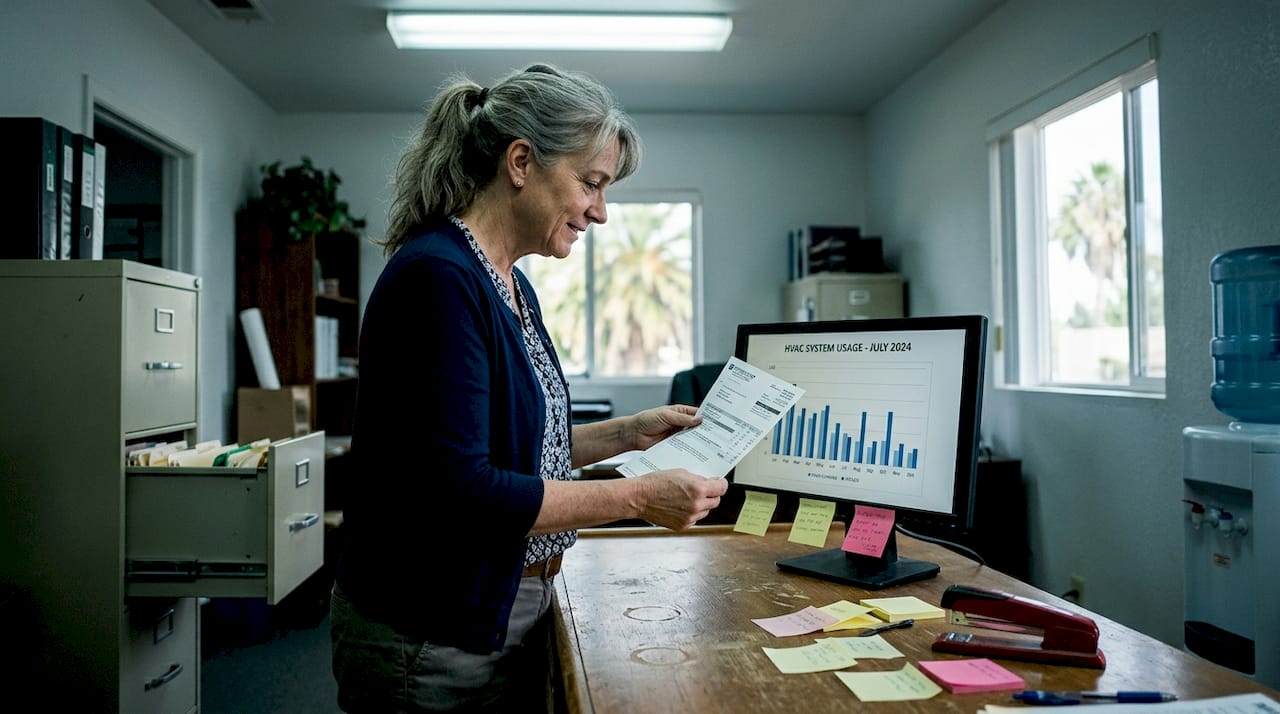
Older systems with low SEER (Seasonal Energy Efficiency Ratio) ratings work harder and cost more to run. A system with a SEER rating of 10 uses roughly twice the energy of a modern unit rated at 20. Upgrading is not just about comfort. It is about recapturing money that is currently going straight to the utility company.
| HVAC system age | Typical SEER rating | Estimated monthly savings vs. older unit |
|---|---|---|
| 15+ years old | 8 to 10 | Baseline (highest cost) |
| 8 to 14 years old | 13 to 16 | 20 to 30% lower |
| 0 to 7 years old | 18 to 22+ | 40 to 50% lower |
Beyond equipment age, how you operate your system matters just as much. Here are the most effective steps to reduce energy costs right now:
- Invest in air conditioning maintenance: Clean coils, fresh filters, and calibrated thermostats keep efficiency high without any equipment upgrade.
- Install programmable or smart thermostats: Reduce cooling during off-hours and ramp back up before staff arrives.
- Seal and insulate ductwork: Leaky ducts can waste 20 to 30 percent of conditioned air before it reaches the space.
- Implement HVAC zoning: Zoned HVAC systems can reduce energy costs significantly by only conditioning the spaces currently in use.
- Audit your system annually: A professional energy audit identifies inefficiencies you cannot see from the thermostat.
Pro Tip: If your building has areas with very different usage patterns, like a busy front office versus a rarely used storage room, zoning is one of the fastest ways to see a measurable drop in your utility bill without replacing your entire system.
The return on investment for modern, well-maintained HVAC is not theoretical. It shows up in your energy bills every single month.
Choosing the right HVAC system: Steps for business owners
Selecting a commercial HVAC system is not a decision you want to make under pressure, like when your current unit fails on the hottest day of August. Getting ahead of it means you can evaluate options clearly, compare costs, and choose a solution that actually fits your building.
Professional guidance ensures proper sizing and configuration for business HVAC. An undersized system runs constantly and still cannot keep up. An oversized system short-cycles, wasting energy and wearing out faster. Neither is acceptable for a business that depends on reliable climate control.
Follow these steps to make a confident decision:
- Assess your space: Measure square footage, ceiling height, and identify heat-generating equipment like servers or commercial ovens.
- Map your usage zones: Which areas need constant cooling? Which are used occasionally? This shapes whether zoning makes sense.
- Set a realistic budget: Include installation, expected maintenance costs, and available HVAC financing options to spread the investment.
- Evaluate contractor credentials: Look for licensed, insured contractors with documented commercial experience in Florida’s climate.
- Ask about efficiency ratings: Prioritize systems with high SEER ratings and humidity control features built in.
- Review the maintenance plan: The best system is only as good as the service behind it. Confirm what ongoing support looks like before signing.
Pro Tip: When choosing an HVAC contractor, ask specifically about their experience with commercial properties in Southwest Florida. Local climate knowledge is not optional. It is the difference between a system that lasts and one that struggles from day one.
The right system, installed correctly and maintained consistently, will serve your business reliably for 15 to 20 years.
The overlooked power of HVAC: Long-term business resilience
Here is something most HVAC conversations skip entirely: your climate control system is a risk management tool. We talk about efficiency ratings and energy savings, but the deeper value is in what a failing system costs you that never shows up on an invoice.
When employees are uncomfortable, turnover increases. Recruiting and training replacements costs far more than a properly maintained HVAC system ever would. When customers are uncomfortable, they leave early, spend less, and do not come back. When equipment fails due to humidity or heat, the replacement costs and downtime hit your bottom line hard.
Businesses that treat HVAC as a strategic asset, not a reactive expense, build a kind of operational resilience that shows up in retention, customer satisfaction scores, and fewer emergency costs. Long-term HVAC maintenance is not just about keeping the air cool. It is about keeping your business running without interruption.
The most resilient businesses in Southwest Florida are not the ones with the newest equipment. They are the ones that take care of what they have, plan ahead, and never let climate control become a crisis.
Next steps: Ultra Air solutions for your business HVAC needs
You now have a clear picture of what your HVAC system is really doing for your business and where the gaps might be. The next move is getting a professional set of eyes on your current setup.
At Ultra Air Heating & Cooling, we work with business owners and property managers across Naples, Cape Coral, and Fort Myers to evaluate, repair, and upgrade commercial HVAC systems. Whether you are seeing signs your air conditioner needs repair, exploring heating solutions for cooler months, or looking to improve your business indoor air quality, our team brings the local expertise and commercial experience to get it right. Contact us today to schedule a consultation and start turning your HVAC system into a genuine business asset.
Frequently asked questions
How does an HVAC system improve business productivity?
Proper climate control increases employee comfort, reduces absenteeism, and creates a welcoming environment for customers. Indoor air quality impacts employee health outcomes directly, making HVAC a key factor in workforce performance.
What HVAC system is best for large Florida offices?
Systems designed for high humidity and scalable cooling, such as zoned commercial units, are ideal for large office spaces. Zoned HVAC improves comfort and lowers costs by conditioning only the areas that need it.
How often should business HVAC be serviced?
Twice yearly maintenance is recommended to maximize efficiency and prevent costly breakdowns. Regular maintenance extends HVAC lifespan and keeps energy costs from creeping up between replacements.
How can my business save on HVAC energy costs?
Upgrade to energy-efficient systems, use zoning controls, and schedule regular maintenance to cut utility bills. Zoned systems and efficient maintenance lower energy bills by eliminating waste in unused or low-traffic areas of your building.
Recommended
- What is HVAC zoning? Improve comfort & cut costs
- Types of HVAC Systems: Best Fit for Florida Homes
- Ultra Air Heating and Cooling Success: Expert Tips for SWFL Comfort – Ultra Air Heating and Cooling
- HVAC Financing Options in Estero, FL: Your 2026 Guide to Affordable Comfort – Ultra Air Heating and Cooling
- Energy-Efficient Blinds: Save on Your Energy Bills – Classique Blinds, Shutters and Curtains