
Most homeowners in Southwest Florida assume their HVAC system is just a fancy way to stay cool. It’s not. HVAC stands for Heating, Ventilation, and Air Conditioning, and every one of those three elements plays a direct role in your health, your energy bills, and whether mold quietly takes hold in your walls. In a region where outdoor humidity regularly tops 90%, understanding what your HVAC system actually does, and what it should be doing, is one of the most practical things you can do as a property owner in Naples, Cape Coral, or Fort Myers.
Table of Contents
- What does HVAC mean and why does it matter?
- How does an HVAC system work?
- Humidity, air quality, and comfort: Unique challenges in Southwest Florida
- Choosing, maintaining, and upgrading your HVAC for efficiency
- What most HVAC articles miss about Southwest Florida homes
- How Ultra Air can help you stay comfortable and efficient
- Frequently asked questions
Key Takeaways
| Point | Details |
|---|---|
| HVAC is more than AC | It also manages humidity and indoor air quality for your health and comfort. |
| SWFL needs dehumidification | Controlling humidity matters as much as temperature to prevent mold and keep your home comfortable. |
| Ventilation design is key | Natural and mechanical ventilation affect both air quality and system efficiency. |
| Smart maintenance pays off | Routine checks and efficient upgrades save energy and extend system life. |
| Get expert guidance for Florida | Local HVAC strategies suit the region’s specific climate challenges better than generic advice. |
What does HVAC mean and why does it matter?
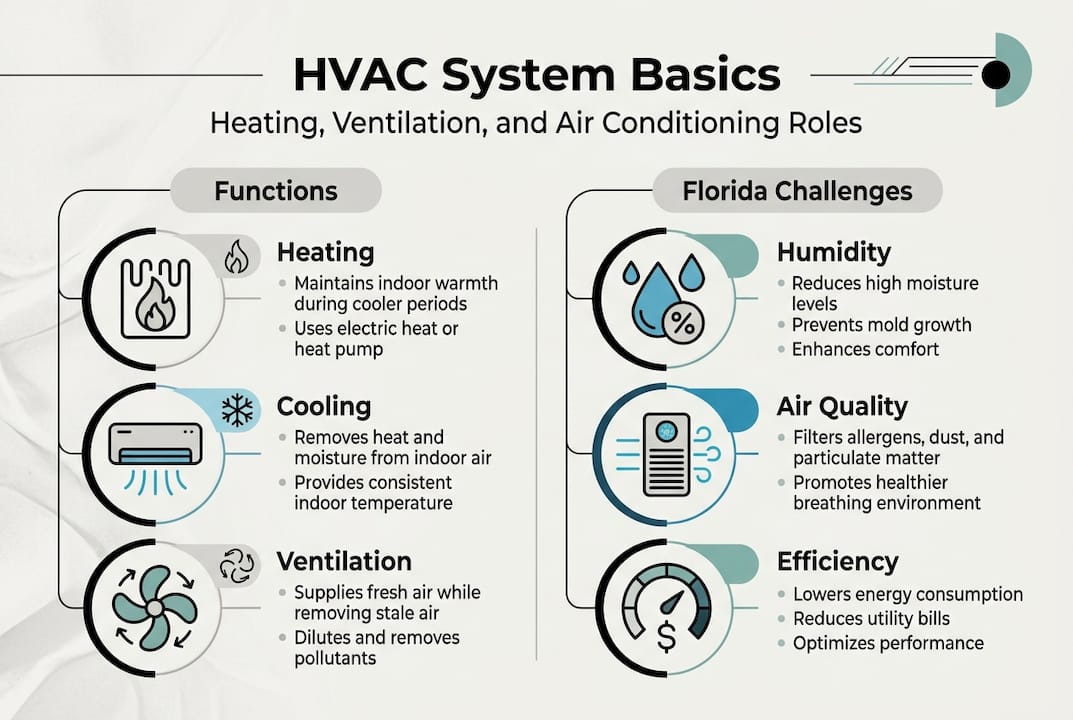
Let’s break down the acronym before anything else. HVAC manages indoor climate and air quality through three core functions: heating, ventilation, and air conditioning. Each one has a specific job, and each one affects your daily comfort in ways you might not expect.
Heating is the component most people underuse in Southwest Florida. Yes, we have mild winters, but overnight lows in January can dip into the low 40s. A system without proper heating leaves you scrambling for space heaters, which are far less efficient.
Ventilation is the unsung hero. It moves air into, out of, and through your home, diluting pollutants, reducing moisture buildup, and replacing stale indoor air. In tightly sealed Florida homes built for energy efficiency, ventilation is what keeps air from becoming a slow health hazard.
Air conditioning goes well beyond temperature. In SWFL, the AC system is also your primary tool for managing humidity. When the system pulls warm air across cold coils, it removes moisture from the air. That dehumidification effect is often more important than the cooling itself.
Here is a quick summary of what each component actually controls:
- Heating: Indoor temperature during cooler months, prevents pipe stress and mold from cold snaps
- Ventilation: Air freshness, allergen dilution, CO2 levels, and moisture control
- Air conditioning: Temperature, humidity removal, and filtration of airborne particles
For SWFL properties, consider this reality:
In humid climates like Southwest Florida, humidity is often a bigger threat to comfort and home health than heat alone. A well-designed HVAC system manages both, but a poorly sized one handles neither.
For a deeper look at which system type suits your property, explore your HVAC system types for Florida to match the right equipment to your specific needs.
How does an HVAC system work?
Once you know what the acronym means, the next question is how it all actually functions together. Think of your HVAC system as a loop: air comes in, gets conditioned, and gets distributed back through your living space.
Here’s the basic sequence:
- Air intake: Return vents pull indoor air back into the system.
- Filtration: The air passes through a filter that removes dust, pollen, and particles.
- Conditioning: Depending on the mode, air is cooled, heated, or dehumidified.
- Distribution: Conditioned air is pushed back through supply ducts into rooms.
- Exhaust or recirculation: Some systems expel stale air outside; others recirculate it.
One of the most important design decisions in any HVAC setup is how ventilation is handled. Ventilation can be natural or mechanical, and the choice affects both air quality and energy use significantly.
| Ventilation type | How it works | Best for SWFL? |
|---|---|---|
| Natural | Windows, gaps, passive airflow | Rarely practical; lets in humid air |
| Mechanical | Fans, ERVs, HRVs, controlled intake | Yes, allows humidity management |
| Ducted system | Centralized air distribution via ducts | Common in most SWFL homes |
| Ductless (mini-split) | Direct room conditioning, no ducts | Great for additions or older homes |
Southwest Florida homes face what engineers call a latent load, meaning the energy needed to remove moisture from the air often exceeds the energy needed to lower the temperature. A system designed only for cooling will run constantly, struggle to keep humidity down, and wear out faster. Proper HVAC installation in Fort Myers accounts for this from the start.
Poor duct design makes this worse. Leaky ducts allow humid outside air to infiltrate the system, pushing both energy costs and mold risk higher. For a full breakdown of what strong system design looks like in this region, review the HVAC best practices in SWFL that certified local technicians follow.
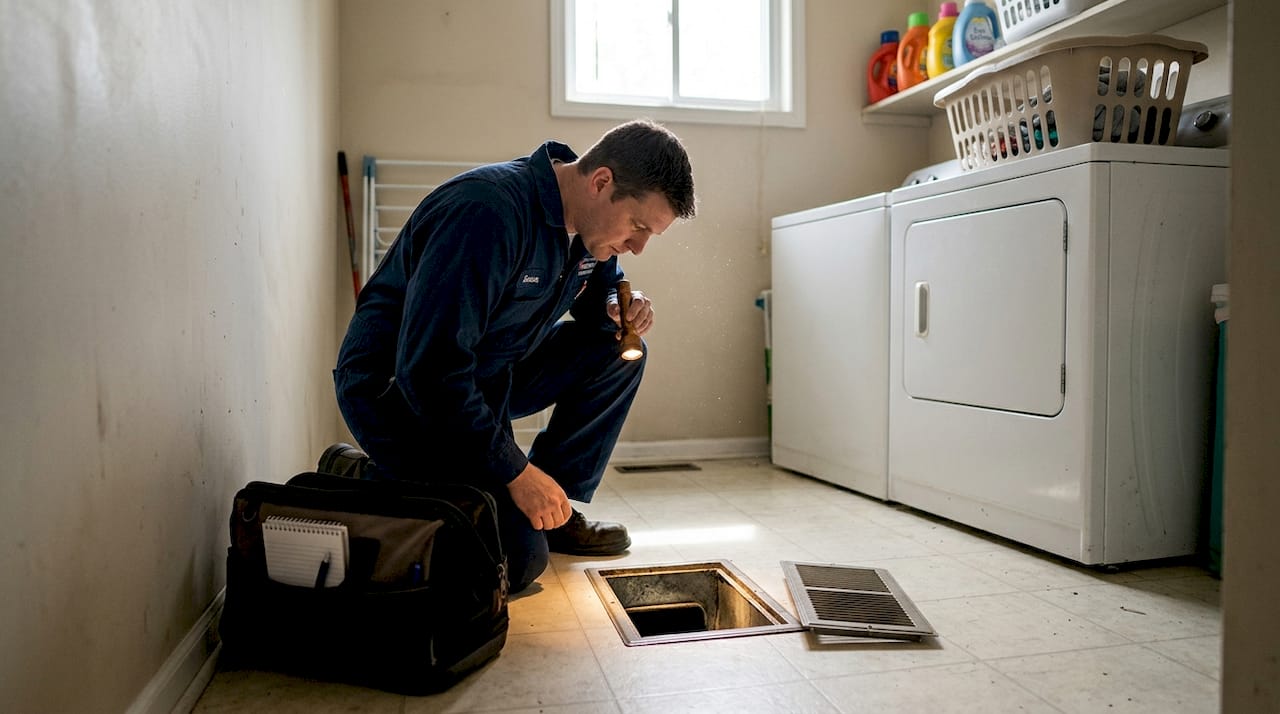
Pro Tip: Schedule your HVAC maintenance in late March or early April, before the rainy season peaks. A technician can check refrigerant levels, clean coils, and verify your system is set up to handle the humidity surge that starts in May. Expert HVAC services can help you stay ahead of the curve.
Humidity, air quality, and comfort: Unique challenges in Southwest Florida
Southwest Florida is not a typical market for HVAC. The region sits in a subtropical climate zone where June through September regularly delivers high humidity alongside heat. Generic HVAC advice written for Phoenix or Chicago simply does not apply here.
The core issue is that dehumidification takes priority over straightforward cooling in SWFL because latent loads exceed sensible loads during much of the year. In plain terms: your system spends more energy pulling moisture out of the air than it does lowering the temperature.
| Factor | Standard cooling focus | Humidity management focus |
|---|---|---|
| Energy use | Moderate | Higher without proper equipment |
| Mold risk | Low to moderate | High if humidity goes unmanaged |
| Comfort level | Cool but possibly clammy | Cool and genuinely comfortable |
| Equipment wear | Normal | Faster without proper sizing |
Common mistakes SWFL homeowners make:
- Oversizing the AC unit: A unit that’s too large cools quickly but shuts off before removing enough moisture, leaving air feeling damp.
- Ignoring attic humidity: Attic spaces in Florida can become moisture traps, pushing humid air into living spaces through leaky ducts or ceilings.
- Skipping dedicated dehumidification: A standalone whole-home dehumidifier adds significant relief during the wettest months.
- Setting the thermostat too low: Cranking the AC colder does not always remove more humidity and wastes energy.
For a full strategy on managing your home’s moisture load, the SWFL humidity management guide is a great starting point. You can also find specific tips for reducing home humidity that go beyond just adjusting your thermostat.
Pro Tip: Set your thermostat to 76 to 78 degrees and pair it with a whole-home dehumidifier. You’ll use less energy and feel more comfortable than if you dropped the temperature to 70. For guidance on equipment, look into dehumidifier installation advice built for SWFL conditions.
Better indoor air quality also protects your property value. Homes with well-maintained air systems have lower mold claims, fewer respiratory complaints from occupants, and higher comfort ratings from renters and buyers alike.
Choosing, maintaining, and upgrading your HVAC for efficiency
Selecting the right system is one decision. Keeping it performing well over years is another. Both matter equally if you want comfort without runaway energy bills.
When choosing a system for a SWFL property, focus on:
- SEER rating (Seasonal Energy Efficiency Ratio): Higher SEER means less energy per unit of cooling. Florida’s climate warrants a minimum SEER of 16 for meaningful savings.
- Humidity controls: Look for variable-speed air handlers and systems with dedicated dehumidification modes.
- Proper sizing: Always get a Manual J load calculation done before installation. Guessing leads to expensive mistakes.
- Regional utility rebates: Florida Power and Light and other utilities offer incentives for qualifying energy-efficient systems.
Proper HVAC maintenance directly affects air quality and operating costs over time. Here are the key routine steps every property owner should follow:
- Replace air filters every 30 to 60 days during peak season.
- Clear debris from the outdoor condenser unit monthly.
- Check condensate drain lines quarterly to prevent water backup.
- Inspect duct insulation annually for moisture damage or gaps.
- Book a full professional tune-up twice a year, spring and fall.
For practical steps you can take on your own, the energy saving AC tips page covers the basics clearly. If your system is more than 10 to 12 years old, it’s worth reviewing the latest HVAC trends to see how newer technology compares.
Upgrading an older system can feel expensive upfront. However, newer systems typically cut monthly cooling costs by 20 to 30 percent, and many SWFL homeowners are surprised by how accessible HVAC financing options make the transition. A certified local technician can also ensure electrical work meets code, something worth checking before any new electric heater installation as well.
What most HVAC articles miss about Southwest Florida homes
Here’s the honest truth: most general HVAC content is written for the American average. That average includes deserts, mountain climates, and the Northeast. Southwest Florida is not average.
We see it repeatedly in how homeowners approach their systems. Someone follows a tip to run their AC at 68 degrees for maximum cooling, and instead of saving money, they end up with a soaking wet coil, a frozen air handler, and a house that still feels humid. The advice was not wrong for Denver. It was just completely wrong for Naples.
Dehumidification and ventilation design are foundational here in a way that no national article explains clearly. The latent load issue means your HVAC system is fighting a battle that most equipment in other regions never faces. A system that wins that battle is sized correctly, has variable-speed components, and is installed by someone who understands local pressure and duct dynamics.
The takeaway: don’t follow one-size-fits-all advice. Consult professionals who work specifically in this region and understand the climate’s real demands. For SWFL-specific strategies, explore local HVAC strategies built for this exact environment.
How Ultra Air can help you stay comfortable and efficient
Now that you know what your HVAC system should be doing, the next step is making sure yours actually does it. At Ultra Air Heating & Cooling, we work exclusively in Southwest Florida, which means every recommendation we make is grounded in the region’s real climate demands.
From heating solutions that handle our mild but unpredictable winters to indoor air quality upgrades that reduce allergens and mold risk year-round, we offer services built for Naples, Cape Coral, and Fort Myers properties specifically. If budget is a concern, our affordable upgrade financing makes it easier to get the right system without delaying comfort. Reach out today to schedule a tailored HVAC assessment and find out exactly what your home needs.
Frequently asked questions
What does HVAC stand for?
HVAC stands for Heating, Ventilation, and Air Conditioning, all three elements working together to maintain indoor comfort and air quality in your home or business.
Why is dehumidification so important in Southwest Florida?
Latent humidity loads in Southwest Florida regularly exceed the sensible heat load, meaning standard cooling alone cannot prevent moisture buildup, mold growth, or that persistent clammy feeling.
How can I improve indoor air quality with my HVAC system?
Regular filter replacements, adding whole-home dehumidification, and ensuring your system has proper mechanical ventilation reduces indoor allergens while keeping moisture levels under control.
Is routine HVAC maintenance necessary?
Absolutely. Proper HVAC maintenance directly affects operating costs and air quality, and skipping it in Florida’s harsh climate accelerates equipment wear significantly.
What is the most energy-efficient HVAC option for Southwest Florida?
Systems with high SEER ratings, variable-speed components, and dedicated humidity controls are the strongest performers in SWFL’s climate because they address both temperature and moisture efficiently.
Recommended
- Step-by-step HVAC repair guide for SW Florida homes
- Types of HVAC Systems: Best Fit for Florida Homes
- HVAC Installation in Fort Myers: The Complete 2026 Homeowner’s Guide – Ultra Air Heating and Cooling
- HVAC financing: affordably upgrade your heating and cooling
- What is HVAC system repair? A 2026 Avondale guide