
Most homeowners in Southwest Florida treat their AC the same way they treat a smoke detector: ignore it until something goes wrong. That mindset is expensive. Regular AC tune-ups improve energy efficiency by 5 to 25%, which translates to real dollars on your monthly power bill. In a region where air conditioners run nearly year-round, skipping routine service doesn’t save you money. It costs you money, comfort, and years off your system’s life. This article breaks down exactly what a tune-up involves, what it does for your wallet, and why Southwest Florida homes need more attention than the national average.
Table of Contents
- What is an AC tune-up and why does it matter?
- How tune-ups improve energy efficiency and cut costs
- Extend your AC’s lifespan and avoid breakdowns
- Why Southwest Florida ACs need extra attention
- Why most AC problems in SWFL start with skipped tune-ups
- Take control of your comfort and savings
- Frequently asked questions
Key Takeaways
| Point | Details |
|---|---|
| Boost energy efficiency | A tune-up can improve your AC efficiency by up to 25 percent and lower your bills. |
| Prevent costly breakdowns | Routine service can catch 70 to 80 percent of issues before they result in expensive emergencies. |
| Extend system lifespan | Regular tune-ups can help your AC last 15 to 20 years instead of just 7 to 10. |
| Adapt for SWFL climate | Salt and humidity mean local ACs need more frequent professional attention. |
| DIY has limits | Filter changes and cleaning are helpful, but only professionals should perform critical tune-up steps. |
What is an AC tune-up and why does it matter?
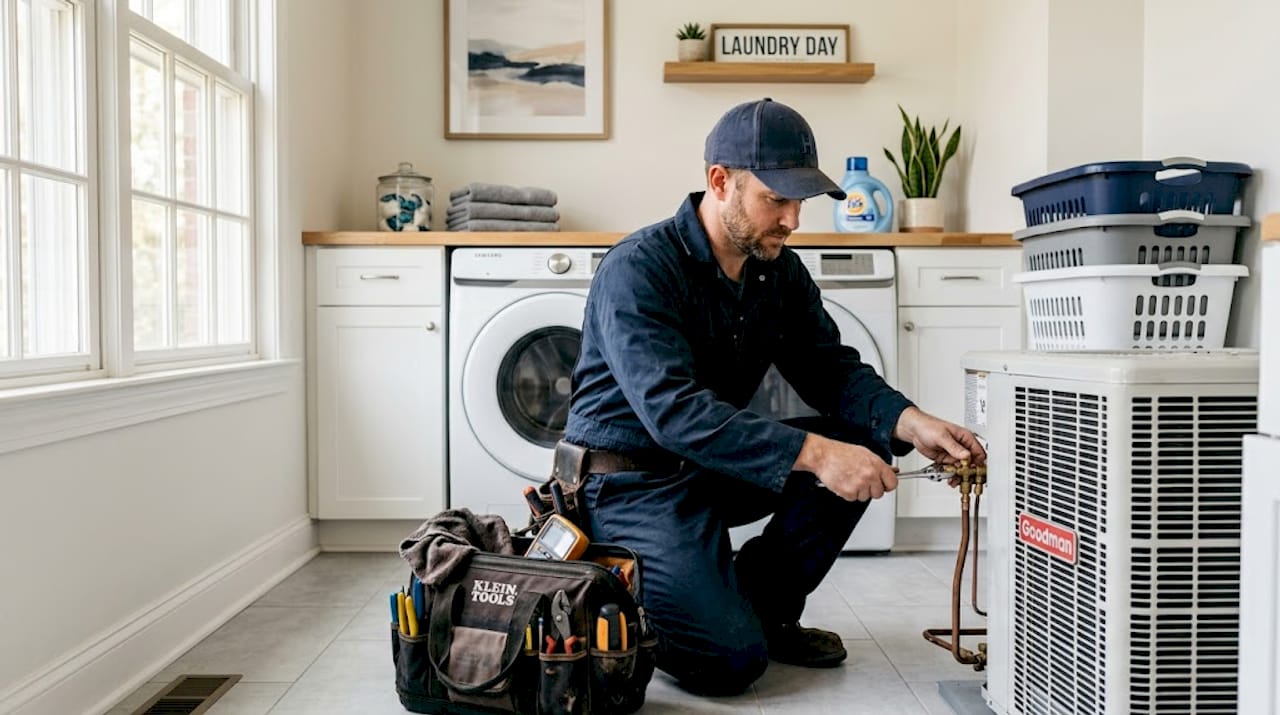
An AC tune-up is not just a filter change. It’s a professional inspection and servicing of your entire cooling system, done by a licensed technician who knows what to look for before small issues become serious failures.
Think of it like an oil change for your car, but more involved. Your technician goes through every major component to verify it’s operating correctly, cleaning what’s dirty, tightening what’s loose, and flagging anything that’s heading toward failure. This kind of attention catches problems that are invisible to the average homeowner.
A professional AC tune-up checklist typically covers all of the following:
- Cleaning evaporator and condenser coils to restore heat transfer efficiency
- Checking refrigerant levels and inspecting for leaks
- Inspecting electrical connections and tightening loose terminals
- Clearing clogged drain lines to prevent water damage and mold
- Lubricating moving parts like fan motors to reduce friction
- Testing capacitors and contactors that start and run the compressor
- Checking the blower assembly and replacing or cleaning the filter
- Measuring airflow and temperature differential across the system
Each one of these tune-up tasks directly affects how hard your system works and how long it lasts. Dirty coils force the compressor to run longer. Low refrigerant causes uneven cooling and overheating. Corroded electrical connections create fire risks and unexpected shutdowns.
“Most homeowners assume their AC is fine if it’s still blowing cold air. By the time you feel the difference, the system has already been overworking for months.”
There are some maintenance tasks you can handle yourself, and we encourage you to learn them. Our guide on DIY AC maintenance tasks covers what’s safe and manageable at home. But refrigerant handling, electrical testing, and deep coil cleaning require a licensed technician with the right tools and certifications. This isn’t fine print. It’s a genuine safety boundary.
How tune-ups improve energy efficiency and cut costs
Understanding what’s done in a tune-up helps highlight the measurable benefits. Let’s see how those actions add up to real savings.
Your air conditioner is likely the biggest energy consumer in your home, accounting for 50 to 70% of your electricity bill in Florida’s climate. When the system is dirty, low on refrigerant, or running with worn parts, it uses more electricity to produce the same amount of cooling. That extra usage shows up every month on your power bill.
The numbers tell a clear story:
| System condition | Estimated efficiency loss | Monthly cost impact (avg. SWFL home) |
|---|---|---|
| Clean, tuned system | 0% | Baseline |
| Dirty coils only | 5 to 10% | +$15 to $30 |
| Low refrigerant | 10 to 20% | +$30 to $60 |
| Neglected (multiple issues) | 20 to 30%+ | +$60 to $120+ |
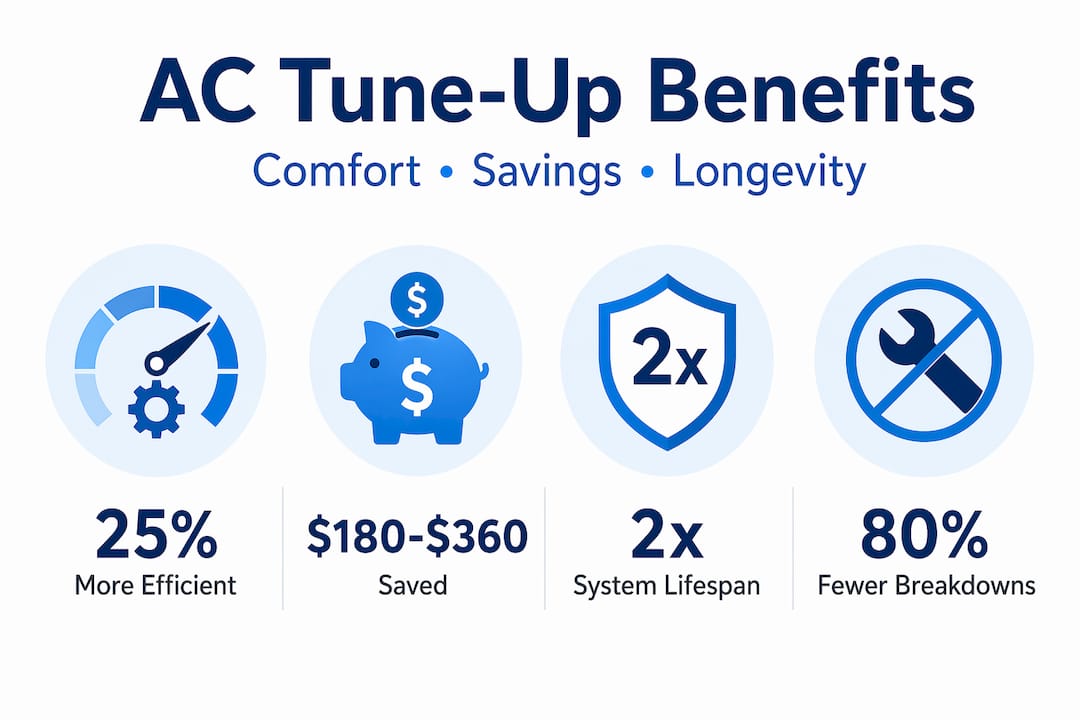
Even a modest 10% efficiency gain from cleaning and servicing can save you $180 to $360 per year in a typical Southwest Florida household. That easily covers the cost of a professional tune-up twice over.
Energy efficiency improvements of 5 to 25% are achievable with consistent annual maintenance. That’s not a marketing claim. That’s the documented result of addressing the exact issues a tune-up targets.
Beyond the bill, a tuned system cools faster and holds temperatures more evenly. You won’t notice your home struggling to reach setpoint on a July afternoon. The system ramps up, hits its target, and cycles off efficiently. That consistency also reduces wear on the compressor, which is the most expensive part to replace.
Pro Tip: Schedule your tune-up in early spring, before the intense summer heat hits. You’ll get faster appointment availability and your system will be ready when you need it most.
For a deeper look at the financial side, our article on energy savings with AC maintenance walks through the math in more detail. You can also review the SWFL AC benefits specific to our region’s demanding conditions.
Extend your AC’s lifespan and avoid breakdowns
While lower bills are motivating, the case for tune-ups gets even stronger once you consider system longevity.
The average air conditioner, when properly maintained, can last 15 to 20 years. Neglected systems routinely fail after just 7 to 10 years. In Southwest Florida, where your system runs nearly every day of the year, that gap becomes even more pronounced. You’re not putting 10,000 miles a year on this equipment. You’re putting 30,000.
Here’s what that lifespan difference actually means in dollar terms. A mid-range residential AC system costs between $5,000 and $10,000 installed. If a tuned system lasts 18 years versus a neglected one that fails at 9 years, you’re looking at two replacement cycles in the same timeframe instead of one. Add in the financing costs and the installation disruption, and you’re spending twice as much for the same cooling.
How tune-ups prevent breakdowns:
- Catching refrigerant leaks early before the compressor overheats and burns out
- Replacing weak capacitors before they fail and strand you on a 95-degree day
- Clearing drain lines before water backs up and shuts the system down on safety lockout
- Inspecting belts and motors before a broken part takes out a more expensive component
- Verifying electrical integrity before a fault causes a short or fire
Routine service catches 70 to 80% of potential breakdowns before they happen. That means the overwhelming majority of emergency service calls, the ones that cost $300 to $800 and always seem to happen on weekends or holidays, are preventable. This is not speculation. This is what technicians consistently find when they’re called out for breakdowns: a problem that was developing for months, visible to a trained eye, that nobody caught because there was no regular service.
Pro Tip: Keep a simple maintenance log for your AC system. Note the date of each tune-up, any parts replaced, and refrigerant levels recorded. This history is valuable when diagnosing issues and can increase your home’s resale appeal.
For a complete breakdown of why this matters, our article on top AC maintenance benefits covers the return on investment in detail.
Why Southwest Florida ACs need extra attention
Extending your system beyond its expected years means adapting strategies for your local climate. Southwest Florida presents unique AC challenges that generic maintenance advice simply doesn’t account for.
The environment here is genuinely harsh on HVAC equipment. Naples, Cape Coral, and Fort Myers sit in a coastal zone where multiple forces work against your system simultaneously. Understanding these threats helps you appreciate why standard annual tune-up advice may not go far enough for your home.
Salt air corrosion is the first major threat. Airborne salt particles from the Gulf coat outdoor condenser units, coils, and electrical components. Over time, this creates corrosion that degrades metal surfaces and weakens electrical contacts. Salt air corrosion can reduce your AC’s lifespan by up to 40%, and humidity forces your system to work 30% harder than it would in a drier climate. These aren’t minor inconveniences. They’re compounding stressors that accelerate wear across every component.
“In coastal Southwest Florida, your AC system faces a double threat: relentless humidity that strains capacity and salt air that corrodes components from the outside in. Neither problem waits for you to get around to maintenance.”
Here’s what smart SWFL homeowners do differently:
- Rinse outdoor condenser units with a garden hose monthly to remove salt deposits before they cause corrosion
- Apply protective coatings to condenser fins and coils to create a barrier against salt and moisture
- Check and clear drain lines more frequently, since humid air produces far more condensate than in drier climates
- Schedule tune-ups every six months rather than annually, especially within a few miles of the coast
- Ask your technician about corrosion-resistant parts when components need replacement
High humidity also creates a secondary problem that’s worth calling out directly. Your AC doesn’t just cool air. It dehumidifies it. In SWFL, that dehumidification load is enormous, often exceeding the cooling load itself in shoulder seasons. A system that’s slightly low on refrigerant or has partially blocked coils may still blow cool air but fail to control humidity effectively. You’ll feel it as that sticky, clammy sensation even when the thermostat reads 74 degrees.
Our guide on salt air AC protection goes deep on the specific threats coastal homeowners face. For a broader regional maintenance plan, the Florida maintenance checklist and our coastal HVAC tips for Naples homes both offer actionable guidance tailored to this environment.
Why most AC problems in SWFL start with skipped tune-ups
Here’s an uncomfortable truth we’ve seen play out over and over: the majority of emergency AC calls we receive in Southwest Florida were entirely preventable. Not partially preventable. Entirely.
The compressor that burned out in August? The drain that overflowed and damaged drywall in June? The capacitor that failed on the hottest day of the year? In nearly every case, a tune-up would have caught the early signs. The capacitor would have tested weak months before it failed. The drain would have shown early restriction. The refrigerant leak that overheated the compressor would have been found and fixed for $150 instead of $2,500.
We understand why people skip tune-ups. The system is running. Nothing seems wrong. It feels like spending money on something that isn’t broken. But that logic doesn’t hold up in this climate. Your AC runs harder here, degrades faster, and faces environmental stressors that simply don’t exist in other parts of the country.
The homeowners who call us least often for emergency repairs are the ones who schedule consistent service. That’s not a coincidence. It’s cause and effect, and we’ve seen it play out across hundreds of homes in Naples, Cape Coral, and Fort Myers.
DIY maintenance matters and we actively encourage it. But there’s a real limit to what it covers. You can change your filter and rinse your condenser. You cannot safely check refrigerant charge, test run capacitance, or inspect electrical terminals for early corrosion. Those tasks require a licensed technician with calibrated tools, and they’re exactly the tasks that prevent the biggest failures.
If you’re weighing whether now is the right time, consider this: our seasonal AC specials make it easier to get professional service without stretching your budget. Prevention is always cheaper than repair, and in this climate, that gap is wider than anywhere else.
Take control of your comfort and savings
If this article has made one thing clear, it’s that consistent AC maintenance isn’t optional in Southwest Florida. It’s the single most cost-effective thing you can do to protect your home’s comfort, your energy bills, and your system’s longevity.
At Ultra Air Heating & Cooling, we serve homeowners and property managers across Naples, Cape Coral, and Fort Myers with professional tune-up services designed for this climate. Whether you’re maintaining an existing system or need guidance on a new one, our SWFL AC installation guide and indoor air quality resources help you make informed decisions every step of the way. Our team offers flexible scheduling, seasonal specials, and honest evaluations with no upsell pressure. Call us or book online to get your system tuned up before the next heat wave hits.
Frequently asked questions
How often should I schedule an AC tune-up in Southwest Florida?
Most homeowners should schedule a tune-up every 6 to 12 months, but coastal salt and humidity mean homes within a few miles of the gulf may benefit from service every six months.
Can I do an AC tune-up myself?
You can safely clean debris and change filters, but a licensed professional must handle refrigerant and electrical work for both safety and effectiveness.
Do tune-ups really lower energy bills?
Yes. Routine maintenance can deliver energy efficiency gains of 5 to 25%, resulting in meaningful reductions on your monthly utility bill.
How does coastal weather impact my AC system?
Salt air corrosion can cut system lifespan by up to 40%, while high humidity forces your AC to work significantly harder, making preventative maintenance especially critical near the Gulf.