
When a rare cold snap hits Naples or Fort Myers and your heat pump starts blowing lukewarm air, the last thing you want is to scramble without a plan. Southwest Florida’s humidity, salt air, and mild but unpredictable winters create a very specific set of HVAC challenges that generic repair guides simply don’t address. Whether you’re a homeowner trying to understand what’s wrong or a landlord managing multiple properties, having a repeatable heating system repair process means faster fixes, lower costs, and real peace of mind. This guide walks you through every stage: preparation, the repair workflow, troubleshooting FL-specific problems, and how to make smarter long-term decisions for your home’s comfort.
Table of Contents
- Understand Southwest Florida heating systems and common failures
- Essential tools, safety steps, and preparation before repair
- Step-by-step heating system repair workflow
- Troubleshooting common SW Florida heating problems and edge cases
- Why your workflow matters more in Florida’s unique climate
- Expert heating repair and comfort solutions for your Southwest Florida home
- Frequently asked questions
Key Takeaways
| Point | Details |
|---|---|
| Florida-specific workflow | Tailoring repair steps to SW Florida’s heat pumps, humidity, and salt air extends comfort and system life. |
| Step-by-step approach | Following safety, inspection, and testing steps ensures reliable heating repairs and fewer repeat issues. |
| Pro maintenance matters | Twice-yearly professional tune-ups and regular filter changes prevent over 50 percent of breakdowns. |
| Know when to replace | If repairs exceed half the cost of a new system or the unit is 15 years old, consider upgrading. |
Understand Southwest Florida heating systems and common failures
Most homeowners moving from the Midwest or Northeast expect to find a gas furnace in their Florida home. What they actually find is a heat pump. In Southwest Florida, heat pumps are the primary heating systems, and repair work focuses on defrost cycles, refrigerant levels, coil condition, and salt-resistant parts, especially in coastal properties. That’s a fundamentally different skill set than furnace repair, and it matters when you’re hiring a technician.
The local environment makes things harder. High humidity causes drain lines to clog with algae and mold. Salt air near the coast accelerates coil corrosion faster than in inland areas. Even a modest cold snap can trigger a defrost cycle malfunction if the system hasn’t been maintained. These aren’t problems you’ll read about in a generic HVAC manual.
Common symptoms to watch for:
- Weak or inconsistent heat output
- Short cycling (system turns on and off rapidly)
- Frozen indoor or outdoor coils
- Unusual grinding or rattling noises
- Musty smells from the vents
- Higher-than-normal energy bills
Clogged filters cause 80% of weak performance cases, and regular maintenance saves around 15% on energy costs. Salt air in coastal Southwest Florida also accelerates coil corrosion, making annual cleaning essential rather than optional.
| Problem | Likely cause | FL-specific risk |
|---|---|---|
| Weak heat | Dirty filter or low refrigerant | High humidity clogs filters faster |
| Frozen coils | Low airflow or refrigerant | Salt corrosion worsens leaks |
| Short cycling | Oversized unit or thermostat fault | Frequent rain causes sensor issues |
| Strange noise | Loose or corroded parts | Salt air accelerates wear |
| Drain overflow | Clogged condensate line | Humidity is the main culprit |
For context on which systems hold up best locally, the guide on best Florida HVAC systems covers the most durable options for coastal and inland homes. You can also review the warning signs of HVAC trouble before they turn into expensive repairs.
Knowing when to call a professional HVAC service versus handling basic checks yourself is the first smart decision in any repair process.
Essential tools, safety steps, and preparation before repair
A rushed repair without preparation is how accidents happen and how small problems become expensive ones. Before any technician touches your system, and before you do any basic DIY checks, proper setup is non-negotiable.
Tools and materials for a standard SW Florida repair call:
- Flathead and Phillips screwdrivers
- Multimeter for electrical testing
- Wet/dry vacuum for condensate drain clearing
- Replacement air filters (correct size for your unit)
- Salt-resistant coil cleaner spray
- Safety glasses and insulated gloves
- Flashlight or headlamp for tight spaces
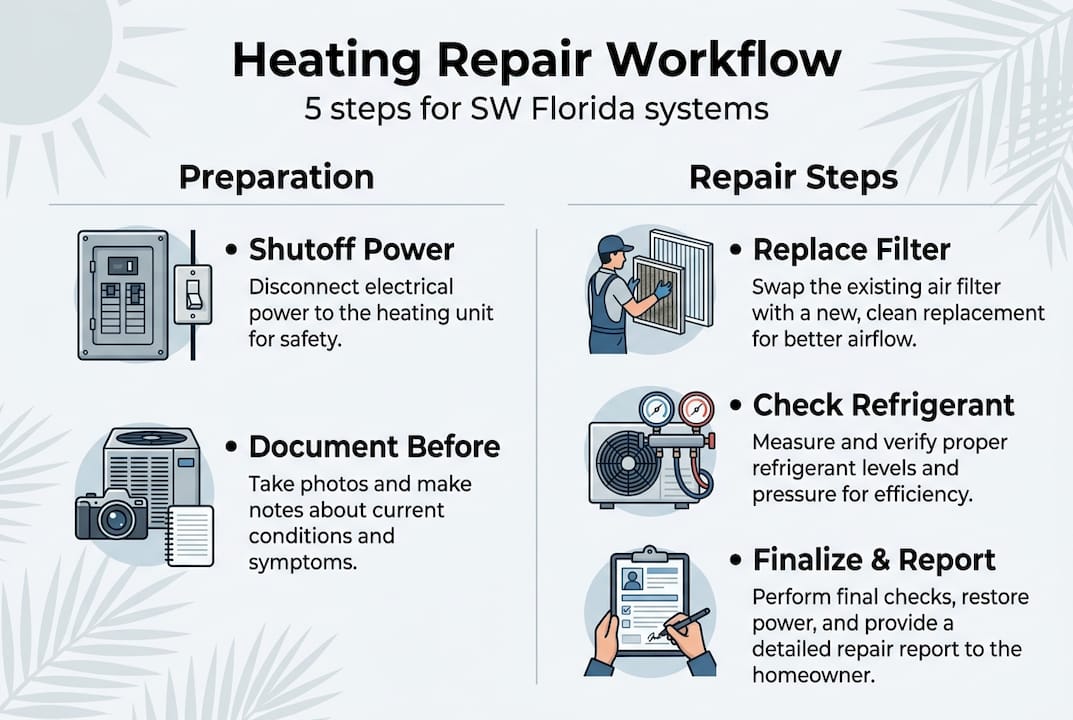
Safety preparation and customer interview are the first steps in any standard heating system repair workflow, and for good reason. Every repair should begin with power off at the breaker, a confirmed gas shutoff for any gas-assisted systems, and a carbon monoxide check if a furnace is involved.
As a homeowner or landlord, your preparation also matters. Clear at least two feet around the outdoor unit. Locate your electrical panel and know which breaker controls the HVAC. Have the model and serial number ready. This cuts service time significantly.
“A technician who skips the customer interview and pre-check is skipping the foundation of a reliable repair. In Florida, that shortcut will catch up with you.”
| Prep task | Homeowner’s role | Technician’s role |
|---|---|---|
| Power shutoff | Confirm breaker location | Verify with multimeter |
| Area clearance | Remove obstacles around unit | Inspect for debris/damage |
| Model info | Locate on unit label | Log for parts ordering |
| CO check | Evacuate if alarm sounds | Test with detector |
| Before photos | Optional but helpful | Required for documentation |
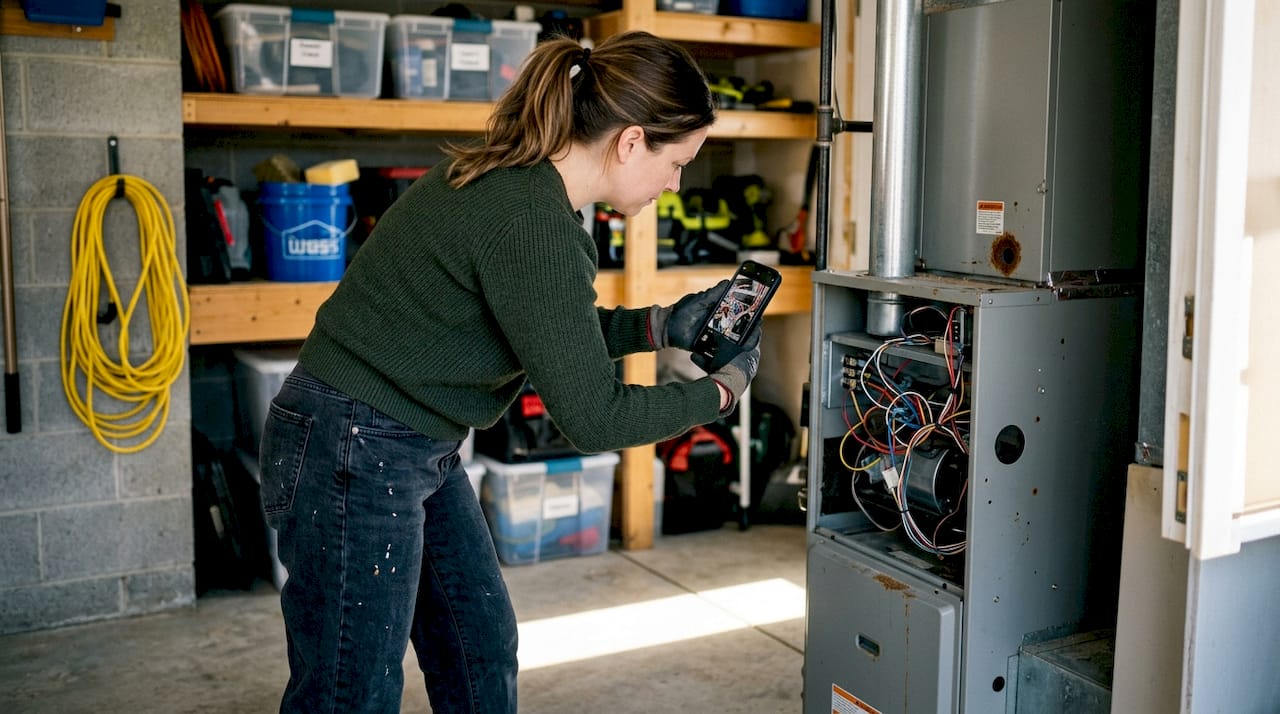
Pro Tip: Snap “before” photos of your unit, wiring connections, and any visible damage before work begins. These images protect you during warranty claims and help a new technician understand prior work.
For a deeper dive into the full process, the HVAC repair guide covers system-specific steps, while heating and cooling best practices outlines what proper service should look like in this region.
Step-by-step heating system repair workflow
A structured workflow isn’t just for the technician. Understanding each stage helps you ask the right questions, verify the work was done correctly, and avoid being overcharged for shortcuts.
The six-step repair workflow:
- Safety and customer interview – Power off, gas shutoff confirmed, CO check completed, and homeowner describes the symptoms in detail.
- Visual inspection – Check the air handler, outdoor unit, ductwork, and thermostat. Look for corrosion, visible leaks, burnt wiring, or ice buildup.
- Diagnostic testing – Use a multimeter to test capacitors, contactors, and electrical connections. Check refrigerant pressure. Test thermostat function and defrost cycle.
- Performance baseline – Measure temperature rise across the air handler and confirm airflow at vents. Compare to manufacturer specs.
- Repair execution – Replace faulty components, clear drain lines, clean coils with salt-resistant cleaner, recharge refrigerant if needed.
- Final test and documentation – Run a full heating cycle, confirm output temperatures, and document everything: parts replaced, readings before and after, and next service date.
A standard repair workflow always ends with verification and documentation, not just a fix. That paper trail matters when warranty claims arise or when a new technician services the system later.
Pro Tip: Ask your technician for a written report after every service visit. If they can’t provide one, that’s a red flag.
Twice-yearly professional service costs $150 to $300 and reduces breakdowns by 50 to 70%, extending system life by 20 to 30%. Paired with filter changes every 30 to 90 days, that’s the simplest investment you can make in your home’s comfort. Check the DIY AC maintenance checklist to handle the basics yourself between professional visits.
Troubleshooting common SW Florida heating problems and edge cases
Some problems are standard HVAC issues. Others are specific to living in a humid, coastal region. Knowing the difference helps you troubleshoot faster and communicate clearly with your technician.
Top 5 local heating failure types:
- Drain line clogs: Algae and humidity cause blockages; clear monthly with a wet/dry vacuum and diluted bleach
- Frozen coils: Usually low refrigerant or a dirty filter restricting airflow; turn the system off and call a technician
- Short cycling: Often points to an oversized unit or low refrigerant; check refrigerant and oversizing first
- Ignition faults: Rare in heat pumps but present in gas-assisted systems; requires a certified technician
- Coil corrosion: Accelerated by salt air near the coast; annual cleaning with salt-resistant coil cleaner is the best defense
| Component | Typical repair cost | Replace threshold |
|---|---|---|
| Capacitor | $150 to $400 | At failure |
| Ignition system | $300 to $600 | Repeated failure |
| Blower motor | $400 to $1,000 | If system is under 10 years |
| Gas valve | $400 to $700 | Usually replace on failure |
| Refrigerant recharge | $200 to $500 | Fix leak source first |
Common repair costs range from $150 for a capacitor up to $1,000 for a blower motor, with a clear recommendation to replace rather than repair if costs exceed 50% of a new system or the unit is over 15 years old.
“In Florida, humidity and salt air aren’t occasional hazards. They’re daily stressors on your HVAC system. Budget and plan accordingly.”
For DIY-friendly checks, start with the filter and the breaker before calling anyone. Beyond that, refrigerant, electrical, and ignition work always require a licensed technician. Carbon monoxide checks are mandatory if you have any gas-assisted heating components.
Stay current on 2026 HVAC trends for systems built to handle Florida’s climate, and use the AC troubleshooting guide to work through problems systematically before scheduling a service call.
Why your workflow matters more in Florida’s unique climate
Most HVAC guides are written for temperate climates. They assume moderate humidity, no salt air, and predictable winter demand. Southwest Florida doesn’t fit that mold, and a generic repair approach will show its limits quickly.
We’ve seen it repeatedly: a technician uses a standard paper checklist, skips the coil corrosion inspection because “the system is only three years old,” and misses early-stage salt damage that turns into a $900 repair six months later. That’s not negligence in a dry climate. In coastal Florida, it’s just inadequate.
Digital checklists and tools like ServiceTitan hold technicians accountable in ways that paper forms simply can’t. Time-stamped entries, photo documentation, and digital sign-off create a verifiable record of every service visit. That record protects both the homeowner and the company.
Non-certified technicians who skip protocol may seem like a bargain upfront. But in a high-humidity, salt-air environment, cut corners accelerate failures. A proper workflow, built specifically for Florida conditions, is what separates a repair that lasts from one that you’re revisiting every season. Explore the heat pump installation guide for what a purpose-built Florida approach looks like from day one.
Expert heating repair and comfort solutions for your Southwest Florida home
When your heating system needs attention, you deserve a team that already knows Southwest Florida’s challenges and doesn’t need to be educated mid-visit. At Ultra Air Heating and Cooling, every repair and maintenance call follows the structured workflow outlined in this guide, adapted specifically for Naples, Cape Coral, and Fort Myers conditions.
Our trained technicians handle everything from routine maintenance to full system upgrades, with services that cover heating repair and installation, indoor air quality services, and HVAC financing options that make upgrades accessible without the financial stress. Contact us today to schedule a maintenance visit or get a quote on a system built to handle Florida’s climate long-term.
Frequently asked questions
What are the most common heating system repairs in Southwest Florida?
The most common repairs involve heat pumps, including defrost cycle faults, refrigerant leaks, coil corrosion from salt air, and drain line clogs caused by Florida’s high humidity.
How much does a typical heating system repair cost?
Repairs range from around $150 for a capacitor replacement to $1,000 or more for a blower motor. If repair costs exceed 50% of a new system’s price or your unit is over 15 years old, replacement is the smarter investment.
How often should HVAC maintenance be performed in SW Florida?
Twice-yearly professional service combined with filter changes every 30 to 90 days keeps your system efficient and significantly reduces the risk of unexpected breakdowns.
When should I replace instead of repair my heating system?
If your system is over 15 years old or repair costs exceed half the price of a replacement, the smarter financial choice is a new, more efficient system rather than patching an aging one.
Recommended
- Step-by-step HVAC repair guide for SW Florida homes
- Florida HVAC Trends: Boost Efficiency and Comfort in 2026
- How to Protect Your HVAC Unit During a Hurricane: The Complete SWFL Checklist – Ultra Air Heating and Cooling
- Best Practices for Ultra Air Heating and Cooling in Southwest Florida – Ultra Air Heating and Cooling