
Duct leaks waste 20-30% of conditioned air in many Florida homes, and that number hits harder when you’re running your AC nine or ten months a year. Southwest Florida homeowners and commercial property managers are facing rising utility bills, stricter comfort expectations, and a rapidly shifting HVAC technology landscape all at once. The good news is that 2026 brings real, proven solutions. This guide covers the latest trends, the smartest efficiency upgrades, and the decisions that will keep your property comfortable and your energy costs under control well into the future.
Table of Contents
- The 2026 Florida HVAC landscape: What’s changed?
- Energy efficiency breakthroughs and best practices
- Repair vs. replace: Southwest Florida’s 2026 decision matrix
- Indoor air quality and comfort: Responding to new expectations
- Why efficiency is no longer optional: Our take on Florida’s HVAC future
- Upgrade your Florida HVAC with proven local solutions
- Frequently asked questions
Key Takeaways
| Point | Details |
|---|---|
| Duct sealing pays off | Properly sealed ducts reduce wasted energy by up to 30% in Florida homes. |
| Upgrade for savings | Swapping old HVAC units for modern systems can boost efficiency by 20% or more. |
| Smart tech advantage | Smart thermostats and zoning technology offer major comfort and cost benefits in Florida’s climate. |
| Indoor air matters | Advanced air quality solutions are now a core expectation for both homeowners and businesses. |
The 2026 Florida HVAC landscape: What’s changed?
The Florida HVAC market looks noticeably different in 2026 compared to just a few years ago. The federal incentive programs that once made upgrades easy to justify have scaled back significantly. Post-IRA incentives have decreased, which means the financial case for efficiency now rests squarely on your own long-term savings rather than government rebates. That shift puts more pressure on making smart, informed choices from day one.
At the same time, the technology available to Florida property owners has never been better. Advanced zoning systems, variable-speed heat pumps, and smart controls are no longer niche products reserved for luxury builds. They are becoming the standard expectation for anyone serious about comfort and cost control. You can explore the full range of HVAC system options to see what fits your property best.
Here is a quick look at how the 2026 landscape compares to previous years:
| Feature | Pre-2024 standard | 2026 expectation |
|---|---|---|
| Thermostat type | Basic programmable | Smart, app-connected |
| System zoning | Single zone common | Multi-zone preferred |
| Air quality focus | Cooling only | Filtration and humidity |
| Incentive support | Strong federal credits | Owner-driven savings |
| Heat pump adoption | Slow in Florida | Rapidly growing |
Several key shifts are driving this new landscape:
- Smart controls are now expected in both residential and commercial installs
- Heat pump technology has become highly practical for Florida’s mild winters
- Indoor air quality is a top priority, not an afterthought
- Zoning systems allow room-by-room temperature management, cutting waste significantly
- Energy audits are becoming a standard first step before any major system upgrades in Florida
Key stat: Properties with outdated HVAC systems and unaddressed duct leaks can lose nearly a third of their cooling output before it ever reaches the living space.
For Southwest Florida specifically, the demand for tailored solutions is growing fast. Naples, Cape Coral, and Fort Myers properties deal with intense heat, high humidity, and salt air, all of which accelerate system wear and make generic solutions less effective.
Energy efficiency breakthroughs and best practices
Now that you understand the big-picture trends, let’s explore the actual efficiency breakthroughs and the smartest moves you can make.
The biggest wins in 2026 come from combining smart technology with disciplined maintenance. Neither alone is enough. A brand-new system installed in a leaky duct network will still waste a significant portion of its output. And a well-sealed system running on an outdated thermostat will never reach its efficiency potential.
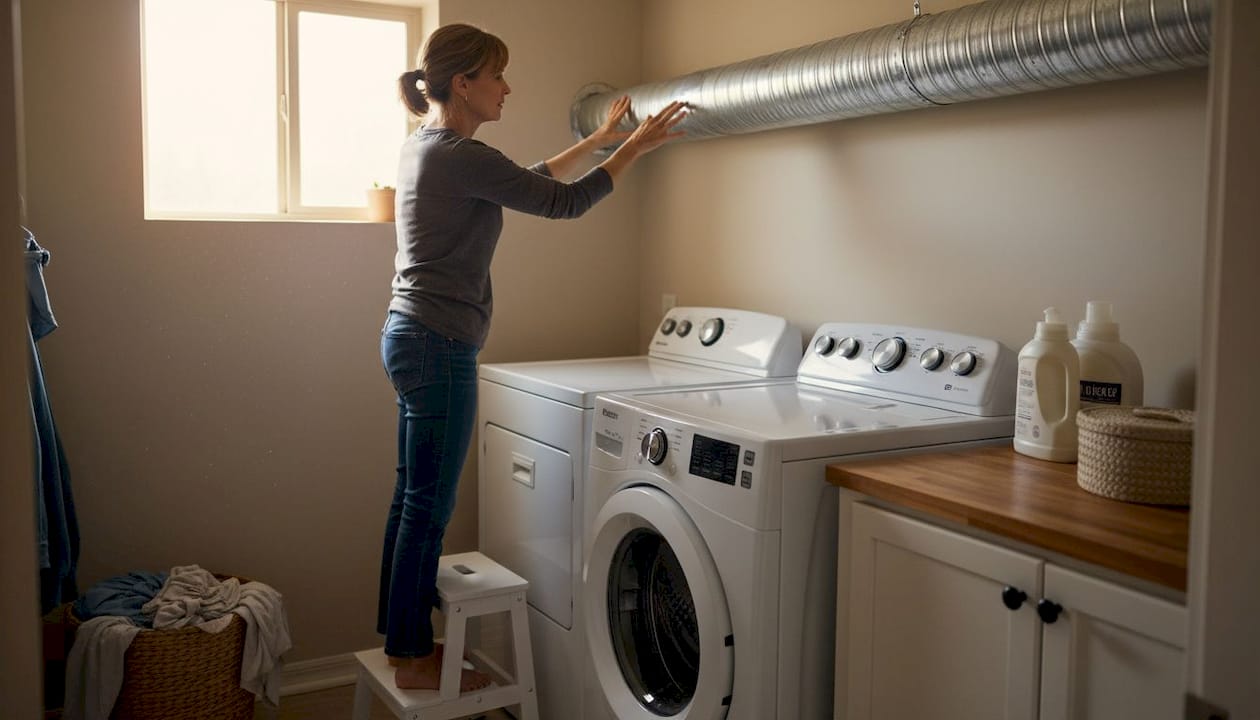
Heat pumps suit Florida’s climate well, but duct sealing is non-negotiable since leaks waste 20-30% of energy. Sealing and insulating your ductwork is often the single highest-return investment you can make before upgrading any equipment.
Here is how common upgrade options compare for Southwest Florida properties:
| Upgrade | Avg. energy savings | Best for |
|---|---|---|
| Smart thermostat | 10-15% | All property types |
| Duct sealing | 20-30% | Older homes and offices |
| Heat pump replacement | 15-25% | Homes with aging AC |
| Zoning system | 10-20% | Multi-room or large spaces |
| VRF system | 20-35% | Commercial buildings |
Here are the top efficiency moves to prioritize in 2026:
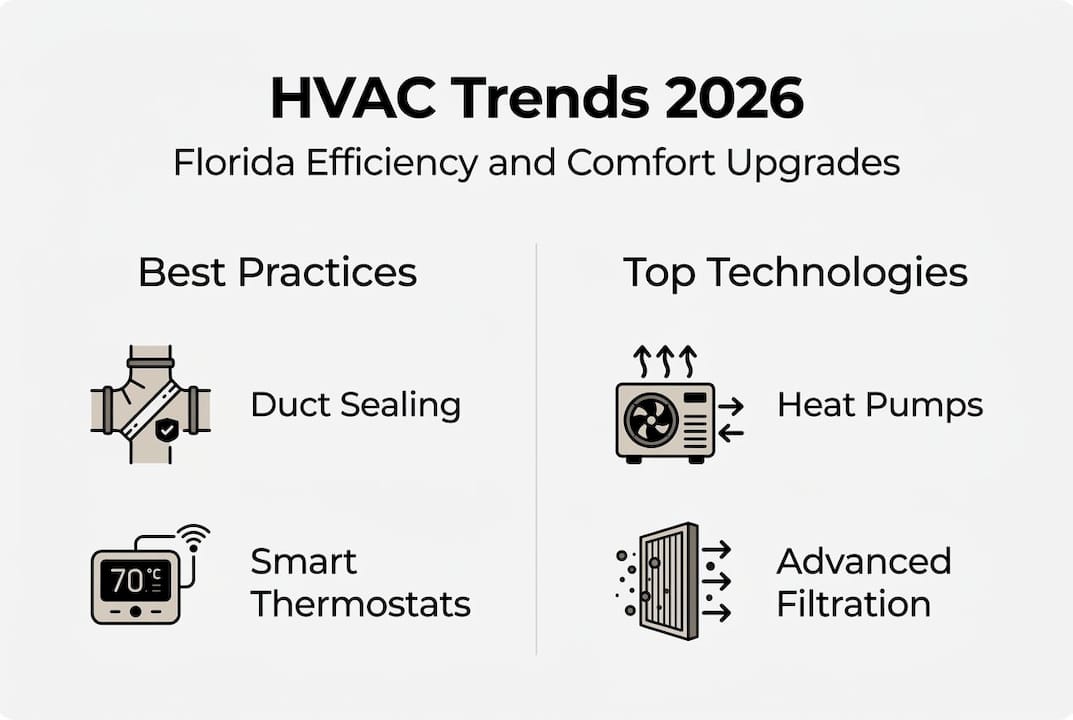
- Seal and insulate ducts before any equipment upgrade
- Install a smart thermostat with scheduling and remote access
- Switch to a variable-speed heat pump if your current unit is over ten years old
- Add zoning controls for properties with multiple rooms or floors
- Schedule twice-yearly maintenance to catch small issues before they become expensive
For commercial properties, rooftop units and VRF (variable refrigerant flow) systems offer the best combination of efficiency and zone control. A large office or retail space in Fort Myers can see dramatic bill reductions with the right commercial setup.
Pro Tip: Before scheduling any upgrade, run through a thorough AC maintenance checklist to identify quick wins that don’t require a full system replacement.
Regular maintenance is not optional if you want your system to perform at its rated efficiency. Dirty coils, clogged filters, and low refrigerant all force your system to work harder and cost more to run. Following solid HVAC maintenance advice year-round is the most reliable way to protect your investment. And if something does go wrong, knowing the right HVAC repair steps can save you time and money.
Repair vs. replace: Southwest Florida’s 2026 decision matrix
With best practices in mind, homeowners face another big question: fix the old or invest in the new?
This is one of the most common calls we get, and the answer is rarely simple. But there are clear patterns that make the decision easier when you know what to look for.
Replacing systems older than 10-12 years can deliver energy savings over 20%, while a repair-first strategy saves upfront costs. That tradeoff is real, but it often favors replacement more than people expect once you factor in the cumulative cost of repeated repairs.
Here is what to weigh when making this call:
- System age: Units over 12 years old rarely justify major repairs
- Repair cost rule: If a single repair exceeds 50% of a new unit’s cost, replace it
- Efficiency rating: Older SEER (Seasonal Energy Efficiency Ratio) ratings below 14 are now far behind current standards
- Frequency of breakdowns: Two or more repairs in a single season is a strong signal to replace
- Comfort consistency: Uneven cooling or persistent humidity issues often point to a system that has reached its limit
Key stat: A new high-efficiency system can pay for itself in energy savings within 5-7 years in Southwest Florida’s demanding climate.
Financing is a bigger factor in 2026 than it was when federal incentives were stronger. Utility rebates and local financing plans have stepped in to fill some of that gap, but you need to actively seek them out. Staying current on air conditioner upkeep also extends system life and delays the replacement timeline when your unit is still in good shape.
Pro Tip: Get a professional load calculation done before replacing any system. Oversized units short-cycle, which means they turn on and off too frequently, wearing out faster and leaving humidity problems unsolved. Proper sizing is just as important as brand or efficiency rating. For more guidance, check out these HVAC comfort tips tailored to Southwest Florida.
Indoor air quality and comfort: Responding to new expectations
Once major investments and upgrades are decided, it’s time to consider what “comfort” and “healthy air” mean for 2026 and beyond.
Florida’s climate creates a unique indoor air quality challenge. High outdoor humidity drives mold and allergen growth indoors. Salt air from the coast accelerates equipment corrosion. And tightly sealed modern homes trap pollutants that older, leakier construction would have vented out naturally.
Floridians expect superior indoor air quality as part of modern HVAC solutions, and that expectation is only growing. Cooling alone is no longer enough.
The technologies making the biggest difference in 2026 include:
- MERV-13 and higher filtration to capture fine particles, allergens, and mold spores
- Whole-home dehumidifiers that work alongside your AC to maintain healthy humidity levels, typically between 40-60%
- UV air purifiers installed inside the air handler to neutralize bacteria and mold growth on coils
- Real-time air quality monitors that alert you when CO2, VOCs (volatile organic compounds), or particulate levels rise
- Energy recovery ventilators (ERVs) that bring in fresh outdoor air without sacrificing efficiency
“Modern HVAC design in Florida must balance cooling capacity, humidity control, and air purification as a single integrated system, not three separate concerns.”
For commercial property managers, air quality is also a liability and productivity issue. Studies consistently link poor indoor air quality to higher absenteeism and lower employee performance. Investing in proper filtration and monitoring is not just a comfort upgrade, it’s a business decision.
Exploring the full range of indoor air quality solutions available for Southwest Florida properties is a strong starting point for any 2026 upgrade plan.
Why efficiency is no longer optional: Our take on Florida’s HVAC future
We have seen a lot of approaches to HVAC management in Southwest Florida over the years, and the ones that aged the worst all shared one thing: they treated efficiency as a bonus rather than a baseline.
The old logic was that if your system was cooling the space, it was doing its job. That thinking made sense when energy was cheaper and expectations were lower. It does not hold up in 2026. Power costs in Florida have risen steadily, comfort standards have jumped, and the gap between an efficient system and an outdated one is now measurable in hundreds of dollars per year.
Delaying upgrades or skipping advanced maintenance does not just cost you money on your utility bill. It compounds. A system running at 70% efficiency because of dirty coils, leaky ducts, and a basic thermostat is not just slightly worse than a modern setup. It is dramatically worse, and the difference grows every month.
What we recommend is proactive planning rather than reactive repair. Knowing your system’s age, current efficiency rating, and maintenance history lets you make decisions on your schedule rather than in an emergency. Following best local HVAC practices tailored to the Southwest Florida climate is the clearest path to maximizing value in 2026 and the years ahead.
Upgrade your Florida HVAC with proven local solutions
Ready to apply what you’ve learned? Here’s how to take immediate action for improved comfort and efficiency.
Ultra Air Heating & Cooling works with homeowners and commercial property managers across Naples, Cape Coral, and Fort Myers to build 2026-ready HVAC systems that perform in Florida’s demanding climate. Whether you need a full HVAC installation and repair or want to explore the right heating solutions for your property, our team brings local expertise and honest guidance to every job.
Not sure where to start? Use our resource on finding the best HVAC fit for Florida homes to narrow down your options. Our team is ready to help you move from planning to action with a solution built around your property, your budget, and your comfort goals.
Frequently asked questions
What are the most important HVAC upgrades for Florida homes in 2026?
Prioritize smart thermostats, efficient heat pumps, proper duct sealing, and advanced filtration. Heat pumps suit Florida’s climate particularly well, and sealing ducts eliminates the biggest single source of energy waste.
How can I decide whether to repair or replace my HVAC system?
Systems older than 10-12 years typically justify replacement since new systems save over 20% on energy costs, while newer units in good condition can benefit from targeted repairs instead.
What is the role of indoor air quality in 2026 HVAC systems?
Air quality solutions now include MERV-13 filtration, whole-home dehumidifiers, UV purifiers, and real-time monitoring. Floridians expect superior air quality as a core part of any modern HVAC setup, not an optional add-on.
Are commercial HVAC trends in Southwest Florida different from residential?
Yes. Commercial properties typically rely on rooftop units or VRF systems for customized zoning and higher efficiency, which meets the more complex control and comfort needs of offices, retail spaces, and multi-tenant buildings.
What financing options exist for HVAC upgrades in 2026?
With post-IRA incentives reduced, local financing plans, utility rebates, and manufacturer promotions have become the primary tools for making upgrades affordable in 2026.
Recommended
- Why HVAC matters for your business: efficiency explained
- Types of HVAC Systems: Best Fit for Florida Homes
- Ultra Air Heating and Cooling Strategies for Growth in Southwest Florida – Ultra Air Heating and Cooling
- What is HVAC zoning? Improve comfort & cut costs
- 3 Advantages of Switching to an Energy-Efficient Pool Heater – Pools of Fun