
If you’ve been watching your electricity bills climb every summer while some rooms in your home or office stay stuffy and others run freezing cold, your HVAC system is telling you something important. Southwest Florida’s brutal heat and relentless humidity put more stress on aging equipment than almost any other climate in the country. Upgrading your system isn’t just about comfort. It’s about protecting your property, lowering operating costs, and taking advantage of serious financial incentives that are available right now in 2026. This guide walks you through every stage of a successful upgrade, from assessing what you have to collecting your rebate check.
Table of Contents
- Understand your current HVAC system and needs
- Preparation: What to consider before upgrading your HVAC
- Step-by-step guide: Upgrading your HVAC system
- Financial incentives and maximizing your investment
- Why thoughtful HVAC upgrades pay off in Southwest Florida
- Expert HVAC upgrades and indoor air quality solutions for Southwest Florida
- Frequently asked questions
Key Takeaways
| Point | Details |
|---|---|
| Assess before upgrading | A careful review of your current HVAC system prevents mistakes and unnecessary upgrades. |
| Plan for efficiency and compliance | Using load calculations and following 2026 standards maximizes both comfort and cost savings. |
| Claim all available incentives | Federal and local rebates can offset 30% or more of your upgrade costs. |
| Professional installation is critical | Proper commissioning and documentation guarantee long-term savings and reliable comfort. |
Understand your current HVAC system and needs
Once you understand why upgrades matter, your next step is to get clear on your current situation. Before you call a contractor or browse new equipment, you need an honest picture of what your current system is actually doing, and what it’s failing to do.
Start with these key performance indicators:
- Rooms that feel noticeably warmer or cooler than your thermostat setting
- Humidity indoors that feels sticky even when the AC is running
- Monthly energy bills that have increased over the past 12 to 24 months without an obvious cause
- Your system running constantly or cycling on and off every few minutes
- Unusual sounds like grinding, rattling, or banging during operation
- A system that’s 10 years old or older
Check your HVAC warning signs and compare them to what you’re experiencing. You may already be past the repair window and firmly in replacement territory.
Locating your system specs
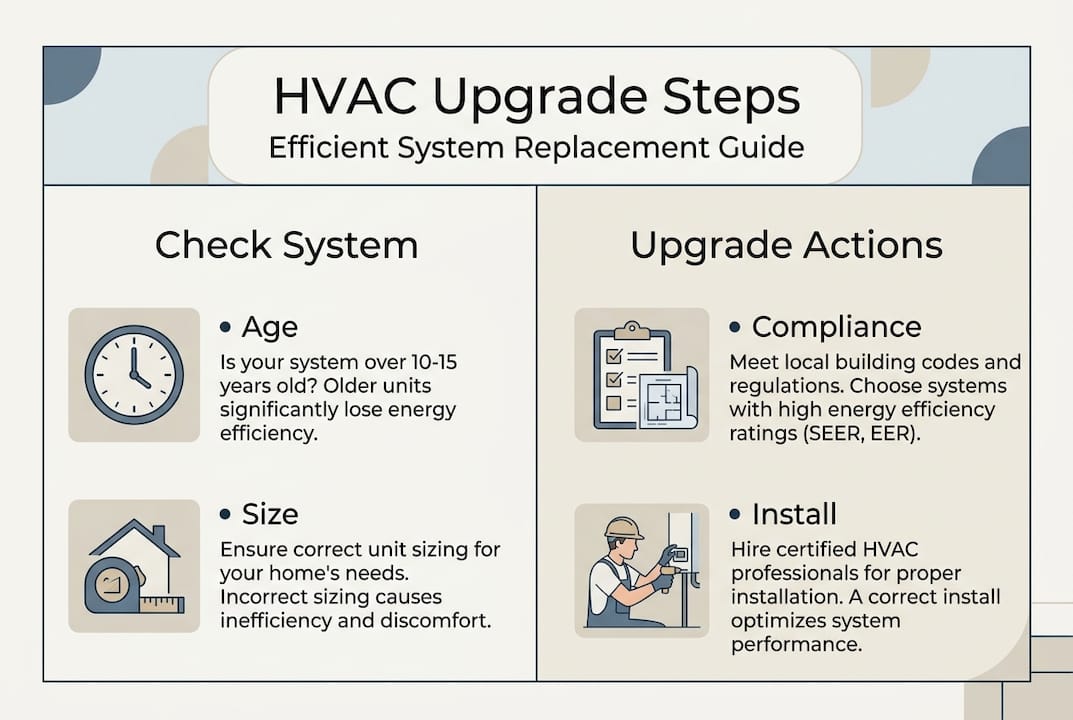
Your equipment’s data plate is usually found on the exterior of the outdoor condenser unit or inside the air handler. Look for the following information:
| Specification | Where to find it | Why it matters |
|---|---|---|
| Age (manufacture date) | Data plate on unit | Systems over 10 years often can’t meet 2026 standards |
| SEER or SEER2 rating | Data plate or product manual | Older systems may be SEER 10 or below |
| Tonnage (capacity) | Model number on data plate | Confirms whether sizing is correct for your space |
| Refrigerant type | Data plate (R-22, R-410A, R-454B) | R-22 is obsolete; R-410A is being phased out in 2026 |
One of the most overlooked problems in Southwest Florida homes is oversized equipment. Contractors in the past sometimes installed larger units thinking “more is better,” but that logic is wrong. Oversizing causes short-cycling, poor humidity control, and higher bills. A system that cycles on and off too quickly never runs long enough to pull moisture out of the air, which is a serious problem in our climate.
Pro Tip: If your system is under 10 years old and properly sized, targeted repairs plus a maintenance plan may extend its life another 3 to 5 years. If it’s over 10 years old and showing multiple symptoms, replacement almost always delivers better long-term value. Review the best practices for HVAC in Southwest Florida to set the right baseline for your property.
Preparation: What to consider before upgrading your HVAC
With your system assessed, it’s time to plan your upgrade by addressing critical pre-installation factors. Skipping this phase is the single biggest reason HVAC upgrades underperform. The equipment itself is only part of the equation.
The four technical pillars of a proper upgrade
- Manual J load calculation: This is a room-by-room analysis that accounts for your home’s square footage, insulation levels, window size and orientation, ceiling height, and local climate data. It’s how a contractor determines the right size system for your specific property.
- Manual D duct design: Your ductwork needs to move the right volume of air to every room. Old, undersized, or leaky ducts will sabotage even the most efficient new system.
- Manual S equipment selection: Once the load and duct design are complete, this step matches the right equipment model to your calculated needs, not just what happens to be in stock.
- Commissioning: After installation, a qualified technician tests airflow, refrigerant charge, temperature splits, and control settings to verify the system is actually performing as designed.
Proper load calculation using Manual J, duct design with Manual D, and full commissioning are not optional extras. They are the foundation of a compliant, efficient installation.
2026 compliance matters more than ever
Florida’s 2026 regulations require SEER2 14.3 minimum ratings and the use of low-GWP (global warming potential) refrigerants. Systems using R-410A cannot be manufactured for sale after 2025. If you’re replacing a system now, your contractor must be up to date on these requirements. Hiring someone unfamiliar with current code is a real risk.
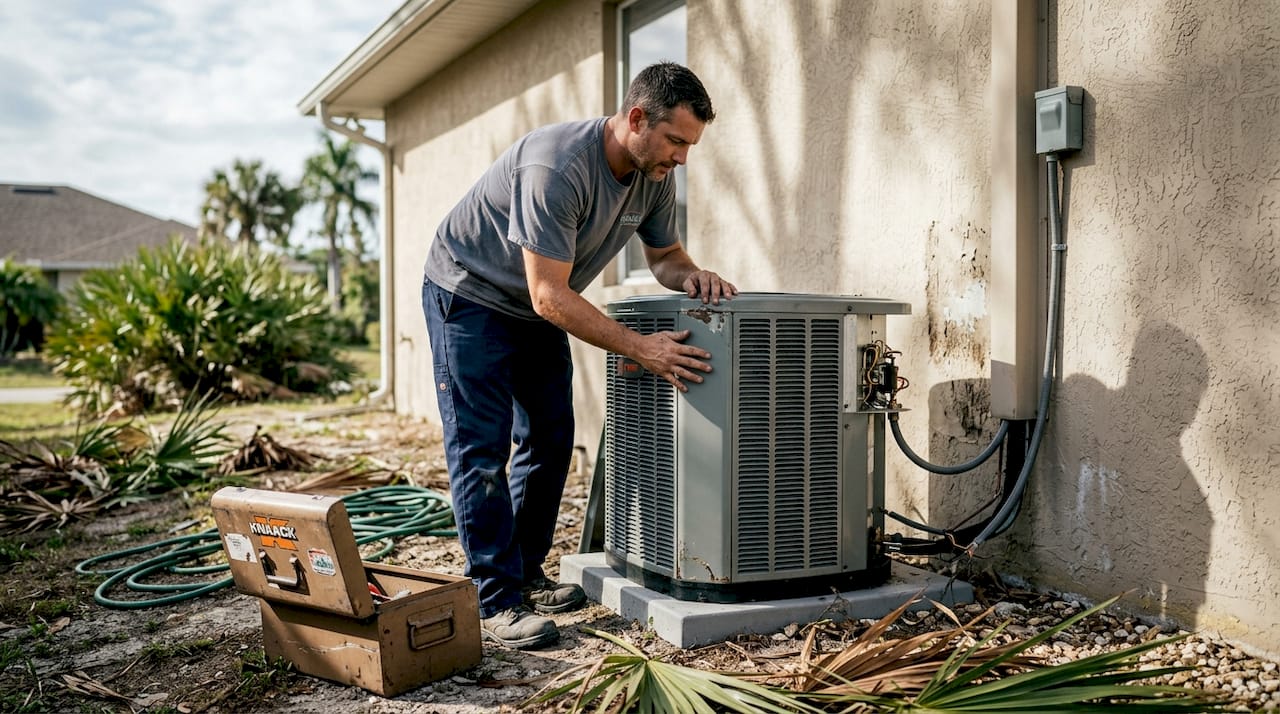
| Upgrade scenario | Estimated cost | Typical payback period |
|---|---|---|
| Standard efficiency (SEER2 14.3) replacement | $4,000 to $7,000 | 5 to 8 years |
| High-efficiency (SEER2 18+) with variable speed | $7,000 to $12,000 | 3 to 5 years with incentives |
| Full system plus ductwork replacement | $10,000 to $18,000 | 4 to 7 years |
Documentation you’ll need for rebates and incentives:
- Contractor invoice showing equipment model numbers and SEER2 ratings
- Manufacturer’s certification statement for energy efficiency
- Permit and inspection records from your local building department
- Utility account number for FPL rebate applications
- IRS Form 5695 for federal tax credit claims
Pro Tip: Ask your contractor before installation begins whether they will provide all documentation in writing. Some homeowners lose out on hundreds of dollars in rebates simply because they can’t produce the required paperwork after the fact. Explore the best HVAC systems for Florida and keep an eye on the latest HVAC trends in Florida to stay informed about what’s being installed successfully in our region.
Step-by-step guide: Upgrading your HVAC system
After thorough preparation, you’re ready to take action and implement your HVAC upgrade. Here’s what the full process looks like from start to finish.
-
Schedule a professional inspection (Day 1 to 3): A qualified HVAC technician evaluates your existing system, ductwork condition, insulation, and electrical panel. This sets the baseline for everything that follows. Don’t skip this step even if your system appears to be working.
-
Complete the load calculation (Day 2 to 5): Your contractor performs the Manual J calculation using actual measurements from your property. This process takes time. Be wary of any contractor who skips this step and quotes you a system size based on square footage alone.
-
Select compliant equipment (Day 3 to 7): Based on Manual J and Manual S, your contractor recommends specific equipment that meets Florida’s 2026 SEER2 and refrigerant requirements. This is also when you decide on optional upgrades like variable-speed air handlers, smart thermostats, or HVAC zoning systems.
-
Pull permits and schedule installation (Day 5 to 10): Florida law requires permits for HVAC replacements in most cases. Your contractor handles the permit application. Installation is typically completed in one to two days for a standard residential replacement.
-
Installation day: The old system is recovered and disposed of properly (refrigerant must be recovered, not vented). New equipment is set, electrical connections are made, and refrigerant lines are pressure-tested before charging.
-
Commissioning and testing (same day or day after): This is critical and often rushed. A properly commissioned system gets measured for airflow at every vent, refrigerant charge verified to manufacturer specifications, temperature splits checked, and thermostat calibrated.
“Commissioning is essential. Oversizing causes efficiency and humidity issues that persist for the entire life of the system if not caught early.”
- Final inspection and documentation: Your local building department inspects the installation. Once approved, collect your permit card, installation invoice, equipment documentation, and manufacturer’s certification statement. Store these in a safe place.
Pro Tip: If your budget is a concern, ask about HVAC financing options before you commit to a lower-efficiency system just to save upfront costs. The monthly payment difference between a standard and high-efficiency unit is often smaller than the monthly energy savings you’ll see on your bill.
Financial incentives and maximizing your investment
With your upgrade underway, let’s ensure you capitalize on financial incentives and maximize long-term value. The combination of federal, state, and utility incentives available in Southwest Florida right now makes 2026 one of the best years to upgrade.
Federal 25C tax credit
The Inflation Reduction Act’s Section 25C credit gives you 30% back, up to $2,000 annually for qualifying high-efficiency HVAC equipment. To qualify, your new system must meet efficiency thresholds set by the IRS (generally SEER2 16+ for split systems). This is a credit, not a deduction, meaning it directly reduces your tax bill dollar for dollar.
FPL and utility rebates
Florida Power and Light offers rebates starting at $150 for qualifying high-efficiency central air conditioning systems. Rebates can increase based on efficiency level, equipment type, and whether you complete a certified contractor installation. Check with your utility provider because rebate programs update regularly.
| Incentive type | Amount | Requirements |
|---|---|---|
| Federal 25C tax credit | 30%, up to $2,000 | SEER2 16+, IRS Form 5695, primary residence |
| FPL rebate | $150 to $400+ | Qualifying system, licensed contractor, FPL account |
| State/local programs | Varies | Check DSIRE database for current offerings |
Savings over time
The numbers here are compelling. Upgrading from a SEER 10 system to a SEER 16+ system cuts your cooling energy use by roughly 40%, and most homeowners see payback within 3 to 5 years when combining energy savings with available incentives.
For a home spending $200 per month on cooling, a 40% reduction means $80 back in your pocket every month. Over 12 months, that’s $960 in annual savings. Add a $2,000 tax credit and a $300 FPL rebate, and your effective payback period shrinks dramatically.
Documentation checklist to secure your rebates:
- Manufacturer’s certification statement (proves efficiency level)
- Contractor invoice with model and serial numbers
- Building permit and final inspection sign-off
- Proof of purchase (dated receipt)
- FPL rebate application (submit within 90 days of installation)
- IRS Form 5695 (filed with your federal tax return for the installation year)
Check the detailed AC unit tax credits guide and the energy efficiency rebate guide to make sure you’re not leaving money on the table. Many homeowners claim less than they’re entitled to simply because they didn’t know what to ask for.
Statistic callout: Homeowners who combine the federal 25C credit with available utility rebates and choose SEER2 18+ variable-speed equipment routinely achieve payback periods under four years in Southwest Florida’s high-cooling-demand climate.
Why thoughtful HVAC upgrades pay off in Southwest Florida
Now that you know how to approach an upgrade, it’s worth sharing a perspective based on years of local experience.
In Southwest Florida, we see a pattern that repeats itself constantly. A homeowner or property manager skips the load calculation to save a few hundred dollars in contractor time, ends up with an oversized unit, and spends the next ten years dealing with rooms that feel muggy, a system that cycles constantly, and energy bills that never deliver the savings they expected. The math never works in their favor.
The 2026 efficiency standards, including the push toward low-GWP refrigerants and higher SEER2 baselines, are actually doing property owners a favor. They’re raising the floor and forcing better installations across the board. The latest Florida HVAC trends point clearly toward variable-speed technology and smarter zoning as the new standard, not premium add-ons.
Our perspective is simple. The upfront investment in proper commissioning and documentation does three things that go beyond code compliance. It ensures your system performs the way you paid for it to perform. It positions you to collect every available rebate and credit. And it protects your warranty, because manufacturers can and do void warranties on improperly installed equipment. That’s not a risk worth taking in a climate as demanding as ours.
Expert HVAC upgrades and indoor air quality solutions for Southwest Florida
To make your upgrade as seamless as possible, explore these tailored solutions for your Southwest Florida property.
At Ultra Air Heating & Cooling, we work with homeowners and commercial property managers across Naples, Cape Coral, and Fort Myers to design and install HVAC systems that actually deliver on their promises. Whether you’re looking to improve indoor air quality with whole-home filtration and humidity control, or need reliable heating system solutions for a commercial property, our team handles it from load calculation through final inspection. We also offer flexible affordable HVAC upgrades so you don’t have to choose between comfort and budget. Contact us to schedule your upgrade consultation and air quality assessment today.
Frequently asked questions
What are the new HVAC efficiency standards in Florida for 2026?
Florida requires a minimum SEER2 of 14.3 along with low-GWP refrigerants for all new HVAC system installations in 2026. Systems using R-410A cannot be manufactured for new sale after 2025.
How much can I save by upgrading to a high-efficiency HVAC system?
Upgrading from SEER 10 to SEER 16+ cuts energy use by roughly 40%, and most homeowners recoup their investment within 3 to 5 years when combining energy savings with available tax credits and utility rebates.
Do I qualify for rebates or tax credits if I upgrade my HVAC in Southwest Florida?
Most homeowners qualify for the federal 25C tax credit worth 30% up to $2,000, plus FPL utility rebates starting at $150 for qualifying high-efficiency equipment installed by a licensed contractor.
Why is proper HVAC sizing important?
An oversized system short-cycles, meaning it runs in short bursts that never fully dehumidify your home, which leads to poor comfort, higher electricity bills, and faster equipment wear.
Is it worth upgrading just for better indoor air quality?
Absolutely. Modern systems paired with whole-home filtration, UV air purifiers, and dehumidifiers can dramatically reduce allergens, mold spores, and humidity levels, which is especially valuable in Southwest Florida’s persistently humid climate.