
Your air conditioning system can account for more than 40% of your utility bill in Florida, and the idea that skipping routine maintenance saves you money is one of the costliest mistakes a homeowner can make. In Southwest Florida, your AC runs harder and longer than almost anywhere else in the country. Neglecting it doesn’t save cash. It quietly drains it, month after month, through higher bills, humidity problems, and premature system failure. This article breaks down exactly how regular AC service protects your comfort, keeps your energy costs in check, and extends the life of your equipment.
Table of Contents
- How your AC works and why it needs regular attention
- Top benefits of regular AC service
- What happens during a professional AC service visit?
- Warning signs: When is AC service overdue?
- The common myths about AC service—and what actually works
- Take the next step: Protect your comfort with expert AC service
- Frequently asked questions
Key Takeaways
| Point | Details |
|---|---|
| Cuts energy bills | Regular AC service improves efficiency and reduces costs, especially in Florida. |
| Prevents breakdowns | Routine maintenance stops minor issues from becoming expensive emergencies. |
| Boosts comfort | A well-maintained AC keeps humidity and temperature under control for year-round comfort. |
| Extends system life | Scheduled service helps your air conditioner last years longer. |
| Simple steps matter | Basic tasks like filter changes and coil cleaning have a big impact on system health. |
How your AC works and why it needs regular attention
Your air conditioner does three jobs at once: it cools the air, removes moisture (dehumidification), and circulates airflow through your home. Most people focus on the cooling part and overlook the other two. In Southwest Florida, where humidity regularly pushes past 80%, the dehumidification function is just as important as temperature control.
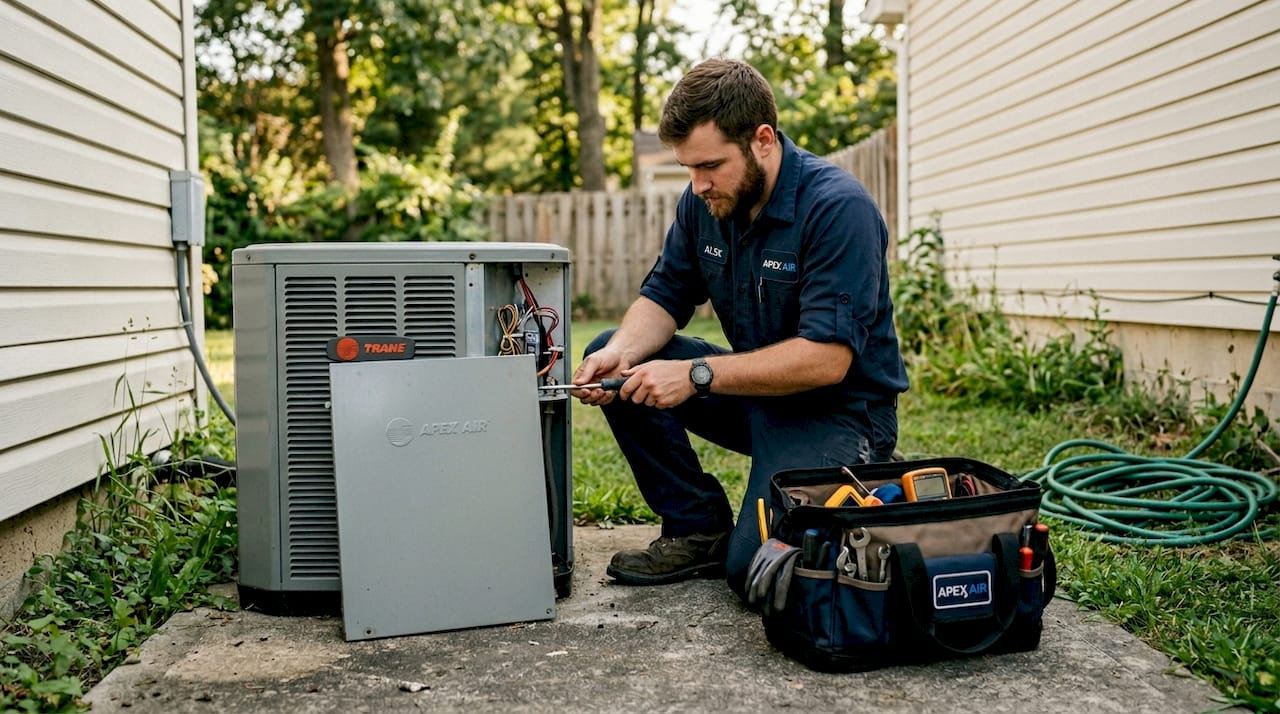
Understanding Florida AC energy use helps explain why this climate creates unique demands on HVAC equipment. The system runs almost year-round here, compared to seasonal use in northern states. That constant operation accelerates wear on every component, from the blower motor to the refrigerant lines.
The three most critical maintenance points for any AC system are:
- Airflow and filtration: Restricted airflow forces the system to work harder, reducing efficiency and increasing wear.
- Coil cleaning: Both the evaporator coil (inside) and condenser coil (outside) collect dirt over time, reducing their ability to transfer heat.
- Drain line and humidity management: A clogged drain line causes water backup, potential mold growth, and higher indoor humidity.
When these three areas are neglected, the effects snowball fast. The system strains to maintain temperature, the thermostat never fully satisfies, and your electricity bill creeps upward without any obvious reason.
| Maintenance area | What happens if neglected | Effect on your home |
|---|---|---|
| Air filter | Clogged, restricted airflow | Higher bills, weak cooling |
| Evaporator coil | Dirt buildup reduces heat transfer | Warm air, increased runtime |
| Drain line | Blockage causes water overflow | Mold risk, humidity spikes |
| Condenser coil | Debris reduces outdoor heat release | System overheats, early failure |
Dirty, clogged filters reduce airflow and efficiency, and the Department of Energy recommends regular inspection and cleaning as a baseline practice for every household. In Florida, that baseline isn’t enough. The heat, humidity, and near-constant runtime mean you need to stay ahead of the maintenance curve.
“Reduced airflow from a dirty filter forces your system to run longer cycles, raising energy use and accelerating wear on components that are already working overtime in Florida’s heat.”
Top benefits of regular AC service
Now that you know the basics, let’s break down how regular AC service translates into savings, comfort, and peace of mind.
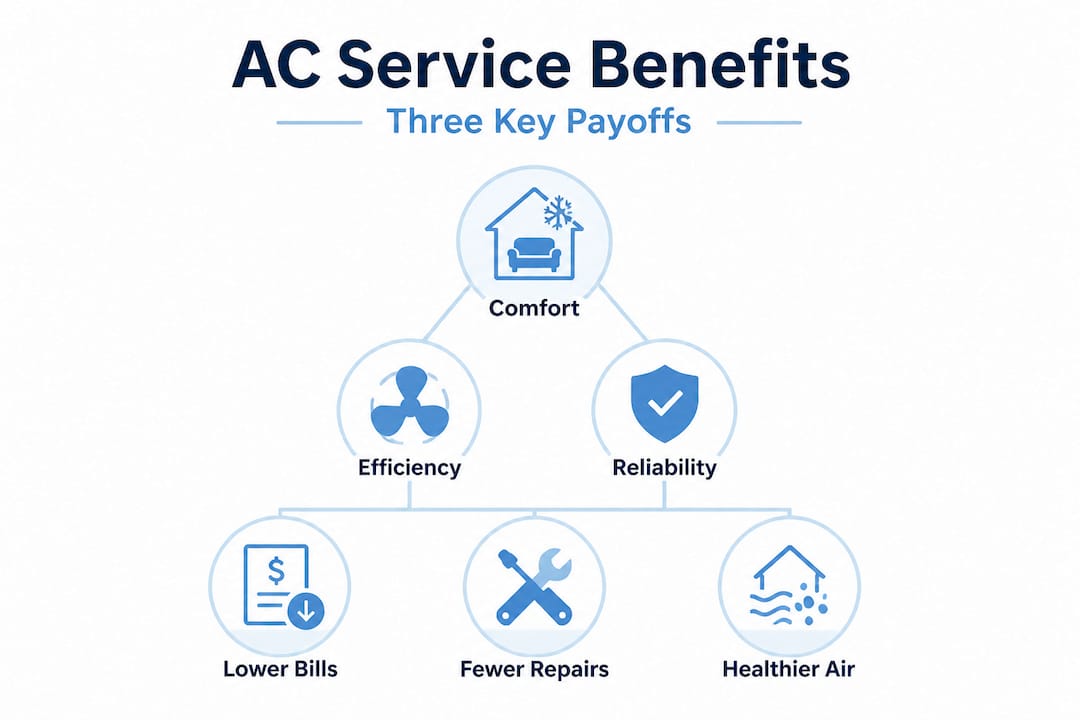
The benefits of AC maintenance go well beyond a clean filter. Three major payoffs stand out for Florida homeowners.
Benefit 1: Lower energy bills through maximum efficiency
A well-maintained system moves through its cooling cycles efficiently. It reaches your target temperature faster and shuts off sooner, reducing total runtime and energy consumption. A neglected system, by contrast, runs longer cycles and still struggles to cool effectively. That struggle shows up directly on your power bill.
Benefit 2: Better comfort and fewer health risks
Humidity is the hidden enemy of comfort in Southwest Florida. When your drain line is clear and your coils are clean, the system pulls moisture from the air effectively. When those components are dirty or blocked, humidity stays high indoors. High indoor humidity doesn’t just feel uncomfortable. It promotes mold growth, worsens allergy symptoms, and can create conditions that affect respiratory health.
Benefit 3: Longer system life and fewer emergency repairs
AC systems are significant investments. Replacing a full residential system costs several thousand dollars. Proper maintenance supports energy savings, humidity control, and extends equipment life well beyond what a neglected system can achieve. The math is simple: a small annual service fee beats a major repair bill or full replacement.
Here’s a quick comparison to illustrate the real-world impact:
| Scenario | Average monthly bill | System lifespan | Emergency repair risk |
|---|---|---|---|
| Regular annual service | Lower by 15 to 20% | 15 to 20 years | Low |
| No scheduled maintenance | Baseline or higher | 8 to 12 years | Moderate to high |
| Skipping 3+ years of service | Significantly higher | Under 10 years | Very high |
Follow these steps to build a reliable maintenance routine:
- Change or clean the air filter every 30 to 60 days, depending on household conditions.
- Schedule professional service at least once a year, ideally before peak cooling season.
- Check the condensate drain line monthly during summer for any signs of blockage or overflow.
- Clear debris around the outdoor condenser unit after storms or heavy wind.
- Monitor your energy bill for unexpected spikes, which often signal a maintenance issue.
The top benefits for SWFL homes include protection against the specific challenges of high heat and humidity that homeowners in Naples, Cape Coral, and Fort Myers face every single year. More detailed guidance is available through DOE air conditioner maintenance tips if you want to go deeper on best practices.
Pro Tip: Schedule your professional AC checkup in April or early May, before summer heat peaks. Technicians are more available, you avoid emergency pricing, and your system is ready to handle the hottest months without missing a beat.
What happens during a professional AC service visit?
Understanding the “why” makes it easier to see the value, but what does a professional actually do during an AC service appointment?
A thorough service visit isn’t just a quick look at the filter. It’s a systematic check of every component that affects performance, efficiency, and reliability. Regular inspection and cleaning of the evaporator coil and other internal components is critical to maintaining system health. Here’s what a complete service visit typically covers:
- Filter inspection and replacement: The technician checks the existing filter and replaces it if needed. This is the fastest way to restore airflow.
- Evaporator coil cleaning: The indoor coil is cleaned to remove dust and grime that reduce heat absorption.
- Condenser coil cleaning: The outdoor unit is checked and cleaned to ensure proper heat release.
- Condensate drain clearing: The drain line is flushed to prevent blockages and water damage.
- Refrigerant level check: Low refrigerant reduces cooling capacity and increases energy use. A technician measures and adjusts levels as needed.
- Blower and motor inspection: Worn belts, dirty blades, or failing motors are identified before they cause a breakdown.
- Thermostat calibration: Ensures your system responds accurately to temperature settings.
- Electrical connections check: Loose or corroded connections are a fire risk and can cause system failure.
Use this AC maintenance checklist to track what was covered during each visit. Keeping a service record lets you spot patterns, like which components need attention most often in your home.
When your technician arrives, ask these questions before and after the visit:
- What is the current airflow reading, and is it within the recommended range?
- Are the coils clean enough to perform efficiently, or do they need additional treatment?
- Is the drain line clear, and is there any sign of mold growth near the air handler?
Good answers to those three questions tell you a lot about the health of your system. Pair that with quality professional HVAC maintenance from a qualified technician, and you have a system that rarely surprises you with problems.
Pro Tip: Keep a photo of your service report on your phone after each visit. If an issue comes up between appointments, you’ll have a clear record of what was last inspected and when, which helps any technician diagnose the problem faster.
Warning signs: When is AC service overdue?
Knowing what a service visit covers helps, but spotting issues before they become costly makes even more difference for your wallet and comfort.
Your AC system usually doesn’t fail without warning. It gives you signals. Most homeowners miss them or ignore them, hoping things will improve on their own. They rarely do.
Watch for these red flags:
- Lukewarm or warm air from the vents even when the thermostat is set low
- Weak airflow that barely reaches the far corners of a room
- Rising indoor humidity that makes a room feel sticky even with the AC running
- Unexplained increase in your electricity bill with no change in usage habits
- Unusual sounds like grinding, rattling, or squealing from the air handler or outdoor unit
- Water pooling near the indoor unit which signals a blocked condensate drain
- Musty or moldy smell from the vents, often caused by bacteria or mold on the evaporator coil
“Dirty filters and lack of maintenance restrict airflow and cause breakdowns,” according to the DOE’s guidance on AC maintenance. In Southwest Florida’s climate, those breakdowns tend to happen during the hottest days when your system is under maximum stress.
These warning signs of HVAC problems are your system asking for help. Waiting until full failure means emergency service rates, possible refrigerant loss, and potential water damage from drain overflow. Knowing when AC needs repair versus when it just needs a tune-up can save you hundreds of dollars in the short term and thousands over the life of the system.
Routine service catches small problems while they’re still small. A technician who finds a mildly clogged drain line during an annual visit costs you almost nothing to fix. That same blockage, left unattended through a humid summer, can flood an air handler, damage insulation, and trigger a mold remediation project.
The common myths about AC service—and what actually works
We’ve covered facts and checklists, but a look at common owner mistakes reveals what truly separates those who enjoy trouble-free AC from those who don’t.
The biggest myth we encounter in Southwest Florida is what we call the “run it until it breaks” strategy. Homeowners assume that if the AC is still producing cold air, it must be fine. But efficiency doesn’t fail all at once. It erodes slowly. Your system can be operating at 70% efficiency for months before you notice anything wrong, costing you money every single day while appearing to work normally.
The second myth is that annual service is a luxury, not a necessity. In a northern state where an AC runs three months a year, you might get away with less frequent attention. In Naples or Fort Myers, where the system runs eight to ten months annually, skipping service is genuinely risky. The math changes completely when runtime doubles.
The third myth is that a filter change is all the maintenance a Florida system needs. Filters matter, but they’re just the beginning. Airflow, coil cleaning, and humidity management are the three pillars of reliable HVAC performance, and none of them are fully addressed by swapping a filter.
From our experience serving homes across Southwest Florida, a $100 to $150 annual service visit routinely prevents repairs that run $800 to $1,500 or more. We’ve seen condensate drain clogs that were weeks away from causing water damage to flooring and drywall. We’ve found refrigerant leaks that were quietly doubling a family’s electricity bill. These problems are invisible until they’re expensive.
The practical approach that helps homeowners maximize comfort is straightforward: prioritize the three things every tech should address on every visit, namely airflow, coil condition, and drain status. Ask for them by name. If a service visit doesn’t include those three items, it isn’t complete.
Schedule maintenance at two key points in the year if possible: once before the summer cooling season and once before any winter heating use. Florida doesn’t have harsh winters, but temperature swings in January and February still put demand on your system.
Take the next step: Protect your comfort with expert AC service
Armed with a clearer picture of how AC service works and what it’s worth, the smartest move is acting before a problem forces your hand.
Ultra Air Heating and Cooling serves homeowners and business owners across Naples, Cape Coral, and Fort Myers with professional maintenance, repair, and installation. Whether you need a full system inspection or just want to build a smarter maintenance schedule, we make it easy to protect your investment without the guesswork. Business owners can explore commercial HVAC best practices for larger systems, and homeowners interested in maximizing efficiency from day one can learn about HVAC commissioning for comfort. Call us today or schedule online and let our team take the pressure off your system and your energy bill.
Frequently asked questions
How often should I schedule AC service in Florida?
In Florida, you should schedule AC service at least once a year, preferably before the peak cooling season begins for optimal efficiency. Many Southwest Florida homeowners benefit from twice-yearly visits given the extended runtime of their systems.
Does regular AC service really lower utility bills?
Yes. Regular AC maintenance improves system efficiency and can meaningfully reduce energy costs, and in Florida HVAC accounts for over 40% of your total utility bill, so even a 15% efficiency improvement makes a noticeable difference each month.
What parts of my AC need the most attention during service?
The air filter, evaporator and condenser coils, and the condensate drainage system are the most critical components. Filter and coil cleaning consistently rank as the top priorities for maintaining cooling performance and efficiency.
Can I do AC maintenance myself or do I need a professional?
You can handle filter changes and clearing debris around the outdoor unit on your own, but a licensed technician should inspect and clean internal components. The DOE recommends homeowners handle basic tasks while professionals manage coil cleaning, refrigerant checks, and electrical inspections.