
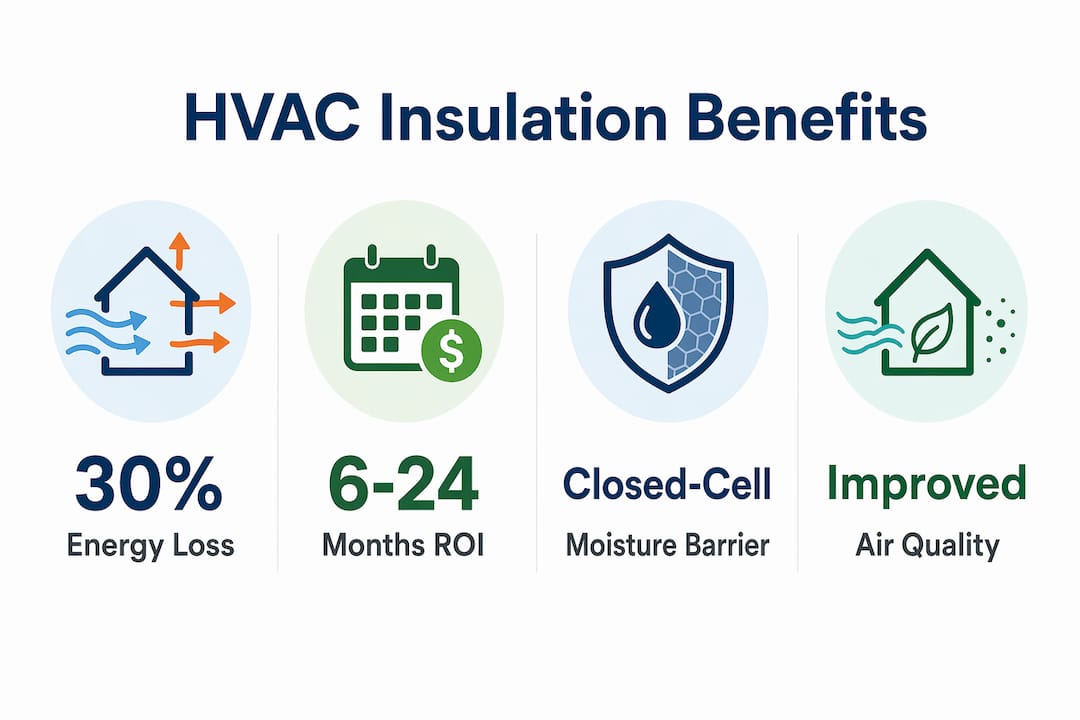
HVAC insulation is the thermal and moisture barrier that prevents conditioned air from escaping your duct system before it reaches living spaces, and for Southwest Florida homeowners, it is one of the highest-return upgrades available. In Naples, Cape Coral, and Fort Myers, outdoor temperatures regularly exceed 90°F for months at a stretch, and humidity levels routinely top 80%. That combination forces air conditioning systems to work harder, longer, and at greater expense. The reason to invest in HVAC insulation comes down to one fact: poor duct insulation causes energy losses up to 30%, while comprehensive sealing and insulation can cut heating and cooling costs by roughly 15%. That is money leaving your home every month through uninsulated attic ductwork.
Why invest in HVAC insulation for energy loss reduction
Heat moves relentlessly from warm areas to cool ones. In a Southwest Florida attic, that means radiant heat from a 140°F roof surface pushes directly into uninsulated ducts carrying 55°F conditioned air. The result is thermal bleed: your system produces cold air, but it arrives at the register warm and depleted.
Thermal resistance, measured in R-values, is the standard metric for how well insulation slows this heat transfer. Fiberglass duct wrap typically delivers R-4 to R-12 resistance, while spray foam and radiant barrier systems push performance further. Higher R-values mean less heat bleeds into conditioned air before it reaches your rooms.
Air sealing works alongside insulation to close a separate problem: physical gaps where conditioned air escapes entirely. Leaky duct connections, unsealed penetrations, and gaps around air handlers can lose significant air volume before insulation even matters. Sealing before insulating is the correct sequence. Doing it in reverse traps moisture inside the building envelope and hides leaks that will continue costing you money.
The practical effect on your HVAC system is significant. When ducts lose less conditioned air to heat gain and physical leaks, the system reaches setpoint faster and shuts off sooner. Shorter run cycles mean less wear on compressors, fans, and capacitors. Proper insulation reduces HVAC repair and maintenance costs, extends equipment life, and reduces the frequency of emergency service calls.
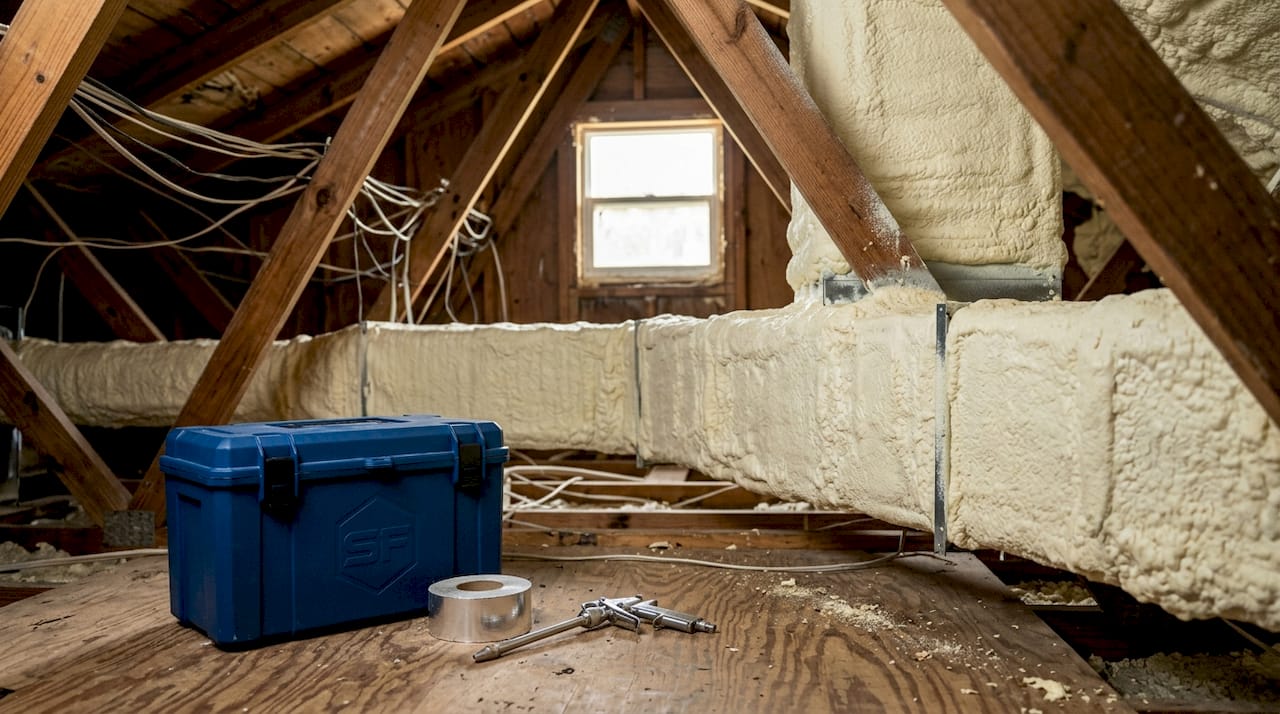
Pro Tip: Have a qualified technician perform a duct blaster test before scheduling insulation work. This pressure test quantifies exactly how much air your duct system is losing, giving you a baseline to measure savings against after the upgrade.
What are the best HVAC insulation materials for Southwest Florida homes?
Material selection matters more in Southwest Florida than in most U.S. climates. High humidity creates mold risk that standard insulation products do not address on their own. South Florida homeowners must prioritize moisture control alongside thermal performance to prevent mold growth inside duct systems and wall cavities.
The three materials most relevant to Southwest Florida HVAC applications are fiberglass duct wrap, spray foam insulation, and radiant barrier systems. Each serves a different function and performs differently under coastal humidity conditions.
| Material | R-value range | Moisture resistance | Best use case | Relative cost |
|---|---|---|---|---|
| Fiberglass duct wrap | R-4 to R-12 | Low | Interior ducts in conditioned spaces | Low |
| Closed-cell spray foam | R-6 to R-7 per inch | High | Attic ducts, crawl spaces, wall cavities | High |
| Radiant barrier | Reduces radiant gain up to 97% | Moderate | Hot attic duct runs, roof decking | Medium |
Fiberglass wrap is the most common and least expensive option. It performs adequately in conditioned spaces but absorbs moisture in humid attic environments, which degrades its R-value over time and creates conditions favorable to mold.
Closed-cell spray foam is the preferred choice for Southwest Florida attic applications. Its closed-cell structure physically blocks moisture vapor, which is why spray foam insulation is favored for preventing mold in coastal environments. It also bonds to duct surfaces, eliminating the air gaps that allow fiberglass wrap to shift and lose coverage over time.
Radiant barriers address a problem unique to hot climates: radiant heat from roof surfaces. Radiant barriers reduce radiant heat gain by up to 97%, making them highly effective for attic duct runs exposed to direct roof radiation. Florida Solar Energy Center research shows radiant barrier duct insulation reduces cooling energy consumption by 10 to 15% compared to standard fiberglass wrap alone. That is a meaningful reduction in a climate where air conditioning runs nine months of the year.
For most Naples and Fort Myers homes, the highest-performing approach combines closed-cell spray foam on attic ductwork with a radiant barrier at the roof deck. This addresses both conductive and radiant heat transfer while blocking moisture.
How does proper HVAC insulation affect long-term costs and ROI?
The financial case for HVAC insulation upgrades is straightforward. Insulation projects typically achieve ROI in 6 to 24 months, which is faster than most homeowners expect and significantly faster than replacing HVAC equipment. Insulation upgrades often yield quicker payback than equipment replacement while also reducing future capacity needs. A properly insulated home may need a smaller replacement system when the time comes.
Here is how the financial benefits stack up for a typical Southwest Florida home:
- Monthly utility savings. Air sealing and insulation combined cut heating and cooling costs by an average of 15%. On a $300 monthly electric bill, that is $45 per month or $540 per year returned to your pocket.
- Reduced maintenance frequency. Shorter HVAC run cycles mean fewer service calls, less refrigerant consumption, and longer intervals between capacitor and contactor replacements. These savings compound over the life of the equipment.
- Extended equipment lifespan. A system that runs fewer hours per day lasts longer. Delaying a $7,000 to $12,000 system replacement by even two years represents substantial financial value.
- Utility rebates and incentives. Florida Power and Light and TECO Energy both offer rebates for qualifying insulation and duct sealing projects. Federal tax credits under the Inflation Reduction Act also apply to certain insulation upgrades, reducing your net project cost.
“Insulation should be part of a documented energy management strategy, with verification of energy loss before and after installation to confirm actual performance gains.” — Insulation Outlook Magazine, 2026
The documentation point matters practically. Before authorizing any insulation project, request a pre-installation energy audit and a post-installation blower door or duct blaster test. This gives you proof of performance, not just a contractor’s estimate. You can track ongoing system health with tools like the HVAC monitoring practices Ultraairswfl recommends for Cape Coral and Naples homeowners.
What are the regional considerations for HVAC insulation in Southwest Florida?
Southwest Florida presents specific challenges that generic insulation guides do not address. Collier and Lee counties sit in ASHRAE Climate Zone 2A, classified as hot and humid. This classification drives specific code requirements and best practices that differ from what works in Atlanta or Phoenix.
Key regional factors to address before and during any insulation project:
- Seal first, insulate second. Insulating before sealing air leaks traps moisture inside wall cavities and duct systems, creating mold conditions that are expensive to remediate. This sequence is non-negotiable in humid climates. Learn more about preventing mold in HVAC ducts before scheduling insulation work.
- Vapor barriers matter. In Zone 2A, vapor retarders belong on the warm side of insulation, which is the exterior side in summer. Placing them incorrectly traps condensation inside the assembly.
- Insulation thickness has an economic limit. Adding insulation below the economic thickness wastes money. The optimal thickness depends on your current energy costs, the operating temperature differential, and how many hours per day your system runs. A qualified energy auditor calculates this for your specific home.
- Attic access points and knee walls need attention. In Cape Coral and Fort Myers slab homes, attic ductwork is the primary heat gain pathway. Knee walls in two-story homes are a secondary source that many contractors overlook.
- Maintenance sustains performance. Spray foam does not degrade, but fiberglass wrap can shift, compress, or absorb moisture over time. Annual HVAC maintenance should include a visual inspection of accessible duct insulation for gaps, compression, or moisture damage.
Pro Tip: In coastal Southwest Florida homes within a mile of salt water, choose closed-cell spray foam over open-cell foam for duct applications. Salt air accelerates moisture infiltration into open-cell foam, reducing its effective R-value and lifespan.
How to plan and execute HVAC insulation upgrades effectively
Planning an insulation upgrade is a process, not a single decision. For property managers overseeing multiple units in Naples or Bonita Springs, a structured approach prevents cost overruns and ensures consistent results across properties.
Follow these steps to execute an insulation upgrade that delivers measurable results:
- Conduct a baseline energy audit. Commission a certified energy auditor to perform a blower door test and duct leakage test. This identifies where energy is being lost and quantifies the opportunity before any money is spent on materials or labor.
- Evaluate existing ductwork condition. Insulating deteriorated or disconnected ducts is wasteful. Repair or replace damaged duct sections before adding insulation. A complete HVAC retrofit assessment covers both ductwork condition and insulation needs together.
- Select a contractor with Florida-specific experience. Ask specifically about their experience with hot-humid climate insulation, their familiarity with ASHRAE Zone 2A requirements, and whether they perform post-installation testing. Contractors who skip post-installation verification are not accountable for actual performance.
- Coordinate insulation with system tuning. After insulation is installed, your HVAC technician should rebalance airflow across all zones. Reduced duct losses change the pressure dynamics of the system, and registers may need adjustment to distribute air correctly.
- Document everything. Photograph duct conditions before and after, retain test reports, and keep records of materials and R-values installed. This documentation supports warranty claims, insurance assessments, and future sale disclosures. For multi-zone luxury homes in Collier County, documentation also supports HVAC zoning optimization decisions down the road.
Key takeaways
Investing in HVAC insulation in Southwest Florida delivers measurable energy savings, faster ROI than equipment replacement, and protection against the moisture and heat conditions that shorten system lifespans in this climate.
| Point | Details |
|---|---|
| Energy loss is significant | Poor duct insulation causes up to 30% energy loss; sealing and insulating cuts costs by 15%. |
| Seal before you insulate | Air sealing must precede insulation to prevent trapped moisture and hidden leaks in humid climates. |
| Material choice is climate-specific | Closed-cell spray foam and radiant barriers outperform fiberglass wrap in Southwest Florida attics. |
| ROI is fast | Most insulation projects pay back in 6 to 24 months, faster than HVAC equipment replacement. |
| Documentation drives accountability | Pre- and post-installation testing confirms actual savings and supports future property decisions. |
What I’ve learned from Southwest Florida insulation projects
The most common mistake I see homeowners make is treating insulation as a standalone product purchase rather than a sequenced process. They call a contractor, get fiberglass wrap installed over existing ductwork, and then wonder why their electric bills barely moved. The reason is almost always the same: nobody sealed the duct connections first. Warm, humid attic air is still infiltrating the system through gaps that are now hidden under a layer of insulation.
The second pattern I notice is underestimating how much the radiant heat load in a Southwest Florida attic changes the math on material selection. A homeowner in Ohio can get excellent results from standard fiberglass wrap. A homeowner in Naples with ductwork running through a 140°F attic needs a fundamentally different solution. Spray foam and radiant barriers are not premium upgrades here. They are the baseline for a system that will actually perform.
The financial reality is also more compelling than most people realize. Insulation upgrades consistently outperform equipment replacement in terms of payback speed. I have seen homes where a $2,500 duct sealing and spray foam project cut monthly electric bills by $80 to $100. That is a 25 to 30 month payback on a product that lasts 20 years or more. No new air handler delivers that math.
My honest recommendation: start with a professional energy audit, not a contractor quote. The audit tells you where the money is going. The contractor quote tells you how to stop it. Do them in that order.
— albert
Upgrade your home’s efficiency with Ultraairswfl
If you are ready to stop paying for conditioned air that never reaches your living spaces, Ultraairswfl serves homeowners and property managers across Naples, Cape Coral, and Fort Myers with professional HVAC insulation assessments, duct sealing, and system upgrades built for Southwest Florida’s climate.
The team at Ultraairswfl understands the specific demands of hot-humid Zone 2A conditions and uses materials and sequencing that deliver verified results. Whether you are managing a single-family home in Bonita Springs or a multi-unit property in Collier County, explore HVAC systems optimized for Florida homes or review indoor air quality solutions that work alongside insulation upgrades to improve comfort year-round. Contact Ultraairswfl to schedule your baseline energy assessment and find out exactly what your home is losing.
FAQ
Why invest in HVAC insulation if my system is new?
A new HVAC system installed in poorly insulated ducts still loses up to 30% of conditioned air before it reaches your rooms. Insulation protects your equipment investment by reducing run time and wear from day one.
How long does HVAC insulation take to pay for itself?
Most residential insulation projects achieve full ROI in 6 to 24 months through reduced utility bills and lower maintenance costs. Southwest Florida homes with high cooling loads often reach payback on the shorter end of that range.
What insulation material works best in Southwest Florida?
Closed-cell spray foam is the top choice for attic ductwork in Southwest Florida because it blocks moisture vapor, resists mold, and maintains its R-value in high-humidity conditions. Radiant barriers add further benefit by reducing radiant heat gain from hot roof surfaces.
Does HVAC insulation help with indoor air quality?
Yes. Properly sealed and insulated duct systems prevent humid outdoor air and attic contaminants from entering the air supply. This reduces dust, allergens, and mold spores circulating through your home.
Should I seal ducts before adding insulation?
Sealing air leaks before adding insulation is the correct sequence. Insulating over unsealed gaps traps moisture inside the assembly and hides leaks that continue degrading performance and building health.