
Most homeowners in Southwest Florida believe fixing indoor comfort is as simple as adjusting the thermostat. Set it to 72°F and you’re done. But if that were true, why do so many people still feel sweaty, stuffy, or oddly chilly inside a home that’s technically at the “right” temperature? Understanding what is indoor comfort requires looking beyond a single number on a wall unit. True comfort is the result of several interacting environmental and personal factors, and in a humid subtropical climate like ours, getting this wrong costs you money, health, and daily satisfaction.
Table of Contents
- Understanding indoor comfort: beyond just temperature
- Key environmental and personal factors that shape indoor comfort
- How HVAC systems influence indoor comfort and air quality
- Balancing occupant comfort and energy efficiency in SW Florida homes and businesses
- Improving indoor comfort in Southwest Florida: practical tips and HVAC solutions
- Rethinking indoor comfort: why temperature isn’t the whole story
- Achieve ideal indoor comfort with Ultra Air Heating and Cooling
- Frequently asked questions
Key Takeaways
| Point | Details |
|---|---|
| Indoor comfort defined | True indoor comfort involves six key factors including temperature, humidity, air movement, radiant heat, clothing, and activity level. |
| HVAC’s role | Effective HVAC systems control temperature, humidity, ventilation, and airflow to optimize comfort and health indoors. |
| Humidity importance | Controlling humidity is critical in Southwest Florida to prevent mold and improve perceived comfort. |
| Energy-comfort balance | Balancing personal comfort controls with energy-efficient HVAC design maximizes satisfaction and reduces costs. |
| Practical upgrades | Home energy audits, weatherizing, and proper HVAC equipment tailored to climate significantly improve indoor comfort. |
Understanding indoor comfort: beyond just temperature
The phrase “indoor comfort” gets used casually, but the technical indoor comfort definition is more precise. Thermal comfort is the condition of satisfaction with the indoor thermal environment, shaped by multiple environmental and personal factors together, not just the thermostat setting. That distinction matters enormously in practice.
Most homeowners are conditioned to think of comfort as a temperature number. When they feel too hot, they lower the thermostat. When they feel cold, they raise it. But this oversimplification is exactly why so many HVAC complaints persist even after the system is technically functioning. You can have a perfectly calibrated air conditioner and still feel miserable if the other variables are out of balance.
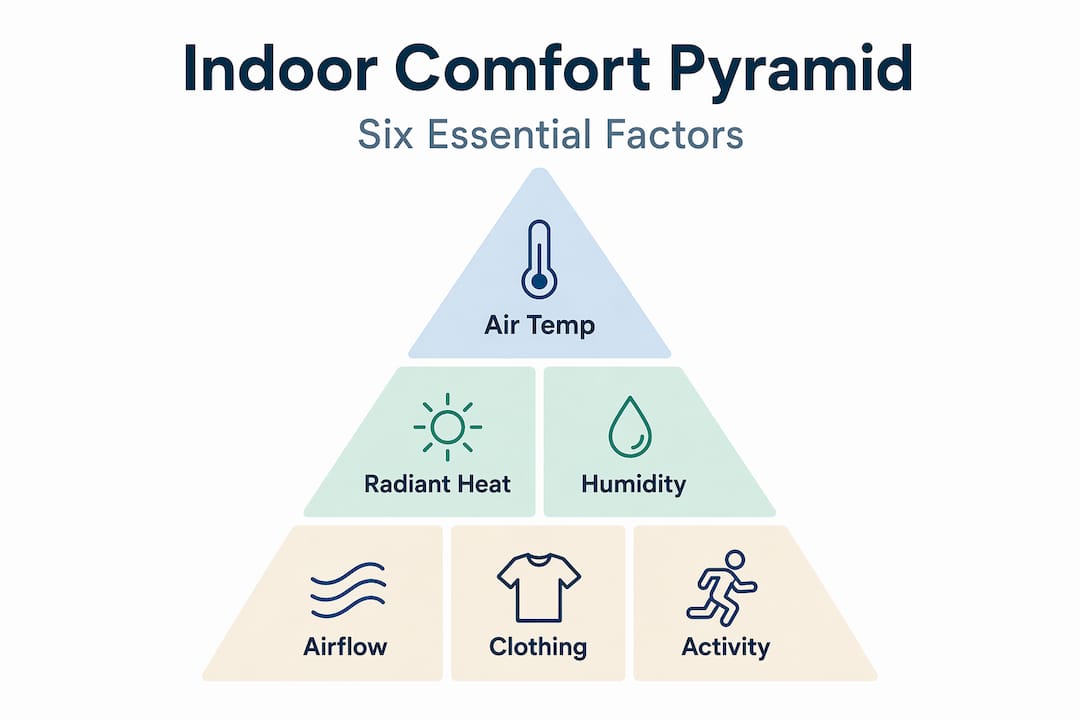
The six primary factors that determine whether a person feels comfortable indoors are:
- Air temperature: The dry bulb temperature your thermostat reads, the most commonly tracked factor
- Mean radiant temperature: Heat radiating from surrounding surfaces like walls, windows, and floors
- Air movement: The speed of air flowing through a space, which affects how the body loses heat
- Relative humidity: The moisture content of the air, especially critical in Florida’s climate
- Clothing insulation: The thermal resistance of what a person is wearing
- Metabolic rate: How much heat a person generates based on their activity level
Understanding HVAC basics helps connect these factors to the systems that control them. When homeowners grasp that all six variables must be managed together, they make smarter decisions about their homes and businesses.
Key environmental and personal factors that shape indoor comfort
With the factors defined, it’s worth understanding which ones hit hardest in Southwest Florida and why they interact the way they do.
Thermal comfort is driven by all six variables simultaneously, and neglecting any one of them produces a gap between what your thermostat says and how your body actually feels. Here’s what that looks like in real-world terms:
- Air temperature is your starting point, but it’s the least complete indicator of how comfortable a room actually is. You can feel cold in a 74°F room if the walls are radiating cool air from large glass windows.
- Mean radiant temperature is the sneaky one. In Florida, west-facing walls and poorly insulated roof surfaces absorb heat all day. By 3 p.m., those surfaces radiate that heat into your living space, raising the perceived temperature well above what the thermostat shows. This is why a room can feel 10 degrees hotter than the display reads.
- Air movement is underused in comfort design. A light breeze across your skin, even at 78°F, feels cooler because it accelerates heat loss from your body. Ceiling fans, well-placed diffusers, and good duct design all contribute here.
- Relative humidity is the defining comfort challenge in Southwest Florida. When humidity climbs above 60%, sweat doesn’t evaporate efficiently, making you feel warmer and stickier than the air temperature suggests. Managing humidity levels is not optional here; it’s foundational.
- Clothing insulation plays a smaller role indoors, but it’s worth noting that office environments with stricter dress codes need slightly cooler air temperatures to compensate for heavier clothing.
- Metabolic rate explains why a home gym needs more aggressive cooling than a bedroom. A resting adult generates about 70 watts of body heat. Someone doing moderate exercise generates over 300 watts. Same room, very different comfort needs.
How HVAC systems influence indoor comfort and air quality
Your HVAC system is the primary tool for managing most of these six factors. A well-designed system doesn’t just cool the air. It controls temperature, removes moisture, moves air through the space, and filters out particles that affect health and perceived air quality.
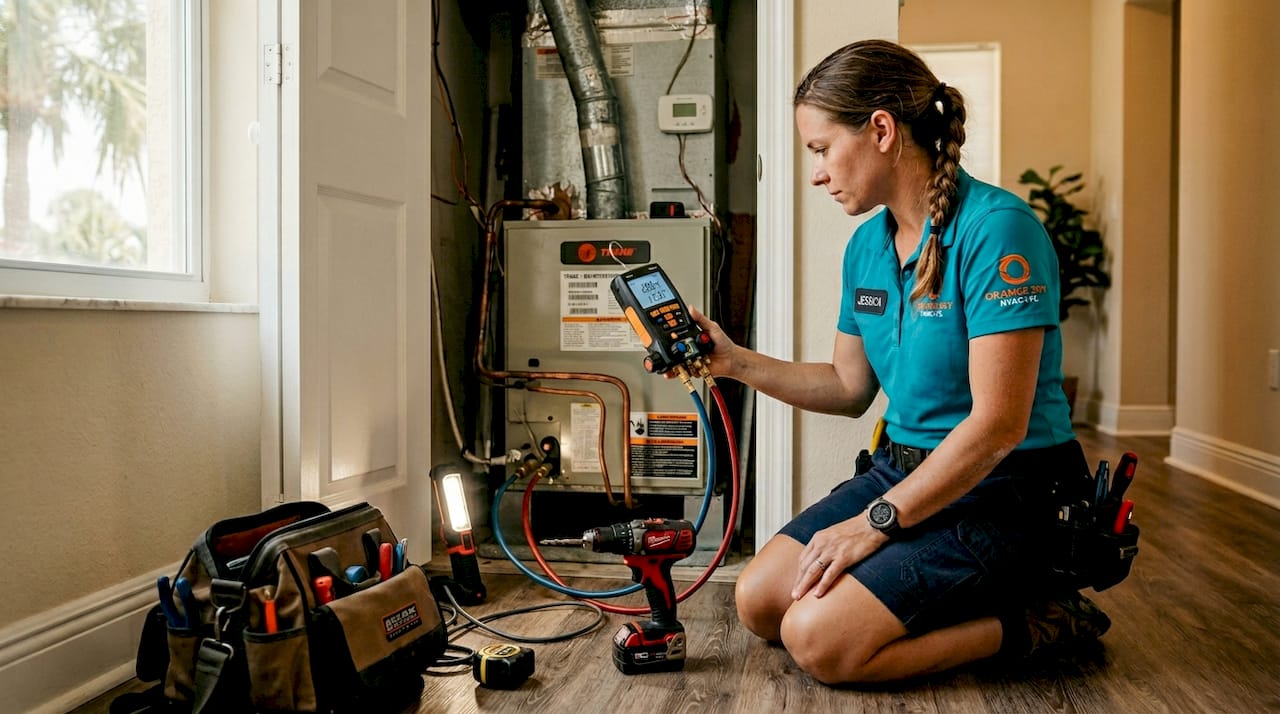
Indoor comfort involves both thermal conditions and air quality, and HVAC systems influence comfort through temperature, humidity, air speed, and filtration. In Southwest Florida, the humidity and air quality components are especially critical because the climate creates persistent latent load challenges. Latent load refers to the moisture your system must remove from the air, not just the heat it must cool.
Here’s what a properly functioning HVAC system manages in your home:
- Temperature control: Maintaining setpoint through efficient cycling and proper equipment sizing
- Dehumidification: Removing moisture during operation to keep relative humidity between 40% and 60%
- Air distribution: Moving conditioned air evenly through the space to eliminate hot or stagnant dead zones
- Ventilation: Bringing in controlled amounts of fresh outdoor air to prevent stale, stuffy indoor air buildup
- Filtration: Capturing dust, allergens, and particulates that affect both health and indoor air quality impact
Pro Tip: If your home feels humid even when the AC is running, your system may be oversized. An oversized unit cools quickly but doesn’t run long enough to remove moisture effectively. Short cycling is a real comfort problem, not just an efficiency one.
Improving indoor air quality goes hand in hand with thermal comfort. A space can feel uncomfortable purely because the air smells stale or triggers allergies, even if the temperature and humidity are technically correct.
Balancing occupant comfort and energy efficiency in SW Florida homes and businesses
One of the most persistent myths in HVAC design is that maximum comfort always means maximum energy use. That’s not accurate. The relationship between comfort and efficiency depends heavily on how the system is designed and controlled.
Optimizing indoor comfort requires balancing occupant satisfaction with energy consumption and providing individual control, because people genuinely vary in their comfort preferences. A home office used by one person doesn’t need the same conditioning as a guest bedroom used once a week.
Here’s a comparison of the most common HVAC approaches and how they stack up:
| Approach | Comfort level | Energy efficiency | Best for |
|---|---|---|---|
| Conventional single-zone | Moderate | Lower | Small, open-plan spaces |
| Zoned HVAC | High | Moderate to high | Multi-room homes and offices |
| DOAS with local units | Very high | High | Commercial and large residential |
| Portable/window units | Variable | Low to moderate | Supplemental or temporary use |
HVAC zoning allows different areas of a home or business to be conditioned independently. A Southwest Florida home that runs the kitchen and living areas during the day and only the bedrooms at night can see meaningful energy savings while maintaining better comfort throughout.
A dedicated outdoor air system, or DOAS, is an advanced approach worth knowing about. Decoupling ventilation with a DOAS provides consistent fresh air independent of heating or cooling, which means individuals can adjust their personal temperature without reducing air quality for the rest of the space.
Pro Tip: In commercial settings like restaurants and retail spaces in Fort Myers and Cape Coral, a DOAS paired with mini-split units gives you precise zone control plus guaranteed fresh air, the two biggest complaints in most commercial HVAC setups.
Upgrading your HVAC system doesn’t have to mean replacing everything at once. Strategic retrofits that add zoning controls or a DOAS component to an existing system can deliver significant comfort improvements at a fraction of full replacement costs.
Improving indoor comfort in Southwest Florida: practical tips and HVAC solutions
Knowing how to achieve indoor comfort is the bridge between theory and your actual utility bill. Here are concrete steps that work in Florida’s specific climate:
- Schedule a home energy audit. A professional energy audit identifies where your home is losing conditioned air or gaining heat through gaps, weak insulation, or inefficient equipment. Weatherization and your HVAC system work together to keep homes comfortable and energy efficient, and audits reveal exactly where to start.
- Seal air leaks and add insulation. Attic insulation in Southwest Florida is particularly important because your roof deck absorbs intense solar radiation all day. Without adequate insulation, that heat transfers directly into your living space, overwhelming your AC.
- Shade west and south-facing windows. External shading, like properly installed overhangs or solar shades, cuts radiant heat gain before it ever enters the room. This reduces the load on your HVAC system and directly lowers the mean radiant temperature inside.
- Choose ENERGY STAR-rated equipment. In Florida’s hot, humid climate, HVAC equipment must handle high latent loads. Equipment with high SEER2 ratings and strong dehumidification performance is worth the investment. Look for units specifically tested for humid climates.
- Maintain your system on a schedule. Dirty filters restrict airflow and hurt humidity control. Clogged coils force your system to work harder and shorten its lifespan. Simple home energy efficiency habits like monthly filter checks make a measurable difference.
Pro Tip: Upgrade to a whole-home dehumidifier if your HVAC system can’t maintain humidity below 60% during Florida’s rainy season. Standalone dehumidifiers are a band-aid. A whole-home unit integrated with your HVAC addresses the root problem.
Rethinking indoor comfort: why temperature isn’t the whole story
Here’s the honest take after years of watching homeowners in Naples and Cape Coral chase thermostat settings that never quite solve the problem. Temperature is a symptom, not a solution.
People often feel too hot or cold even when thermostat settings are reasonable, because mean radiant temperature and air movement heavily influence how the body perceives its environment. A home with a metal roof and limited attic insulation will feel hot at 72°F in August because the ceiling is radiating heat downward. No amount of thermostat adjusting fixes a radiant heat problem.
The more important and frequently ignored reality in Southwest Florida is that most comfort failures in humid climates aren’t actually temperature problems. Comfort failures in humid subtropical climates typically appear as temperature issues but are actually humidity and latent load challenges requiring proper dehumidification and ventilation strategies. You lower the thermostat trying to feel less sweaty. The house gets colder but still feels damp. You lower it again. Your energy bill climbs, and the root cause, high relative humidity, is never addressed.
The other thing the HVAC industry doesn’t say loudly enough is that giving occupants some control over their environment improves satisfaction beyond what any single setpoint can achieve. People tolerate a wider range of temperatures when they have agency over airflow or can open a vent. It’s not just psychology. HVAC retrofits that include occupant controls consistently produce better comfort survey results than systems optimized purely for efficiency.
The best indoor climate control isn’t the one with the lowest operating cost or the most advanced technology. It’s the one that accounts for how real people live in real spaces with real humidity levels, and then matches the system design to that reality.
Achieve ideal indoor comfort with Ultra Air Heating and Cooling
Solving true indoor comfort in Southwest Florida requires more than swapping a thermostat. It takes equipment designed for high humidity, smart zoning that matches how you actually use your space, and a team that understands the specific demands of our local climate.
Ultra Air Heating and Cooling specializes in exactly that. Whether you’re exploring a full HVAC installation in Fort Myers, considering an HVAC retrofit to add zoning and better dehumidification, or looking for dedicated humidity management solutions for your home or business, we bring the local expertise to make it work. We serve Naples, Cape Coral, Fort Myers, and the surrounding communities with solutions tailored to Florida’s unique climate demands. Contact us today to schedule your consultation and start building the comfort your home and your family actually deserve.
Frequently asked questions
What factors besides temperature affect indoor comfort?
Indoor comfort depends on six primary variables: air temperature, radiant heat from surfaces, air movement, humidity, clothing insulation, and activity level, not just thermostat settings.
Why is humidity control important for indoor comfort in Southwest Florida?
Humidity affects perceived temperature and health; humidity must be controlled for occupant comfort and to prevent mold growth, making dehumidification a core HVAC function in Florida’s climate.
How can I balance energy use and comfort in my home?
Balancing comfort with energy use includes using HVAC zoning, personal comfort controls, and energy-efficient equipment sizing to condition only the spaces you use and reduce overall utility costs.
What is the role of radiant temperature in how a room feels?
Mean radiant temperature is heat emitted by surfaces like walls, ceilings, and windows; cold or sun-heated surfaces can make a room feel significantly warmer or cooler than the air temperature alone suggests.
How do dedicated outdoor air systems (DOAS) improve indoor comfort?
DOAS decouple ventilation from heating and cooling by delivering 100% outdoor air independently, which allows personalized temperature control in each zone without compromising fresh air delivery throughout the building.