
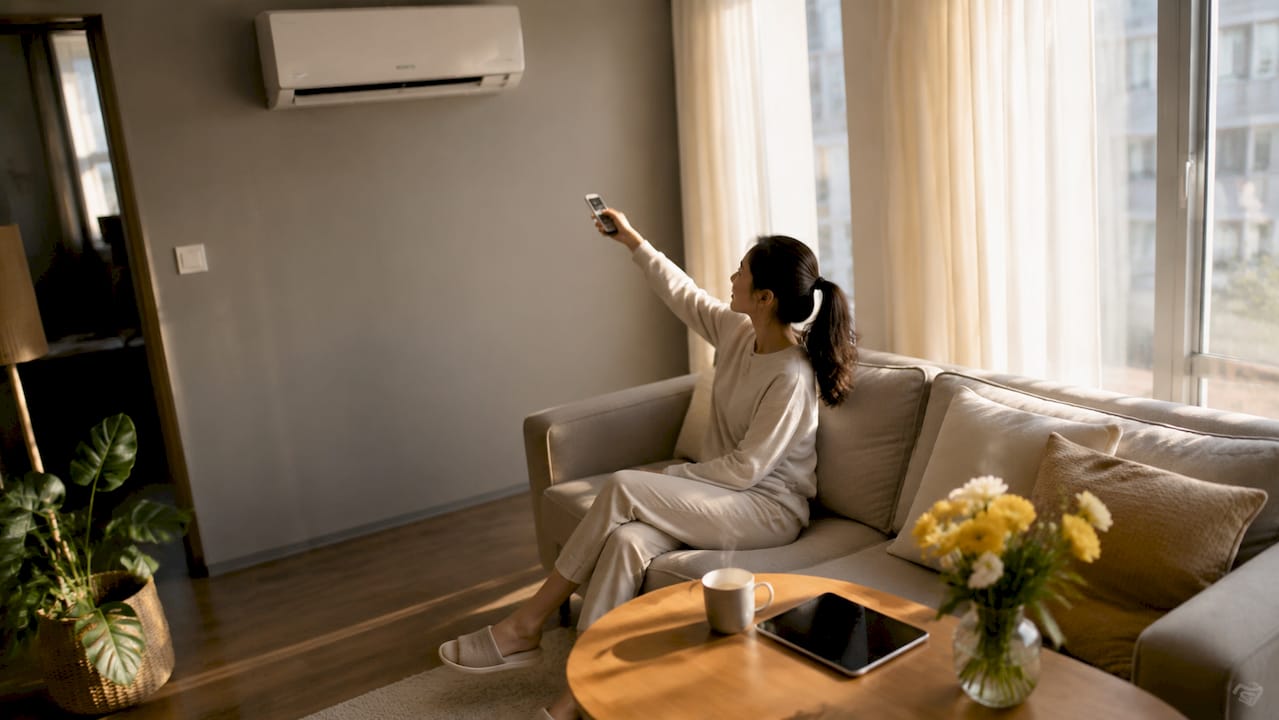
Ductless cooling is defined as a climate control system that cools specific rooms using indoor air handlers connected to an outdoor compressor through refrigerant lines, with no ductwork required. The industry term for this technology is the mini-split system, a name used by manufacturers like Mitsubishi Electric and Daikin. The U.S. Department of Energy recognizes ductless mini-splits as one of the most energy-efficient cooling options available for residential use. Indoor units come in wall-mounted and ceiling cassette styles, giving homeowners and tenants real flexibility in how they install and use the system. Most setups also provide heating, making them a year-round solution for homes in Southwest Florida and beyond.
How does ductless cooling work?
Ductless cooling transfers heat rather than generating cold air. The indoor unit pulls warm air from the room across refrigerant coils. Those coils absorb the heat, and the refrigerant carries it outside to the outdoor condenser, which releases it into the open air. The result is cooler, dehumidified air returned to the room.
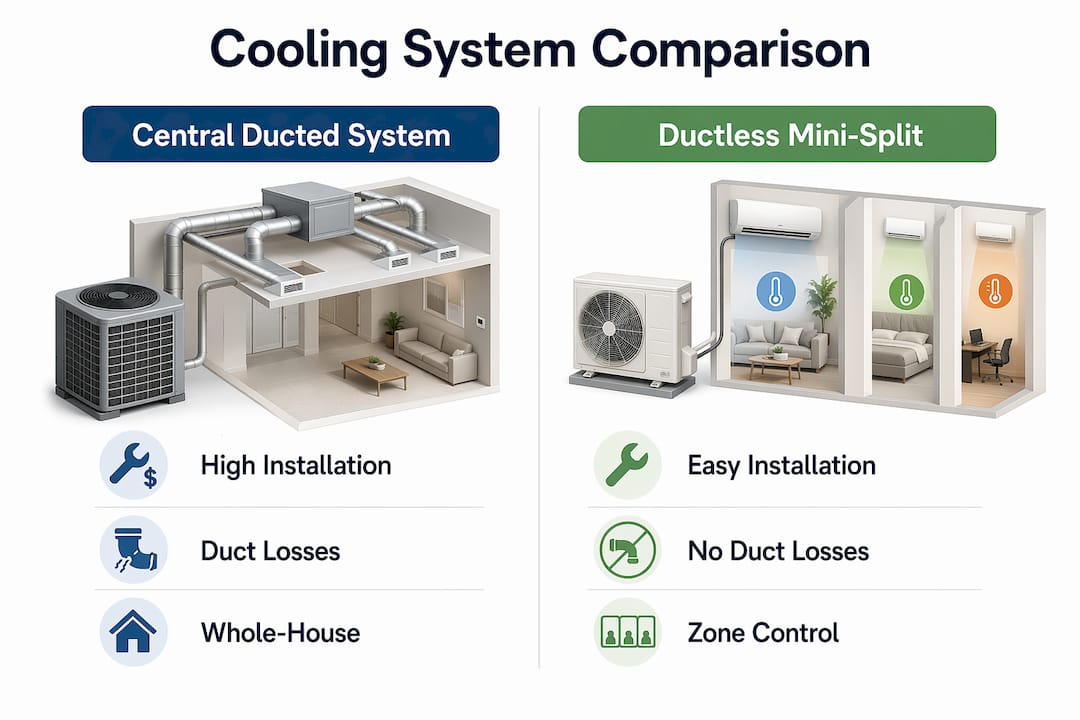
This process mirrors how a traditional central air conditioner works, but with one critical difference: there are no ducts. A central forced-air system pushes cooled air through a network of ducts running through walls, attics, and crawl spaces. Duct losses in central systems can account for over 30% of air conditioning energy consumption. A ductless system eliminates that loss entirely.
Installation requires only a small hole in the wall for the refrigerant line conduit. The outdoor unit can sit up to 50 feet from the indoor handler, which gives installers flexibility in placing the compressor on a side yard, rooftop, or balcony. That flexibility makes ductless systems popular for room additions, garage conversions, and older homes built before central air became standard.
Pro Tip: Understanding the refrigerant and heat transfer cycle is key to optimizing ductless cooling performance. Ask your installer to explain the refrigerant line routing before they finalize placement.
Zoning: the core advantage over central air
Zoning is what separates ductless systems from most other cooling options. Some ductless systems connect up to four indoor units to a single outdoor compressor. Each indoor unit operates independently with its own thermostat. You cool the bedroom at night without running the living room unit. That precision is something a single-zone central system simply cannot match.
What are the main benefits of ductless cooling?
The benefits of ductless cooling go beyond just skipping the ductwork. Here are the advantages that matter most to homeowners and tenants:
- Energy efficiency. Eliminating duct losses and cooling only occupied rooms reduces energy consumption significantly. Zoning with independent room thermostats is more precise than central systems, which cool an entire home to one temperature regardless of occupancy.
- Easy installation in retrofits. Homes without existing ductwork, including older construction and room additions, can add ductless cooling without major structural work. The small wall penetration needed is far less disruptive than installing a full duct system.
- Year-round climate control. Ductless systems combine cooling and heating through heat pump technology. The refrigerant flow reverses in winter to bring heat indoors, giving you one system for both seasons.
- Improved indoor air quality. Most mini-split indoor units include multi-stage filtration that captures dust, allergens, and particulates. Central systems push air through ducts that accumulate debris over time. Ductless units filter air at the source.
- Low noise operation. The compressor sits outside, so the loudest component of the system is never in your living space. Indoor units operate at whisper-quiet levels, typically around 19–26 decibels.
Pro Tip: If you are a tenant, check your lease before committing to a ductless installation. The outdoor condenser requires a wall penetration and exterior mounting, which most landlords must approve in advance.
For a deeper look at how energy efficient cooling works in practice, the principles behind ductless systems apply directly to lowering your monthly utility bills.
What should you consider before installing a ductless system?
Choosing the right ductless setup requires more than picking a brand. Several practical factors determine whether the system performs well long-term.
- Sizing matters more than most people realize. An undersized unit runs constantly and never fully cools the room. An oversized unit short-cycles, meaning it turns on and off too quickly to dehumidify properly. A licensed HVAC technician calculates the correct BTU capacity based on room size, ceiling height, insulation, and sun exposure.
- Indoor unit placement affects comfort directly. Wall-mounted units work best high on an interior wall, away from direct sunlight and heat sources. Indoor units come in wall-mounted and ceiling cassette styles, and ceiling cassettes distribute air in four directions, making them ideal for open-plan rooms.
- Tenants face additional steps. Installing a ductless system in a rental requires landlord permission for the outdoor condenser and any wall penetrations. Ductless systems in multifamily housing are feasible with minimal structural changes, but written approval protects both parties.
- Energy ratings guide your purchase. Look for SEER2 ratings when comparing systems. Higher SEER2 numbers mean lower operating costs. ENERGY STAR-certified models meet strict efficiency thresholds set by the U.S. Environmental Protection Agency.
- Maintenance keeps performance consistent. Condensate drainage lines need periodic flushing to prevent clogs. Indoor air filters require cleaning every few weeks in high-use periods. Neglecting these steps leads to reduced airflow and potential water damage.
| Factor | Central Ducted System | Ductless Mini-Split |
|---|---|---|
| Installation complexity | High (ductwork required) | Low (small wall penetration only) |
| Energy loss from ducts | Up to 30% | None |
| Zone control | Limited without upgrades | Built-in per indoor unit |
| Retrofit suitability | Difficult in older homes | Excellent |
| Noise level indoors | Moderate | Very low |
For homeowners exploring HVAC retrofit options, ductless mini-splits consistently rank as the most practical choice for spaces without existing ductwork.
How does ductless cooling impact energy efficiency?
The efficiency advantage of ductless systems comes from two sources: eliminating duct losses and enabling precise zone control. Central forced-air systems lose a significant share of cooled air before it ever reaches the room. Duct losses can exceed 30% of total air conditioning energy use. That means nearly one-third of what you pay to cool your home never actually cools it.
Zoning compounds the savings. When you only cool the rooms you occupy, you stop paying to condition empty spaces. A family that sleeps in two bedrooms does not need to run the living room unit overnight. That behavioral flexibility, built directly into the system design, reduces energy waste without requiring any sacrifice in comfort.
Heat pump technology adds another layer of efficiency. Rather than generating heat by burning fuel, a heat pump moves existing heat from one place to another. In cooling mode, it moves heat out of your home. In heating mode, it pulls heat from outdoor air and brings it inside. This process uses far less energy than resistance heating and is why ductless systems deliver strong performance year-round in climates like Southwest Florida.
ENERGY STAR-certified ductless mini-splits meet efficiency standards that can reduce cooling energy use substantially compared to older window units or systems with degraded ductwork.
What are common configurations for homes and apartments?
Ductless systems fit a wide range of living situations. The configuration you choose depends on your home layout, the number of rooms you need to condition, and whether you are a homeowner or a tenant.
- Single-zone systems pair one indoor unit with one outdoor compressor. This setup works well for a single room, a studio apartment, or a home addition where the main system does not reach.
- Multi-zone systems connect multiple indoor units to one outdoor compressor. Up to four indoor units can run off a single outdoor unit, each with independent temperature control. This setup suits whole-home cooling in houses without ductwork.
- Wall-mounted units are the most common indoor style. They mount high on the wall, distribute air across the room, and are straightforward to install.
- Ceiling cassette units recess into the ceiling and push air in four directions simultaneously. They are less visible than wall units and work well in open living areas or commercial spaces.
- Floor-mounted units sit near the baseboard and work in rooms where wall or ceiling mounting is not practical, such as spaces with large windows or sloped ceilings.
In apartments and condos, ductless systems in multifamily housing require minimal wall penetrations and no major structural work. That makes them one of the few real cooling upgrades available to tenants, provided the landlord approves the outdoor unit placement. For a full breakdown of air conditioning unit types suited to Southwest Florida homes, the differences between wall-mounted, cassette, and floor units become even clearer in a regional context.
Key takeaways
Ductless mini-split systems deliver targeted, energy-efficient cooling by eliminating duct losses and enabling independent zone control in any room or apartment.
| Point | Details |
|---|---|
| No ductwork needed | Ductless systems connect indoor units to an outdoor compressor via refrigerant lines through a small wall hole. |
| Duct losses eliminated | Central systems lose over 30% of cooling energy through ducts; ductless systems avoid this entirely. |
| Zone control built in | Up to four indoor units can connect to one outdoor compressor, each with its own thermostat. |
| Works for tenants too | Ductless installation requires only landlord approval for the outdoor unit and a small wall penetration. |
| Year-round performance | Heat pump technology provides both cooling and heating from a single system. |
Why i think most homeowners underestimate ductless systems
I have seen a lot of homeowners dismiss ductless cooling as a niche product, something for garages or sunrooms. That view is outdated. In Southwest Florida, where cooling loads are high and older homes often lack the infrastructure for central air, ductless mini-splits are frequently the most practical whole-home solution available.
The misconception I hear most often is that ductless systems are expensive to run. The opposite is true when they are sized and installed correctly. The efficiency gains from eliminating duct losses alone justify the switch for many homes. Add zone control, and the savings compound quickly for families with different comfort preferences across rooms.
The other thing most articles skip is the installation quality gap. A poorly routed refrigerant line or a badly placed indoor unit can undermine an otherwise excellent system. The brand matters less than the installer. Mitsubishi Electric and Daikin both make reliable equipment, but a careless installation will hurt performance regardless of the hardware.
My honest advice: get a load calculation done before you buy anything. Do not let anyone size your system by square footage alone. And if you are a tenant, get landlord approval in writing before the installer shows up. Those two steps prevent the majority of problems I see in the field.
— albert
Ready to install ductless cooling in southwest florida?
Ultraairswfl specializes in ductless mini-split installation, sizing, and consultation for homeowners and tenants across Naples, Cape Coral, and Fort Myers. Whether you are cooling a single room or planning a multi-zone setup for your whole home, the team at Ultraairswfl brings the technical expertise to size, place, and install your system correctly the first time.
Ultraairswfl also offers heating and cooling solutions that pair naturally with ductless systems, including heat pump setups that handle both seasons from one outdoor unit. If you are weighing your options or want a professional assessment of your home’s cooling needs, contact Ultraairswfl to schedule a consultation and get a system that actually fits your space.
FAQ
What is ductless cooling in simple terms?
Ductless cooling is a system that cools specific rooms using indoor air handlers connected to an outdoor compressor through refrigerant lines, with no ductwork involved. The industry term is a mini-split system.
How many rooms can one ductless system cool?
Some ductless systems support up to four indoor units connected to a single outdoor compressor, each cooling a different room independently.
Can a tenant install a ductless system in a rental?
Yes, but ductless installation in rentals requires landlord approval for the outdoor unit placement and the small wall penetration needed for refrigerant lines.
Is ductless cooling more efficient than central air?
Ductless systems are more efficient for most homes because they eliminate duct losses, which can exceed 30% of total cooling energy in central forced-air systems.
Do ductless systems also provide heat?
Most ductless mini-splits include heat pump technology that reverses refrigerant flow in winter to bring heat indoors, making them a year-round climate control solution.