

An air conditioner that runs without cooling is caused by one of five identifiable problems: thermostat misconfiguration, clogged air filters, refrigerant leaks, frozen evaporator coils, or failed mechanical components like a run capacitor or compressor. Southwest Florida homeowners face these issues more frequently than most, because the region’s heat, humidity, and salt air push systems harder and accelerate wear. The good news is that 12 to 15% of all AC not cooling service calls can be resolved in under five minutes with basic checks. This guide walks through every cause in order of likelihood, with clear guidance on what you can fix yourself and when to call a certified technician.
Why is my AC not cooling the house?
The most common reason your air conditioner runs without cooling is a settings error, an airflow restriction, or a failed component in what HVAC professionals call the “cooling chain.” Think of your system as a series of links: thermostat, airflow path, refrigerant circuit, and mechanical components. Any weak link in that chain produces warm air at the vents, even when the unit sounds like it is running normally. The system is not broken in one obvious place. It is stalled somewhere along the sequence, and the fix depends entirely on where the stall is.
What thermostat and control settings cause cooling failure?
Thermostat errors account for roughly 8% of AC not cooling complaints, and they are the fastest to fix. Before assuming a mechanical problem, run through these checks:
- Mode setting: Confirm the thermostat is set to Cool, not Heat or Fan Only. This sounds obvious, but accidental mode changes happen after power outages or when children interact with smart thermostat screens.
- Temperature setpoint: The target temperature must be set below the current room temperature. If the room reads 78°F and the setpoint is 78°F or higher, the compressor will never activate.
- Fan setting: “Fan On” runs the blower continuously, including when the compressor is off. This pushes unconditioned air through the vents and feels warm. Switch to “Fan Auto” so the fan only runs during active cooling cycles.
- Smart thermostat connectivity: Nest, Ecobee, and Honeywell Home devices can lose Wi-Fi sync and revert to default schedules. Check the app to confirm the device is online and the schedule reflects your current preferences.
- Battery check: Low batteries in a non-smart thermostat cause erratic behavior, including failure to signal the compressor to start.
Pro Tip: If you have a smart thermostat, open the app and look at the “system status” screen before touching any physical controls. It will tell you whether the compressor is actually running or just the fan, which narrows the diagnosis immediately.
These checks take under five minutes and cost nothing. Running through them before calling a technician can save you a diagnostic fee that starts around $89 per visit.
How do dirty filters and blocked vents reduce cooling?
Restricted airflow is the single most preventable cause of AC cooling failure in Southwest Florida homes. Here is why it matters more here than in most of the country: the region’s year-round cooling season means filters accumulate dust, pollen, and mold spores faster than in seasonal climates. A clogged filter does not just reduce comfort. It triggers a chain reaction.
- Reduced airflow reaches the evaporator coil. The coil needs a steady flow of warm room air to absorb heat. Without it, the coil temperature drops below freezing.
- Ice forms on the coil. Dirty filters can reduce system airflow by up to 50%, which causes the evaporator coil to freeze solid. A frozen coil cannot absorb heat, so the system blows warm or barely cool air.
- Efficiency drops. Even before freezing occurs, a clogged filter reduces AC efficiency by 5 to 15%, meaning you pay more on your FPL or LCEC bill for less cooling output.
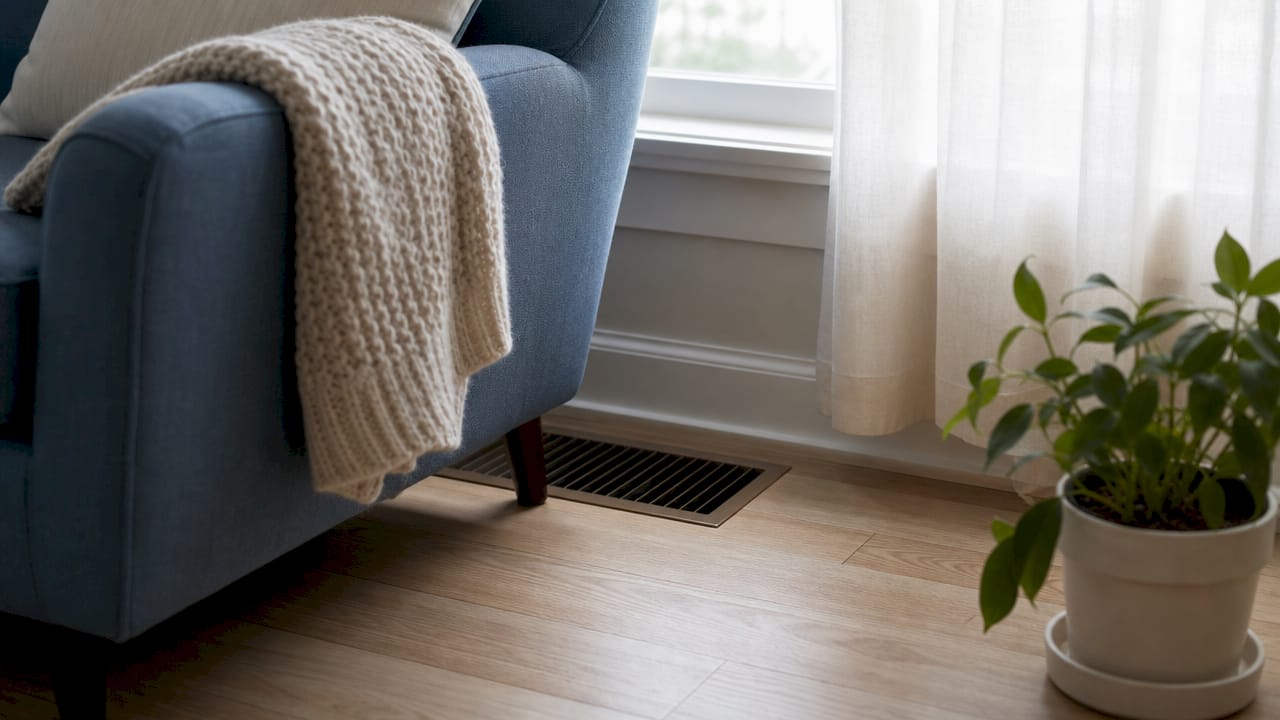
- Closed or blocked supply vents compound the problem. Furniture pushed against floor vents, closed registers in unused rooms, and debris-blocked return air grilles all restrict the airflow the system depends on.
Pro Tip: In Southwest Florida’s climate, replace 1-inch filters every 30 days and 4-inch media filters every 60 to 90 days. If you have pets or live near a construction site, shorten that interval by half.
Check every supply and return vent in your home right now. Make sure none are blocked by rugs, furniture, or curtains. Then pull the filter and hold it up to a light source. If you cannot see light through it, replace it before doing anything else.
Why do capacitor and compressor failures cause no cooling?
Mechanical failures are the most expensive category of AC not cooling troubleshooting, and they require a licensed technician. Understanding what fails and why helps you have an informed conversation with your service provider.
The run capacitor is a small cylindrical component that stores and releases electrical energy to start and keep the compressor and condenser fan motor running. In Southwest Florida’s heat, capacitors degrade faster than the national average because high ambient temperatures accelerate the breakdown of the dielectric material inside. A failed capacitor accounts for 25 to 30% of service calls where the unit runs but does not cool. Symptoms include:
- The outdoor unit hums but the fan blade does not spin
- The system short-cycles, turning on and off every few minutes
- The compressor starts slowly or with a loud clicking sound
- The unit runs but produces no temperature drop indoors
The compressor is the heart of the refrigerant circuit. When it fails, the system circulates air but moves no heat. Compressor failure is often the end result of ignoring earlier problems: a bad capacitor left unrepaired, low refrigerant running the compressor hot, or a frozen coil causing liquid slugging.
| Component | Repair Cost Range | DIY Possible? |
|---|---|---|
| Run capacitor | $245 to $895 | No |
| Contactor relay | $150 to $350 | No |
| Compressor replacement | $1,800 or more | No |
| Full system replacement | $11,500 or more | No |
Pro Tip: If your outdoor unit is more than 10 years old and the compressor has failed, replacement of the full system is almost always more cost-effective than a compressor swap alone. Ask your technician for a side-by-side cost comparison before authorizing any repair over $1,500.
Electrical components carry lethal voltage even when the system appears off. Never open the outdoor disconnect box or the air handler cabinet without proper training and lockout procedures.
How do refrigerant leaks and frozen coils affect cooling performance?
Refrigerant and frozen coil problems are closely related, and both require professional handling. Understanding the difference between the two helps you describe symptoms accurately when you call for service.
Refrigerant leaks are the root cause, not low refrigerant levels. Refrigerant does not get “used up” like fuel. Low refrigerant always indicates a leak somewhere in the sealed system. Topping off the charge without finding and repairing the leak is a temporary patch that leads to repeated service calls and escalating compressor wear. EPA Section 608 regulations prohibit homeowners from purchasing or handling refrigerants like R-410A and R-32 without certification. Signs of a refrigerant leak include:
- Gradual cooling loss over days or weeks, not a sudden failure
- Ice buildup on the refrigerant lines or evaporator coil
- A hissing or bubbling sound near the indoor air handler
- Higher-than-normal electricity bills without a change in usage
Refrigerant leaks increase energy consumption by 20% or more before the system fails completely. Catching a leak early saves both the compressor and your utility budget. For a detailed look at leak signs specific to Southwest Florida homes, the refrigerant leak guide from Ultraairswfl covers the most common indicators by season.
Frozen evaporator coils can result from either low refrigerant or restricted airflow. The fix depends on the cause, but the immediate recovery process is the same. Running a frozen coil causes liquid slugging, which sends liquid refrigerant into the compressor and can destroy it permanently. If you suspect a frozen coil, turn the system to “Fan Only” mode and let it run for 4 to 24 hours until the ice melts completely. Then replace the filter before restarting in Cool mode. If the coil freezes again within 24 hours, the cause is refrigerant-related and requires a technician.
What homeowner checks can prevent AC cooling problems early?
Catching problems early in Southwest Florida means checking your system before the peak of summer, not during it. Run through this sequence every 30 days during cooling season:
- Check the thermostat display. Confirm mode, setpoint, and fan setting are correct. Verify battery life or Wi-Fi status on smart models.
- Inspect the air filter. Pull it out and check for visible debris. Replace it if it looks gray or dense. Keep a three-pack on hand so replacement is never delayed.
- Walk every room and check supply vents. Make sure all registers are open and unobstructed. A single blocked return vent can reduce whole-system airflow significantly.
- Check the circuit breaker panel. A tripped breaker for the air handler or condenser is a common cause of partial cooling loss. Reset it once. If it trips again, call a technician.
- Inspect the outdoor condenser unit. Clear any leaves, grass clippings, or organic debris from the top and sides. Dirty condenser coils reduce heat rejection and force the compressor to overwork. Rinse the fins gently with a garden hose. Never use a pressure washer, which bends the aluminum fins and reduces airflow permanently.
- Listen for unusual sounds. Humming without fan movement, hissing near the air handler, or grinding from the outdoor unit all signal problems that get worse with delay.
The DIY AC maintenance checklist from Ultraairswfl covers these steps in detail with photos specific to common SWFL unit configurations. For issues beyond these checks, including anything involving refrigerant, electrical components, or coil cleaning with chemical agents, schedule a professional diagnostic rather than guessing.
Key takeaways
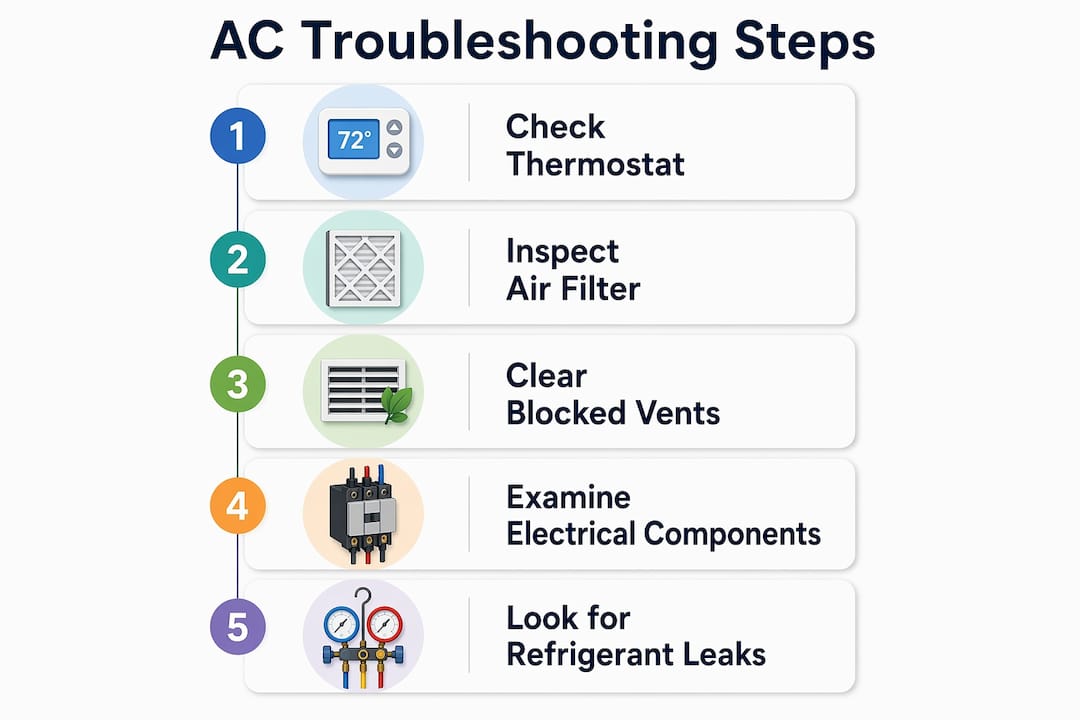
An AC running without cooling always has a specific, identifiable cause. Systematic troubleshooting from thermostat to mechanical components resolves most issues faster and cheaper than calling for service without checking first.
| Point | Details |
|---|---|
| Start with thermostat settings | Verify Cool mode, correct setpoint, and Fan Auto before assuming a mechanical problem. |
| Replace filters monthly in SWFL | Clogged filters cut airflow by up to 50% and cause coil freezing, which stops cooling entirely. |
| Capacitor failure is most common | Failed run capacitors cause 25 to 30% of “unit runs but won’t cool” service calls. |
| Never run a frozen coil | Switch to Fan Only for 4 to 24 hours to thaw safely and avoid compressor damage. |
| Refrigerant leaks require pros | EPA regulations prohibit DIY refrigerant handling; leaks must be repaired, not just topped off. |
What I’ve learned after years of SWFL cooling calls
The most common pattern I see is a homeowner who waited. They noticed the house getting warmer over two or three days, assumed the system just needed to “catch up,” and called for service only after the temperature inside hit 82°F. By that point, what started as a slow refrigerant leak had run the compressor hot long enough to cause real damage.
The second most common pattern is the opposite: a homeowner who called immediately because the AC “wasn’t working,” and the fix was switching the thermostat from Heat to Cool. Homeowners often call for service prematurely without checking basic settings first. Both extremes cost money unnecessarily.
The honest truth about AC not cooling troubleshooting in Southwest Florida is that the climate here is genuinely harder on equipment than most of the country. Salt air corrodes electrical contacts. Humidity accelerates mold growth on evaporator coils. Year-round operation means components never get a rest season. That reality makes routine maintenance more important here than anywhere else, not just as a cost-saving measure, but as the difference between a $245 capacitor replacement and a $11,500 system replacement.
After replacing a dirty filter, give the system several hours to thaw and recover before concluding the problem is still there. Patience after a filter swap has saved more than a few homeowners from an unnecessary service call.
— albert
Get your AC cooling again with Ultraairswfl
If you have worked through the checks above and your system is still blowing warm air, the problem is almost certainly in the refrigerant circuit or a failed mechanical component. Ultraairswfl serves Naples, Cape Coral, and Fort Myers with certified HVAC technicians who handle everything from capacitor replacements to full refrigerant leak repairs under EPA Section 608 compliance. Diagnostic visits start at $89, and the team provides transparent repair cost estimates before any work begins. Whether you need a quick fix or a full system evaluation, you can schedule service through the HVAC service and installation page. Do not let a warm house in a SWFL summer wait.
FAQ
Why is my AC running but not cooling the house?
The most likely causes are a thermostat set to the wrong mode, a clogged air filter restricting airflow, a failed run capacitor, or a refrigerant leak. Start with thermostat and filter checks before calling a technician, since 12 to 15% of these calls resolve with a five-minute homeowner fix.
How do I know if my AC has a refrigerant leak?
Signs include gradual cooling loss over several days, ice on the refrigerant lines or indoor coil, a hissing sound near the air handler, and rising electricity bills. Refrigerant leaks require a certified technician. EPA regulations prohibit homeowners from purchasing or handling refrigerants without Section 608 certification.
Can a dirty filter cause my AC to stop cooling?
Yes. A heavily clogged filter can reduce system airflow by up to 50%, which causes the evaporator coil to freeze and blocks all heat transfer. Replace the filter, switch to Fan Only mode for several hours to thaw the coil, then restart in Cool mode.
What does a failed capacitor feel like from inside the house?
The system will sound like it is running, but the house temperature will not drop. The outdoor unit may hum without the fan spinning. Capacitor replacement costs between $245 and $895 and must be performed by a licensed technician due to stored electrical charge.
How often should I replace my AC filter in Southwest Florida?
Replace 1-inch filters every 30 days during active cooling season. The combination of year-round operation, high humidity, and coastal air quality means filters in SWFL clog significantly faster than the 90-day intervals recommended for northern climates.
Recommended
- What to Do When Your AC Freezes Up in the Summer: A 2026 SWFL Homeowner’s Guide
- Your Guide to Energy Efficient Cooling at Home
- Why Does My Air Conditioner Keep Tripping the Breaker? 2026 SWFL Guide
- My AC Is Not Cooling: Cape Coral Homeowner’s Troubleshooting Guide (2026) – Ultra Air Heating and Cooling