
Getting HVAC sizing right is one of the most consequential decisions you’ll make for your home or commercial property, yet most people never think about it until something goes wrong. Why HVAC sizing matters becomes painfully clear when your energy bills spike, your home feels muggy in July, or your brand-new unit fails years ahead of schedule. The shocking reality: over 60% of residential HVAC systems are incorrectly sized, meaning the majority of homeowners are already paying the price. This guide breaks down what correct sizing actually involves, what goes wrong when you get it wrong, and exactly what to do about it.
Table of Contents
- Key takeaways
- Why HVAC sizing matters more than you think
- What happens when sizing goes wrong
- Benefits of getting the size right
- How to get properly sized HVAC
- My honest take on the sizing problem
- Get the right size from the start with Ultraairswfl
- FAQ
Key takeaways
| Point | Details |
|---|---|
| Sizing is not guesswork | Manual J load calculations use your home’s specific data, not just square footage, to determine the right system size. |
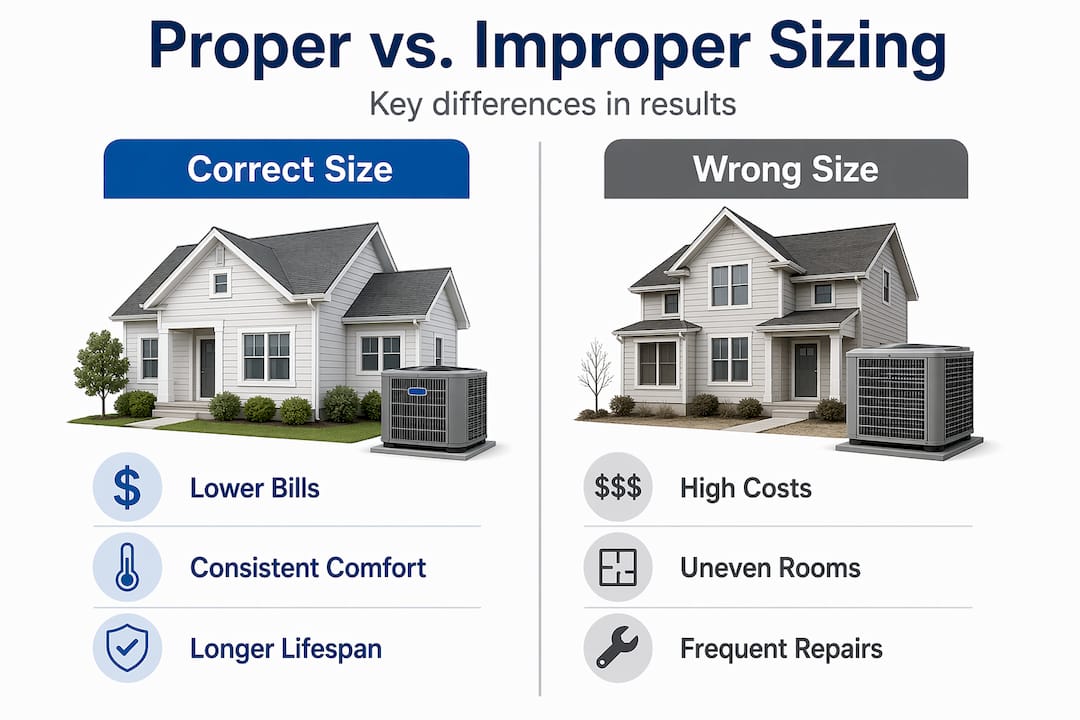
| Oversizing is the bigger threat | An oversized unit short cycles, raises humidity, and can cut equipment lifespan nearly in half. |
| Correct sizing saves real money | Properly sized systems can reduce your annual heating and cooling costs by 15 to 30%. |
| Three manuals work together | Manual J, Manual S, and Manual D must all be completed to get sizing, equipment, and airflow right. |
| You have the right to ask | Always request a written Manual J calculation before any contractor installs a new system in your property. |
Why HVAC sizing matters more than you think
Most homeowners assume HVAC sizing is simple: measure the square footage, pick a unit, done. That assumption costs people thousands of dollars every year. HVAC sizing is actually a precise engineering process, and getting it even slightly wrong changes how your system performs, how long it lasts, and how much you spend running it.
The core concept is called the heating and cooling load. This is the amount of heat your home gains in summer or loses in winter, measured in British Thermal Units (BTUs). Your HVAC system needs to match that load closely. Too small and it can’t keep up. Too large and it overcorrects, shutting off before it finishes the job properly.
The industry standard for calculating load is Manual J. Developed by the Air Conditioning Contractors of America (ACCA), this method is the gold standard methodology for sizing HVAC systems. A proper Manual J calculation considers factors like:
- Insulation R-values in your walls, attic, and floors
- Window size, efficiency ratings, and orientation to the sun
- Local climate design temperatures specific to your ZIP code
- Air infiltration rates and how tightly your home is sealed
- Internal heat sources like appliances, lighting, and occupants
- Duct losses if your ductwork runs through unconditioned spaces
Two homes with the same square footage can require completely different HVAC capacity. A southwest-facing home in Fort Myers with single-pane windows and minimal attic insulation has a dramatically higher cooling load than a well-shaded, tightly sealed home next door. Solar heat gain and window placement alone can swing the calculation by a significant margin.
Pro Tip: Ask your contractor to show you the Manual J report before signing any installation agreement. A legitimate report will be several pages long with your home’s specific inputs, not a one-line estimate based on square footage.
Rules of thumb like “400 square feet per ton” were shortcuts that made sense before accurate modeling tools existed. Today, they are a red flag. Any contractor who sizes your system that way is skipping a step that energy codes like IECC and California Title 24 actually require.
What happens when sizing goes wrong
The consequences of improper sizing are not abstract. They show up in your utility bills, your comfort, and eventually your repair invoices.
The oversized system problem
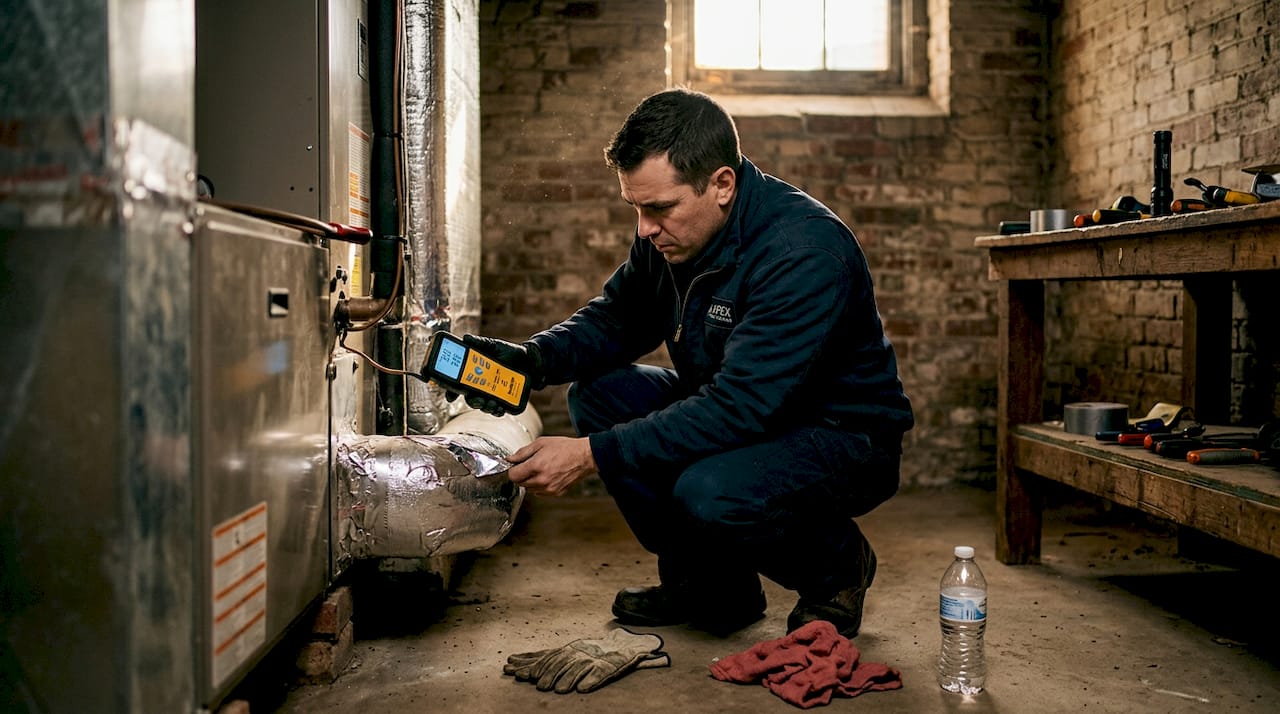
Oversizing is by far the more common mistake, driven largely by the “bigger is better” mindset. An oversized unit cools your space rapidly, then shuts off before completing a full cycle. This behavior is called short cycling, and it creates a chain of problems:
- Humidity stays high. Your AC removes moisture from the air during its run cycle. Short cycling means the system never runs long enough to pull adequate moisture from the air. In Southwest Florida’s climate, indoor humidity can stay 10 to 15 percentage points higher than it would with a correctly sized system.
- Bills go up. The compressor draws the most power at startup. An oversized system that cycles every 3 to 5 minutes instead of running smooth 10 to 20 minute cycles burns far more electricity per BTU of cooling delivered.
- The equipment wears out faster. Each compressor startup is a high-stress event. Frequent short cycling creates a 400 to 600% increase in wear events, cutting expected lifespan from 15 to 20 years down to 8 to 10 years.
- Temperature swings become noticeable. The system blasts cold air, shuts off, and the temperature climbs before the next cycle begins. You feel it as inconsistency rather than steady comfort.
“Oversizing rarely triggers immediate callbacks, which makes it popular among contractors, but the hidden costs accumulate and surface as premature failures and higher utility expenses.” — Oversizing Consequences Explained
If you notice your system running in short bursts, your home feels clammy even when the temperature reads correctly, or you keep seeing signs of HVAC problems like mold near vents, an oversized unit may be to blame.
The undersized system problem
Undersizing gets less attention but is equally damaging. An undersized system runs continuously without ever reaching the set temperature on the hottest or coldest days. Constant operation means constant wear. Components that should last 15 years get cycled through the equivalent of far more operating hours than they were designed for. Your utility bill climbs because the system never shuts off, and comfort is never quite reached.
Benefits of getting the size right
When your system is properly sized, everything works the way it should. The benefits are measurable and significant.
| Benefit | Correctly sized system | Improperly sized system |
|---|---|---|
| Annual energy cost savings | Up to 30% lower | Baseline or higher |
| Humidity control | Consistent and comfortable | Frequently too high |
| Equipment lifespan | 15 to 20 years | As low as 8 to 10 years |
| Temperature consistency | Even throughout the home | Hot and cold spots common |
| Repair frequency | Lower, with predictable maintenance | Higher, often unpredictable |
Homeowners who insist on Manual J calculations consistently receive better equipment recommendations and report higher satisfaction with their system’s performance. The energy savings alone, at 15 to 30% annually, typically offset the cost of a thorough load calculation within the first year.
Proper sizing also matters for HVAC system efficiency in ways that go beyond just the equipment itself. Correctly sized systems operate within their designed performance range, which means their rated SEER efficiency numbers are actually achievable in real-world conditions. An oversized unit almost never achieves its rated efficiency because it never completes full operating cycles.
Pro Tip: If you’re managing multiple rental units or a commercial property, a proper load calculation for each individual space pays for itself faster than you’d expect. Tenant comfort complaints drop sharply when each unit is sized correctly for its specific load.
Humidity control deserves special attention in Florida’s climate. A properly sized system runs long enough to condense moisture on the evaporator coil and drain it away. That process is what actually dehumidifies your air. When you understand the impact of HVAC sizing on indoor humidity, it becomes clear why a correctly sized unit feels so much more comfortable than an oversized one, even on days when the temperature numbers look the same.
How to get properly sized HVAC
Knowing the importance of HVAC sizing is only useful if you can act on it. Here is what to ask for and what to expect when installing a new system or replacing an existing one.
- Demand a written Manual J load calculation. This is not optional. Tell your contractor upfront that you expect to see the completed report before equipment is ordered. A proper calculation accounts for your home’s specific envelope, orientation, and climate data.
- Ask about Manual S equipment selection. Once the load is calculated, the chosen equipment must match it within defined limits. Manual S guidelines specify that cooling capacity should not exceed 115% of the calculated load, which prevents the contractor from simply “bumping up a size” as a safety margin.
- Verify that Manual D duct design is included. Manual D governs duct sizing and layout so that conditioned air actually reaches every room at the right volume. Without it, even a perfectly sized unit can perform poorly because the ductwork becomes the bottleneck.
- Check for code compliance documentation. Many Florida jurisdictions require load calculations as part of the permit process. Ask whether the contractor’s sizing documentation will be submitted with the permit.
- Get a second opinion if numbers feel off. If a contractor recommends a system significantly larger than your current one without doing a load calculation, that is a warning sign worth acting on. Getting a second assessment costs far less than living with a mis-sized system for years.
Accurate sizing paired with proper equipment selection and duct design forms the foundation of long-term HVAC performance. These three manuals are designed to work together, and skipping any one of them introduces gaps that show up as discomfort, inefficiency, or shortened equipment life.
My honest take on the sizing problem
I’ve spent years watching homeowners discover, usually on a sweltering August afternoon, that the system they paid good money for was never going to perform the way they expected. Almost every time, the root cause was sizing done by feel rather than calculation.
The “bigger is better” myth persists in this industry for a specific reason: contractors rarely face immediate consequences for oversizing. The system cools the house fast. The customer feels satisfied at first. The problems, the humidity, the short cycling, the early compressor failure, show up months or years later. By then, the connection to the original installation is easy to miss.
What I’ve found is that homeowners who understand even the basics of why HVAC sizing matters are far better positioned to hold their contractors accountable. You don’t need to know how to run a Manual J calculation yourself. You just need to know to ask for one, to read the report, and to question any contractor who tells you it isn’t necessary.
The correct HVAC sizing benefits are not theoretical. They are lower bills, a system that actually controls humidity in a Florida summer, and equipment that reaches its full expected lifespan. Treating proper sizing as an investment rather than a line item to cut is the single best decision you can make before any new HVAC system goes in.
— albert
Get the right size from the start with Ultraairswfl
At Ultraairswfl, proper sizing is where every installation begins. Ultra Air Heating & Cooling serves Naples, Cape Coral, and Fort Myers with professional Manual J load calculations, Manual S equipment selection, and full duct design for both residential and commercial properties. The team does not guess, and they do not size by rule of thumb.
Whether you’re replacing an aging system or installing HVAC in a new build, explore the full range of heating and cooling solutions available to Southwest Florida homeowners and property managers. Flexible financing options are also available, so getting the right system doesn’t have to mean stretching your budget. Contact Ultra Air today to schedule a sizing assessment and stop paying for a system that was never matched to your actual needs.
FAQ
What is HVAC sizing and why does it matter?
HVAC sizing refers to matching your system’s heating and cooling capacity to your home’s specific load. It matters because an improperly sized system wastes energy, fails to control humidity, and wears out significantly faster than a correctly sized one.
How is HVAC size calculated correctly?
The industry standard is the Manual J load calculation, which accounts for your home’s insulation, windows, orientation, local climate data, and infiltration rates rather than just square footage. Two identically sized homes can require different HVAC capacity depending on these variables.
What are the signs that my HVAC is the wrong size?
Common signs include short run cycles that leave the air feeling humid, rooms that never reach a consistent temperature, unusually high energy bills, and frequent system repairs. You can learn more from a detailed look at HVAC warning signs specific to homeowners.
Does oversizing really shorten equipment life?
Yes. Short cycling caused by an oversized unit creates a 400 to 600% increase in compressor wear events, reducing equipment lifespan from the typical 15 to 20 years down to as little as 8 to 10 years.
Can I request a Manual J calculation from any contractor?
You can and should request it from every contractor you consider. Manual J is required by energy codes in most jurisdictions, so any licensed contractor should be able to provide it. If a contractor refuses or claims it isn’t necessary, treat that as a serious warning sign.