
When your air conditioner quits in the middle of a Southwest Florida summer, it is not a minor inconvenience. It is a potential health crisis. Temperatures in Naples, Cape Coral, and Fort Myers regularly push past 95°F with brutal humidity, turning an un-air-conditioned home into a dangerous environment within hours. Emergency AC repair exists precisely for these moments — urgent, unplanned situations where delay could harm people or property. This guide covers what truly qualifies as an AC emergency, why SWFL homeowners face this risk more than most, and exactly what to do when your cooling system fails without warning.
Table of Contents
- What qualifies as emergency AC repair?
- Common causes of AC emergencies in Southwest Florida
- What to expect from emergency AC repair services
- How to prevent AC emergencies: Practical homeowner tips
- Why most AC emergencies are avoidable — and what experts wish homeowners knew
- Stay cool and stress-free with professional AC support
- Frequently asked questions
Key Takeaways
| Point | Details |
|---|---|
| Know what’s urgent | AC emergencies involve more than comfort—they can threaten health or safety, especially in Florida heat. |
| Rapid response is vital | Quickly contacting a qualified technician helps minimize downtime and prevent further damage. |
| Prevention saves costs | Regular maintenance and early repairs dramatically lower your risk of expensive AC emergencies. |
| Expert help matters | Certified local pros deliver faster, safer, and more reliable emergency service than DIY fixes. |
What qualifies as emergency AC repair?
Not every AC problem is an emergency. A unit that blows slightly warm air on a mild spring day is frustrating, not dangerous. But in Southwest Florida’s peak summer heat, the line between inconvenience and genuine crisis moves fast.
A true emergency is any situation where waiting 24 to 48 hours for standard repair would put people at risk or cause significant property damage. Extreme heat can make AC outages a health risk, not just a comfort issue — especially for seniors, young children, or anyone with heart or respiratory conditions. Businesses that rely on precise temperature control for equipment, food storage, or client comfort also face costly consequences when cooling fails.
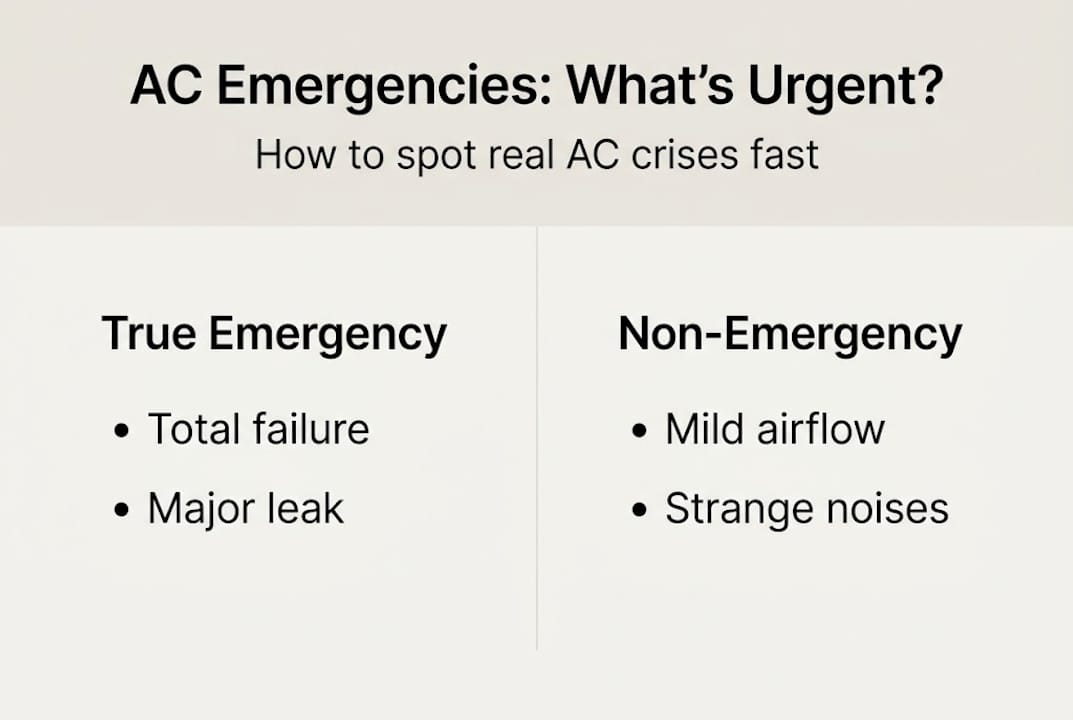
Here is a clear comparison to help you decide:
| True emergency | Non-emergency |
|---|---|
| Complete AC failure during extreme heat | Slightly reduced airflow |
| Burning smell or electrical hazard | Minor thermostat glitch |
| Refrigerant leak with visible ice or hissing | Filter needs replacement |
| Loud banging, grinding, or rattling sounds | Occasional clicking at startup |
| Indoor flooding from drain line overflow | Unit not cooling as efficiently |
One common misconception is that any AC problem during summer automatically counts as an emergency. It does not. But another dangerous misconception is assuming you have time to wait when the problem is clearly severe. If your system is producing strange smells, making alarming noises, or failing to run at all during peak heat, those are signals that call for immediate attention.
Watch for AC repair warning signs before they escalate. Learning to spot early trouble keeps you in control.
Call for emergency AC repair when you notice:
- Complete system shutdown with no cool air
- Burning or chemical odors from vents
- Visible sparking, tripped breakers, or electrical sounds
- Significant water pooling inside your home
- Indoor temperature rising rapidly despite the unit running
“When in doubt during extreme heat, treat it as an emergency. Waiting hours in a home exceeding 95°F is not a risk worth taking for any family.”
If you live or own a business in AC repair in Cape Coral, knowing the difference between a true emergency and a routine repair can save you money and stress.
Common causes of AC emergencies in Southwest Florida
Southwest Florida is not average HVAC territory. The combination of relentless summer heat, near-daily thunderstorms, and salt-laden coastal air creates conditions that push AC systems to their limits faster than almost anywhere else in the country.
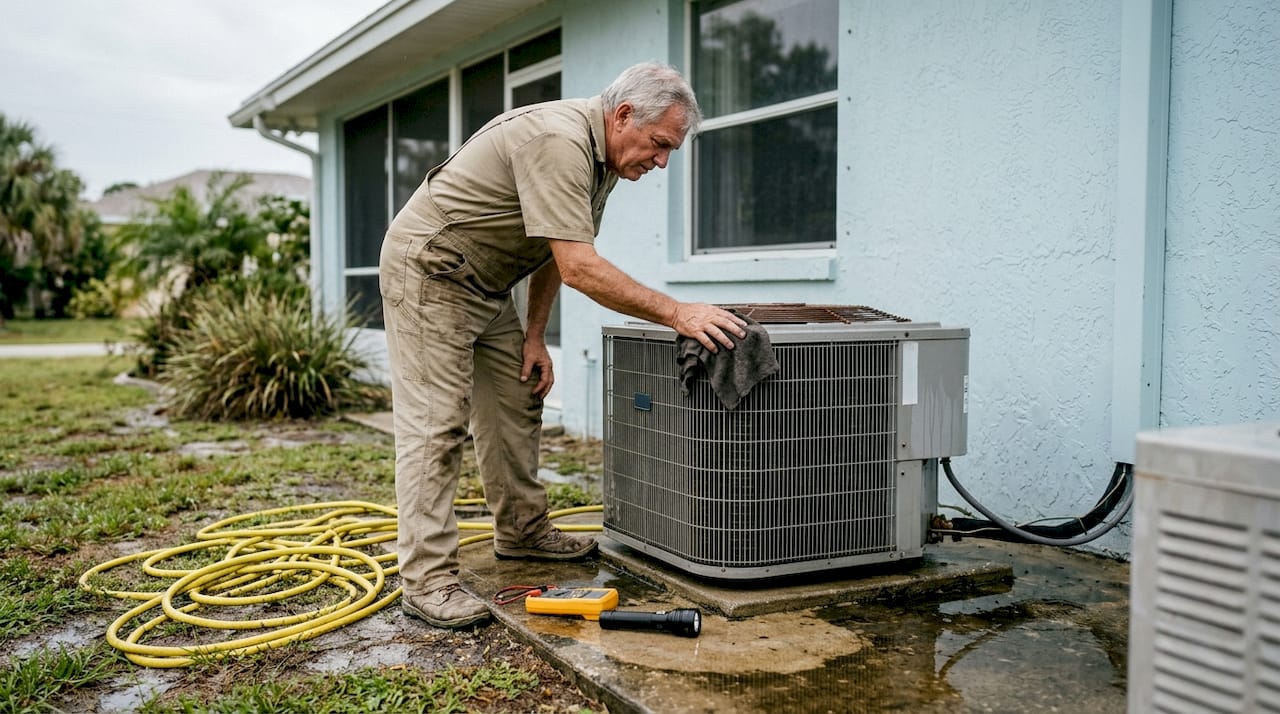
Emergencies spike sharply from June through September, when systems run nearly 24 hours a day. High humidity and salt air increase AC system breakdown risk in coastal areas, accelerating wear on coils, electrical contacts, and refrigerant lines. A system that might last 15 years in a dry climate can show serious stress in 8 to 10 years along the Gulf Coast.
The most common emergency triggers in SWFL include:
- Compressor failure: The heart of your AC stops working, usually after prolonged overload
- Frozen evaporator coils: Caused by restricted airflow or low refrigerant, leading to complete cooling failure
- Refrigerant leaks: Result in ice buildup, warm air, and potential environmental hazards
- Electrical shorts or blown capacitors: Often caused by lightning or power surges during SWFL storms
- Clogged condensate drain lines: Lead to water damage and system shutoffs in high-humidity conditions
For AC repair in Naples and surrounding areas, peak season downtime can easily exceed 6 hours as technicians manage high call volumes. That is a long time to go without cooling in a home reaching dangerous temperatures.
What makes SWFL different from most of the U.S.:
- Year-round AC dependency (not seasonal like northern states)
- Coastal salt air corrodes components faster
- Daily humidity levels routinely above 80%
- Frequent lightning and power surges
- Heavy storm season from June through November
Pro Tip: Scheduling 24/7 AC repair Naples before summer peaks means you have an established relationship with a technician who knows your system — and can respond faster when things go wrong.
What to expect from emergency AC repair services
When your system fails and you call for emergency help, knowing what happens next removes a lot of anxiety from the situation.
Here is the typical process from first call to completed repair:
- Initial call: You describe symptoms and your address. A dispatcher determines urgency and assigns the nearest available technician.
- Estimated arrival: You receive a response time window — typically 2 to 4 hours in SWFL during peak season.
- System diagnosis: The technician inspects electrical components, refrigerant levels, airflow, and controls to identify the root cause.
- Transparent quote: A reputable company provides a written estimate before work begins. No surprises.
- Repair or stabilization: The technician either fixes the problem on the spot or stabilizes the system and orders parts if needed.
- Follow-up recommendation: You receive a written summary and recommendations for preventing the next failure.
Prompt repair can prevent further property damage and reduce overall costs — delaying even a few hours can turn a minor fix into a major replacement.
| Factor | Typical range |
|---|---|
| Response time (peak season) | 2 to 6 hours |
| Diagnostic fee | $75 to $150 |
| Average emergency repair cost | $150 to $600+ |
| Technician certification required | EPA 608, state license |
| Parts availability (common repairs) | Same day in most cases |
Pro Tip: When you call, have your unit’s model number, age, and a clear description of symptoms ready. This helps the dispatcher send the right technician with the right parts, cutting your wait time significantly.
For homeowners wanting to understand their system better before emergencies happen, reviewing homeowner AC tips gives you a practical foundation. And if you own a specific brand like Daikin, working with specialists in Daikin AC repair in SWFL ensures your warranty and system performance are protected.
A reputable emergency service will never pressure you into same-day replacements unless there is a clear, documented reason. Be cautious of any company that skips the diagnostic step.
How to prevent AC emergencies: Practical homeowner tips
The best emergency repair is the one you never need. Most SWFL homeowners can dramatically lower their risk with a few consistent habits.
Preventive maintenance reduces emergency repairs by up to 40 percent — that is a number worth paying attention to when you consider the cost and stress of a mid-summer breakdown.
Top 5 actions to reduce your risk of an AC emergency:
- Schedule professional maintenance twice a year: Spring and fall tune-ups catch problems before they become failures. A technician cleans coils, checks refrigerant, tests electrical components, and verifies airflow.
- Replace air filters every 30 to 60 days: Dirty filters restrict airflow, forcing your system to overwork and increasing the risk of frozen coils and compressor failure.
- Keep the outdoor unit clear: Remove leaves, grass clippings, and debris within 2 feet of the unit to maintain proper airflow.
- Check your condensate drain line monthly: Pour a cup of diluted bleach down the line to prevent algae buildup, which is one of the top causes of water damage and system shutoffs in SWFL.
- Install a smart thermostat: These devices alert you to unusual temperature changes or system behavior before a full breakdown occurs.
Early warning signs to watch for:
- Warm air from vents despite the thermostat being set correctly
- Weak or reduced airflow from registers
- Unusual sounds like squealing, grinding, or banging
- Musty or burning odors when the system runs
- Unexplained spikes in your electricity bill
Pro Tip: The DIY AC maintenance checklist for SWFL homeowners is one of the most practical tools you can use between professional visits. It takes about 15 minutes and could save you thousands.
If you notice any of the early AC failure signs listed above, do not wait for a complete breakdown. Acting early almost always means a simpler, cheaper fix.
Why most AC emergencies are avoidable — and what experts wish homeowners knew
Here is an uncomfortable truth from years of emergency calls across Naples, Cape Coral, and Fort Myers: the vast majority of AC emergencies we respond to were preventable. Not bad luck. Not unavoidable failures. Missed maintenance, ignored warning signs, and the very human tendency to wait until something completely stops working.
Homeowners who avoid most emergencies share one trait — they treat their AC like their car. You would not skip oil changes and wait for the engine to seize. Yet many people go years without a professional tune-up on a system that runs 16 or more hours a day in SWFL heat.
The shift from reactive to proactive thinking is not complicated. It just requires accepting that a small investment of time and money upfront avoids a large, stressful expense later. Our Naples AC repair experience consistently shows that customers on regular maintenance plans call us for emergencies far less often — and when they do, those emergencies are resolved faster because we already know their system.
The homeowners who struggle most are the ones who call for the first time in a crisis. We fix the immediate problem, but they are starting from zero. The homeowners who thrive are the ones who build a relationship with their HVAC provider before things go wrong. That preparation is worth more than any single repair.
Stay cool and stress-free with professional AC support
If you are ready to take control of your indoor comfort, Ultra Air Heating & Cooling is here before, during, and after any cooling emergency. We serve homeowners and business owners across Southwest Florida with fast response times, licensed technicians, and honest pricing.
Whether you need to plan ahead with a Fort Myers HVAC installation guide, explore flexible HVAC financing options to make repairs more manageable, or set up a proactive HVAC maintenance in Estero plan that reduces your risk all year, we have the right solution for your situation. Do not wait for the next breakdown to find out what your options are.
Frequently asked questions
How fast can an emergency AC technician arrive?
In most SWFL cases, certified technicians arrive within 2 to 4 hours, though high-demand periods during peak summer months may extend that window slightly.
What should I do while waiting for emergency AC repair?
Stay hydrated, keep blinds and curtains closed to block heat gain, and use portable fans to move air. Per guidance on staying safe in extreme heat, relocate vulnerable family members to an air-conditioned location if indoor temps rise rapidly.
Does homeowners insurance cover AC emergencies?
Coverage varies widely — most standard policies exclude normal wear-and-tear but may cover sudden damage from events like electrical surges or storms. Always review your policy and contact your provider before assuming coverage.
What’s the difference between emergency and standard AC repair?
Emergency repair addresses urgent failures that threaten health, safety, or property right now, while standard repair handles non-critical problems scheduled during normal business hours at lower rates.
How much does emergency AC repair cost in Southwest Florida?
Costs typically start around $150 for basic repairs and can rise significantly based on the part needed, labor time, and whether the call is after hours or on a weekend.
Recommended
- Expert AC Repair in Naples, FL: Fast, Reliable Cooling Solutions – Ultra Air Heating and Cooling
- Emergency AC Repair in Naples, FL: 24/7 Fast & Reliable Service – Ultra Air Heating and Cooling
- Emergency AC Repair in Cape Coral: 24/7 Weekend Service You Can Trust – Ultra Air Heating and Cooling
- Expert AC Repair in Cape Coral: Restoring Your Comfort in the SWFL Heat – Ultra Air Heating and Cooling
- What Is Emergency HVAC Service: When to Call