Last Tuesday, a Cape Coral homeowner opened their front door only to be hit by a scent that belonged in a high school locker room rather than a living room. If your aircon smells musty, you know exactly how frustrating that persistent, damp odor can be. It makes your entire home feel dirty, no matter how much you scrub. In Southwest Florida, where humidity levels often exceed 70 percent during the summer months, this isn’t just a minor annoyance. It is a signal that your indoor air quality needs immediate attention to protect your family’s health.
We agree that a fresh-smelling home is a non-negotiable part of your comfort. This guide provides the Ultra comfort you deserve by identifying the specific causes of that “dirty sock syndrome.” You’ll discover exactly why your system is struggling and learn the step-by-step DIY fixes and professional solutions to restore your home’s air quality. As a family-owned and operated business, our goal is to help you beat the heat with a clear plan to eliminate odors and keep them from returning for good.
Key Takeaways
- Understand the science behind “Dirty Sock Syndrome” and why your aircon smells musty in the high-humidity environment of Southwest Florida.
- Identify the primary breeding grounds for mold and bacteria within your system, from the evaporator coil to the condensate drain line.
- Follow actionable, step-by-step DIY instructions for deep filter changes and drain pan cleaning to restore immediate freshness to your home.
- Discover long-term “Ultra” solutions like UV germicidal lights that provide permanent coil sterilization and superior indoor air quality.
- Learn to recognize the critical warning signs that require professional expertise to protect your HVAC system from leaks and technical failure.
Why Your Aircon Smells Musty: The SWFL ‘Dirty Sock Syndrome’
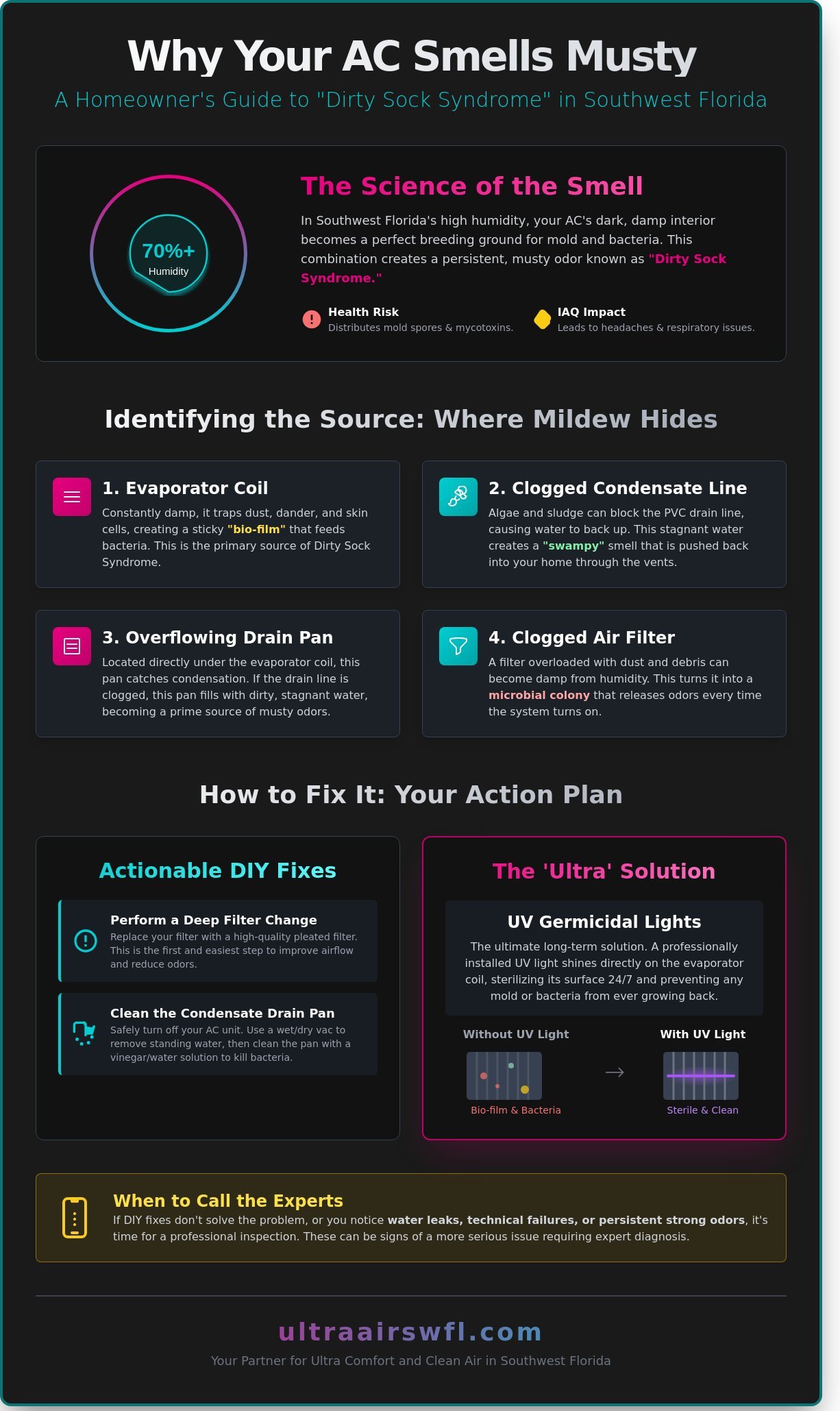
If your aircon smells musty, you are likely dealing with a condition known as Dirty Sock Syndrome. This isn’t just a nuisance; it’s the result of bacteria and mold colonies colonizing your evaporator coils. In the dark, damp environment of a standard HVAC cabinet, these microorganisms find everything they need to flourish. While a faint, dusty smell is common during the first startup of the season, a persistent mildew odor is a red flag. In coastal areas like Naples, salt air contributes to coil pitting. These tiny pits in the metal trap moisture and organic debris, creating a stubborn home for bacteria that regular cleaning might miss.
With Cape Coral’s 2026 humidity levels trending higher, these dark HVAC cabinets become perfect incubators for unwanted growth. The transition from a clean system to one that smells like a damp locker room can happen in just a few weeks if the unit isn’t draining properly. We see this most often in systems that haven’t had a professional inspection in over six months.
The Role of Southwest Florida Humidity
Southwest Florida remains one of the most challenging climates for climate control. In Cape Coral, 2026 weather data indicates that outdoor humidity levels stay above 80% for the majority of the summer. When your indoor humidity crosses the 60% threshold, your home becomes a sweet spot for fungal growth. In Bonita Springs, AC units work overtime, often running for 15 hours or more without a break. This leads to constant moisture in the drain pan and on the coils. We identify 65% humidity as the Ultra threshold. At this level, moisture no longer evaporates quickly enough, leading to the stagnant water smells that plague many local households.
Is a Musty AC Smell Dangerous?
The smell is a symptom, but the spores are the problem. When your aircon smells musty, your system is actively distributing mold spores and Mycotoxins throughout your home. This has a direct negative impact on your Indoor air quality (IAQ). For our neighbors in Estero who suffer from asthma or allergies, this can lead to increased respiratory distress and fatigue. While the smell is a warning, the biological growth hidden on the coils is the real threat to your health. We treat these odors as a priority because fresh air is essential for a healthy home. Ultra Air technicians look beyond the surface to find the root cause of the contamination, ensuring your family stays safe and comfortable.
- Mold Spores: These microscopic particles can trigger sneezing, itchy eyes, and skin rashes.
- Mycotoxins: These are toxic substances produced by certain molds that can linger in ductwork.
- IAQ Impact: Poor air quality can lead to “Sick Building Syndrome,” causing headaches and lethargy for residents.
Ultra Air provides the technical mastery needed to sanitize your system. We don’t just mask the smell with sprays. We get to the source of the growth to restore your peace of mind and your home’s comfort.
Identifying the Source: Where Mildew Hides in Your AC
When your aircon smells musty, the scent usually originates from one of four specific locations within your cooling system. These areas are prone to moisture accumulation, which provides the perfect environment for microbial growth. In Southwest Florida, our high humidity levels mean your AC removes up to 20 gallons of water per day. If that water doesn’t exit your home correctly, you’ll notice that unmistakable odor. We see this daily in Cape Coral homes where systems struggle against 90% outdoor humidity.
The Evaporator Coil Moisture Trap
The evaporator coil is the component responsible for absorbing heat and removing moisture from your indoor air. Because these coils are constantly damp, they act like a magnet for dust, skin cells, and pet dander. This mixture creates a “bio-film,” a sticky layer of nutrients that feeds “Dirty Sock Syndrome” bacteria. Even high-efficiency systems with high SEER ratings can fall victim to this if you skip annual cleanings. Keeping these coils sterile is a core part of our Ultra comfort maintenance plans.
Clogged Condensate Lines and Stagnant Water
During hot Estero summers, your PVC drain lines become a breeding ground for algae blooms. When these lines clog, standing water sits in the pipe and forces musty air back through your vents. This creates a “swampy” smell throughout the house. Most modern systems include a float switch designed to shut the unit down if water backs up. If this switch fails, you face both a foul odor and potential water damage to your ceiling or floor. According to the EPA’s guide to mold and moisture, controlling this water flow is the most effective way to stop mold growth before it starts.
In many Cape Coral homes, the drain pan under the coil can rust or tilt over time. A 2-degree tilt is enough to trap a half-inch of water, which quickly turns stagnant and smells like a pond. Additionally, leaky ductwork in a 130-degree attic can pull in humid, unfiltered air. This moisture seeps into the air stream through small gaps, contributing to the reason your aircon smells musty and making your unit work harder than necessary. Professional hvac duct repair can seal these hidden gaps and prevent humid, unfiltered air from entering your system. Our technicians use specialized cameras to find these hidden gaps and seal them tight.
How to Fix a Musty AC Smell: A Homeowner’s Step-by-Step Guide
If your aircon smells musty, you don’t have to settle for poor indoor air quality. In the humid SWFL climate, moisture management is the key to a fresh home. Follow these five steps to troubleshoot the odor and restore Ultra comfort to your living space. Taking action now prevents small odors from becoming expensive repairs.
Step 1: Filter and Vent Inspection
Start by removing your current air filter. Look closely at the frame for “blow-by” dust. This occurs when air bypasses the filter because of a poor fit, allowing 100% of that debris to settle on your damp cooling coils. For homes in Cape Coral, we recommend upgrading to a MERV 11 or MERV 13 pleated filter. These higher ratings capture microscopic spores that standard fiberglass filters miss. While the filter is out, take a moment to clean your supply vents. Use a simple solution of mild soap and warm water to wipe down the louvers. This removes surface spores before they can blow back into your rooms.
Step 2: Clearing the Drain Line Safely
Your condensate line is a prime spot for sludge buildup. Locate the white PVC exit pipe outside your home. Use a wet/dry shop vac to create a tight seal against the pipe and run it for 30 seconds. This often pulls out “algae snakes” that cause standing water. Inside, find the primary drain pan located under the indoor evaporator coil. According to the EPA guide to mold and moisture, keeping these pans clean and dry is essential for mold prevention. Pour a cup of distilled white vinegar down the drain line to kill remaining bacteria. Avoid using bleach. Bleach is corrosive and can damage your internal components or eat through the PVC glue over time. If the line remains completely clogged after vacuuming, you likely need professional ac repair cape coral to clear the blockage safely.
Step 3: Final System Reset and Monitoring
Once the filters are fresh and the lines are clear, it’s time to test your work. Wipe down the interior of the blower cabinet if you see visible dust. Close the system and turn the thermostat back on. Monitor the air quality for the next 24 hours. In 90% of cases, the musty odor will dissipate as the humidity levels stabilize and the standing water is removed. If the “dirty sock” smell persists after a full day of operation, the issue may be embedded deep within the evaporator coils, requiring an Ultra service professional to perform a chemical coil cleaning. This step ensures you can Beat the Heat without the unwanted odors.
Beyond the Quick Fix: Long-Term IAQ Solutions for Naples Homes
In our Southwest Florida climate, a simple surface cleaning often fails to stop recurring odors. The “Beat the Heat” environment presents unique challenges that standard maintenance cannot always solve alone. If your aircon smells musty despite regular filter changes, it is time to look at professional Indoor Air Quality (IAQ) upgrades. We help homeowners move past temporary fixes toward permanent air purification. Simple sprays only mask the problem; true solutions involve changing the environment inside your air handler.
UV Germicidal Lights: The ‘Ultra’ Defense
Microbial growth thrives in the dark, damp environment of your evaporator coils. UV-C germicidal lights provide a chemical-free solution by scrambling the DNA of mold and bacteria. This prevents them from reproducing and spreading through your vents. These systems offer 24/7 protection, ensuring your coils stay sterile without manual scrubbing. “UV lights can reduce airborne bacteria by up to 99% when installed correctly in the air handler.” This “Ultra” level of protection keeps your system efficient and your air crisp.
Whole-Home Dehumidifiers for Florida Humidity
Your air conditioner is designed to cool, but it often struggles to manage the extreme moisture levels in Cape Coral and Naples. A dedicated whole-home dehumidifier works alongside your HVAC system to maintain the 45-50% “Fresh Zone.” This prevents the conditions where an aircon smells musty even after a professional tune-up. Understanding what should indoor humidity be in your SWFL home is essential to choosing the right dehumidification strategy. For a deeper understanding of how to keep moisture under control year-round, our guide to managing humidity levels in Southwest Florida covers the latest dehumidification strategies for 2026.
- Energy Efficiency: Drier air feels cooler. This allows you to set your thermostat 3 degrees higher without losing comfort, saving on monthly bills.
- System Longevity: Your AC won’t have to work double duty to pull moisture from the air, reducing wear on the compressor.
- Odors: Consistent humidity control stops the dampness that fuels fungal growth in the first place.
Professional Duct Cleaning
Ductwork can hide 10 years of skin cells, pet dander, and moisture. This accumulation becomes a permanent breeding ground for odors. Professional cleaning removes these triggers entirely rather than just filtering the air passing by them. Our team uses specialized vacuum equipment to clear out years of buildup in a single visit. This process restores your home to a neutral, fresh baseline that smells as clean as it looks.
Stop settling for stale air and take control of your home’s environment. Our technicians specialize in local climate solutions that provide lasting relief. Schedule your IAQ consultation with Ultra Air today to breathe easier tomorrow.
When to Call the Experts at Ultra Air Heating and Cooling
DIY fixes like changing a filter or pouring vinegar down a drain line are great first steps. However, if your aircon smells musty even after basic maintenance, you likely have a deeper issue. Professional intervention becomes necessary when odors stem from a cracked heat exchanger or a refrigerant leak. These problems aren’t just smelly; they can be dangerous. Our EPA-certified technicians identify these technical failures quickly to keep your Cape Coral home safe.
Professional coil cleaning requires specialized, non-corrosive chemicals that are unavailable to the general public. Using the wrong household cleaners can eat through your evaporator coils, leading to expensive repairs. We use industrial-grade solutions that break down organic growth without compromising the integrity of your system. This ensures your unit runs efficiently while providing the Ultra comfort you expect.
Professional Coil Cleaning and Duct Sanitization
A simple surface wipe only removes about 15% of accumulated debris. For a true fix, we perform a “pull and clean” service. This involves removing the blower or evaporator coil to scrub away every layer of biofilm. We also deploy antimicrobial fogs. These fogs travel deep into your ductwork to neutralize spores that a vacuum can’t reach. As a Family Owned & Operated business, we treat your air quality with the same care we give our own homes. We don’t cut corners because we know your family’s health depends on the air they breathe.
The Importance of Maintenance Agreements
Prevention is the only way to ensure your aircon smells musty no more. Our Ultra Maintenance Plan includes bi-annual visits that catch drainage issues before they turn into full-blown mold colonies. Statistics show that 80% of SWFL system failures are preventable through regular checkups. You can learn more about long-term care in our air conditioning maintenance near me guide. These visits provide the peace of mind that your system will survive the humidity of a Florida summer.
2026 Beat the Heat Checklist:
- Schedule your Ultra Maintenance visit before the June humidity spike.
- Replace standard 1-inch filters with high-efficiency pleated versions.
- Clear a 2-foot perimeter around your outdoor condenser unit to ensure airflow.
- Check the thermostat batteries to prevent mid-day cooling drops.
- Verify that the condensate pump is cycling every 15 to 20 minutes during peak heat.
Don’t live with the smell. Let the local experts at Ultra Air restore your home’s comfort today. We provide the technical mastery and honest service you need to stay cool all year long. Contact us now to schedule your deep clean and breathe easy again.
Restore Your Home’s Freshness and Comfort
Don’t let “Dirty Sock Syndrome” compromise your comfort in the Southwest Florida heat. You’ve learned that identifying mildew in your evaporator coils or drain lines is the first step toward restoring freshness. Whether it’s a targeted cleaning or a long-term IAQ upgrade like UV lights, taking action now prevents minor odors from becoming major repair bills. If your aircon smells musty, it’s a clear signal that your system is struggling with our local humidity levels.
Ultra Air Heating and Cooling has been family owned and operated since 2018. We provide 24/7 emergency AC repair in Cape Coral and Naples because we know that Florida cooling issues don’t follow a schedule. Our team consists of experts in Florida-specific indoor air quality who are dedicated to providing Ultra service for every neighbor. We’re ready to help you beat the heat and ensure your family breathes the cleanest air possible. Trust the local experts to restore your peace of mind and your Ultra comfort today.
Schedule your Ultra Air IAQ inspection and breathe easier today!
Frequently Asked Questions
Is the musty smell from my AC dangerous to breathe?
Breathing in air when your aircon smells musty can be hazardous because it often signals active mold or mildew growth. Exposure to these spores triggers respiratory issues or allergic reactions in 24% of sensitive individuals according to EPA data. We recommend addressing these odors immediately to protect your indoor air quality and ensure your family’s health in the Cape Coral humidity.
How do I get rid of the ‘dirty sock’ smell in my air conditioner?
You eliminate the “dirty sock” smell by professionally cleaning the evaporator coils and the condensate pan. This odor typically stems from bacteria buildup on the cooling coils, which occurs in 90% of cases where moisture remains trapped. Our Ultra technicians use specialized, non-toxic cleaners to strip away this organic matter. Regular maintenance prevents these microorganisms from returning to your SWFL home.
Can I use bleach to clean my AC drain line?
You should avoid using bleach in your AC drain line because it’s a corrosive agent that can degrade PVC glue and metal components within 3 to 5 years. Instead, pour 1/4 cup of distilled white vinegar down the line every 30 days. This safe alternative kills algae and prevents clogs without damaging your system. If your line is already backed up, our team provides professional clearing services to restore proper drainage.
Why does my AC smell like mildew only when the fan is running?
This happens because the fan circulates air directly over damp evaporator coils or through ductwork where moisture has settled. When the compressor is off but the fan stays on, the lack of active dehumidification allows existing moisture to evaporate back into the airflow. Since 100% of your home’s air passes through these components, even a small amount of mildew becomes noticeable. It’s a clear sign your system needs an Ultra cleaning.
How often should I change my air filter in Southwest Florida?
You should change your air filter every 30 to 60 days in Southwest Florida to account for our high humidity and year-round cooling demands. While some manufacturers suggest 90 days, the heavy dust and pollen in Cape Coral often clog filters 25% faster than in milder climates. Checking your filter monthly ensures your system maintains peak efficiency. This simple step is the best way to prevent your aircon smells musty from becoming a recurring problem.
Will a UV light really stop my AC from smelling musty?
Yes, installing a UV-C light is an effective way to neutralize the organic growth that causes musty odors. These lights are laboratory-proven to reduce airborne fungi and bacteria by up to 99% when installed near the evaporator coil. Our Ultra Air experts recommend these systems for SWFL homeowners who struggle with persistent mildew. It’s a permanent solution that works 24/7 to keep your air fresh and your coils clean.
What happens if I ignore a musty smell in my HVAC system?
Ignoring a musty smell leads to decreased system efficiency and eventual component failure. When mold and slime build up, they restrict airflow and force your unit to work 15% harder to cool your home. Neglecting these signs for more than 6 months can result in repair costs that are 50% higher than a standard cleaning. As a family-owned and operated business, we want to help you avoid these expensive breakdowns with proactive care.