
Humidity control is the practice of managing indoor moisture to keep your home healthy, comfortable, and structurally sound. The EPA and ASHRAE both identify 40%–60% relative humidity as the target range for indoor spaces. Fall outside that window and you face mold growth, respiratory irritation, damaged wood floors, and corroded HVAC components. For homeowners in Southwest Florida, where outdoor humidity regularly pushes past 80%, getting this right is not optional. It is the foundation of a livable home.
Why humidity control is important for your health
High indoor humidity is a direct health threat, not just a comfort issue. Dust mites thrive above 60% relative humidity (RH), and mold colonies establish quickly on walls, ceilings, and HVAC surfaces. Both trigger allergies, asthma attacks, and chronic respiratory irritation for everyone in the home.

Low humidity causes its own problems. When RH drops below 30%, mucous membranes dry out, making it easier for airborne viruses to enter the respiratory tract. Maintaining 40%–60% RH significantly lowers influenza virus survival on surfaces. That single fact makes humidity management one of the most practical things you can do for your family’s health year-round.
Sleep quality takes a direct hit from humidity imbalance too. High humidity disrupts sleep by blocking the body’s ability to regulate temperature through sweat evaporation. Dust mite allergens in bedding compound the problem, triggering nighttime congestion and broken sleep cycles. The Sleep Foundation and the American Lung Association both recommend keeping bedrooms at 40%–55% RH and 65–68°F for the best rest.
Pro Tip: If you or anyone in your household wakes up with a stuffy nose, itchy eyes, or a dry throat, check your bedroom humidity before blaming seasonal allergies. A $15 digital hygrometer will tell you the truth in seconds.
| Condition | Low humidity (below 30%) | High humidity (above 60%) |
|---|---|---|
| Respiratory health | Dry airways, increased viral risk | Mold spores, dust mite allergens |
| Sleep quality | Dry throat, nasal irritation | Night sweats, allergen exposure |
| Skin and comfort | Dry skin, static electricity | Sticky, clammy feeling |
| Immune response | Higher viral surface survival | Mold-related immune reactions |
How does excess moisture damage your home’s structure?
Humidity causes hidden, cumulative damage to building materials and HVAC systems long before you notice any visible signs. Wood absorbs moisture and swells, causing floors to buckle and door frames to warp. Metal fasteners, ductwork, and electrical components corrode slowly. By the time you see the damage, the repair bill is already large.
The most dangerous damage happens behind walls and inside HVAC systems. Mold colonies grow in wall cavities where moisture condenses on cooler surfaces. High humidity fosters microbial growth on cooling coils and duct linings, turning your air system into a distribution network for airborne pathogens. Insulation loses its effectiveness when it absorbs moisture, which raises your energy bills without any obvious cause.
Common signs of humidity-related home damage include:
- Window condensation on the interior glass, especially in the morning
- Musty odors in closets, bathrooms, or near HVAC vents
- Peeling paint or bubbling wallpaper on exterior-facing walls
- Warped wood floors or gaps appearing between floorboards
- Visible mold spots in grout lines, caulk, or ceiling corners
- Rust stains on metal fixtures, pipes, or appliance surfaces
Early signs like window condensation and musty smells are your home telling you that moisture levels are already too high. Acting on those signals immediately costs far less than remediating mold or replacing damaged flooring.
Pro Tip: Check the corners of your exterior walls and the area around your air handler once a month. Those spots collect moisture first. Catching a problem there early can save thousands in repairs.
What practical methods control indoor humidity effectively?
Humidity control requires a system approach that combines ventilation, dehumidification, and proper HVAC management. No single tool handles all three moisture sources: outdoor air infiltration, occupant activity (cooking, showering, breathing), and moisture from building materials.
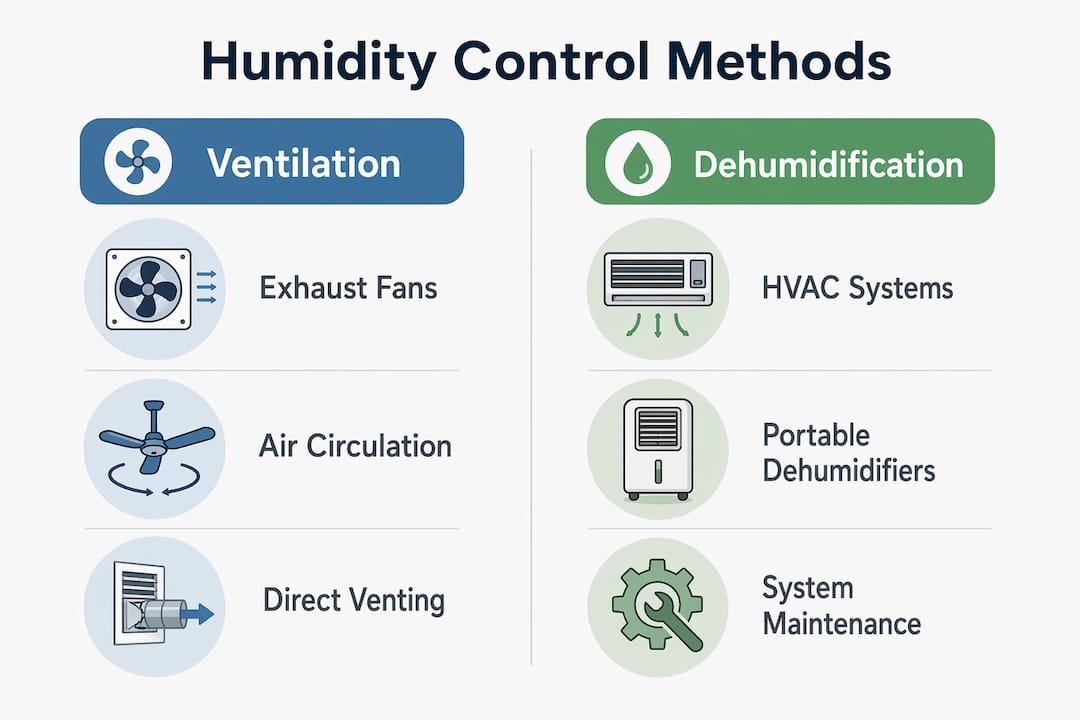
Ventilation is the starting point. Exhaust fans in bathrooms and kitchens must vent directly outside, not into attic spaces. Running them during and for 15 minutes after showers removes the bulk of moisture before it spreads through the home. In Southwest Florida, however, bringing in raw outdoor air without treating it first adds humidity rather than removing it.
Standard air conditioners often fail to remove enough moisture in high-humidity climates because they are sized for sensible (temperature) load, not latent (moisture) load. The result is a home that feels cool but still clammy. A dedicated dehumidifier or a whole-house dehumidification system paired with your HVAC solves this directly. You can read a detailed breakdown of dehumidifier vs. AC performance for humid climates to understand which setup fits your home.
Energy-efficient, airtight homes trap moisture indoors, making dedicated dehumidification necessary even when the AC runs constantly. Sealing air leaks around windows, doors, and penetrations reduces how much humid outdoor air enters. But sealing without ventilation creates a different problem: stale, moisture-laden air with nowhere to go.
Do’s and don’ts for managing indoor humidity:
- Do use a hygrometer to measure actual RH before buying equipment
- Do size your HVAC system for latent load, not just temperature
- Do run exhaust fans every time you cook or shower
- Do seal gaps around pipes, windows, and exterior doors
- Don’t rely on AC alone in a high-humidity climate
- Don’t vent exhaust fans into attic or crawl spaces
- Don’t skip annual HVAC maintenance, as dirty coils lose dehumidification capacity fast
- Don’t ignore condensation on windows or walls, even if it seems minor
Understanding what humidity control means in HVAC systems helps homeowners ask the right questions when upgrading or replacing equipment.
How do you monitor and maintain ideal indoor humidity year-round?
A digital hygrometer is the most practical tool for tracking indoor RH. Basic models cost under $20 and give you an accurate reading in real time. Place one in the bedroom, one in the living area, and one in the basement or utility room if you have one. Those three locations cover the zones most likely to drift outside the 40%–60% target.
Seasonal variation matters in Southwest Florida. Summer brings relentless outdoor humidity, so your system works hardest from june through october. Winter months are drier but can still push indoor humidity above 60% during warm spells. Checking your hygrometer readings weekly during peak season and monthly in cooler months keeps you ahead of problems before they develop.
Consistent air circulation is as important as dehumidification. Stagnant air allows moisture to pool in corners, closets, and behind furniture. Running ceiling fans on low keeps air moving and helps your HVAC system distribute conditioned air evenly. This reduces the chance of localized high-humidity zones where mold can start.
Routine HVAC maintenance directly affects humidity control. Dirty evaporator coils lose their ability to remove moisture from the air. Clogged drain lines cause condensate to back up and add moisture to your living space. Scheduling a professional tune-up twice a year keeps your system performing at full dehumidification capacity. For a detailed seasonal plan, the SWFL homeowner’s humidity guide covers the full year-round strategy.
Pro Tip: Place your hygrometer away from windows, exterior walls, and vents. Those spots give skewed readings. The center of a room at breathing height gives you the most accurate picture of what you are actually living in.
Key Takeaways
Maintaining indoor relative humidity between 40% and 60% is the single most effective action homeowners in high-humidity climates can take to protect their health, comfort, and home structure.
| Point | Details |
|---|---|
| Target RH range | Keep indoor humidity at 40%–60% per EPA and ASHRAE standards to prevent mold and health issues. |
| Health impact | Humidity above 60% feeds dust mites and mold; below 30% dries airways and raises viral risk. |
| Structural damage | Moisture causes hidden, cumulative damage to wood, metal, and HVAC systems before symptoms appear. |
| AC limitations | Standard air conditioners often fail to remove enough moisture; pair them with a dedicated dehumidifier. |
| Monitoring habit | Use a digital hygrometer in bedrooms and main living areas and check readings weekly during humid months. |
What I’ve learned after years of watching humidity damage homes
Most homeowners I talk to think their air conditioner handles humidity automatically. That assumption is the most expensive mistake I see in Southwest Florida. An AC cools the air. It does not always remove enough moisture, especially in a home that was built or retrofitted for energy efficiency. The tighter the building envelope, the more you need a dedicated dehumidification strategy.
The other misconception is that humidity damage is obvious. It is not. I have seen homes where the walls looked fine, the paint was intact, and the floors felt solid. Then someone pulled back a baseboard or opened an access panel and found mold colonies that had been growing for two years. The role of AC in humidity control is real but limited, and homeowners who understand that limitation make far better decisions about their systems.
The good news is that small, consistent actions produce real results. A properly sized system, a $20 hygrometer, and a habit of checking readings once a week will protect your home better than any single expensive fix. Humidity control is not a project. It is a practice. Treat it like one and your home will stay healthier, last longer, and cost less to maintain over time.
Understanding why humidity control matters for residential buildings reinforces the same principles regardless of climate: consistent monitoring and integrated system management beat reactive repairs every time.
— albert
Ultraairswfl helps Southwest Florida homeowners breathe easier
Living in Naples, Cape Coral, or Fort Myers means fighting humidity every single day. Ultraairswfl specializes in HVAC solutions built for the specific demands of Southwest Florida’s climate, from properly sized air conditioning systems to whole-house dehumidification and indoor air quality improvements that address moisture at the source.
The Ultraairswfl team handles installation, maintenance, and system upgrades with one goal: keeping your indoor humidity in the healthy 40%–60% range year-round. Whether you need a system assessment, a dehumidifier installation, or a full HVAC upgrade, the heating and cooling solutions available cover every stage of the process. Contact Ultraairswfl to schedule a home comfort assessment and get your humidity under control before the next rainy season arrives.
FAQ
What is the ideal indoor humidity level for a home?
The EPA and ASHRAE both recommend keeping indoor relative humidity between 40% and 60%. This range prevents mold growth, dust mite proliferation, and respiratory irritation.
Can my air conditioner control humidity on its own?
Standard air conditioners cool air but often remove insufficient moisture in high-humidity climates because they are sized for temperature, not latent load. A dedicated dehumidifier paired with your AC provides full humidity control.
What health problems does high indoor humidity cause?
Humidity above 60% promotes mold growth and dust mite activity, both of which trigger allergies, asthma, and respiratory infections. It also disrupts sleep by blocking the body’s natural cooling process.
How do I know if my home has a humidity problem?
Window condensation, musty odors, peeling paint, and warped wood floors are the most common early signs of excess indoor moisture. A digital hygrometer confirms the problem with an exact RH reading.
How often should I check my indoor humidity levels?
Check hygrometer readings weekly during peak humid months (june through october in Southwest Florida) and monthly during cooler periods. Schedule HVAC maintenance twice a year to keep dehumidification capacity at its best.
Recommended
- How to Reduce Humidity in Your House: 2026 SWFL Homeowner’s Guide – Ultra Air Heating and Cooling
- The Role of AC in Humidity Control for Homeowners
- Managing Humidity Levels in Southwest Florida: The 2026 Homeowner’s Guide – Ultra Air Heating and Cooling
- How to Reduce Humidity in Your House This Summer: A SWFL Guide