
Whole house ventilation is defined as a mechanical system that continuously exchanges stale indoor air with fresh outdoor air across every room in your home. Unlike opening a window or running a bathroom fan, these systems work around the clock to meet the ASHRAE 62.2 standard for residential ventilation rates. The EPA recognizes mechanical ventilation as essential for modern airtight homes, where energy-efficient building envelopes trap CO2, VOCs, and moisture. Heat Recovery Ventilators (HRVs) and Energy Recovery Ventilators (ERVs) take this further by recovering 70%–80% of the energy from outgoing air, making the system both healthy and efficient.
What is whole house ventilation, and how does it work?
Whole house ventilation works by using fans, ducts, and controls to move a measured volume of air into and out of your home on a continuous schedule. The system does not rely on random air leaks through walls or windows. Relying on uncontrolled air leaks for ventilation undermines both indoor air quality goals and energy efficiency. Intentional, mechanical ventilation gives you real control over what enters your home and when.
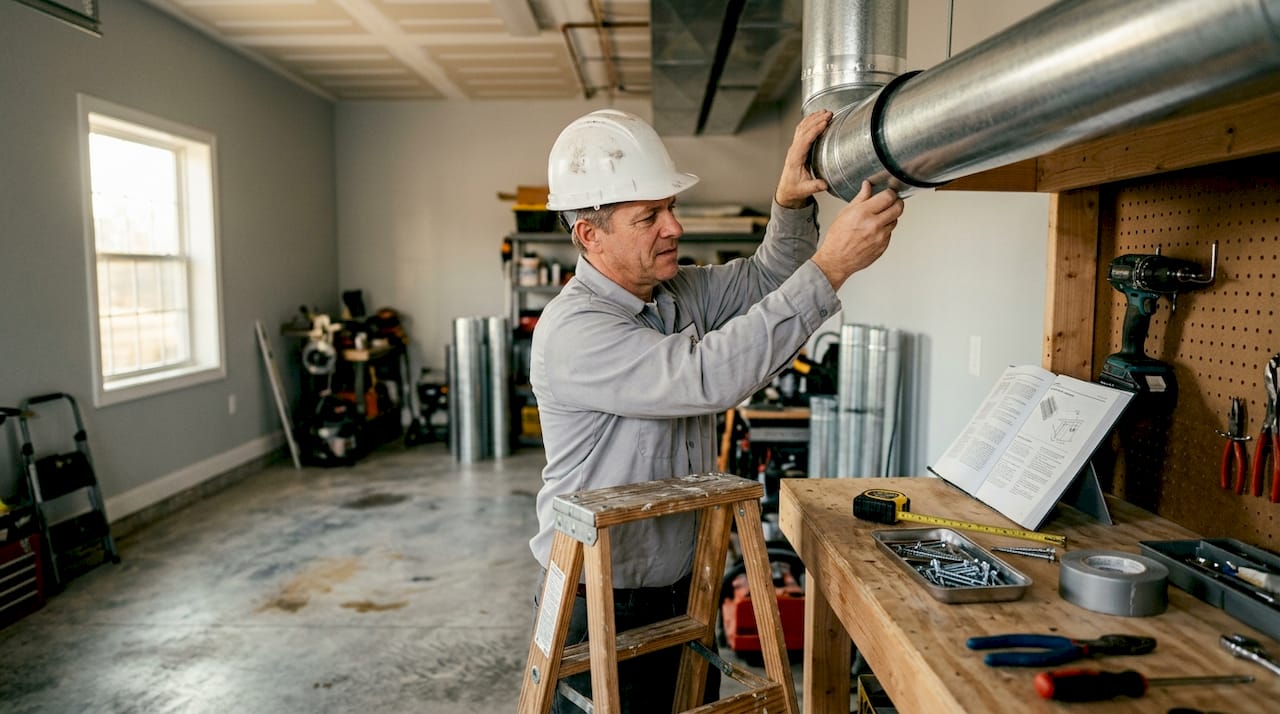
The industry term you will hear most often is “whole house mechanical ventilation,” and it covers three distinct system architectures. Each one moves air differently and suits different homes, climates, and budgets. Understanding the difference before you buy saves you money and avoids performance problems down the road.
What are the main types of whole house ventilation systems?
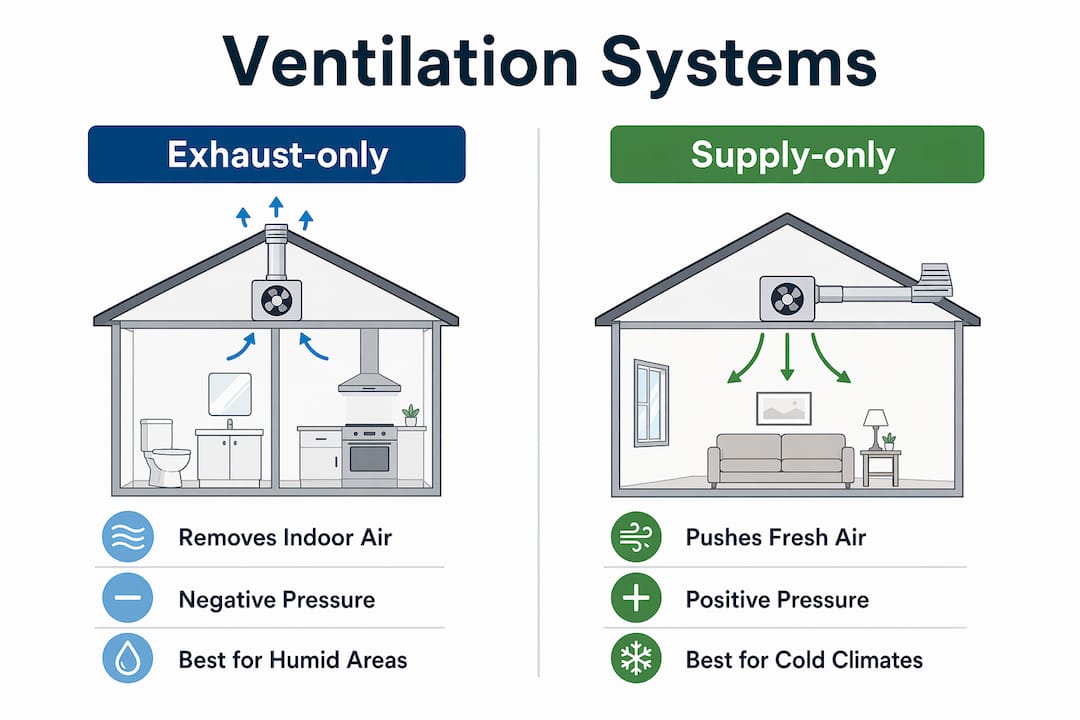
Three primary system types exist for whole house ventilation: exhaust-only, supply-only, and balanced. Each creates a different air pressure relationship inside your home.
Exhaust-only systems
Exhaust-only systems pull stale air out of the home, creating slight negative pressure. Fresh air then enters through small gaps in the building envelope. These systems are simple and inexpensive to install, but they give you no control over where replacement air comes from or whether it is filtered.
Supply-only systems
Supply-only systems push fresh outdoor air in, creating positive pressure. Stale air exits through leaks and exhaust points. This approach works well in hot, humid climates because positive pressure resists moisture infiltration from outside. However, it can push conditioned air out through unintended gaps, raising energy costs.
Balanced systems with HRV or ERV
Balanced ventilation systems maintain neutral air pressure by moving equal volumes of air in and out simultaneously. This eliminates the risk of unfiltered air infiltration and provides even air exchange throughout the home. When paired with an HRV or ERV, the system transfers heat and moisture between the two airstreams. HRVs and ERVs recover 70%–80% of the energy from outgoing stale air to pre-condition incoming fresh air. That recovery rate translates directly into lower heating and cooling bills.
| System type | How it works | Best for | Key limitation |
|---|---|---|---|
| Exhaust-only | Removes indoor air, negative pressure | Mild climates, tight budgets | No control over incoming air quality |
| Supply-only | Pushes fresh air in, positive pressure | Hot, humid climates | May increase energy loss through gaps |
| Balanced (HRV/ERV) | Equal exchange, neutral pressure | Most climates, high-performance homes | Higher upfront cost |
Pro Tip: In Southwest Florida’s hot, humid climate, an ERV is often the better choice over an HRV because it transfers moisture as well as heat, preventing excess humidity from entering your home with the fresh air supply.
What are the benefits of whole house ventilation for health and comfort?
Whole house ventilation improves indoor air quality by continuously diluting CO2, VOCs, allergens, and other pollutants that build up inside sealed homes. Ventilation is the final step in a layered indoor air quality strategy: after source control and filtration, mechanical ventilation dilutes whatever remains. For families with asthma, allergies, or pets, that continuous dilution makes a measurable difference in daily comfort.
Moisture control is another major benefit. Whole house ventilation helps control indoor humidity, preventing mold growth and protecting your home’s structure over time. In Florida, where humidity is a year-round concern, this function alone justifies the investment.
Here are the core benefits for homeowners and renters:
- Reduced pollutants: Continuous fresh air dilutes CO2, cooking odors, VOCs from furniture and cleaning products, and pet dander.
- Moisture control: Balanced airflow prevents the humidity spikes that lead to mold, mildew, and wood rot.
- Consistent comfort: Even air distribution eliminates stuffy rooms and hot spots caused by stagnant air.
- Energy savings: HRV and ERV systems recover heat and moisture from outgoing air, lowering the load on your air conditioner or furnace.
- Better sleep and focus: Lower CO2 levels at night improve sleep quality. Lower daytime CO2 improves concentration.
- Code compliance: Properly designed systems meet ASHRAE 62.2, protecting you during home inspections and resale.
For homeowners building or retrofitting toward a non-toxic home environment, mechanical ventilation is a foundational requirement, not an optional upgrade.
How does a whole house fan differ from a ventilation system?
A whole house fan and a whole house ventilation system are not the same thing. Whole house fans differ fundamentally from ventilation systems: fans provide high-volume cooling by exhausting hot air through the attic, while ventilation systems provide measured, year-round fresh air exchange. Confusing the two leads homeowners to buy the wrong product for their actual problem.
A whole house fan is a seasonal cooling tool. You open windows, run the fan for 15–30 minutes in the evening, and flush hot air out of the living space. It moves a large volume of air quickly but does not filter it, does not control humidity, and does not run continuously. It also requires open windows to work, which defeats the purpose on days when outdoor air quality is poor.
A whole house ventilation system runs continuously, moves a much smaller and precisely measured volume of air, and operates independently of outdoor conditions. It filters incoming air, recovers energy, and meets building code requirements for fresh air delivery.
Key differences at a glance:
- Purpose: Fan = rapid cooling. Ventilation system = continuous fresh air exchange.
- Runtime: Fan = intermittent, seasonal. Ventilation system = continuous, year-round.
- Airflow volume: Fan = high volume, uncontrolled. Ventilation system = low volume, measured.
- Energy recovery: Fan = none. HRV/ERV = 70%–80% recovery.
- Code compliance: Fan = not a ventilation substitute. Ventilation system = meets ASHRAE 62.2.
Pro Tip: You can use both systems together. Run a whole house fan on cool spring evenings for rapid cooling, and let your ventilation system handle continuous fresh air and humidity control the rest of the year. They serve different functions and do not compete.
What should you know before choosing and installing a ventilation system?
System sizing is the most common mistake homeowners make. ASHRAE 62.2 sets specific ventilation rates based on floor area and the number of bedrooms. An undersized system fails to dilute pollutants. An oversized system wastes energy and can create uncomfortable drafts. Get the math right before you buy anything.
Professional commissioning to balance incoming and outgoing airflow is critical to meet ASHRAE 62.2 and achieve design performance. Many systems are installed but never properly balanced, which means they never deliver what they were designed to provide. Commissioning is not optional if you want the system to actually work.
Climate matters for system selection. In cold climates, HRVs prevent frost buildup in the heat exchanger core. In hot, humid climates like Southwest Florida, ERVs manage both heat and moisture transfer. Your local climate should drive the decision, not marketing materials. Reviewing HVAC options for Florida homes with a qualified professional gives you a clear picture of what works in your specific region.
Installation costs vary based on home size, system type, brand, and labor. Advanced ERV and HRV systems carry higher upfront costs, but energy recovery offsets operating expenses over time. The payback period depends on how much you currently spend on heating and cooling.
Common pitfalls to avoid:
- Skipping professional commissioning after installation
- Choosing a system based on price alone without checking ASHRAE 62.2 sizing requirements
- Neglecting regular filter and grille cleaning, which reduces airflow and system effectiveness
- Installing an HRV in a hot, humid climate where an ERV is the correct choice
- Assuming a bathroom exhaust fan or kitchen range hood substitutes for whole house ventilation
Modern high-performance homes treat whole house ventilation as foundational infrastructure, not an add-on. If you are planning an eco-friendly HVAC upgrade, ventilation belongs at the top of the list.
Key Takeaways
Whole house ventilation is the most direct and controllable way to protect indoor air quality, manage humidity, and reduce energy costs in a modern home.
| Point | Details |
|---|---|
| Balanced systems outperform alternatives | HRV and ERV systems maintain neutral pressure and recover 70%–80% of outgoing energy. |
| Size to ASHRAE 62.2 | Ventilation rates must match floor area and bedroom count to meet code and perform correctly. |
| Fans are not ventilation | Whole house fans cool rapidly but do not substitute for continuous, measured fresh air exchange. |
| Commission after installation | Professional balancing is required to achieve design airflow and meet ventilation standards. |
| Climate drives system choice | ERVs suit hot, humid climates; HRVs suit cold climates where frost protection is needed. |
Why I think whole house ventilation is now non-negotiable
I have watched the conversation around home ventilation shift dramatically over the past decade. When homes were leaky, ventilation happened by accident through gaps in walls and around windows. Nobody thought about it because the house breathed on its own. That era is over.
Modern construction seals homes tightly to cut energy costs. That is the right call for efficiency, but it creates a problem: the air inside has nowhere to go. Pollutants accumulate. Humidity builds. CO2 rises while you sleep. The home becomes a sealed box, and the people inside breathe whatever is in it.
What surprises most homeowners I talk to is the cost objection. They assume running a ventilation system will spike their utility bills. The reality is that modern HRV and ERV systems minimize energy impact by recovering heat and moisture from outgoing air. The operating cost is often less than running a single light bulb continuously. The health cost of not ventilating is far higher.
My honest recommendation: do not treat ventilation as a luxury or a final phase of a renovation. Treat it as infrastructure, the same way you treat plumbing or electrical. A balanced ERV system, properly sized and commissioned, is the single best investment most homeowners can make for long-term comfort and health. Consult an HVAC professional who understands both the building science and your local climate before you commit to any system.
— albert
Whole house ventilation solutions from Ultraairswfl
Ultraairswfl serves homeowners across Naples, Cape Coral, and Fort Myers with HVAC expertise that covers ventilation assessment, system selection, and professional installation.

If you are ready to improve your home’s air quality and cut energy waste, Ultraairswfl’s team can evaluate your current setup and recommend the right system for your home size, budget, and Florida climate. Whether you need a full ERV installation or a ventilation audit on an existing system, the team brings the local knowledge that generic online guides cannot provide. Explore heating and ventilation solutions tailored for Southwest Florida homes, or review the home air quality improvement process to understand your next steps.
FAQ
What is the purpose of whole house ventilation?
Whole house ventilation continuously replaces stale indoor air with filtered fresh outdoor air, reducing CO2, VOCs, allergens, and moisture throughout the entire home. It meets ASHRAE 62.2 standards for residential fresh air delivery.
How much energy does a whole house ventilation system use?
HRV and ERV systems recover 70%–80% of the energy from outgoing air, which significantly reduces the added load on your heating and cooling equipment. Operating costs are typically low compared to the comfort and health benefits delivered.
Do I need a whole house ventilation system if I have a new home?
New homes built to modern energy codes are often too airtight to ventilate adequately through natural air leakage. Mechanical ventilation is required by many building codes and is the only reliable way to meet ASHRAE 62.2 fresh air standards in a tight home.
How often does a whole house ventilation system need maintenance?
Regular cleaning of intake grilles and filter replacement are the primary maintenance tasks. Frequency depends on the system and local air quality, but most manufacturers recommend checking filters every 3–6 months.
Can a whole house ventilation system help with allergies and asthma?
Yes. Continuous fresh air dilution reduces indoor concentrations of allergens, dust, pet dander, and VOCs. Homeowners managing asthma or allergies benefit from pairing ventilation with quality filtration for the strongest results.
Recommended
- What Is HVAC? A Complete Guide for SW Florida Homes
- Whole House Dehumidifier Installation in Cape Coral: The 2026 Homeowner’s Guide
- Whole House Dehumidifier Installation in Cape Coral, FL: The Complete 2026 Homeowner’s Guide – Ultra Air Heating and Cooling
- Home Air Quality Improvement Process: 2026 Guide