
UV air purification is defined as a disinfection process that uses ultraviolet-C (UV-C) light to damage the DNA and RNA of airborne viruses, bacteria, and mold spores, rendering them unable to reproduce. The industry standard term is ultraviolet germicidal irradiation, or UVGI. Standard mercury vapor lamps emit at 253.7 nm, which sits within the UV-C spectrum of 200–280 nm. This technology does not filter dust or allergens from the air. It works alongside mechanical filtration, not instead of it. For homeowners and renters in Southwest Florida, where humidity drives mold and microbial growth, understanding what UV air purification can and cannot do is the first step toward building a genuinely effective indoor air quality strategy.
What is UV air purification and how does it work?
UV-C light disrupts the genetic material of microorganisms, stopping them from replicating. A pathogen that cannot replicate cannot infect you. That is the core mechanism behind every UV air purification system on the market today.
The UV-C spectrum runs from 200 to 280 nm. The 253.7 nm wavelength produced by standard mercury vapor lamps is the most studied and widely used for germicidal purposes. At this wavelength, UV-C photons penetrate microbial cell walls and break the chemical bonds in DNA and RNA strands. The result is a microorganism that is biologically inactivated, even if it remains physically present in the air.
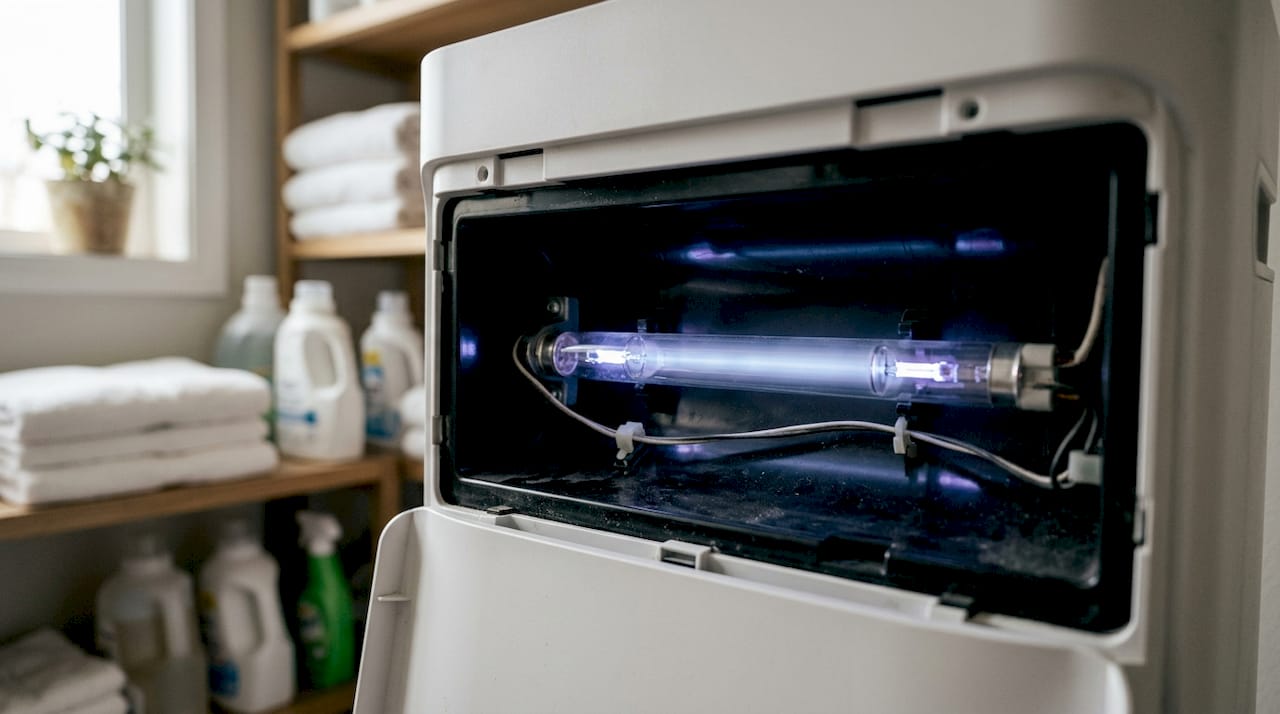
Effectiveness depends on three factors working together: UV-C intensity, the transmittance of the medium the light passes through, and exposure time. More UV power alone does not guarantee better disinfection unless exposure time is also sufficient. A device with a powerful lamp but fast airflow can still fail to neutralize pathogens.
The required exposure time for effective inactivation is roughly 1–2 seconds. Most residential portable UV units move air through the lamp chamber in under 0.5 seconds. That gap explains why standalone UV devices frequently underperform in real-world home settings.
- UV-C wavelength range: 200–280 nm
- Standard germicidal wavelength: 253.7 nm
- Required dwell time for pathogen inactivation: 1–2 seconds
- Typical residential airflow exposure: under 0.5 seconds
- UV-C targets: viruses, bacteria, mold spores
Pro Tip: When evaluating any UV air purifier, ask the manufacturer for its dwell time rating and UV dose specification. If those numbers are not listed, the device’s disinfection performance cannot be verified.
What are the benefits and limitations of UV air purifiers?
UV air purification neutralizes living pathogens. That is its genuine strength. Viruses, bacteria, and mold spores that pass through a properly designed UV chamber are inactivated before they can circulate back into your breathing zone.
The limitation is equally clear. UV does not physically remove anything from the air. Dead microbial matter remains suspended after UV exposure. Dust, pollen, pet dander, and other allergens pass through completely unaffected. A UV-only system leaves all of that floating in your home.
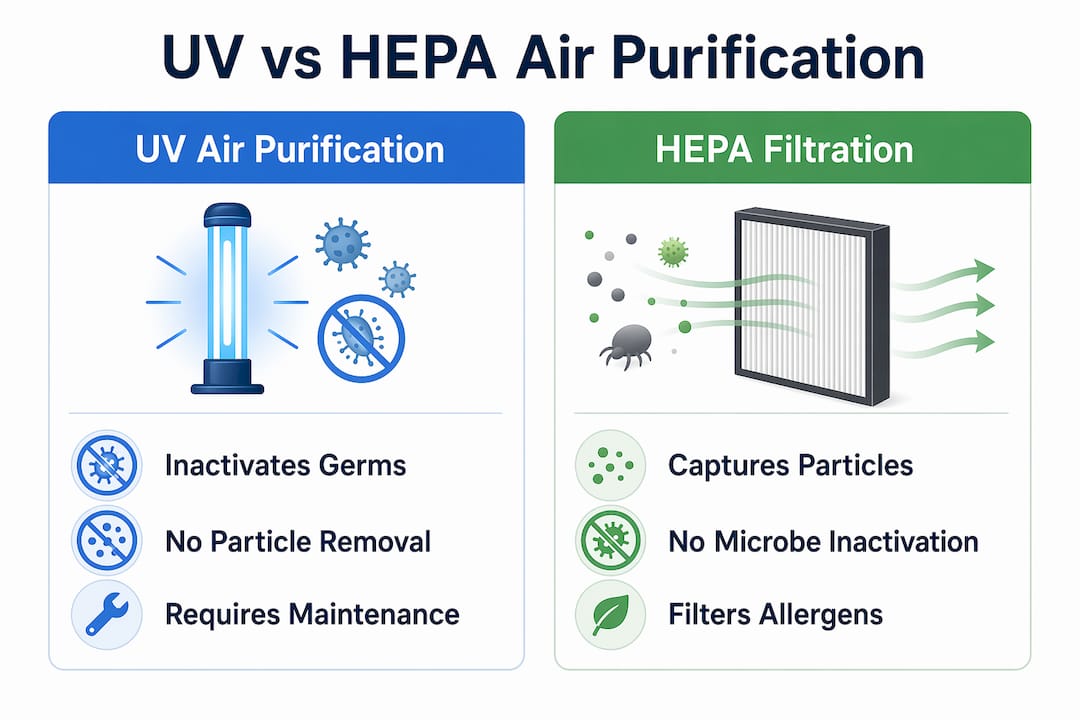
HEPA filters solve the problem UV cannot. HEPA filtration captures 99.97% of particles down to 0.3 microns, including the dead microbial debris that UV leaves behind. That number reflects why mechanical filtration remains the primary defense against allergens and airborne particles. UV is the secondary layer that handles what filters cannot: live microorganisms that slip through or grow on filter surfaces.
| Feature | UV air purification | HEPA mechanical filtration |
|---|---|---|
| Inactivates viruses and bacteria | Yes | No |
| Removes dust and allergens | No | Yes |
| Removes dead microbial debris | No | Yes |
| Requires sufficient dwell time | Yes | No |
| Works on mold spores | Inactivates only | Captures physically |
| Can replace the other | No | No |
Wavelength choice also carries safety trade-offs. Conventional 254 nm UVGI is mostly limited to upper-room installations because direct exposure harms skin and eyes. Far-UVC at 222 nm allows whole-room use, but wavelengths below 242 nm can generate ozone and secondary particulate matter at rates roughly 20 times higher per disinfection rate than wavelengths above 242 nm. That is a meaningful indoor air pollution risk if the wrong device is installed without proper ventilation.
Pro Tip: Look for UV systems that specify operation above 242 nm to avoid ozone generation. If a device does not list its wavelength, treat that as a red flag.
Experts consistently advise treating UV as a supplement to air filters, not a replacement. The most effective home air quality systems combine both technologies in sequence.
What safety precautions and maintenance does UV air purification require?
UV-C light is harmful to human skin and eyes. Direct exposure causes burns and eye damage within seconds. Every residential UV device must fully contain the lamp so occupants are never exposed during normal operation. This is not optional. It is a baseline safety requirement for any UV system you install.
Ozone generation is the second safety concern. UV lamps operating below 242 nm produce ozone as a byproduct. Ozone irritates the respiratory system and can worsen asthma and allergy symptoms. Choosing a device that operates at 253.7 nm or above 242 nm eliminates this risk.
Maintenance determines whether your UV system actually works over time. Three practices are non-negotiable:
- Clean UV lamp surfaces and quartz sleeves every three to six months. Dust buildup on the lamp surface blocks UV-C light from reaching the air stream, reducing germicidal output significantly.
- Replace lamps on the manufacturer’s recommended schedule, typically every 9,000–12,000 hours of operation. UV lamp intensity degrades over time even when the lamp still appears to glow.
- Inspect for line-of-sight obstructions inside the HVAC unit. Lamp surface dust or physical blockages reduce effectiveness just as much as a failing lamp.
Upper-room UV installations follow specific safety standards that limit lamp positioning and intensity to protect occupants below. Certified UV systems carry validation from recognized testing bodies, which confirms that the device delivers the UV dose it claims at the airflow rates specified.
Pro Tip: Mark your calendar for annual UV lamp maintenance at the same time as your HVAC tune-up. Combining both visits saves money and keeps your system performing at full capacity.
The UV Alliance notes that UV-C lamps consume relatively little energy and require no chemical disinfectants, making them a practical long-term option when maintained correctly. The technology is sustainable. The results depend entirely on how well you maintain it.
How to integrate UV air purifiers into your home HVAC system
UV air purification works best when it is built into your existing HVAC airflow, not used as a standalone portable unit. The reason is dwell time. Air moving through a central HVAC system travels at a controlled rate, and a properly sized UV lamp installed in the ductwork or at the air handler can achieve the 1–2 second exposure window that portable units rarely reach.
The most effective placement locations within an HVAC system include:
- Coil placement: Installing a UV lamp directly above the evaporator coil prevents mold and bacterial growth on the coil surface, one of the most common sources of indoor microbial contamination in humid climates like Southwest Florida.
- Drain pan area: UV lamps positioned near drain pans reduce standing water contamination that feeds mold growth.
- Return air ductwork: Placing UV emitters in the return air stream exposes recirculating air to germicidal light before it passes through the filter and into the living space.
Pairing UV with a HEPA or high-MERV mechanical filter in the same air handler creates a two-stage system. The filter captures particles and microbial debris. The UV lamp inactivates live pathogens. Neither stage does the other’s job, and together they cover the full range of indoor air threats.
Fan speed matters too. Slower fan settings increase the time air spends near the UV lamp, improving exposure. Running your HVAC fan continuously at a lower speed, rather than cycling it on and off with the compressor, increases the total volume of air treated each hour.
Professional installation is the right call for HVAC-integrated UV systems. Lamp sizing, placement geometry, and electrical connections all affect performance. A technician familiar with UV lights in HVAC systems can match the lamp output to your specific air handler’s airflow rate, which is the variable most homeowners cannot calculate on their own.
For renters or homeowners not ready for HVAC integration, a high-quality portable air purifier that combines a true HEPA filter with a UV stage offers a meaningful improvement over UV-only devices. The indoor air quality improvement process does not have to be all-or-nothing. Start with the layer that addresses your biggest concern, then build from there.
Key Takeaways
UV air purification inactivates airborne pathogens through UV-C light exposure, but it requires mechanical filtration as a partner to physically remove particles, dead microbial debris, and allergens from indoor air.
| Point | Details |
|---|---|
| UV-C disinfects, not filters | UV-C light inactivates viruses and bacteria but does not remove dust, allergens, or microbial debris. |
| Dwell time determines effectiveness | Pathogens need 1–2 seconds of UV-C exposure; most portable units fall short of this threshold. |
| HEPA filtration is the primary defense | HEPA captures 99.97% of particles down to 0.3 microns, covering what UV cannot address. |
| Wavelength affects safety | UV lamps below 242 nm generate ozone; choose systems operating at 253.7 nm to avoid this risk. |
| Maintenance sustains performance | Clean lamps and replace them on schedule; dust on lamp surfaces blocks germicidal output entirely. |
Why I think most homeowners are using UV air purifiers wrong
The single biggest mistake I see is treating a UV air purifier as a complete air cleaning solution. People buy a UV device, plug it in, and assume their air is clean. It is not. The UV lamp may be inactivating some pathogens, but the dust, pollen, and pet dander are still circulating freely. The dead microbial fragments are still in the air. Nothing has been physically removed.
The second mistake is ignoring maintenance. A UV lamp that has not been cleaned in a year is probably delivering a fraction of its rated germicidal output. Dust on the quartz sleeve is invisible from across the room, but it cuts UV-C transmission dramatically. I have seen HVAC systems where the UV lamp was still glowing but the quartz sleeve was so coated with grime that it was essentially decorative.
The technology itself is sound. UV-C germicidal irradiation has decades of validated use in hospitals, water treatment, and food processing. The problem in residential settings is almost always installation quality and maintenance discipline, not the underlying science.
My honest recommendation: invest in a good HEPA or high-MERV filter first. Then add UV as a second layer, ideally integrated into your HVAC system by a professional who can verify dwell time and lamp placement. If you live in a humid climate like Naples or Fort Myers, where mold pressure is constant, the UV benefits for HVAC are real and worth the investment. Just do not skip the filter.
Far-UVC at 222 nm is worth watching. Early research suggests it can disinfect occupied spaces without the skin and eye hazards of conventional 254 nm systems. The ozone generation risk at wavelengths below 242 nm is a real concern that the industry is actively working to address. For now, 253.7 nm HVAC-integrated systems with proper filtration remain the most reliable choice for residential use.
— albert
Ultraairswfl can help you get UV air purification right
UV air purification delivers real results when it is sized, installed, and maintained correctly. Ultraairswfl specializes in HVAC installation, maintenance, and indoor air quality improvements for homeowners across Naples, Cape Coral, and Fort Myers. The team integrates UV germicidal systems directly into existing HVAC equipment, matches lamp output to your specific airflow rate, and pairs UV with the right mechanical filtration for your home’s needs.
Whether you are starting from scratch or upgrading an existing system, Ultraairswfl walks you through every step of the air quality improvement process with transparent pricing and professional service. Contact Ultraairswfl today to schedule an assessment and find out which UV and filtration combination fits your home.
FAQ
What does UV air purification actually do?
UV air purification uses UV-C light at 253.7 nm to damage the DNA and RNA of airborne viruses, bacteria, and mold spores, preventing them from reproducing. It disinfects the air but does not physically remove particles or allergens.
Is UV air purification effective on its own?
Standalone UV devices are often not effective because most residential units expose air to UV-C light for under 0.5 seconds, well below the 1–2 second dwell time needed for reliable pathogen inactivation. UV works best when combined with HEPA filtration.
Can UV air purifiers remove allergens like pollen and dust?
No. UV-C light only inactivates living microorganisms. Pollen, dust, pet dander, and dead microbial debris require mechanical filtration, such as a HEPA filter, to be physically captured and removed from the air.
Are UV air purifiers safe to use at home?
UV air purifiers are safe when the lamp is fully enclosed and the device operates at or above 242 nm. Devices operating below 242 nm can generate ozone, which irritates the respiratory system. Always verify the wavelength specification before purchasing.
How often should UV air purifier lamps be replaced?
UV lamps typically require replacement every 9,000–12,000 hours of operation, and lamp surfaces and quartz sleeves should be cleaned every three to six months. Dust buildup on the lamp blocks UV-C output and reduces disinfection performance even when the lamp still appears to be working.