
A smart thermostat is an intelligent device that automates your home’s heating and cooling based on your schedule, habits, and real-time occupancy. The role of smart thermostats goes well beyond simple temperature control. These devices use Wi-Fi connectivity, machine learning algorithms, and geofencing to cut energy waste and lower utility bills without requiring constant manual adjustments. Ultraairswfl installs and configures these systems across Southwest Florida, helping homeowners in Naples, Cape Coral, and Fort Myers get the most from every degree of comfort.
How do smart thermostats function to improve energy efficiency?
Smart thermostats work by learning your daily routine and adjusting your HVAC system automatically. Within the first week of use, most models track when you wake up, leave for work, return home, and go to sleep. The device then builds a temperature schedule around those patterns, so your system runs only when it needs to.
Four core mechanisms drive this efficiency:
-
Occupancy learning. Sensors and algorithms detect when people are home and when the house is empty. The thermostat lowers heating or cooling during empty hours, then restores comfort before you return. Automated adjustments replace the manual interventions most homeowners forget to make.
-
Geofencing. Your phone’s GPS tells the thermostat when you leave a set boundary around your home. The system shifts to an energy-saving mode the moment you drive away, then starts conditioning the air as you approach. This eliminates the common problem of forgetting to adjust the thermostat before leaving.
-
Demand response participation. Utilities recruit millions of smart thermostats to reduce grid load during peak consumption periods. When demand spikes, the utility sends a signal and the thermostat makes a small, temporary temperature adjustment. This helps utilities avoid expensive infrastructure upgrades and passes financial incentives back to participating homeowners.
-
Real-time adjustments. Smart thermostats monitor indoor conditions continuously and react to changes in outdoor temperature, humidity, and occupancy. This prevents the HVAC system from running longer than necessary.
Pro Tip: Set your geofencing radius to at least one mile from your home. A tighter boundary gives the system too little time to pre-condition the air before you arrive.
What are the advantages of smart thermostats over traditional models?
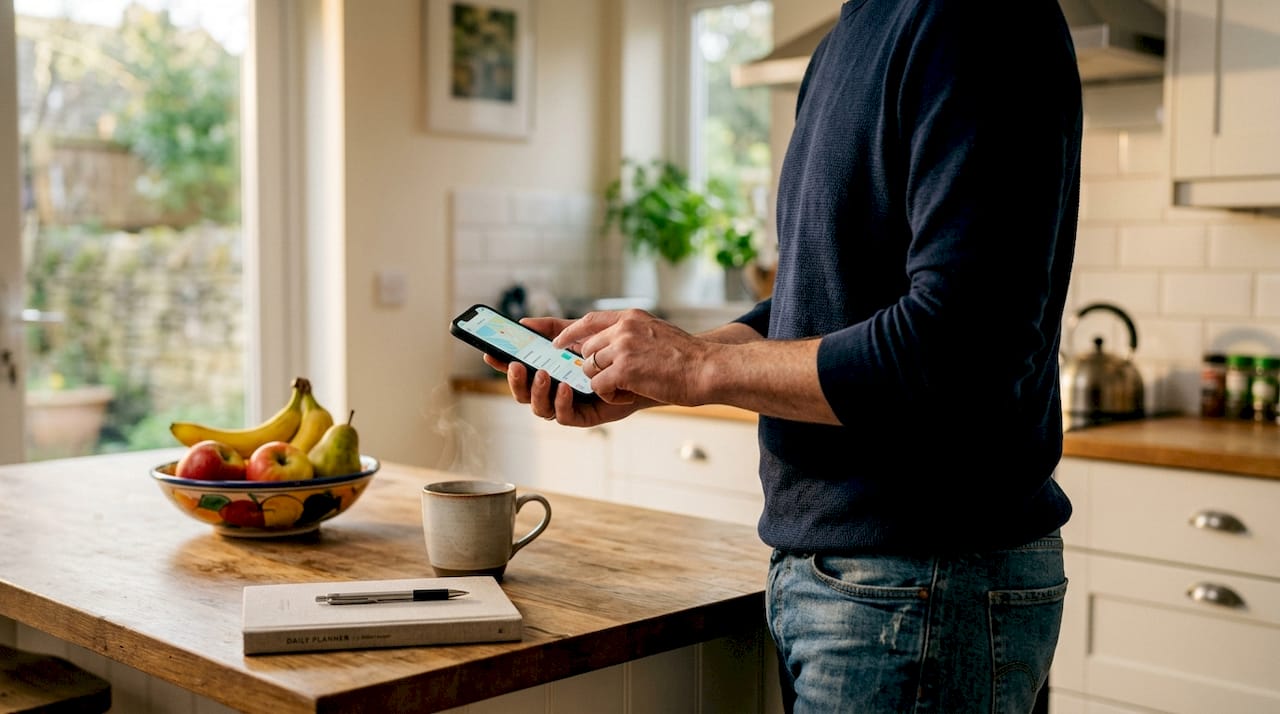
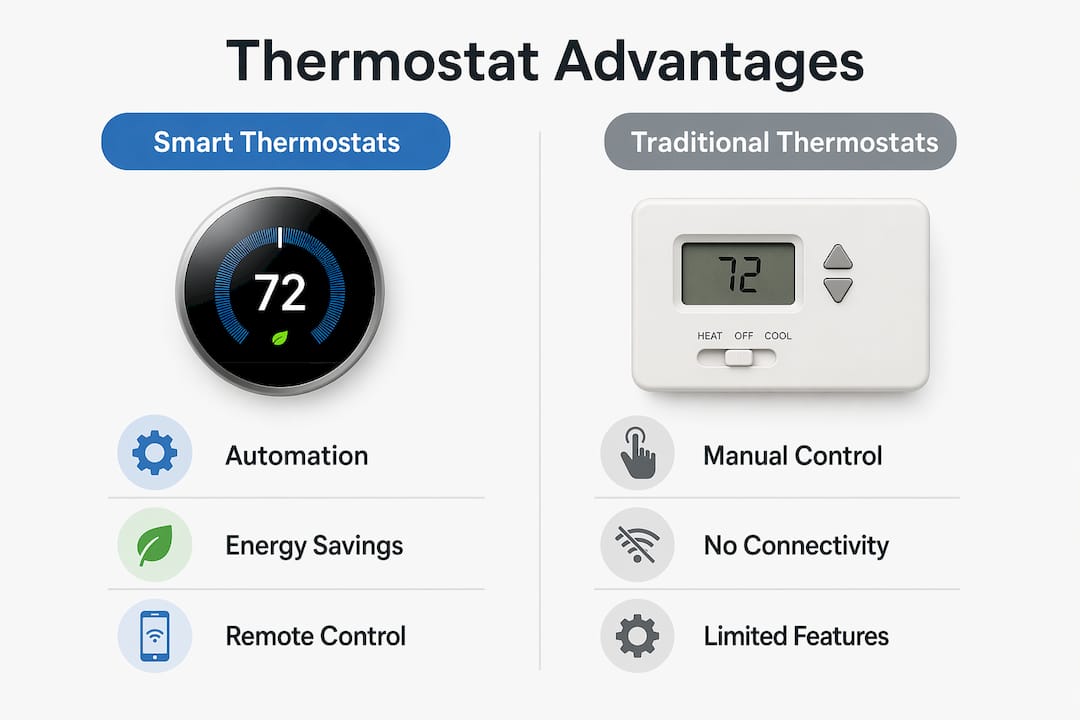
The core advantage of a smart thermostat over a manual or basic programmable unit is that it works without you thinking about it. A programmable thermostat requires you to set a schedule once and hope your life stays predictable. A smart thermostat adapts when your schedule changes.
Key advantages include:
- Remote control. You can adjust temperature from anywhere using a smartphone app. If you leave work early or stay late, the system responds to your actual location, not a fixed schedule.
- Adaptive learning. The device refines its schedule over time based on your real behavior. It gets more accurate the longer you use it.
- Multi-room sensing. Premium models connect to remote sensors placed in bedrooms, living rooms, or other zones. The system prioritizes comfort where people actually are, not just where the thermostat sits.
- Indoor air quality monitoring. Some models track humidity, CO2 levels, and airborne particles. Pairing this data with a smart air monitor gives you a fuller picture of your home’s air health.
- Preventive maintenance reminders. Smart thermostats track HVAC runtime and alert you when filter changes or service checks are due.
- Lower utility bills. Reduced HVAC runtime during unoccupied hours is the primary driver of energy savings. The system stops conditioning empty rooms, and that reduction shows up directly on your monthly bill.
The shift toward invisible energy management, where the thermostat handles adjustments without prompting, is what makes these devices genuinely useful rather than just a novelty. Homeowners who rely on HVAC automation consistently report less effort and lower costs compared to manual control.
What practical considerations affect smart thermostat effectiveness?
A smart thermostat amplifies the efficiency of a well-functioning HVAC system. It cannot fix a system that is already struggling. Smart thermostats facilitate efficiency but are not a substitute for mechanical or structural repairs. If your ducts leak, your insulation is thin, or your equipment is aging, the thermostat will schedule a failing system more precisely. That is not the same as saving energy.
Three factors have the biggest impact on real-world performance:
Wiring and power supply
Most smart thermostats require a C-wire for continuous power. Older homes often lack this wire. Without it, some models use a “power stealing” method that draws current from other wires. This can cause flickering lights, relay chatter, or system errors. Before buying, check your existing wiring or ask a technician to confirm compatibility.
Thermostat placement
Incorrect thermostat placement causes false temperature readings, which trigger unnecessary HVAC cycles. Keep the device away from direct sunlight, exterior walls, drafts, and heat-generating appliances. A hallway near the center of your home is usually the best location. For two-story homes, placement rules differ from single-level layouts and deserve specific attention.
Home insulation and HVAC condition
The quality of your home’s insulation directly limits how much a smart thermostat can save. A well-insulated home holds conditioned air longer, so the HVAC runs fewer cycles. Poor insulation forces the system to run constantly regardless of how smart the thermostat is. The role of insulation in HVAC efficiency is often underestimated by homeowners focused on device upgrades.
Pro Tip: Before installing a smart thermostat, schedule an HVAC inspection. A technician can identify duct leaks, refrigerant issues, or insulation gaps that would limit your savings.
What advanced features do top smart thermostats offer?
The top smart thermostats for homes in 2026 go well beyond scheduling. Premium models prioritize features that connect your HVAC system to a broader smart home ecosystem, giving you more control and better data.
Advanced features worth knowing:
- Voice assistant integration. Most current models work with Amazon Alexa, Google Assistant, and Apple HomeKit. You can adjust temperature with a voice command without reaching for your phone.
- HVAC zoning support. When paired with a zoned system, a smart thermostat can direct heating and cooling to specific areas of the home. This pairs well with HVAC zoning setups that divide a home into independently controlled areas.
- Energy usage analytics. The app shows a breakdown of how long your system ran each day, what triggered each cycle, and how your usage compares to similar homes. This data helps you spot waste and refine your schedule.
- Demand response enrollment. Homeowners who enroll in utility demand response programs receive financial incentives in exchange for allowing small, temporary temperature adjustments during peak grid demand. You retain the right to override any adjustment.
- Humidity monitoring. In climates like Southwest Florida, humidity control matters as much as temperature. Some models track indoor humidity and coordinate with dehumidifiers or ventilation systems. A structured humidity control workflow can extend equipment life and improve comfort year-round.
- Schedule adaptability. If your routine changes, the thermostat detects the shift within a few days and updates its schedule automatically. You do not need to reprogram it manually.
Key Takeaways
Smart thermostats deliver real energy savings only when paired with a quality HVAC system, correct placement, and consistent use of automated scheduling rather than frequent manual overrides.
| Point | Details |
|---|---|
| Core function | Smart thermostats learn your schedule and adjust temperature automatically to cut HVAC runtime. |
| Biggest savings driver | Reducing heating and cooling during unoccupied hours lowers utility bills without sacrificing comfort. |
| Wiring matters | Most models need a C-wire; confirm compatibility before purchase to avoid power supply issues. |
| Placement is critical | Keep the thermostat away from sunlight, drafts, and heat sources to prevent false temperature readings. |
| System quality limits gains | A smart thermostat amplifies a good HVAC system but cannot compensate for poor insulation or failing equipment. |
Why I think most homeowners underestimate what smart thermostats actually require
After seeing dozens of installations across Southwest Florida, the pattern is consistent. Homeowners buy a smart thermostat expecting it to fix high utility bills, then feel disappointed when savings are smaller than expected. The device is rarely the problem.
The real issue is that a smart thermostat is a control layer, not a cure. It tells your HVAC system what to do and when. If the system itself is inefficient, or if the home leaks conditioned air through thin walls and unsealed ducts, the thermostat schedules that waste more precisely. That is not progress.
The homeowners who see the best results treat the thermostat as one part of a larger upgrade. They address insulation, get their ducts checked, and let the thermostat’s schedule run without constantly overriding it. Manual overrides are the single biggest reason smart thermostats underperform. Every time you push the temperature five degrees past the schedule, you train the system to expect that behavior, and it adjusts its baseline upward.
The demand response programs utilities are building around smart thermostat networks are genuinely exciting. They represent a shift where your home participates in grid stability automatically, and you get paid for it. That is a real, underused benefit most homeowners have never heard of.
My honest recommendation: get the HVAC system assessed first. Then install the thermostat. Then leave the schedule alone for 30 days before judging the results.
— albert
Ultraairswfl can help you get the most from your smart thermostat
Smart thermostat performance depends heavily on professional installation and a well-maintained HVAC system. Ultraairswfl serves homeowners across Naples, Cape Coral, and Fort Myers with expert installation, system assessments, and ongoing maintenance that make smart thermostats work as intended.
The team at Ultraairswfl evaluates your existing wiring, HVAC condition, and home layout before recommending a thermostat model. That upfront assessment prevents the compatibility issues and placement mistakes that limit savings. Explore Ultraairswfl’s full range of heating solutions to find the right combination of equipment and smart controls for your home. Professional installation also protects your manufacturer warranty and gives you a system that performs from day one.
FAQ
What is the main role of a smart thermostat?
A smart thermostat automates your home’s heating and cooling based on occupancy, learned schedules, and real-time conditions. Its primary purpose is to reduce HVAC runtime during empty or sleeping hours, which lowers energy costs without requiring manual adjustments.
How much can a smart thermostat save on energy bills?
Savings vary by home size, climate, and HVAC system condition. The core benefit comes from reduced HVAC runtime when the home is unoccupied, which directly cuts heating and cooling costs compared to a manual thermostat left at a fixed setting.
Do smart thermostats work with older HVAC systems?
Most smart thermostats are compatible with standard forced-air systems, but older systems may lack the C-wire needed for continuous power. A technician can confirm compatibility and install an adapter if needed before you commit to a specific model.
What is a demand response program?
A demand response program is a utility arrangement where your smart thermostat makes small, temporary temperature adjustments during peak grid demand. Homeowners who participate receive financial incentives and retain the right to override any adjustment the utility makes.
Where should a smart thermostat be installed?
Place the thermostat on an interior wall near the center of your home, away from direct sunlight, exterior doors, drafts, and heat-generating appliances. Incorrect placement causes false temperature readings that trigger unnecessary HVAC cycles and waste energy.