
Air conditioning is defined as the primary method of indoor humidity control in humid climates, removing moisture by cooling air below its dew point so that water vapor condenses on the evaporator coil and drains away. This process happens alongside temperature reduction, which is why your AC does double duty every time it runs. The role of AC in humidity control is real and measurable, but it has limits that most homeowners in places like Naples, Cape Coral, and Fort Myers never hear about. Understanding those limits is what separates a comfortable home from one that feels cold and clammy all summer.
How does an air conditioner remove humidity from indoor air?
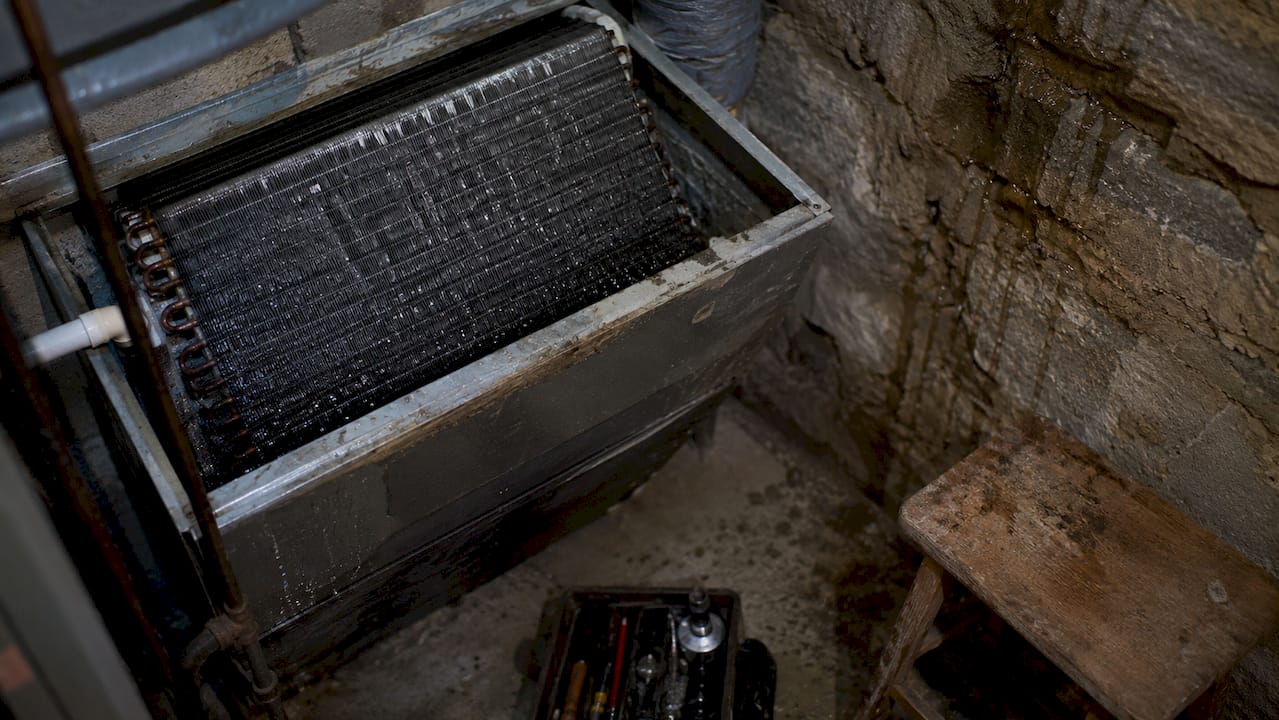
Dehumidification starts only when the evaporator coil surface temperature drops below the dew point of the incoming air. The dew point is simply the temperature at which air can no longer hold its moisture. Once the coil gets cold enough, water vapor in the warm air touching the coil turns to liquid and drips into the condensate pan, then drains out of your home.
Here is what happens step by step during a normal cooling cycle:
- Warm, humid indoor air gets pulled across the cold evaporator coil by the blower fan.
- The coil surface temperature drops well below the air’s dew point, triggering condensation.
- Liquid water collects on the coil fins and drips into the condensate drain pan below.
- The now-drier, cooler air gets pushed back into your living space.
- The collected moisture drains outside through the condensate line.
The key variable is coil surface temperature relative to dew point. If the coil never gets cold enough, or if the compressor shuts off too soon, condensation stops and humidity stays in the air. This is why compressor runtime matters as much as thermostat setting. A longer, steadier run pulls far more moisture than a series of short bursts.
Pro Tip: Check your condensate drain line every few months. A clogged line causes water to back up, which can shut down your system and leave humidity unchecked.
Why do many AC systems struggle with humidity in humid climates?
The honest answer is that most residential AC systems are designed to control temperature, not humidity. Modern high-efficiency units are very good at hitting your temperature setpoint quickly, but that speed works against moisture removal. The compressor shuts off once the thermostat is satisfied, often before the coil has had enough time to pull significant moisture out of the air.
Oversized equipment makes this worse. A unit that is too large for your home cools the space so fast that it short cycles, running for only a few minutes before shutting down. HVAC professionals call this “dehumidification starvation.” The room temperature drops, but the relative humidity stays high. You end up feeling cold and clammy at the same time, which is one of the most common complaints from homeowners in Southwest Florida.
There is also a capacity issue baked into modern equipment design. Latent capacity, which is the portion of cooling dedicated to moisture removal, is often less than 10% of total cooling capacity in high-efficiency units. Older systems handled a larger share of the latent load. The shift toward higher SEER ratings improved energy efficiency but reduced the fraction of work dedicated to pulling water out of the air.
Pro Tip: If your home feels humid even when the AC is running, the problem is often system sizing or short cycling, not a refrigerant leak. Have a technician check your equipment size against your home’s actual load before assuming the worst.
The result in humid climates is predictable. Homeowners lower the thermostat trying to feel more comfortable, the system runs longer, energy bills climb, and the humidity problem often persists anyway because the root cause is latent capacity, not temperature.
What can improve your AC’s ability to control humidity?
Several approaches can meaningfully improve how much moisture your existing system removes, without necessarily replacing the whole unit.
-
Reduce airflow across the coil. Lower fan speeds give air more contact time with the cold coil surface. More contact time means more condensation. Many variable-speed air handlers allow this adjustment through the thermostat or control board settings.
-
Use variable-speed compressors. Variable-speed or two-stage compressors run at lower capacity for longer periods instead of cycling on and off at full blast. Longer, gentler runs give the coil more time to pull moisture. This is one of the most effective upgrades available for humid climates.
-
Activate “dry mode” if your system has it. Mini-split systems with dry mode run the compressor at reduced capacity specifically to cool air near the dew point without dropping room temperature dramatically. This prioritizes moisture removal over aggressive cooling.
-
Manage ventilation timing. Optimizing ventilation during the compressor’s on-cycle and minimizing outdoor air intake during the off-cycle keeps humid outside air from flooding the space between cooling runs. This is a control strategy, not a hardware upgrade.
-
Add a whole-house dehumidifier. When the AC alone cannot keep up, a whole-house dehumidifier installed in the duct system runs independently of the cooling cycle. It targets moisture directly and maintains your target relative humidity even when the compressor is off.
The most cost-effective starting point is usually adjusting airflow and control settings before buying new equipment. A qualified HVAC technician can often improve your system’s dehumidification performance significantly with a service call and a few setting changes.
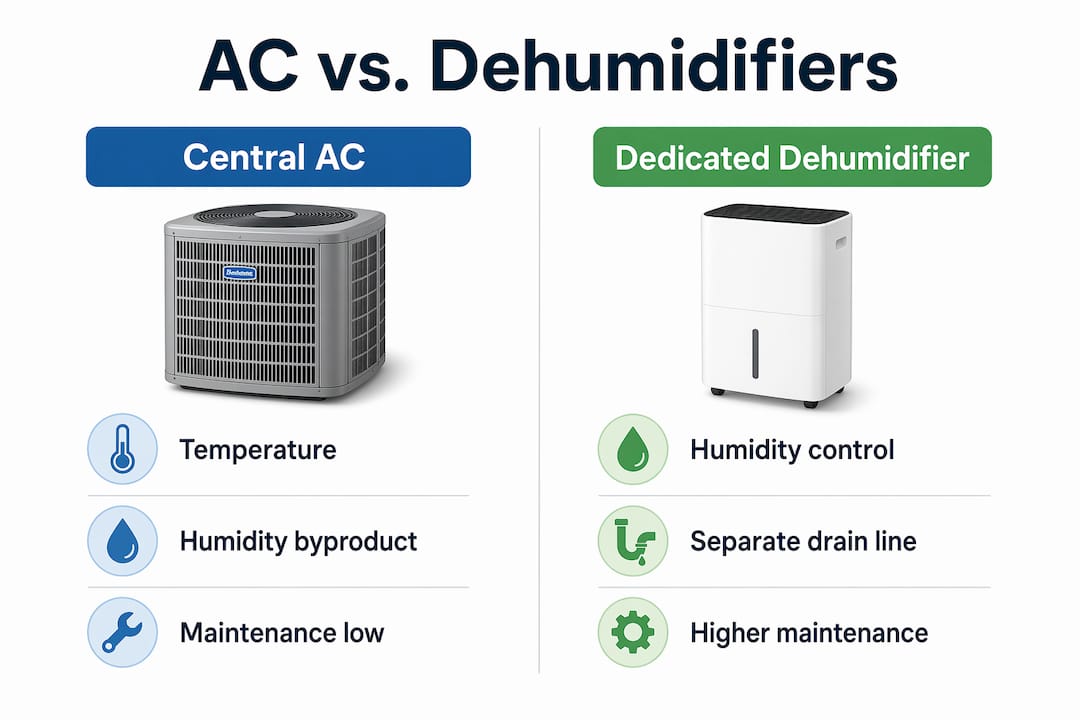
AC vs. dedicated dehumidifiers: which one actually controls humidity better?
The short answer is that they do different jobs, and in very humid climates, you often need both.
| Feature | Central AC | Dedicated dehumidifier |
|---|---|---|
| Primary function | Temperature reduction | Moisture removal |
| Humidity control | Byproduct of cooling | Direct and continuous |
| Operates without cooling | No | Yes |
| Precise RH control | Limited | Yes, with humidistat |
| Best for | Mild to moderate humidity | High or persistent humidity |
AC units in humid climates handle roughly 50%–70% of the total dehumidification load a home needs. That gap is significant in places like Southwest Florida, where outdoor humidity stays high for months at a time. A dedicated dehumidifier fills that gap by running whenever humidity rises above your set point, regardless of whether the AC compressor is on.
The practical advantages of a dedicated dehumidifier include:
- Continuous operation independent of temperature demand.
- Precise relative humidity setpoints using a built-in humidistat.
- Effective moisture removal during mild weather when AC is not needed.
- Reduced strain on the AC system, which can extend equipment life.
The tradeoff is cost and maintenance. Dedicated dehumidifiers require their own drain line, filter cleaning, and periodic servicing. For homeowners comparing dehumidifier vs. AC options in Florida, the combination approach almost always outperforms either system alone during peak summer months.
What indoor humidity levels should you actually target?
ASHRAE Standard 55 recommends keeping indoor relative humidity between 30% and 60% for comfort and health. That range is the target for any air conditioning humidity control strategy. Going above 60% creates real problems fast, especially in warm climates.
High indoor humidity causes:
- Mold and mildew growth on walls, ceilings, and inside duct systems.
- Increased dust mite populations, which worsen allergies and asthma.
- Wood swelling and damage to flooring, cabinetry, and structural elements.
- A “feels hotter than it is” effect because humid air slows the evaporation of sweat from your skin.
Staying within the recommended RH range also improves your AC’s efficiency. Drier air feels cooler at the same temperature, which means you can set the thermostat a degree or two higher without sacrificing comfort. That small adjustment adds up to real energy savings over a long Florida summer.
A simple digital hygrometer, available at most hardware stores for under $20, tells you your current indoor relative humidity. If you are consistently above 60%, your system needs attention.
Key takeaways
Air conditioning removes indoor humidity as a byproduct of cooling, but system sizing, runtime, and latent capacity determine whether it does the job well enough for humid climates.
| Point | Details |
|---|---|
| AC dehumidifies through condensation | Moisture removal only occurs when the coil drops below the air’s dew point. |
| Short cycling kills humidity control | Oversized units cool too fast and shut off before removing enough moisture. |
| Latent capacity is often under 10% | Modern high-efficiency AC units dedicate very little capacity to moisture removal. |
| Dedicated dehumidifiers fill the gap | In humid climates, AC alone handles only 50%–70% of total dehumidification needed. |
| Target 30%–60% relative humidity | ASHRAE Standard 55 sets this range for comfort, health, and HVAC efficiency. |
What I’ve learned after years of watching AC systems fail at humidity
The most common mistake I see homeowners make is treating the thermostat as a humidity dial. Lowering the temperature setpoint does not reliably lower humidity. It just makes the room colder and the energy bill higher. The real levers are compressor runtime, airflow rate, and equipment sizing.
What actually surprises people is how often a brand-new, high-efficiency system performs worse at humidity control than the older unit it replaced. The efficiency gains came from faster cycling and better temperature control, not better moisture removal. If you are upgrading equipment in a humid climate like Southwest Florida, ask your contractor specifically about latent capacity and whether the new unit is sized for your actual load, not just the square footage.
My practical advice: get a hygrometer, check your indoor humidity, and if it is above 60% while the AC is running, call a technician before assuming you need a new system. Airflow adjustments and control settings fix the problem more often than people expect. When they do not, a whole-house dehumidifier paired with your existing AC is almost always the right next step.
— albert
Ultraairswfl can help you get humidity under control
Persistent indoor humidity in Naples, Cape Coral, or Fort Myers is not something to wait out. It damages your home, affects your health, and signals that your HVAC system is not performing the way it should.

Ultraairswfl specializes in indoor air quality solutions for Southwest Florida homeowners, including AC system evaluations, airflow adjustments, and whole-house dehumidifier installation. Whether your current system needs a tune-up or you are ready to upgrade to equipment that handles humidity properly, the team at Ultraairswfl can assess your home and recommend the right fix. Reach out to schedule an evaluation and find out exactly what is keeping your home from feeling comfortable.
FAQ
How does AC reduce humidity in a home?
AC reduces humidity by pulling warm, humid air across a cold evaporator coil. When the coil temperature drops below the air’s dew point, moisture condenses on the coil and drains out of the home.
Can AC lower humidity without lowering temperature?
Standard central AC systems cannot. Moisture removal is a byproduct of cooling, so the compressor must run and the coil must get cold. Mini-split systems with a dry mode come closest by running at low capacity to target moisture without aggressive temperature drops.
What humidity level should my AC maintain indoors?
ASHRAE Standard 55 recommends 30%–60% relative humidity for comfort and health. If your home stays above 60% while the AC runs, the system may be short cycling, oversized, or lacking sufficient latent capacity.
Why does my house feel humid even with the AC on?
The most common causes are short cycling from an oversized unit, low latent capacity in modern high-efficiency equipment, or a clogged condensate drain. A technician can diagnose which issue applies and adjust settings or recommend supplemental dehumidification.
When should I add a dedicated dehumidifier to my AC system?
Add a dedicated dehumidifier when indoor humidity stays above 60% despite normal AC operation, especially during mild weather when the compressor runs infrequently. In humid climates, AC alone often covers only 50%–70% of total dehumidification needs.