Last Tuesday, a family in Estero discovered that their worsening coughs weren’t from seasonal allergies, but from hidden growth in their ventilation. If you have noticed a persistent musty smell or seen dark spotting around your registers, you are likely looking for the signs of black mold in air ducts Estero homeowners need to know. Living in Southwest Florida means battling humidity levels that often exceed 65% indoors. You shouldn’t have to worry if the air you breathe is making your family sick.
We understand the anxiety that comes with a potential mold problem. This guide will help you identify the subtle warnings and show you how to eliminate the issue for good. We’ll cover the key physical indicators, the health risks involved, and the professional steps required to restore your home’s air quality. It’s time to take control of your indoor environment and provide your family with the Ultra comfort they deserve. Let’s look at what is really happening inside your vents and how our expert team can help you breathe easy again.
Key Takeaways
- Identify the subtle warning signs of black mold in air ducts Estero homeowners often overlook, from persistent musty odors to visible spotting on vent grilles.
- Understand how Estero’s extreme humidity and oversized AC units can turn your ductwork into a breeding ground for toxic spores.
- Learn the immediate steps you must take to stop the spread of mold and why DIY treatments like bleach can actually do more harm than good.
- Discover how Ultra solutions like UV germicidal lights and whole-home dehumidifiers provide the peace of mind you need for a healthy SWFL home.
Understanding Black Mold in Estero Air Ducts
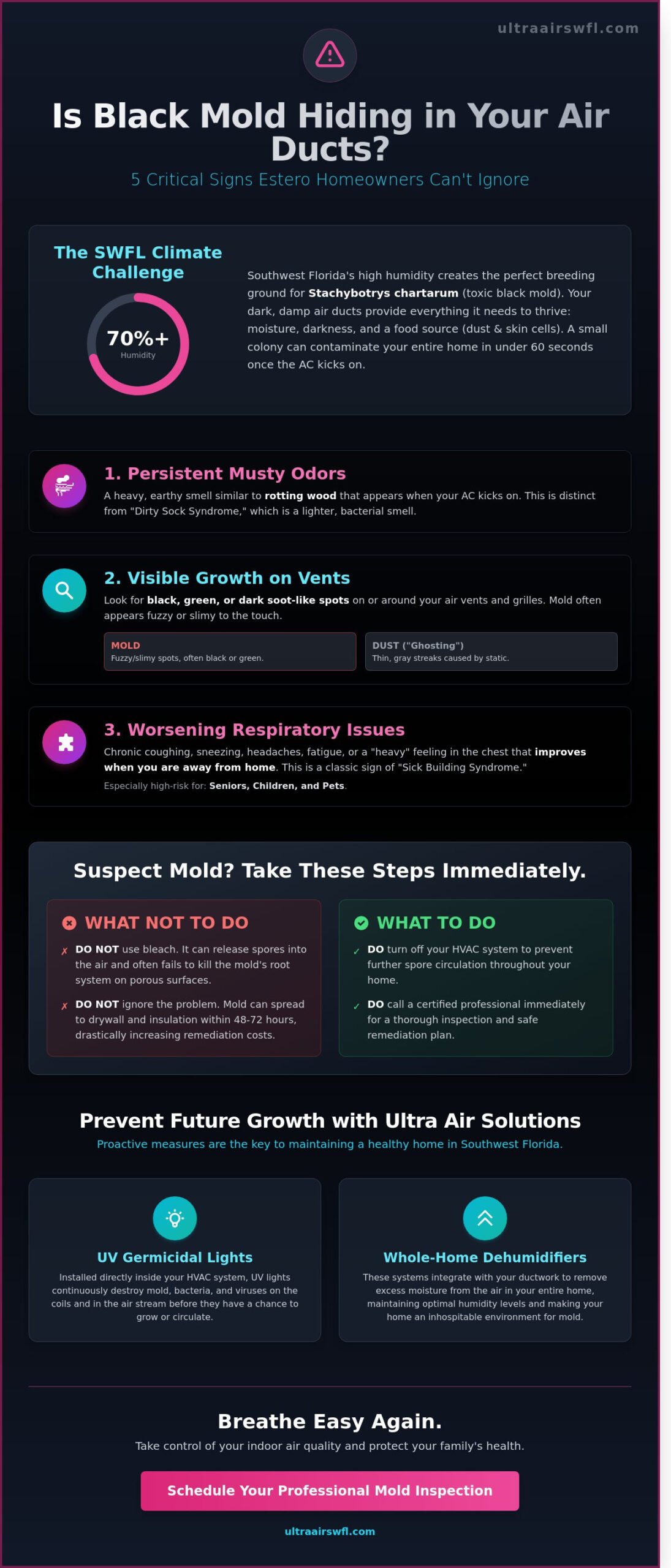
Estero’s climate is a constant challenge for any HVAC system. With average relative humidity levels in Southwest Florida often exceeding 70 percent, your home can quickly become an incubation chamber for Stachybotrys chartarum. This specific fungus, commonly known as toxic black mold, thrives in damp, dark environments where organic material is present. While regular dust is a nuisance, black mold is a serious biohazard that requires immediate professional attention.
You might notice dark spots around your vents and wonder if it is just typical SWFL mildew. Mildew is usually powdery, gray, or white and stays on the surface. In contrast, toxic black mold is often slimy, greenish-black, and rooted deep within the porous surfaces of your HVAC system. Identifying the signs of black mold in air ducts Estero homeowners should watch for is the first step in protecting your family and your property. We recommend addressing these issues the moment they appear. If left untreated, spores can migrate from your metal ducts to porous drywall and attic insulation within 48 to 72 hours, leading to thousands of dollars in remediation costs.
Why Air Ducts are the Perfect Breeding Ground
Your AC system provides everything mold needs to flourish: total darkness, moisture from condensation, and a steady supply of “food” in the form of skin cells and dust. When your system cycles on, it creates an “Ultra” risk for your indoor air quality. In a typical Estero residence, HVAC blowers can propel microscopic spores through the entire ductwork system in under 60 seconds. This rapid distribution means a small colony in your air handler can contaminate every room in your house before you even smell the first musty odor. We focus on breaking this cycle by eliminating the moisture that allows these colonies to take root.
The Health Impact of Mold Spores in Your Home
The presence of mold is more than a maintenance issue; it is a health priority. Many of our neighbors in SWFL report a “heavy” feeling in the chest, chronic coughing, or persistent sneezing that only happens when they are indoors. These symptoms are often the first signs of black mold in air ducts Estero residents experience. Vulnerable groups face the highest risks from poor air quality:
- Seniors: Many Estero residents in retirement communities have compromised respiratory systems that react sharply to fungal spores.
- Children: Developing lungs are highly sensitive to the mycotoxins produced by black mold.
- Pets: Smaller animals often show signs of respiratory distress faster than humans.
Beyond physical health, there is a significant psychological toll. Living with a persistent, musty smell creates constant anxiety about the safety of your living space. As a family owned and operated business, we understand that your peace of mind is just as important as your physical comfort. Our goal is to restore that “Ultra” comfort to your home by ensuring the air you breathe is clean and safe.
5 Critical Signs of Black Mold in Your HVAC System
Identifying mold in a Southwest Florida home requires a sharp eye and a keen sense of smell. Because our local humidity frequently stays above 70 percent, your HVAC system works overtime, creating a damp environment where spores thrive. If you suspect an issue, don’t wait for a total system failure. Look for these five red flags to protect your family and your property.
Musty Odors and Recurring Respiratory Issues
A telltale sign of trouble is a pungent, earthy smell that fills the room the moment your air conditioner starts a cycle. You might hear technicians refer to “dirty sock syndrome.” This typically involves bacterial growth on the evaporator coils that smells like gym clothes. However, black mold produces a much heavier, rotting wood scent that doesn’t dissipate after the system runs for a few minutes.
Track your health symptoms relative to your location. If your coughing, watery eyes, or headaches disappear after 20 minutes of running errands at Coconut Point, but return once you’re back in the living room, your ductwork is likely contaminated. This “sick building syndrome” is a direct result of poor indoor air quality. It’s important to understand the dangers of mold exposure, as long-term inhalation of spores can lead to chronic respiratory conditions and persistent fatigue. We often see families who assume they have seasonal allergies when they’re actually reacting to the air blowing through their vents.
Visual Cues Around Vents and Grilles
Don’t panic if you see thin, gray streaks on your ceiling vents. This is often “ghosting,” which is just household dust pulled toward the vent by static electricity. Actual fungal growth looks different. You’ll see black, green, or soot-like spots that appear fuzzy or slimy. These clusters usually form around the edges of the supply registers where cold air meets warm room air, causing condensation.
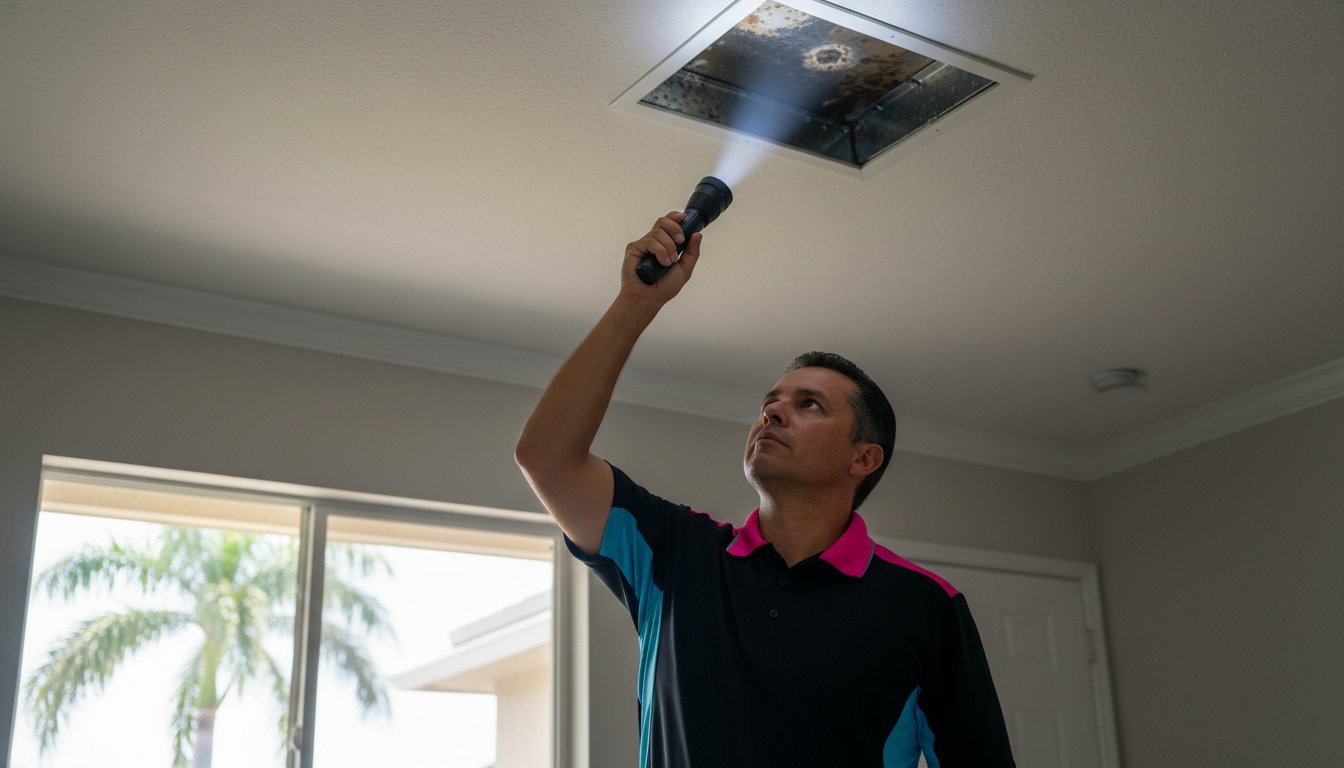
To get a better look, use a flashlight to peer into the duct boots or the plenum, which is the box connecting your air handler to the ductwork. If the fiberglass insulation inside looks dark or water-stained, you have found definitive signs of black mold in air ducts Estero homeowners should address immediately. Check your primary condensate drain pan as well. While some clear water is normal, a thick, jelly-like “sludge” indicates a microbial colony is active. If you notice standing water or rust at the duct joints, the seal has failed. This allows humid SWFL air to leak in, providing the moisture mold needs to spread. If you’re worried about your home’s air quality, our team can provide Ultra comfort solutions to restore your peace of mind.
Why Southwest Florida Homes are Prone to Duct Mold
Living in Estero means dealing with a climate that is relentless on HVAC systems. Our local environment provides the exact three ingredients mold needs to thrive: moisture, high temperatures, and organic food sources like dust. When these elements combine inside your ventilation system, you will likely notice the signs of black mold in air ducts Estero residents often report during the sweltering summer months. At Ultra Air, we see these issues daily across Southwest Florida.
The Role of Estero’s Extreme Humidity
The geography of our area plays a massive role in indoor air quality. Near landmarks like the Estero Bay Preserve, relative humidity levels frequently exceed 90%. This moisture doesn’t just stay outside. It enters your home through microscopic gaps in your building envelope and duct leaks. When your air conditioner blows 55-degree air through ducts located in a 130-degree attic, the “dew point” becomes a major problem. The ducts begin to “sweat” just like a cold glass of iced tea on a porch. This condensation saturates the insulation and creates a damp environment where spores flourish.
According to the EPA guidance on duct cleaning, visible mold growth is a primary reason to seek professional remediation. Without addressing the underlying humidity, the mold will simply return after cleaning. We focus on sealing those duct leaks to stop the cycle of moisture infiltration. This is part of our commitment to Ultra service and long term home health.
Improper Sizing and Poor Ventilation
A common mistake in SWFL construction is the installation of oversized AC units. While a bigger unit sounds better, it actually hurts your air quality. An oversized system cools your home too quickly and then shuts off. This is called short-cycling. Because the system doesn’t run long enough, it fails to pull moisture out of the air. You are left with a home that feels cold but clammy. Stagnant, humid air is a magnet for signs of black mold in air ducts Estero homes.
- Clogged Lines: Clogged condensate lines cause water to back up into the drain pan. If the safety switch fails, this water overflows directly into your ductwork or flooring.
- Duct Leaks: Holes in your return air ducts pull in hot, mold-laden air from your attic, bypassing your filtration system entirely.
- Maintenance Gaps: Skipping your annual air conditioning maintenance near me allows dust to build up on coils, providing the “food” mold needs to grow.
Seasonal residents, or “snowbirds,” face the highest risks. Many homeowners leave their systems set to “Auto” or “Off” to save money while they are away. If the indoor humidity rises above 60% for more than 48 hours, mold colonization begins. We recommend keeping your humidistat set to 58% or lower to maintain Ultra comfort and protect your property while you are gone. Our family-owned team is here to help you beat the heat and keep your air clean year round.
What to Do If You Suspect Mold in Your Vents
If you notice the signs of black mold in air ducts Estero homeowners often describe, your first instinct might be to grab a scrub brush. Stop right there. Handling mold improperly can actually make your indoor air quality worse. At Ultra Air, we want you to stay safe while we work to restore your Ultra comfort. Follow these four decisive steps to manage the situation before the spores spread further.
- Turn off your HVAC system immediately. This is the most critical step. Your AC unit acts like a giant fan that distributes spores to every room in the house. By shutting it down, you contain the problem to the current ductwork.
- Avoid DIY “fixes” like bleach. It might seem like a strong cleaner, but bleach is actually 90% water. On porous surfaces, the chlorine stays on top while the water soaks in, which can actually feed the mold you are trying to kill.
- Schedule a professional inspection. You need a certified SWFL technician who understands our local humidity levels. We use specialized cameras to see exactly where the growth is hiding.
- Address the root cause. Cleaning the mold is useless if you don’t fix the moisture source. Whether it is a leaky roof or a clogged condensate line, the water must go before the cleaning starts.
Why DIY Mold Removal Often Fails
Many homeowners try to save money by using store-bought mold kits or household chemicals. These kits are often unreliable for HVAC-specific issues because they only test the air in one spot at one specific time. They don’t account for the mold colonies growing deep inside your supply lines.
Amateur cleaning attempts often do more harm than good. When you scrub at a mold colony without proper containment, you release millions of spores into the air. These spores then settle on your furniture, carpets, and clothing. Because bleach is mostly water, it fails to penetrate the porous dust and insulation inside your ducts, often leading to a secondary bloom within 14 days of cleaning.
The Professional Duct Cleaning Process
Ultra Air uses a rigorous process to ensure your home is safe. We use high-powered HEPA-filtered vacuums that create negative pressure, ensuring that every particle of dust and mold is sucked out of your home rather than blown into it. Our technicians use mechanical agitation tools to physically scrub the duct walls clean.
We also perform antimicrobial fogging to sanitize the entire system. A key part of our “Ultra” service is inspecting the evaporator coil. This component is a primary mold source because it is constantly wet with condensation. If your system has been neglected, you might need more than a cleaning. We provide expert ac repair cape coral residents trust to ensure the entire mechanical system is functioning properly and keeping humidity levels below 50%.
Don’t let mold compromise your family’s health. Contact our family owned and operated team today for a professional inspection. Schedule your Ultra Air inspection now.
Preventing Future Growth with Ultra Air Solutions
Identifying the signs of black mold in air ducts Estero is only the first step toward a healthy home. Once the immediate threat is gone, you need a proactive strategy to ensure those spores never return. At Ultra Air Heating and Cooling, we don’t just treat the symptoms; we address the root cause. Our family-owned and operated team provides the technical mastery needed to transform your HVAC system into a fortress against moisture. We focus on long-term reliability so you can breathe easier every single day.
UV Germicidal Lights and Air Purifiers
We consider UV germicidal lights the gold standard for mold prevention. These systems are installed directly near your indoor evaporator coil, which is the primary site for condensation and organic growth. The UV-C light works by penetrating the cellular walls of mold spores and bacteria. This process disrupts their DNA, effectively neutralizing them and preventing reproduction before they can circulate through your vents. It’s a 24/7 defense mechanism that works silently behind the scenes.
For maximum protection, we recommend combining these lights with MERV 13 or higher air filtration. While standard filters only catch large dust particles, MERV 13 filters are dense enough to trap microscopic spores and allergens. This “Ultra” investment provides peace of mind for families concerned about respiratory health. It’s a clean, quiet, and highly efficient way to maintain a sterile environment inside your ductwork without restricting airflow.
Whole-Home Dehumidification for Estero Residents
The Southwest Florida climate is relentless. In Estero, outdoor humidity frequently stays above 80%, which can quickly overwhelm a standard air conditioner. Portable dehumidifiers are often a losing battle; they only treat small rooms and require constant manual emptying. We install integrated whole-home dehumidifiers that work in tandem with your HVAC unit to pull gallons of moisture from the air every day.
These integrated systems offer several key benefits for your home:
- Precision Control: They maintain a consistent 45-55% humidity range, which is the “kill zone” where mold cannot physically survive.
- System Efficiency: Dry air feels cooler, allowing you to set your thermostat higher and save on energy costs.
- Structural Protection: Proper humidity levels prevent wood rot, peeling wallpaper, and warped floorboards.
Our goal is to help you “Beat the Heat” and the humidity simultaneously. Regular preventative maintenance is the final piece of the puzzle. Our technicians perform detailed 25-point inspections to ensure drain lines are clear and seals are tight, preventing the moisture buildup mold craves. Don’t wait for the signs of black mold in air ducts Estero to reappear. Contact Ultra Air today for a professional IAQ assessment. We are the reliable local expert ready to restore your home’s comfort and safety.
Take Control of Your Home’s Air Quality Today
Living in Southwest Florida means dealing with humidity levels that frequently climb above 70 percent, creating a prime breeding ground for spores. You shouldn’t ignore the signs of black mold in air ducts Estero homeowners often encounter, such as persistent musty odors or visible dark clusters on supply vents. These issues directly impact your indoor air quality and your HVAC system’s overall efficiency. Since 2018, our family owned and operated team has helped neighbors across the region breathe easier and stay cool.
We provide 24/7 emergency support because we know that air quality concerns don’t always happen during business hours. Our certified IAQ specialists use professional grade tools to identify hidden growth and restore your peace of mind. Every home deserves ultra comfort and clean air. Don’t let poor air quality compromise your health or your home’s safety. We’re ready to help you beat the heat and the humidity with the reliable expertise you expect from a local leader. You can trust us to keep your home safe and comfortable year round.
Protect your family’s health with an Ultra Air IAQ inspection today!
Frequently Asked Questions
Is black mold in air ducts common in Estero, Florida?
Yes, mold growth is common in Estero because our local humidity levels average 74 percent throughout the year. This constant moisture creates a prime breeding ground inside dark, cool ductwork. We frequently identify signs of black mold in air ducts Estero homeowners report during routine maintenance calls. Our humid SWFL climate makes proactive inspections essential for maintaining a healthy home environment.
Can black mold in my AC vents make me sick?
Yes, mold spores circulating through your vents can cause respiratory issues and allergic reactions. The EPA reports that indoor mold exposure triggers asthma attacks in approximately 20 percent of sensitive individuals. You might experience coughing, sneezing, or itchy eyes whenever your system cycles on. We focus on improving your indoor air quality to restore your Ultra comfort and protect your family’s health.
How can I tell the difference between dust and black mold on my vents?
You can distinguish mold from dust by checking the texture and the growth pattern of the substance. Dust typically looks gray and fibrous, while black mold appears slimy, fuzzy, or shows distinct circular spotting. If the material regrows within 48 hours after you wipe it away, it’s likely a biological growth rather than simple debris. Our expert technicians use specialized tools to provide a definitive diagnosis for your peace of mind.
Should I turn off my AC if I find mold in the ducts?
Yes, you should turn off your HVAC system immediately to prevent spores from spreading to every room. Running the blower fan can move millions of microscopic spores through your home at speeds of 500 feet per minute. This rapid cross-contamination makes the eventual remediation more difficult and time-consuming. Contact our Family Owned & Operated team for an urgent inspection so you can Beat the Heat safely.
How much does professional mold remediation for air ducts cost?
Professional mold treatment costs depend on the size of your system and the extent of the contamination. According to industry data from HomeAdvisor, the national average for HVAC mold remediation ranges from $600 to $2,000. We provide honest, upfront assessments to ensure you get the exact service you need without unnecessary add-ons. Our goal is to provide an efficient solution that fits your specific situation.
Will a UV light kill mold already inside my air ducts?
UV lights are effective at preventing new growth but they can’t remove mold that’s already established in the system. While these lights kill 99.9 percent of airborne organic contaminants, they don’t penetrate thick layers of existing mold clusters. We recommend a professional cleaning followed by an Ultra service UV light installation. This two-step approach ensures your system stays clean and continues to deliver peak performance.
How often should Estero homeowners have their ducts cleaned to prevent mold?
You should have your air ducts inspected and cleaned every 3 to 5 years to maintain a healthy system. The National Air Duct Cleaners Association (NADCA) recommends this timeframe to prevent the accumulation of moisture and organic debris. Since Estero faces high humidity for 10 months of the year, staying ahead of the signs of black mold in air ducts Estero is a smart investment. Regular maintenance ensures your system remains reliable and efficient.