
If you’re catching a rotten-egg or sewage odor indoors, open windows, ventilate the space, and move anyone with symptoms outside immediately. The chemical behind that smell is hydrogen sulfide, a sewer gas that causes throat irritation, nausea, and dizziness at higher concentrations. Most of the time, the source is a dried-out P-trap, a failed toilet wax ring, a clogged vent stack, or standing water in an HVAC condensate pan. Those are all fixable. But first, rule out danger.
- If anyone feels dizzy, nauseated, or has trouble breathing: get outside and call 911.
- If the rotten-egg smell is near a gas appliance: treat it as a possible natural gas leak. Natural gas is scented with mercaptan to smell like sulfur, which is nearly identical to sewer gas. Call your utility immediately and leave the building.
- For persistent odors without symptoms: schedule a licensed plumber or NATE-certified HVAC technician to diagnose the source before it worsens.
Pro Tip: If the smell comes only when you run hot water, the culprit may be your water heater’s anode rod reacting with sulfur bacteria — not a sewer line at all. Test by running cold water from the same faucet and comparing the odor.
Table of Contents
- What fast checks can you do right now?
- How do licensed plumbers and HVAC pros locate the source?
- What are the most common sources and fixes?
- When is a sewage smell a health emergency?
- What does diagnosis and repair cost in SWFL?
- How do you prevent sewage smells from coming back?
- Key Takeaways
- Why SWFL homeowners need HVAC and plumbing working together
- Ultra Air Heating & Cooling handles the HVAC side of sewage odors in SWFL
- Authoritative sources and further reading
What fast checks can you do right now?
Most sewage odors have a simple mechanical cause you can find in under 30 minutes. Work through these steps before calling anyone.
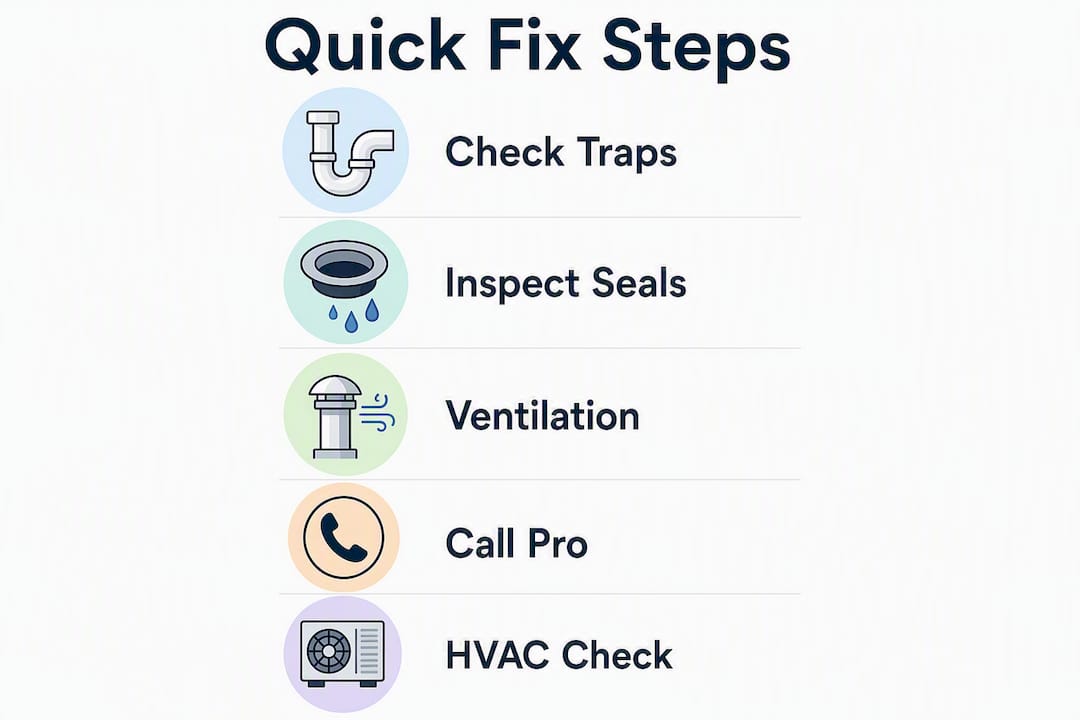
- Run water in every drain for 10–30 seconds. Guest bathrooms, basement floor drains, and laundry standpipes are the most common culprits. A dry P-trap lets sewer gas rise straight into the room.
- Pour water into floor drains. If a floor drain hasn’t seen water in weeks, the trap seal has evaporated. A gallon of water restores it in seconds.
- Check toilet bases. Kneel and push gently on the bowl. Any rocking means the wax ring has likely failed and is venting gas rather than water.
- Look at clean-out caps. Missing or cracked caps on sewer clean-outs are a direct opening for odors. You can spot these along exterior walls or in utility areas.
- Listen when fixtures run. Gurgling or bubbling from a drain while another fixture is in use points to a venting or main-line problem that needs a pro.
- Check your HVAC condensate pan. Standing water or slime in the drain pan under your air handler can produce a sewage-like odor that circulates through your ducts. If you see standing water, the condensate line is clogged.
Stop and call a professional if: the smell is whole-house, symptoms appear, you see wet spots near the slab, or multiple drains are slow simultaneously.
Pro Tip: Pour a teaspoon of mineral oil into seldom-used traps after refilling them with water. The oil floats on the surface and dramatically slows evaporation — especially useful for SWFL homes with floor drains that go weeks without use.
How do licensed plumbers and HVAC pros locate the source?
When DIY checks come up empty, professionals use three core diagnostic tools. Here’s what each one targets and an estimate of duration.
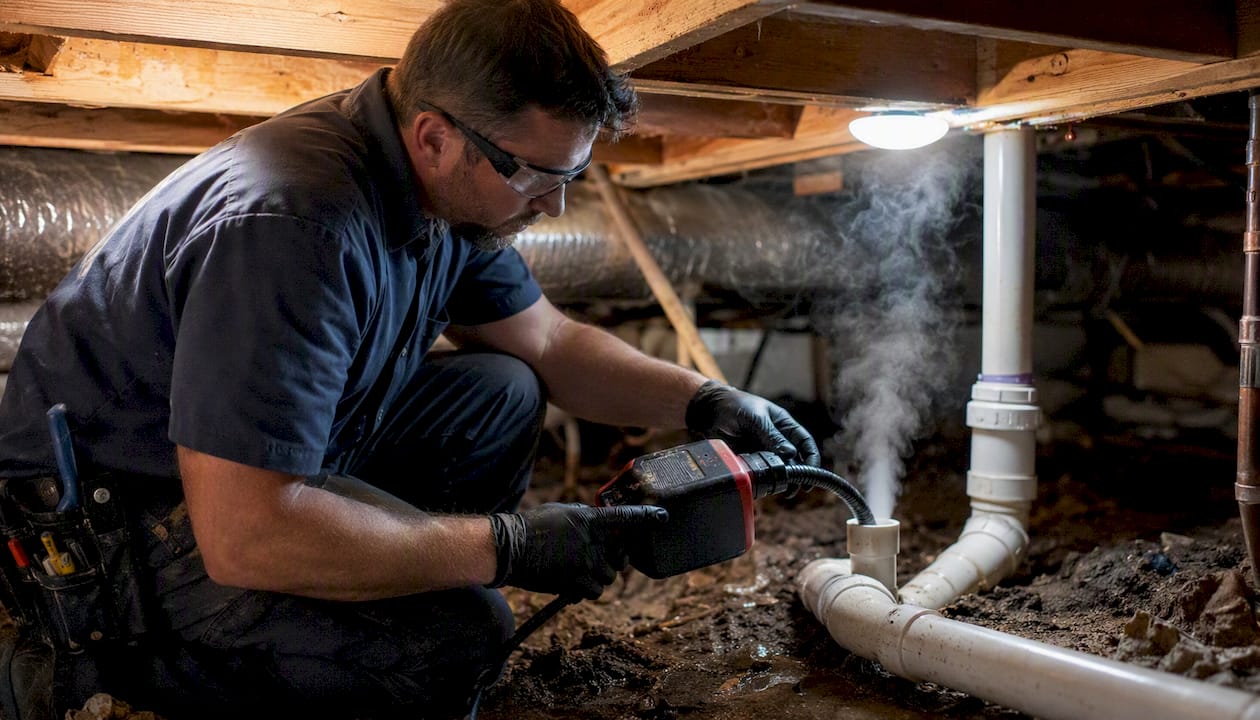
Smoke testing pumps non-toxic smoke into the plumbing system under slight pressure. Any gap, crack, or improperly sealed connection becomes visible as smoke escapes. It’s the fastest way to find vent-stack leaks and buried breaks without digging. A sewer camera goes further: it travels the lateral line from a clean-out access point and sends live video of the pipe interior, revealing root intrusion, collapsed sections, or hairline cracks under a concrete slab.
HVAC diagnostics run parallel to plumbing work in many SWFL homes. A NATE-certified HVAC technician checks the condensate drain line for blockages, inspects the drain pan for standing water or biofilm, and evaluates whether ductwork near a sewer vent intake is pulling odors into the air supply. If your AC unit smells like sewage, that’s a separate diagnostic path from a broken sewer line.
Pro Tip: Ask for a written estimate and repair warranty before any diagnostic work begins. Reputable contractors provide both.
What are the most common sources and fixes?
Knowing the source tells you who to call and roughly what it costs. Here’s how the most frequent causes map to repairs.
Plumbing sources:
- Dry P-trap: Refill with water; add mineral oil. Cost: $0–$10.
- Failed toilet wax ring or low flange: Replace the wax ring; correct flange height if set below finished floor. An improperly set flange prevents proper compression and will fail repeatedly until the height is corrected. Cost: $150–$400 with a licensed plumber.
- Missing or cracked clean-out cap: Replace cap. Cost: $20–$75.
- Clogged vent stack: Clear debris from roof vent (professionally). Cost: $100–$300.
- Cracked lateral or main sewer line: Camera inspection, then repair or reline. Cost: $1,500–$15,000+ depending on depth and method.
- Septic system issues: Pumping alone won’t fix a blocked baffle or failed drainfield. Targeted inspection and repair are required.
- Water heater anode rod: Sulfur bacteria react with magnesium or aluminum rods to produce hydrogen sulfide only when hot water runs. Replacing the anode rod or switching to an aluminum-zinc rod resolves it.
HVAC sources:
- Clogged condensate drain line: flush with diluted vinegar or compressed air.
- Standing water or biofilm in drain pan: clean and treat pan.
- Contaminated ductwork: professional duct sanitizing removes odor-causing buildup. Cost: $300–$700.
- Sewer vent too close to an HVAC air intake: requires repositioning by a licensed contractor.
Bleach poured down a drain does not fix dry traps, failed seals, or broken vents. It temporarily masks the odor and can damage pipes. Repair the source.
When is a sewage smell a health emergency?
Sewer gas is a mixture of hydrogen sulfide, methane, and ammonia. At low levels, it’s an unpleasant nuisance. At higher concentrations, it becomes dangerous fast.
Evacuate immediately if you or anyone in the building experiences:
- Dizziness or lightheadedness
- Nausea or vomiting
- Severe headache
- Difficulty breathing
- Loss of smell (olfactory fatigue — you stop noticing the odor even as exposure continues)
- Eye or throat irritation
Key safety fact: Hydrogen sulfide causes olfactory fatigue at elevated concentrations, meaning you can lose the ability to smell it just as exposure reaches dangerous levels. Never assume the odor disappearing means the problem is resolved — it may mean exposure has intensified.
Once outside, call 911 if symptoms are severe. Call your gas utility if you cannot rule out natural gas. For persistent low-level exposure without acute symptoms, ventilate thoroughly and schedule a professional inspection the same day. Methane is also combustible, so avoid open flames or sparks until the source is identified. Reviewing your HVAC safety equipment is a smart next step after any sewer-gas event.
What does diagnosis and repair cost in SWFL?
| Repair type | Typical cost range | Timeline |
|---|---|---|
| Trap refill / clean-out cap | $0–$75 | Same day (DIY or quick service call) |
| Wax ring replacement | $150–$400 | Same day |
| Condensate line flush / drain pan clean | $20–$75 | Same day |
| Smoke test + camera inspection | $300–$700 | Half day to full day |
| Vent stack clearing | $100–$300 | Same day |
| Duct sanitizing | $300–$700 | Half day |
| Sewer line repair (spot) | $1,500–$15,000+ | 1–3 days |
| Sewer line excavation / full reline | $1,500–$15,000+ | Days to weeks |
Costs in SWFL are affected by slab construction (no crawl space access), older cast-iron or Orangeburg pipe materials, and whether the repair requires both a licensed plumber and an HVAC contractor. Sewer line maintenance is worth understanding before a crisis hits — regular inspections catch root intrusion and pipe degradation early, when repairs are still modest.
- Get a written estimate before work begins.
- Confirm the contractor is licensed in Florida.
- Ask whether the diagnostic fee applies toward repair costs.
- Request a repair warranty in writing.
How do you prevent sewage smells from coming back?
Monthly:
- Run water for 30 seconds in every infrequently used drain (guest bath, laundry standpipe, floor drains).
- Check toilet stability; tighten if any rocking is felt.
Quarterly:
- Inspect condensate drain line and drain pan; flush with diluted vinegar.
- Check clean-out caps for cracks or missing covers.
- Visually inspect roof vent openings from the ground for debris or bird nests.
Annually:
- Schedule an HVAC tune-up that includes condensate system inspection.
- Have a licensed plumber inspect visible drain lines and any accessible sewer clean-outs.
- If you have a septic system, follow your county’s recommended pumping schedule and inspect baffles.
- Consider a duct check every 2–3 years in SWFL’s high-humidity climate.
Recommended preventive installations:
- Trap primers on seldom-used floor drains (automatic water feed keeps the seal intact).
- Backwater valves on main sewer lines in flood-prone areas.
- Secure, gasketed clean-out caps on all access points.
Pro Tip: For bathroom sewage smells specifically, common causes and simple fixes are well documented — bookmark that resource before your next DIY check.
Key Takeaways
A sewage leak smell indoors almost always traces to a dry P-trap, failed toilet seal, blocked vent, or HVAC condensate issue — all diagnosable and fixable when you act systematically.
| Point | Details |
|---|---|
| Ventilate and assess symptoms first | Open windows and move vulnerable occupants outside; call 911 if dizziness or breathing trouble occurs. |
| Run water in every drain | Refilling dry P-traps resolves the majority of household sewage odors at zero cost. |
| Persistent odors need a licensed pro | Whole-house smell, gurgling drains, or wet spots near the slab require smoke testing or a sewer camera. |
| HVAC can be the source too | Clogged condensate lines and contaminated ductwork produce sewage-like odors that circulate through your air supply. |
| Ultraairswfl for SWFL diagnosis | Ultra Air Heating & Cooling provides HVAC condensate inspection, duct sanitizing, and IAQ verification for Naples, Cape Coral, and Fort Myers homeowners. |
Why SWFL homeowners need HVAC and plumbing working together
Southwest Florida’s climate and construction style create a specific set of odor problems that don’t show up the same way in other parts of the country. Humidity stays high year-round, which accelerates biofilm growth inside condensate pans and ductwork. That moisture also speeds up the evaporation cycle in P-traps — a drain that might hold its seal for two months in a dry climate can dry out in three weeks here.
Slab construction is the bigger complication. Most homes in Naples, Cape Coral, and Fort Myers sit on concrete slabs with no crawl space. When a lateral sewer line cracks under the slab, there’s no easy visual access. Camera inspection becomes the only reliable way to locate the break without tearing up flooring. Older cast-iron and Orangeburg pipes, common in homes built before the 1980s, are particularly prone to corrosion and root intrusion in SWFL’s sandy, root-active soil.
The practical result: a coordinated visit from both a licensed plumber and a NATE-certified HVAC technician often resolves the diagnosis in a single appointment rather than two separate service calls. The plumber handles smoke and camera work on the drain and sewer side; the HVAC tech clears the condensate system and checks whether duct contamination is amplifying the odor. That collaboration shortens the diagnostic window and avoids the frustrating cycle of fixing one system while the other continues to vent gas into the living space.
Ultra Air Heating & Cooling handles the HVAC side of sewage odors in SWFL
When a sewage smell turns out to be HVAC-related, or when you need both systems checked at once, Ultra Air Heating & Cooling is the local resource for Naples, Cape Coral, and Fort Myers homeowners and business owners.
Ultraairswfl provides HVAC condensate line inspection and flushing, drain pan cleaning, duct sanitizing, and indoor air quality testing to verify the air is clean after any remediation. For commercial properties, the team handles ventilation and kitchen hood systems that can develop their own odor problems. Financing options are available for larger IAQ or system repairs. Every service visit includes a written estimate before work begins.
If you’ve already run the DIY checks and the smell persists, the next step is a professional diagnostic. Book a service visit with Ultraairswfl to get a clear picture of what your HVAC system is contributing to the odor, and to get a verified indoor air quality improvement plan for your home or business.
Authoritative sources and further reading
- OSHA — Hydrogen Sulfide: Primary federal guidance on hydrogen sulfide hazards, exposure limits, and health effects.
- Wisconsin DHS — Sewer Gas in the Home: State public-health guidance on sewer gas causes, symptoms, and when to evacuate.
- Healthline — Sewer Gas Exposure: Plain-language overview of causes, symptoms, and treatment for sewer gas exposure.
- Oatey — Sewer Gas Odor in Your House: Manufacturer guidance on P-traps, wax rings, flange height, and water heater anode rods.
- InspectApedia — Sewer Line Leaks and Diagnostics: Technical reference for smoke testing, camera inspection, and hidden pipe failures.
- InspectApedia — Septic Sewer Gas Odors: Explains why septic pumping alone does not resolve baffle or drainfield failures.
- The Spruce — How to Identify and Remove Sewer Gas Smell: Homeowner-focused guide covering mineral oil trap treatment and why bleach doesn’t work.
- Northwest Natural — How Gas Is Scented: Explains mercaptan and why natural gas and sewer gas smells can be confused.
- Element Service Group — Diagnosing Sewer Smell: Practical guide on gurgling drains as a diagnostic signal for main-line issues.
- Ultra Air Heating & Cooling — Indoor Air Quality Testing: Local IAQ testing and verification services for SWFL homeowners after odor remediation.
Recommended
- Why Your AC Unit Smells Like Sewage: Causes and Fixes for 2026 SWFL Homes
- Air Conditioner Smells Like Rotten Eggs in Cape Coral? Here is Why (and What to Do) – Ultra Air Heating and Cooling
- Why Your Aircon Smells Musty: A Cape Coral Homeowner’s Guide to Fresh Air – Ultra Air Heating and Cooling
- AC Leaking Water Inside Your Bonita Springs Home? Here Is What to Do Right Now (2026)