
Winterizing your AC unit means preparing your air conditioner for cold weather so it survives the off-season without damage, corrosion, or costly repairs. The process covers central air conditioners, window units, and room air conditioners. Heat pumps are the one major exception. Because heat pumps run year-round for heating, they should never be covered or shut down for winter. Get the process right and your system will be ready to cool your home the moment warm weather returns.
What tools and materials do you need to winterize your AC unit?
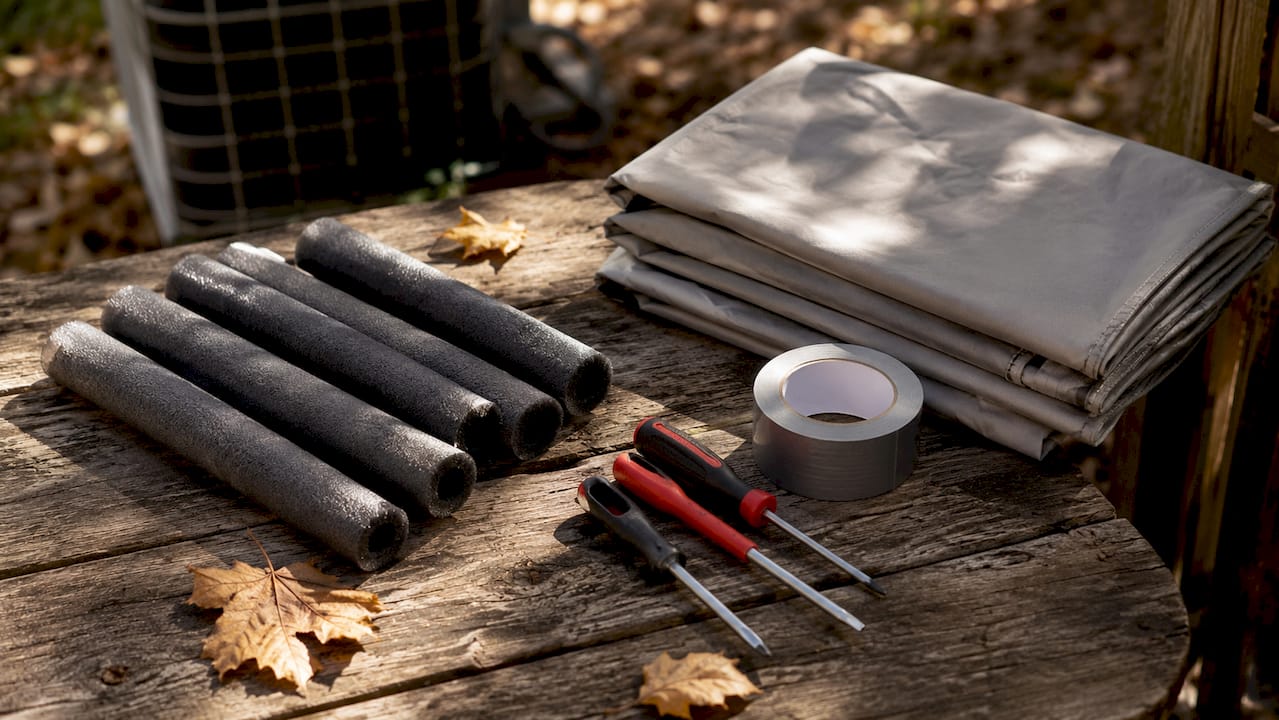
Having the right supplies before you start saves time and prevents damage to delicate components. Gather everything listed below before touching the unit.
Tools and materials checklist:
- Screwdriver set (flathead and Phillips): needed to remove access panels and secure cover straps
- Garden hose with spray nozzle: for rinsing condenser coils and washing away debris
- Soft brush or coil fin comb: cleans between fins without bending them
- Foam pipe insulation: wraps exposed refrigerant and copper lines to prevent freezing
- Breathable AC cover or top-only cover: protects the unit from leaves and snow without trapping moisture
- Zip ties or bungee cords: secure the cover against wind
- Work gloves: protect hands from sharp metal fins and debris
- Safety glasses: shield eyes when rinsing coils or clearing debris
- Dry towels or rags: help dry the unit before covering
Each item serves a specific purpose. Foam pipe insulation, for example, is not optional. Exposed refrigerant lines without insulation are vulnerable to freezing damage and expensive repairs. Replacing cracked or worn insulation wrap during winterization is far cheaper than fixing a refrigerant line in spring.
Pro Tip: Buy a breathable cover made specifically for AC units, not a plastic tarp. Plastic traps moisture inside, which accelerates rust over a long winter.
How to safely shut off power and prepare your outdoor unit
Cutting power before you touch anything is the single most important safety step. An AC compressor that kicks on unexpectedly while you are cleaning or covering it can cause serious injury.
- Locate the outdoor disconnect box. This gray or black box sits on the exterior wall near your condenser unit. Open the cover and pull out the disconnect block or flip the switch to the OFF position.
- Go to your indoor electrical panel. Find the breaker labeled for the air conditioner or condenser. Flip it to OFF.
- Label the breaker. Write “DO NOT TURN ON” on a piece of tape and stick it over the breaker. Labeling the breaker prevents a family member from accidentally switching it on during a cold snap.
- Wait 30 minutes before proceeding. Capacitors inside the unit store electrical charge. Waiting allows them to discharge safely.
- Unplug window units. If you have a window or room air conditioner, unplug it from the wall outlet before cleaning or moving it.
For renters: You may not have access to the main electrical panel. Simple steps like unplugging window units, cleaning filters, and storing units indoors are fully within your control and make a real difference. Contact your landlord about shutting off power to central systems.
For homeowners with central air, check your thermostat and switch the system mode from “Cool” to “Off.” Do not leave it on “Auto,” which could trigger the compressor if temperatures spike briefly before a hard freeze.
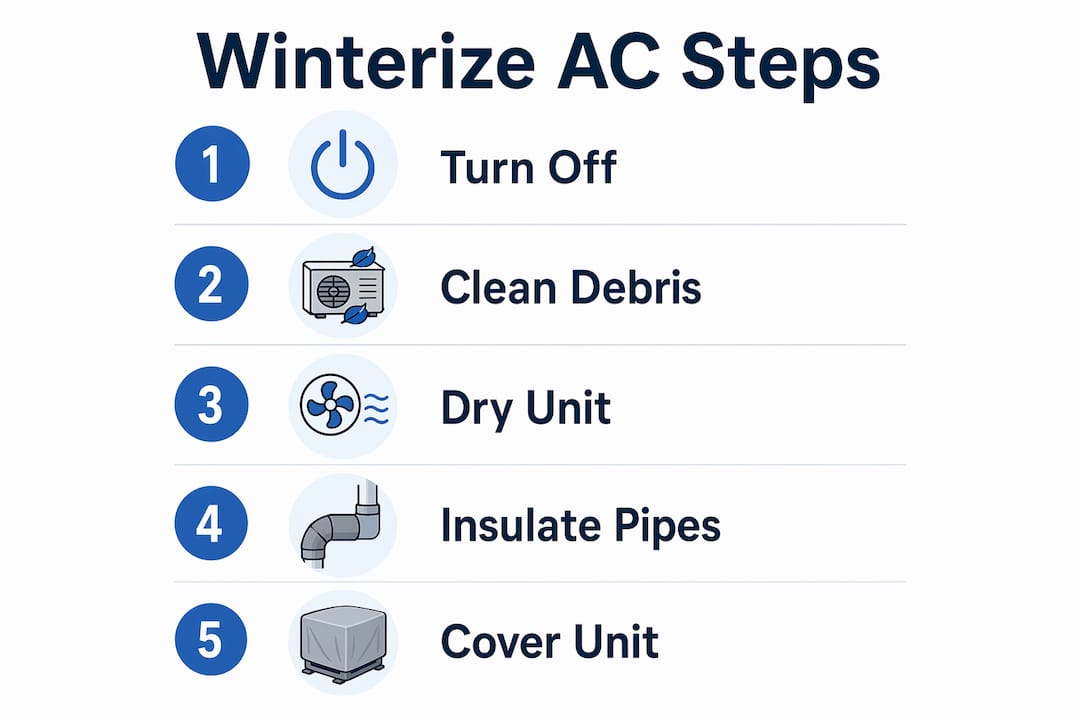
Cleaning and clearing debris around the unit before winter
A dirty unit going into winter is a unit heading toward rust, mold, and pest problems. Debris traps moisture, and moisture is the primary cause of corrosion on condenser coils and cabinet metal.
Cleaning steps to follow:
- Remove leaves, twigs, and grass clippings from the top and sides of the unit by hand before hosing anything down.
- Trim vegetation to at least 2 feet away from all sides of the condenser. Clearing vegetation reduces moisture buildup and eliminates nesting spots for rodents and insects.
- Rinse condenser coils gently with a garden hose on a low-pressure setting. Spray from the inside out if possible to push debris outward without bending fins.
- Avoid pressure washers. The fins on condenser coils are thin aluminum. High pressure bends them and reduces airflow efficiency permanently.
- Dry the unit completely before putting any cover on it. Residual moisture trapped under a cover accelerates corrosion during cold nights.
The drying step is one most homeowners skip. They rinse the coils, immediately throw a cover on, and walk away. That trapped moisture sits against metal all winter. By spring, rust has already started.
Pro Tip: Do your cleaning on a sunny afternoon with low humidity. The unit dries faster, and you can visually confirm it is fully dry before covering.
Check the HVAC maintenance checklist from Ultraairswfl for a broader look at seasonal upkeep tasks that pair well with winterization.
How to cover and insulate your AC unit properly for winter
Covering protects your unit from physical debris and weather. It does not need to create a sealed environment. In fact, sealing the sides is the most common and damaging mistake homeowners make.
- Choose a breathable or top-only cover. The U.S. Department of Energy recommends covering outdoor central AC units to protect from weather and debris. A breathable cover or a cover that only sits on top allows airflow while blocking leaves and ice.
- Avoid full plastic tarps. Sealed or wrapped sides raise humidity inside the cover, creating the exact conditions that cause rust.
- Insulate refrigerant and copper lines. Slide foam pipe insulation over any exposed lines running from the unit to your home. Replace any sections that are cracked or missing.
- Secure the cover with zip ties or bungee cords. Wind can pull a loose cover off and send it into the unit, damaging fins or the cabinet.
- Do not cover heat pumps. Heat pumps should not be covered because they continue operating in winter for heating. Covering one blocks airflow and interferes with its heating function.
Cover type comparison:
| Cover type | Moisture risk | Debris protection | Recommended |
|---|---|---|---|
| Breathable fabric cover (full) | Low | High | Yes, for central AC |
| Top-only cover | Very low | Medium | Yes, best option |
| Plastic tarp (full wrap) | High | High | No |
| No cover | None | None | No |
The goal of covering is to block debris and ice, not to seal the unit. Airflow inside the cover is a feature, not a flaw.
For a deeper look at how insulation affects system efficiency year-round, the Ultraairswfl guide on insulation and HVAC efficiency is worth reading before you buy foam pipe wrap.
What are the special steps for winterizing window and room AC units?
Window and room AC units need a different approach than central systems. They are smaller, portable, and far more vulnerable to freeze damage when left installed through a hard winter.
Key steps for window and room units:
- Remove the unit if temperatures regularly drop below freezing. Leaving a window unit installed through a cold winter risks freeze damage to internal components and allows cold drafts into your home.
- Clean and dry the filter before storage. Wash the filter with warm soapy water, rinse it fully, and let it air dry completely. A damp filter stored indoors grows mold.
- Drain any water from the unit. Tilt the unit slightly backward over a sink or outdoors to drain condensation from the pan.
- Store the unit indoors in a dry location. A basement, closet, or garage shelf works well. Keep it upright and away from moisture.
- If you leave the unit installed, use foam insulation panels cut to fit around the unit and a breathable cover on the exterior. Removable tape and plastic seals help prevent drafts from entering around the edges.
- Check window seals during winter. Cold air leaking around an installed window unit raises heating costs and can cause condensation damage to the window frame.
For renters, removing and storing a window unit is the most practical option. It protects the unit, eliminates drafts, and is something you can do without landlord involvement.
Key Takeaways
Winterizing your AC unit correctly before freezing temperatures arrive prevents corrosion, freeze damage, and costly spring repairs.
| Point | Details |
|---|---|
| Shut off power first | Turn off the outdoor disconnect and indoor breaker before cleaning or covering the unit. |
| Clean before you cover | Remove debris, rinse coils, and let the unit dry fully to prevent trapped moisture and rust. |
| Use breathable covers only | Avoid plastic tarps; breathable or top-only covers protect without raising humidity inside. |
| Never cover a heat pump | Heat pumps run year-round for heating and must stay uncovered to function properly. |
| Window units need removal | Remove, clean, dry, and store window units indoors when temperatures regularly drop below freezing. |
What I’ve learned after years of watching homeowners skip the basics
The single most common mistake I see is timing. Homeowners wait until the first hard freeze to think about their AC. By then, they are rushing the process, skipping the drying step, and throwing a plastic tarp on a wet unit. That tarp stays on all winter, trapping moisture against the coils, and by march the rust is already visible.
The optimal timing is after you stop using the AC for cooling but before the first hard freeze. Watch for nighttime temperatures consistently below 50°F and heavy leaf fall as your signal. That window gives you a dry, calm afternoon to do the job right.
The second mistake is ignoring the unit all winter. Monthly winter checks take five minutes. Walk out, confirm the cover is still secure, look for ice buildup or animal activity, and walk back in. Catching a displaced cover or a mouse nest in november costs nothing. Catching it in april after months of damage costs real money.
My honest advice: do the DIY steps for cleaning, covering, and insulating. But if you notice corrosion, bent fins, refrigerant line damage, or anything that looks wrong during your walkthrough, call a professional. Signs of damage during winterization are exactly the moment to get expert eyes on the system before it sits idle for months.
— albert
Professional HVAC support when you need it most
Winterizing your AC is a job most homeowners can handle. But when your system shows signs of wear, or when you want a full seasonal inspection before shutting down for winter, professional service makes the difference between a smooth spring startup and an expensive repair call.

Ultraairswfl provides heating and cooling services across Southwest Florida, including Naples, Cape Coral, and Fort Myers. If your system needs a professional checkup before or after winter, or if you want expert support with your heating solutions heading into the cold months, the Ultraairswfl team is ready to help. Contact Ultraairswfl to schedule a seasonal inspection and protect your investment before temperatures drop.
FAQ
Should you cover your AC unit every winter?
Cover central AC outdoor units with a breathable or top-only cover to protect from debris and ice. Never cover a heat pump, as it operates year-round for heating and needs open airflow.
When is the right time to winterize your AC?
Winterize after your last cooling use but before the first hard freeze, typically when nighttime temperatures drop consistently below 50°F in late fall.
Can you leave a window AC unit in the window all winter?
You can, but removing it is better. If you leave it installed, seal the gaps with foam insulation panels and cover the exterior with a breathable cover to block drafts and protect internal parts.
What happens if you cover a wet AC unit?
Trapped moisture under a cover causes corrosion on coils and the cabinet. Always let the unit dry completely after rinsing before putting any cover on.
Do renters need to winterize their AC units?
Yes. Renters can unplug, clean, drain, and store window units indoors. For central systems, contact your landlord about shutting off power at the breaker and handling outdoor unit care.