
Indoor air quality (IAQ) is the measure of how clean and breathable the air inside your home is, and knowing how to improve indoor air quality starts with one principle: reduce pollution at the source before adding any equipment. The EPA classifies indoor air as a top environmental health concern, and the main culprits are volatile organic compounds (VOCs), combustion byproducts, biological allergens, and radon. Most homeowners reach for an air purifier first. That instinct is understandable but incomplete. Source control, ventilation, humidity management, and proper filtration work together as a system, and skipping any one of them leaves real problems unaddressed.
How do you control and reduce pollution sources inside your home?
Source control is the most effective single step you can take to clean up your indoor air. Removing or reducing what produces pollution costs nothing and delivers immediate results, unlike equipment purchases that only manage what is already airborne.
The biggest offenders in most homes include:
- Scented candles and air fresheners. These release VOCs and fine particles directly into your breathing zone. Swap them for unscented alternatives or open a window instead.
- Bleach-based cleaners. Mixing bleach with ammonia or acids creates chloramine gas. Use one product at a time and ventilate the room during and after cleaning.
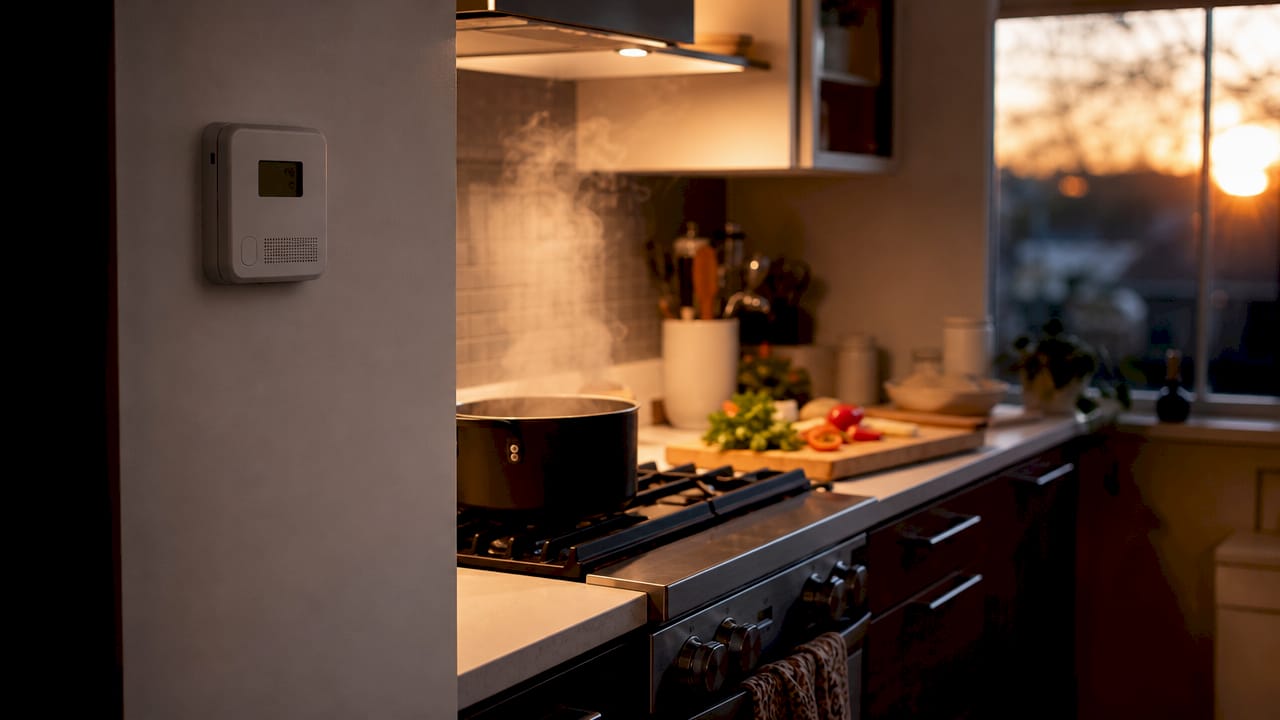
- Gas stoves and combustion appliances. These emit nitrogen dioxide and carbon monoxide. Always run your range hood on high while cooking and keep it running afterward.
- Tobacco smoke. Smoking indoors deposits carcinogens on every surface in the room. There is no filtration system that fully neutralizes secondhand smoke indoors.
- Synthetic fragrances in laundry products. Dryer sheets and fabric softeners release VOCs through dryer vents and into living spaces. Fragrance-free versions perform identically for cleaning.
Radon and carbon monoxide deserve specific attention because you cannot smell or see either one. Radon is a naturally occurring radioactive gas that seeps through foundations and is the second leading cause of lung cancer in the United States. A radon test kit costs under $30 at most hardware stores. Carbon monoxide detectors are required by code in most states and should be placed on every floor of your home.
Pro Tip: Schedule heavy cleaning tasks like oven cleaning or stripping floors for days when you can open every window and leave the house for several hours. The off-gassing from cleaning products peaks in the first 30 minutes.
Air purifiers primarily remove particulate matter but do not filter gaseous pollutants like VOCs from scented products. That means limiting sources of gaseous pollution matters more than any device you can buy.
What are the best ventilation practices to improve indoor air quality safely?
Ventilation dilutes indoor pollutants by replacing stale air with fresh outdoor air. The right approach depends on your outdoor air quality, climate, and home layout.
Natural ventilation works well when outdoor air quality is good. Opening windows for 10–15 minutes daily dilutes accumulated pollutants without any equipment cost. Avoid this during high pollen days, wildfire smoke events, or when outdoor ozone levels are elevated. The EPA’s AirNow.gov site shows real-time air quality index (AQI) readings for your zip code.
Exhaust fan use is where most homeowners fall short. Running the fan only while you cook or shower is not enough. Exhaust fans need 15–20 minutes after the activity ends to fully remove moisture and combustion byproducts. A stuffy room that never clears out often signals a poor return air path, which a contractor can fix by adding a transfer grille or jump duct for $300–$800.
Mechanical ventilation systems handle homes where opening windows is impractical. Here is a quick comparison:
| System type | Best use case | Approximate cost |
|---|---|---|
| Exhaust-only fan | Bathrooms, kitchens | $50–$300 installed |
| Energy Recovery Ventilator (ERV) | Humid climates, tight homes | $1,500–$4,000 installed |
| Heat Recovery Ventilator (HRV) | Cold climates, tight homes | $1,500–$3,500 installed |
ERV and HRV systems exchange stale indoor air for fresh outdoor air while recovering most of the energy used to condition the outgoing air. For Southwest Florida homeowners dealing with year-round humidity, an ERV is the more practical choice because it also manages moisture transfer. You can find room-by-room ventilation guidance useful for planning which spaces need the most airflow attention.
Pro Tip: If your home feels stuffy even with fans running, check that supply vents are not blocked by furniture. Blocked supply vents create pressure imbalances that reduce the effectiveness of your entire ventilation system.
Common ventilation mistakes to avoid:
- Running the bathroom fan only during a shower, then turning it off immediately.
- Sealing every gap in a home without adding a mechanical fresh-air source.
- Opening windows during high-humidity afternoons in Florida, which pulls in moisture and raises indoor humidity above safe levels.
- Ignoring the kitchen range hood because it seems loud. Noise is not a sign of malfunction.
How can managing indoor humidity improve your air quality and health?
Humidity is one of the most overlooked factors in home air quality. The optimal indoor relative humidity range is 30–50%. Staying within that band prevents two separate sets of problems.
Too high (above 60%): Mold colonies establish within 24–48 hours on damp surfaces. Dust mite populations explode, and both are potent allergens. In Southwest Florida, summer humidity regularly pushes indoor levels above 70% without active dehumidification.
Too low (below 35%): Dry mucous membranes become less effective at trapping airborne particles. Respiratory infections spread more easily, and wood floors and furniture crack over time.
| Humidity level | Primary risk | Recommended fix |
|---|---|---|
| Below 30% | Dry airways, static electricity | Whole-home or portable humidifier |
| 30–50% | None. Ideal range | Maintain with monitoring |
| Above 60% | Mold growth, dust mites | Dehumidifier or ERV system |
A digital hygrometer costs $10–$25 and gives you a real-time reading of your indoor humidity. Place one in the bedroom and one in the main living area. If readings consistently fall outside the 30–50% range, a portable dehumidifier handles most rooms for $150–$300. Whole-home dehumidifiers integrated into your HVAC system cost more but cover every room simultaneously, which matters in a humid climate like Naples or Fort Myers.
Seasonal strategy matters too. In winter, heating systems dry indoor air significantly. In summer, air conditioning removes moisture but may not be enough in very humid climates. Knowing your region’s seasonal patterns helps you decide whether to run a humidifier in winter and a dehumidifier in summer, or just one device year-round.
What filtration options help remove indoor airborne particles and allergens effectively?
Filtration is the third layer of a complete IAQ strategy, not the first. It works best after you have addressed source control and ventilation.
HVAC filters are your baseline. Replacing HVAC filters every 60–90 days with MERV 11–13 pleated filters effectively captures dust, pollen, pet dander, and mold spores. MERV stands for Minimum Efficiency Reporting Value. A higher MERV rating captures smaller particles but also increases resistance to airflow. This is where a critical warning applies: high-MERV filters can damage blower motors if your HVAC system was not designed for the added resistance. Always confirm compatibility with your system’s specifications or ask a technician before upgrading filter ratings. The real role of HVAC filtration goes beyond just catching dust. It protects the equipment itself.
Portable HEPA air purifiers complement HVAC filtration in specific rooms. HEPA filters capture 99.97% of particles 0.3 microns and larger, which includes most allergens and fine dust. They work best in bedrooms or rooms where vulnerable family members spend the most time. Size the purifier to the room’s square footage using the Clean Air Delivery Rate (CADR) rating on the box.
Pro Tip: Run your portable HEPA purifier on its highest setting for 30 minutes before bedtime, then drop it to low overnight. You get fast particle clearance without the noise disruption during sleep.
One technology to avoid: ionization and ozonation air cleaners produce harmful byproducts including ultrafine particles and ozone, which is itself a respiratory irritant. Mechanical HEPA filtration is the only technology with a consistent safety record for residential use.
For homes with severe allergy or asthma concerns, a whole-house air purification system integrated into the HVAC ductwork offers the broadest coverage. Ultraairswfl provides IAQ solutions for asthma-focused homes that combine proper filtration with system compatibility checks.
What routine cleaning habits support better indoor air quality?
Cleaning removes settled particles before they re-enter the air. Done wrong, it temporarily makes indoor air worse. Done right, it is one of the most cost-effective ways to enhance air quality.
- Vacuum with a HEPA-filtered vacuum at least twice a week on carpets and upholstered furniture. Standard vacuums exhaust fine particles back into the air. HEPA vacuums trap them.
- Wet mop hard floors after vacuuming. Wet mopping and HEPA vacuuming reduce airborne particle disturbance compared to dry sweeping, which kicks particles back into suspension.
- Wash bedding weekly in hot water (at least 130°F) to kill dust mites. Pillowcases and mattress covers are the highest-contact surfaces in any bedroom.
- Dust with microfiber or damp cloths. Dry feather dusters move particles from surfaces into the air. Microfiber cloths trap them.
- Schedule cleaning when vulnerable people are away. Cleaning temporarily increases airborne dust and allergens if done with the wrong tools or timing. Children, elderly residents, and anyone with asthma should be out of the home during heavy cleaning sessions.
- Inspect HVAC vents and ducts annually. Dusty supply vents signal a filter that needs changing. Visible mold in ducts requires professional remediation, not just a filter swap.
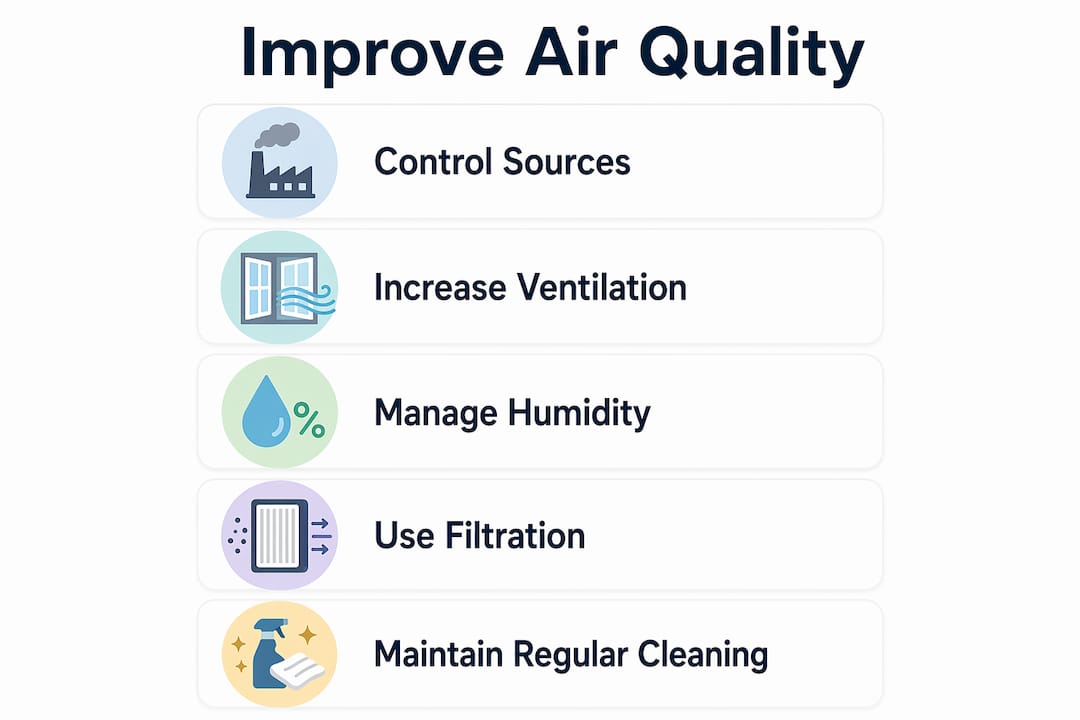
For a structured approach to the full home air quality improvement process, working through source control, ventilation, humidity, filtration, and cleaning in sequence gives you the clearest picture of where your home stands.
Key Takeaways
Improving indoor air quality requires controlling pollution sources first, then layering in ventilation, humidity management, and filtration for lasting results.
| Point | Details |
|---|---|
| Source control comes first | Eliminating VOCs, smoke, and combustion byproducts reduces pollutants before any device is needed. |
| Ventilate with timing | Run exhaust fans 15–20 minutes after cooking or showering, not just during the activity. |
| Keep humidity at 30–50% | A $10–$25 digital hygrometer tells you exactly where you stand and what equipment you need. |
| Match filters to your system | MERV 11–13 filters work well, but confirm blower compatibility before upgrading to avoid motor damage. |
| Clean with the right tools | HEPA vacuums and damp mops remove particles instead of redistributing them into the air. |
What I have learned after years of watching homeowners fix the wrong problem first
The single most common mistake I see is homeowners spending $400 on a portable air purifier while their bathroom exhaust fan vents directly into the attic and their HVAC filter has not been changed in eight months. The purifier runs, they feel like they did something, and the actual problems compound quietly.
Source control and ventilation are not glamorous. Switching to fragrance-free cleaners and running the range hood for an extra 20 minutes after dinner does not feel like a meaningful upgrade. But those two habits do more for your daily air quality than most devices on the market.
I am also skeptical of the idea that houseplants meaningfully clean indoor air. The research behind that claim comes from NASA studies conducted in sealed chambers with no airflow, not in real homes. Plants are pleasant. They are not air purifiers.
The one area where I strongly recommend professional help is persistent stuffiness or unexplained respiratory symptoms that do not improve after you have addressed the basics. Professional indoor air quality testing identifies specific pollutants, radon levels, and humidity patterns that a consumer hygrometer cannot capture. Spending $200–$400 on a professional test is far cheaper than years of trial-and-error equipment purchases. For homes in Southwest Florida, where humidity and mold risk are elevated year-round, that test is worth doing before investing in any whole-home system.
— albert
Ultraairswfl can help you take the next step
If you have worked through the basics and still notice persistent stuffiness, allergy symptoms, or humidity problems, the issue is likely in your HVAC system itself.
Ultraairswfl serves homeowners across Naples, Cape Coral, and Fort Myers with professional IAQ assessments, HVAC filter upgrades, whole-home dehumidifier installations, and ERV system setups. The team checks blower compatibility before recommending any filter upgrade, which protects your equipment and your budget. You can also review the indoor air quality investment case to understand the long-term health and cost benefits before committing to any system. For a full picture of available HVAC installation options, Ultraairswfl provides clear guidance matched to your home’s specific needs.
FAQ
What is the fastest way to improve indoor air quality?
Open windows for 10–15 minutes to flush stale air, run exhaust fans after cooking or showering, and replace your HVAC filter if it has not been changed in the last 90 days. These three steps cost almost nothing and deliver immediate results.
What MERV rating should I use for my home HVAC filter?
MERV 11–13 pleated filters offer the best balance of particle capture and airflow for most residential systems. Confirm your blower motor can handle the added resistance before upgrading, since high-MERV filters can cause motor strain in older systems.
Does indoor humidity really affect air quality?
Yes. Humidity above 60% accelerates mold growth and dust mite populations, while humidity below 35% dries mucous membranes and reduces your body’s natural defense against airborne particles. A digital hygrometer lets you monitor your levels for $10–$25.
Are air purifiers enough to clean indoor air on their own?
No. Air purifiers remove particulate matter effectively but do not filter gaseous pollutants like VOCs from cleaning products or cooking emissions. Source control and ventilation must come first, with filtration as a supporting layer.
When should I call a professional for indoor air quality issues?
Call a professional when symptoms like persistent coughing, headaches, or mold odors continue after you have addressed ventilation, humidity, and filtration basics. Professional air quality testing identifies specific pollutants and guides targeted solutions.