
Cooling technologies are defined as systems that remove heat from a space, device, or process to maintain a safe and comfortable temperature. The main categories include air cooling, liquid cooling, evaporative cooling, and solid-state methods like thermoelectric and elastocaloric systems. Each category serves a different heat load and environment, which means choosing the wrong type costs you money and comfort. Ultraairswfl works with residential and commercial clients across Southwest Florida to match the right cooling technology to each building’s specific needs, from a single-family home in Naples to a commercial server room in Fort Myers.
1. What are the common examples of cooling technologies using air?
Air cooling is the most widely used thermal management method in both residential and commercial buildings. It works by moving air across a heat source, either through natural convection or with fans and blowers, to carry heat away. Common examples include fan coil units, Computer Room Air Conditioning (CRAC) units in data centers, and standard split-system air conditioners found in most Florida homes.
Air cooling remains the most cost-effective method for low to moderate heat loads. That cost advantage disappears quickly when heat density rises, because adding more fans produces diminishing returns past certain thresholds.
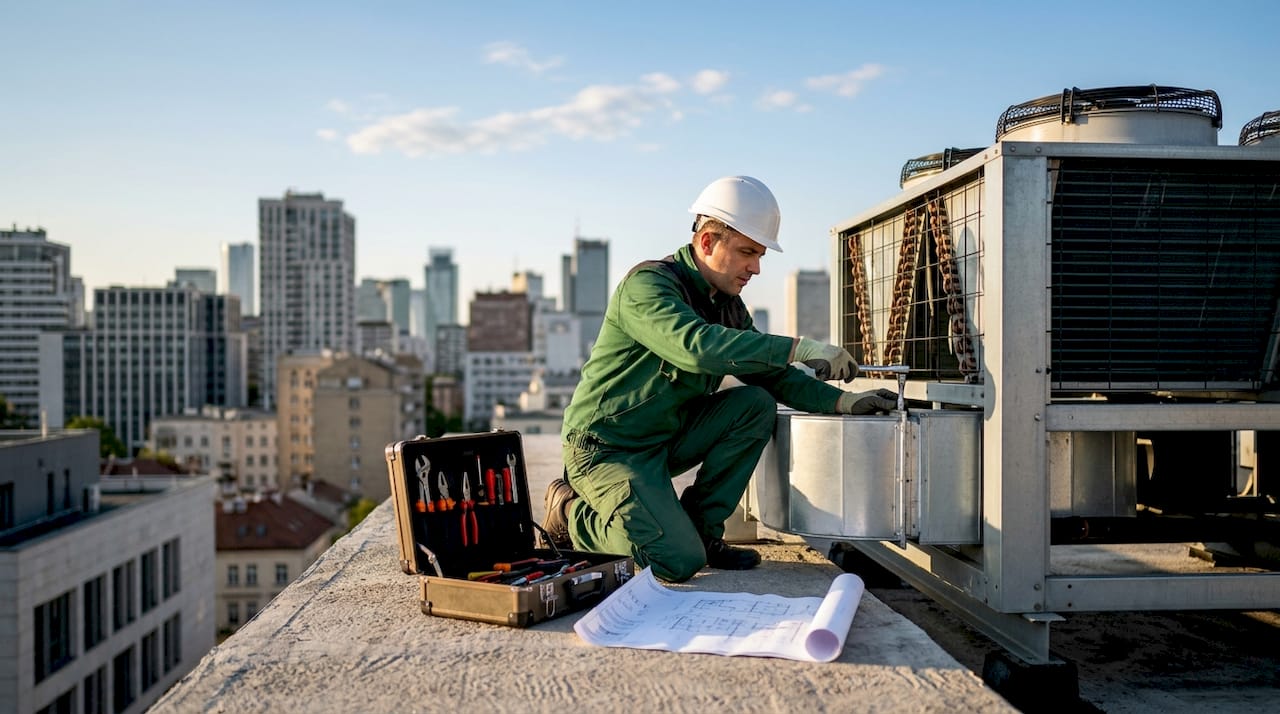
Passive air cooling relies on heat sinks, typically made from extruded aluminum, to spread heat across a larger surface area before natural airflow carries it away. This approach works well in low-power electronics and ventilated enclosures. Forced air cooling adds fans or blowers to accelerate that process, which is why your home’s air handler pushes conditioned air through ducts rather than relying on natural circulation alone.
Advantages and limitations of air cooling:
- Low upfront cost and simple installation
- Easy maintenance with widely available parts
- Effective for moderate heat loads in well-ventilated spaces
- Loses effectiveness at high power densities
- Noise from fans increases as cooling demand rises
- Enclosure design directly affects performance
Pro Tip: Optimize air cooling by designing enclosures with clear airflow paths from intake to exhaust. Blocked or recirculating airflow is the most common reason air-cooled systems underperform, even with adequate fan capacity.
2. How does liquid cooling work and what are its practical examples?
Liquid cooling moves a coolant fluid, typically water or a water-glycol mixture, through a cold plate mounted directly on a heat source. The fluid absorbs heat and carries it to a remote radiator or heat exchanger where it dissipates. Liquid cooling is approximately 25 times more thermally conductive than air, which explains why it handles high heat densities that air simply cannot manage.
Practical examples include direct-to-chip cooling in high-performance computing servers, cold plate systems in power electronics, and immersion cooling where entire circuit boards are submerged in a dielectric fluid. In residential settings, hydronic systems circulate water through radiant panels or fan coil units to cool living spaces efficiently.
Liquid cooling reduces component temperatures by around 22°C compared to air cooling under identical conditions. That reduction is significant because every 10°C drop in operating temperature can roughly double the lifespan of electronic components.
Key features and common applications:
- Cold plate systems for CPUs, GPUs, and power converters
- Immersion cooling for high-density server racks
- Hydronic fan coil units in commercial buildings
- Direct-to-chip cooling in data centers
- Radiant cooling panels in residential and office spaces
Liquid cooling does introduce maintenance complexity. Coolant chemistry must stay within specified pH and conductivity ranges to prevent corrosion. Leak detection systems and pump reliability checks are not optional. Matching the cold plate and heat spreader design to component geometry is critical to avoid localized hotspots, even when the coolant flow rate is adequate.
Pro Tip: Before specifying a liquid cooling system, map the exact footprint of each heat-generating component. A cold plate sized for a standard processor will leave hotspots on a non-standard chip layout, regardless of how powerful the pump is.
3. What innovative and specialized cooling technologies are emerging?
Several cooling technologies are moving from laboratory research into early commercial use, and they represent a meaningful shift away from refrigerant-based vapor compression systems.
Elastocaloric cooling uses the mechanical properties of shape-memory alloys, most commonly nickel-titanium (NiTi), to absorb and release heat through compression and tension cycles. Elastocaloric cooling offers a greenhouse gas-free alternative with recent breakthroughs reducing NiTi chip manufacturing costs by 90% and achieving 70–88% mechanical work recovery efficiency. Three-dimensional printing of NiTi components has made it possible to produce complex geometries that improve heat exchange surface area without adding bulk. The remaining barrier to commercial adoption is developing compact, efficient mechanical drives that can cycle the alloy reliably over millions of operations.
Adaptive Phase Cooling, inspired by nuclear reactor thermal management, uses subcooled boiling to accelerate heat removal. Adaptive phase cooling requires zero water usage and no toxic chemicals, including no PFAS compounds, which makes it attractive for data centers facing environmental regulations.
The table below compares these emerging methods against traditional vapor compression cooling across key performance metrics.
| Technology | Refrigerant | Water Use | Relative Efficiency | Best Application |
|---|---|---|---|---|
| Vapor compression | HFCs/HFOs | Moderate | Baseline | Residential and commercial HVAC |
| Elastocaloric | None (NiTi alloy) | Minimal | High (70–88% work recovery) | Electronics, future HVAC |
| Adaptive phase cooling | None | Zero | High | Data centers, high-density computing |
| Thermoelectric | None | None | Lower than vapor compression | Spot cooling, niche electronics |
Thermoelectric coolers are solid-state devices that pump heat electrically with no moving parts. They are reliable and compact, which makes them useful for precise spot cooling in medical devices and scientific instruments. Their efficiency is lower than vapor compression systems, so they are not practical for whole-room or whole-building cooling.
Heat pipes and vapor chambers are passive devices that spread heat through evaporation and condensation cycles inside a sealed tube or flat chamber. Laptops, smartphones, and LED lighting fixtures all rely on vapor chambers to move heat away from chips without any power input.
4. How do evaporative and hybrid cooling systems work with examples?
Evaporative cooling removes heat by converting liquid water into vapor. As water evaporates, it absorbs energy from the surrounding air, which drops the air temperature. Direct evaporative coolers, commonly called swamp coolers, push warm outside air through a wet pad and deliver cooled air directly into the space. Indirect evaporative coolers use a heat exchanger so the cooled air never contacts the water, which keeps indoor humidity lower.
Evaporative cooling effectiveness depends heavily on climate, specifically on ambient humidity and water availability. In dry climates like the American Southwest, evaporative coolers can cut cooling energy use dramatically. In humid climates like Southwest Florida, direct evaporative cooling adds moisture to already-humid air, which reduces comfort rather than improving it. This is a critical point for Florida homeowners and businesses evaluating their options.
Hybrid cooling systems combine air and liquid methods to handle mixed heat loads across a single facility. A typical commercial hybrid setup uses air-cooled systems for general office areas and liquid cooling for high-density server rooms or manufacturing equipment. Hybrid systems are increasingly common in data centers because they balance infrastructure cost against cooling performance across workloads that vary by time of day and season.
Advantages and limitations of evaporative and hybrid systems:
- Evaporative cooling uses significantly less electricity than vapor compression
- Hybrid systems adapt to varying heat loads without overbuilding capacity
- Both approaches reduce peak energy demand compared to all-air systems
- Evaporative cooling requires consistent water supply and humidity management
- Hybrid systems need more complex controls and commissioning
- Maintenance involves both air-side and water-side components
For energy-efficient cooling at home, understanding which method fits your local climate is the first decision to make, before comparing equipment brands or prices.
5. Passive cooling methods that work without energy input
Passive cooling is the preferred starting point for any thermal management plan. Passive cooling is preferred for reliability, with active cooling added only when heat loads exceed what passive methods can handle. This principle applies equally to a residential attic and a commercial electronics enclosure.
Natural ventilation uses building orientation, window placement, and stack effect to move air through a space without fans. A well-designed building in Southwest Florida can reduce air conditioning runtime significantly by positioning windows to capture prevailing breezes and using overhangs to block direct solar gain. Cool roofing materials reflect solar radiation rather than absorbing it, which reduces the heat load entering the building before the HVAC system ever turns on.
Thermal mass is another passive method. Dense materials like concrete, brick, and tile absorb heat during the day and release it slowly at night, smoothing out temperature swings. Combined with good insulation, thermal mass reduces the peak demand placed on active cooling equipment. The role of insulation in HVAC efficiency is often underestimated. Insulation does not cool a space, but it dramatically reduces how hard the cooling system has to work.
Passive methods have clear limits. When internal heat gains from people, equipment, and lighting exceed what natural ventilation and thermal mass can absorb, active cooling becomes necessary. The goal is to push that threshold as high as possible through good building design before sizing active equipment.
Key takeaways
The most effective cooling strategy combines passive methods to reduce heat load with active systems sized precisely for the remaining demand, rather than defaulting to the largest or most familiar technology available.
| Point | Details |
|---|---|
| Air cooling suits moderate loads | Air cooling is cost-effective but loses performance at high heat densities. |
| Liquid cooling handles high heat density | Liquid is 25 times more conductive than air and reduces component temps by around 22°C. |
| Emerging technologies skip refrigerants | Elastocaloric and adaptive phase cooling use no greenhouse gases or toxic chemicals. |
| Climate determines evaporative viability | Evaporative cooling works in dry climates but adds humidity in places like Southwest Florida. |
| Passive cooling reduces active system demand | Insulation, cool roofing, and thermal mass cut the load before active equipment turns on. |
What I’ve learned about choosing cooling technologies in the real world
After years of working with homeowners and facility managers across Southwest Florida, the pattern I see most often is this: people buy cooling capacity instead of buying cooling strategy. They size up the equipment, install it, and then wonder why their energy bills stay high or why certain rooms never reach the right temperature.
The uncomfortable truth is that no single cooling technology is universally best. The right choice depends on heat load, local climate, building envelope quality, and how the system will be maintained over its lifetime. A liquid-cooled server room in a Naples commercial building is a completely different problem from a residential split system serving a Cape Coral home, even if both spaces feel warm.
I am genuinely excited about elastocaloric and adaptive phase cooling, but I caution against treating them as ready-to-install solutions for most residential or commercial clients right now. Transitioning elastocaloric technology to commercial use still depends on developing compact mechanical drives that can survive millions of cycles reliably. Watch this space, but plan with proven technology today.
The most overlooked factor in cooling system selection is maintenance planning. A liquid cooling system with no coolant monitoring program will fail faster than a basic air-cooled system that gets regular filter changes. The technology you can maintain consistently outperforms the technology you cannot.
— albert
Ultraairswfl’s cooling expertise for Southwest Florida homes and businesses
Selecting the right cooling system for your home or commercial space in Southwest Florida requires more than comparing equipment specs. It requires understanding how your building performs, what your heat loads actually are, and which technology will deliver reliable comfort year after year in a humid, high-temperature climate.
Ultraairswfl specializes in office HVAC installation and residential cooling solutions across Naples, Cape Coral, and Fort Myers. The team evaluates your specific building conditions before recommending any system, whether that means a high-efficiency split system, a hybrid setup for a mixed-use commercial space, or eco-friendly HVAC options that reduce your environmental footprint. Contact Ultraairswfl to schedule a consultation and get a cooling plan built around your actual needs.
FAQ
What are the main types of cooling systems for homes?
The main types are air cooling (split systems and central air), evaporative cooling, and heat pump systems. In humid climates like Southwest Florida, vapor compression split systems and heat pumps are the most effective choices.
How does liquid cooling differ from air cooling?
Liquid cooling uses a fluid to carry heat away from a source, making it approximately 25 times more thermally conductive than air. Air cooling moves heat using airflow alone, which limits its effectiveness at high heat densities.
Is evaporative cooling effective in Florida?
Evaporative cooling is not effective in Florida’s humid climate. It works by evaporating water into the air, which raises indoor humidity in already-humid conditions and reduces comfort rather than improving it.
What is elastocaloric cooling and is it available now?
Elastocaloric cooling uses nickel-titanium alloys to absorb and release heat without refrigerants or greenhouse gases. It is not yet commercially available for residential or commercial HVAC, but manufacturing costs have dropped by 90% in recent research, signaling near-term progress.
How do I choose between cooling technologies for my building?
The choice depends on your heat load, local climate, building insulation quality, and maintenance capacity. A qualified HVAC professional, like the team at Ultraairswfl, can assess these factors and recommend the right system for your specific situation.