
Most homeowners in Naples, Cape Coral, and Fort Myers assume heating is barely a blip on their energy bills. After all, this is Southwest Florida. But heating costs account for a surprisingly large share of annual utility expenses, even here, and small inefficiencies add up fast across the year. The good news is that targeted efficiency upgrades deliver real, measurable savings while making your home noticeably more comfortable during those cooler winter months. This guide walks you through exactly why heating efficiency matters locally, which technologies make the biggest difference, and what most homeowners get wrong when trying to cut costs.
Table of Contents
- Why heating efficiency matters in Southwest Florida
- The whole-house approach: Beyond just high-efficiency equipment
- Choosing the most efficient heating technology for Florida’s climate
- Maximizing comfort and bill savings: What most homeowners miss
- Our take: The overlooked drivers of heating efficiency in Florida homes
- How Ultra Air Heating and Cooling helps Southwest Florida homeowners
- Frequently asked questions
Key Takeaways
| Point | Details |
|---|---|
| Heating costs are significant | Heating makes up nearly a third of home energy bills—even in Southwest Florida. |
| Whole-house approach yields savings | Combining insulation, maintenance, and smart controls can save up to 30 percent. |
| Heat pumps excel in Florida | Modern heat pumps deliver far higher efficiency compared to gas systems for local climates. |
| Distribution quality is essential | Proper ductwork and installation ensure you get the full benefit of efficient heating. |
| Comfort and savings go hand in hand | Efficient heating upgrades improve both indoor comfort and monthly bill reductions. |
Why heating efficiency matters in Southwest Florida
You might be surprised to learn that heating accounts for about 29% of a typical home’s utility bill. Even in a warm climate like ours, winter nights in Fort Myers can dip into the 40s, and your heating system kicks on more than you’d expect from November through February. Those hours add up.
The bigger issue is that many homes in Southwest Florida were built with cooling in mind, not heating. Insulation levels, window sealing, and equipment choices were often optimized for summer performance. That means your heating system can work harder than necessary to maintain comfort on cool nights, burning more energy and raising your monthly bill without you even noticing.
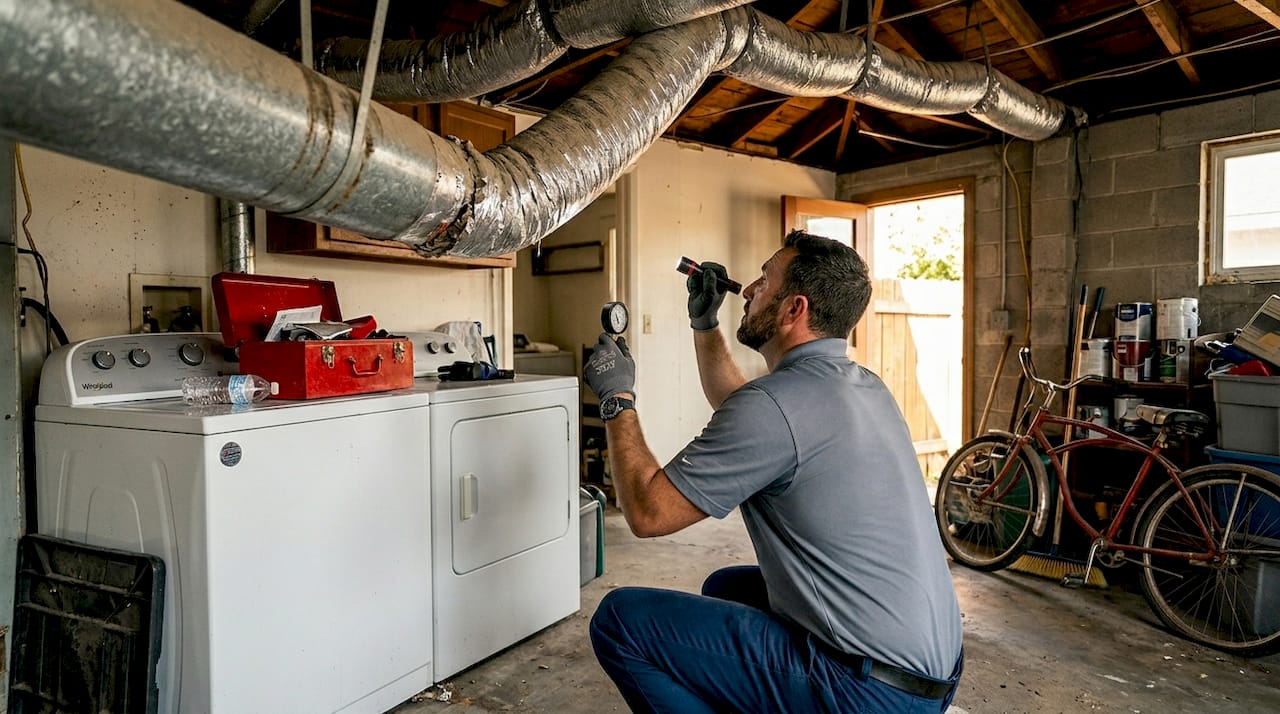
Efficiency upgrades change that equation. When your system moves heat effectively, runs at the right capacity, and delivers conditioned air where it’s needed, you stop paying for wasted energy. Keeping an eye on Florida HVAC trends shows that more local homeowners are recognizing this gap and acting on it.
Beyond savings, there’s a comfort angle that often gets overlooked. Efficient systems maintain more consistent temperatures throughout the home, eliminate cold spots, and cycle less erratically. That translates to a home that simply feels better, not just cheaper to run.
Key reasons to prioritize heating efficiency in Southwest Florida:
- Lower monthly utility bills even during brief but real heating seasons
- More consistent indoor temperatures from room to room
- Reduced strain on equipment, meaning fewer breakdowns and longer system life
- Better indoor air quality since well-maintained systems circulate air more cleanly
- Higher resale value for homes with modern, efficient HVAC equipment
The whole-house approach: Beyond just high-efficiency equipment
Here’s something most marketing materials skip: buying a high-efficiency heating unit alone rarely delivers the promised savings. A whole-house efficiency approach almost always beats upgrading only the heater itself. Why? Because your heating system doesn’t work in isolation. It works alongside your insulation, windows, ductwork, and thermostat. If any of those pieces are underperforming, your new high-efficiency unit still struggles.
“Energy-efficient heating typically delivers a comfort benefit as well as bill reductions, making whole-house improvements a double win for homeowners.”
Think about it this way: if you buy a fuel-efficient car but leave the windows open while driving, the fuel economy rating means nothing. The same logic applies to your home. Sealing gaps, adding insulation, and improving duct performance are the “closed windows” of home energy efficiency.
Here’s how different whole-house improvements stack up against buying new equipment alone:
| Improvement | Average savings potential | Comfort impact |
|---|---|---|
| New high-efficiency unit only | 10-15% on heating costs | Moderate improvement |
| Air sealing + insulation only | 10-20% on heating costs | Noticeable improvement |
| Duct sealing + repair | 10-15% on heating costs | Significant improvement |
| Smart thermostat integration | 5-12% on heating costs | Consistent temperature control |
| Whole-house combined approach | Up to 30% | Maximum improvement |
The compounding effect is real. Each improvement builds on the last. Sealing your ducts means the efficient equipment actually delivers conditioned air to the right rooms. Adding a smart thermostat means the system runs only when needed, not on a fixed schedule that wastes energy.
Pro Tip: Before investing in new equipment, schedule a home energy assessment. A technician who evaluates your insulation, duct condition, and air sealing can tell you exactly where your dollars will go furthest. Sometimes a $500 duct-sealing job saves more than a $3,000 equipment upgrade.
A practical whole-house efficiency plan looks like this:
- Audit your current system. Identify duct leaks, insulation gaps, and thermostat programming issues before spending a dollar on equipment.
- Seal and insulate first. Air sealing attic penetrations and adding insulation locks in conditioned air and reduces the load on your heater.
- Upgrade or repair ductwork. Leaky ducts in unconditioned attic spaces are one of the biggest efficiency drains in Florida homes.
- Choose correctly sized equipment. Oversized units short-cycle, wasting energy and creating humidity problems. Undersized units run constantly.
- Integrate a smart thermostat. Proper programming or learning algorithms optimize run times without sacrificing comfort.
Understanding the range of Florida HVAC system types available helps you match equipment to your specific home layout and efficiency goals.
Choosing the most efficient heating technology for Florida’s climate
Southwest Florida’s mild winters mean the heating technology that works best here differs from what makes sense in colder northern states. Gas furnaces, electric resistance heaters, and heat pumps all operate very differently when outdoor temperatures stay mostly above 40°F.
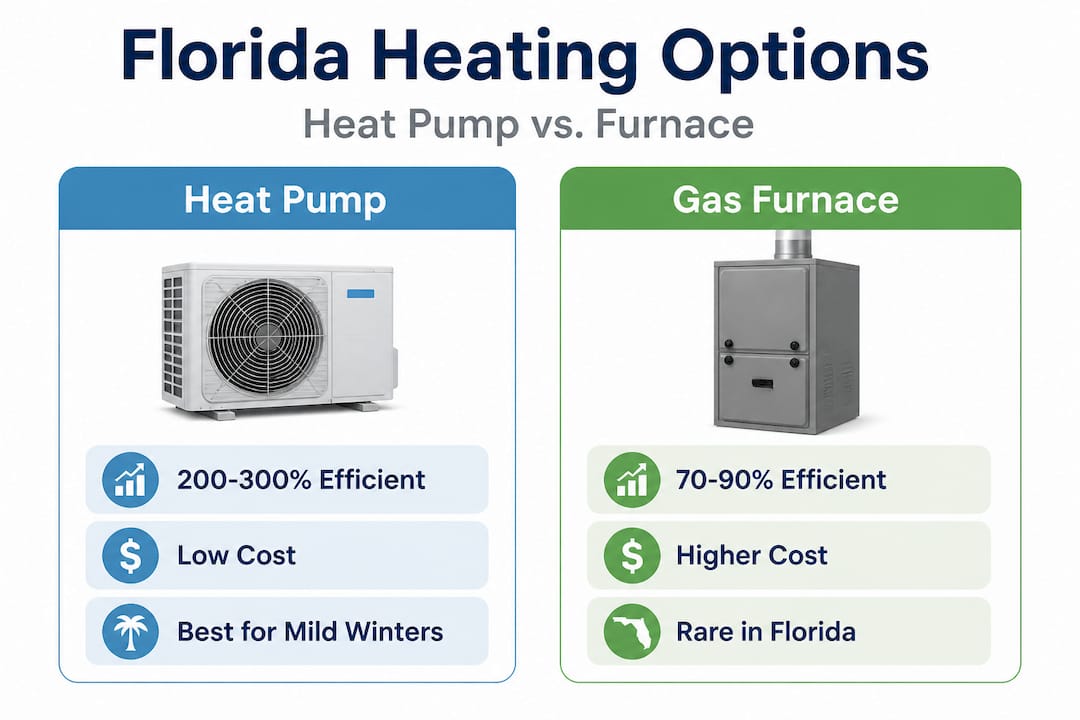
Heat pumps are often the most efficient heating option for mild climates because they move existing heat from outdoor air into your home rather than generating heat from scratch. That distinction matters enormously for efficiency. A standard electric resistance heater converts one unit of electricity into one unit of heat. A heat pump moves two to three units of heat for every unit of electricity it consumes. That’s not a small difference. It’s a complete shift in how you pay for warmth.
For our climate, heat pumps are a natural fit. When outdoor temperatures rarely drop below freezing, the heat pump operates at peak efficiency almost all winter long. Gas furnaces can match or exceed heat pump performance in very cold climates where outdoor temps regularly hit single digits, but in Southwest Florida, that scenario almost never applies.
Heating technology comparison for Southwest Florida:
| Technology | Efficiency rating | Best for | Limitations |
|---|---|---|---|
| Heat pump (modern) | 200-300% efficient (moves heat) | Mild climates, whole-year use | Less effective below 30°F |
| Gas furnace | 80-98% AFUE | Cold climates, large homes | Higher fuel cost variability |
| Electric resistance | 100% efficient (generates heat) | Backup/supplemental heating | High operating cost |
| Mini-split heat pump | 200-300%+ efficient | Zone-specific heating | Higher upfront cost |
However, even the most efficient equipment only delivers its rated performance when installed correctly. Installation quality, sizing, and duct condition directly determine how close to the rated efficiency you actually experience in daily operation. A heat pump with a stellar HSPF (Heating Seasonal Performance Factor) rating, which measures how efficiently a heat pump heats your home across an entire season, will underperform if the duct system leaks 20% of conditioned air into your attic.
The benefits of a variable speed air handler are especially worth considering here. Unlike single-speed systems that blast air at full capacity and then shut off, variable speed units modulate their output continuously. They run longer at lower speeds, which distributes heat more evenly, reduces temperature swings, and often achieves better real-world efficiency than the HSPF rating alone suggests.
Key factors that determine real-world efficiency for Florida homeowners:
- Proper sizing via Manual J load calculation. Guesswork leads to oversized or undersized systems.
- Tight ductwork. Even 10-15% duct leakage significantly erodes delivered efficiency.
- Quality installation. Refrigerant charge, airflow balancing, and electrical connections all affect performance.
- Commissioning after installation. Verifying the system operates as designed catches problems before they become costly habits.
Pro Tip: Ask any contractor for a Manual J load calculation before they size your new system. If they quote equipment size based on square footage alone without doing a full load calculation, that’s a warning sign. Proper sizing is non-negotiable for real efficiency gains.
When problems do develop, knowing the heating repair steps specific to Southwest Florida homes helps you respond quickly and avoid compounding issues.
Maximizing comfort and bill savings: What most homeowners miss
Most efficiency articles stop at “buy better equipment.” But for homeowners in our region, there are practical strategies that routinely get skipped and they make a real difference in monthly bills and daily comfort.
Start with ductwork, not equipment. Duct leakage and poor distribution rank among the top efficiency killers in Florida homes. Ducts running through hot attic spaces lose conditioned air before it ever reaches your living areas. Having ducts tested, sealed, and insulated properly is often the single highest-return investment available to existing homeowners, even before considering equipment upgrades.
“Treating duct sealing and proper commissioning as part of your efficiency strategy is the most underutilized path to real-world savings in Southwest Florida homes.”
Understand how heat pumps interact with thermostat setbacks. Many homeowners program their thermostats to drop the temperature at night or when the house is empty. For conventional gas furnaces, that strategy saves money. For heat pumps, the math changes. Heat pumps are efficient enough that you generally do not need to lower the setpoint overnight or when you’re away. Large temperature setbacks force the heat pump to recover quickly, which may activate inefficient backup resistance heating, actually costing more than maintaining a steady temperature throughout the day.
Practical steps to maximize efficiency and comfort:
- Schedule annual professional maintenance. Clean coils, correct refrigerant charge, and properly lubricated components all preserve efficiency season after season.
- Test and seal ductwork. A duct blaster test (a diagnostic tool that pressurizes your duct system to find leaks) reveals exactly how much conditioned air you’re losing.
- Use thermostat programming correctly for your system type. Heat pumps benefit from consistent setpoints rather than aggressive setbacks.
- Replace air filters on schedule. A clogged filter forces your system to work harder and can cause early equipment failure.
- Check and clear outdoor unit clearance. For heat pumps, unobstructed airflow around the outdoor unit is essential for efficient heat extraction during cool weather.
Proper HVAC commissioning after any installation or major repair ensures the system actually performs as intended, not just as rated on a specification sheet. Commissioning involves verifying airflow, refrigerant charge, electrical connections, and thermostat calibration.
Pairing heating efficiency strategies with energy-efficient cooling practices means your HVAC system works smart year-round, not just during the heating months.
Our take: The overlooked drivers of heating efficiency in Florida homes
After working with homeowners across Naples, Fort Myers, and Cape Coral for years, we’ve noticed a pattern. Homeowners chase equipment specifications, SEER ratings (an efficiency measure for cooling), HSPF ratings, and headline numbers from marketing brochures, while the real efficiency gap sits inside their attic, in their ductwork, or in how they operate their thermostats.
Even top-tier equipment fails to deliver its rated performance when duct leakage prevents conditioned air from reaching living spaces. A heat pump rated at a high HSPF sitting on a pad outside your home is only as efficient as what actually arrives inside your rooms.
The uncomfortable truth is that most efficiency guides, including manufacturer materials, talk about equipment ratings because those are easy to quantify and sell. Duct testing, commissioning, and behavioral habits around thermostat use are harder to market. But they’re where the real money is.
We also see homeowners underestimate the value of consistent, scheduled maintenance. A system that loses 5% efficiency each year due to dirty coils, low refrigerant, and restricted airflow will be operating at 75% efficiency within five years, regardless of how efficient it was on day one. That slow degradation is invisible until you compare your bills from this year to bills from five years ago.
Our honest advice: before you spend money on new equipment, invest in understanding the complete picture of how your system types for Florida homes work together. Equipment, ducts, insulation, and habits all contribute. A 30% savings target is genuinely achievable, but only when you address the system as a whole, not just the unit sitting in your garage or on your roof.
How Ultra Air Heating and Cooling helps Southwest Florida homeowners
Improving your heating efficiency is not a single purchase. It’s a strategy. And getting it right in Southwest Florida requires someone who understands the local climate, home construction styles, and utility cost realities specific to our region.
At Ultra Air Heating & Cooling, we bring that local expertise to every job. Whether you’re evaluating heating solutions for a new home, dealing with an aging system that runs longer than it should, or simply trying to understand where your energy dollars are going, we help you find the most effective path forward. Our team handles everything from thorough HVAC commissioning to full system replacement, always with an eye on real-world performance, not just spec-sheet numbers. We serve homeowners throughout Naples, Cape Coral, and Fort Myers, and we’d love to help you stop leaving money on the table every winter.
Frequently asked questions
How much can an energy-efficient heating upgrade save me in Southwest Florida?
A whole-house approach can yield about 30% savings on heating-related costs, significantly more than replacing only the heating unit itself.
Are heat pumps more efficient than gas furnaces in Florida?
Modern heat pumps deliver 2-3 times more heat per energy unit than gas furnaces, making them the top choice for Florida’s mild winters.
Why does ductwork matter for heating efficiency?
Duct leakage can prevent you from getting the full value of your system’s rated efficiency, so sealing ducts is essential before or alongside any equipment upgrade.
Should I lower my thermostat at night with a heat pump?
Unlike with furnaces, heat pumps are efficient enough that you generally do not need to lower the setpoint while sleeping or away, because large setbacks can trigger costly backup resistance heating.
Can energy-efficient heating upgrades also improve comfort?
Yes, a whole-house approach increases comfort alongside savings by creating more consistent temperatures, fewer drafts, and more reliable system performance throughout your home.
Recommended
- Florida HVAC Trends: Boost Efficiency and Comfort in 2026
- Florida Energy Efficiency Tax Credits 2026: The SWFL Homeowner’s Guide – Ultra Air Heating and Cooling
- Commercial HVAC best practices for Southwest Florida buildings
- Best Practices for Ultra Air Heating and Cooling in Southwest Florida – Ultra Air Heating and Cooling