
Insulation is defined as a thermal barrier that controls heat transfer between your home’s interior and the outside environment, and its role in HVAC performance is direct and measurable. Homes with properly insulated ducts and building envelopes can save 10%–50% annually on heating and cooling costs depending on climate and baseline usage. That range is wide because insulation quality varies so dramatically from home to home. For homeowners and property managers in Southwest Florida, where air conditioners run nearly year-round, getting insulation right is one of the highest-return investments you can make in your property.
How does insulation improve HVAC efficiency?
The role of insulation in HVAC systems is to reduce the amount of work your equipment must do to maintain a set temperature. Every time conditioned air escapes through walls, attics, or ductwork before reaching a room, your system runs longer to compensate. That extra runtime adds up fast on your utility bill.
The building envelope, which includes your walls, roof, and attic floor, is the first line of defense. When that envelope is poorly insulated, heat pours in during summer and escapes in winter. Your HVAC unit cycles more frequently, wears out faster, and consumes more energy for the same result.
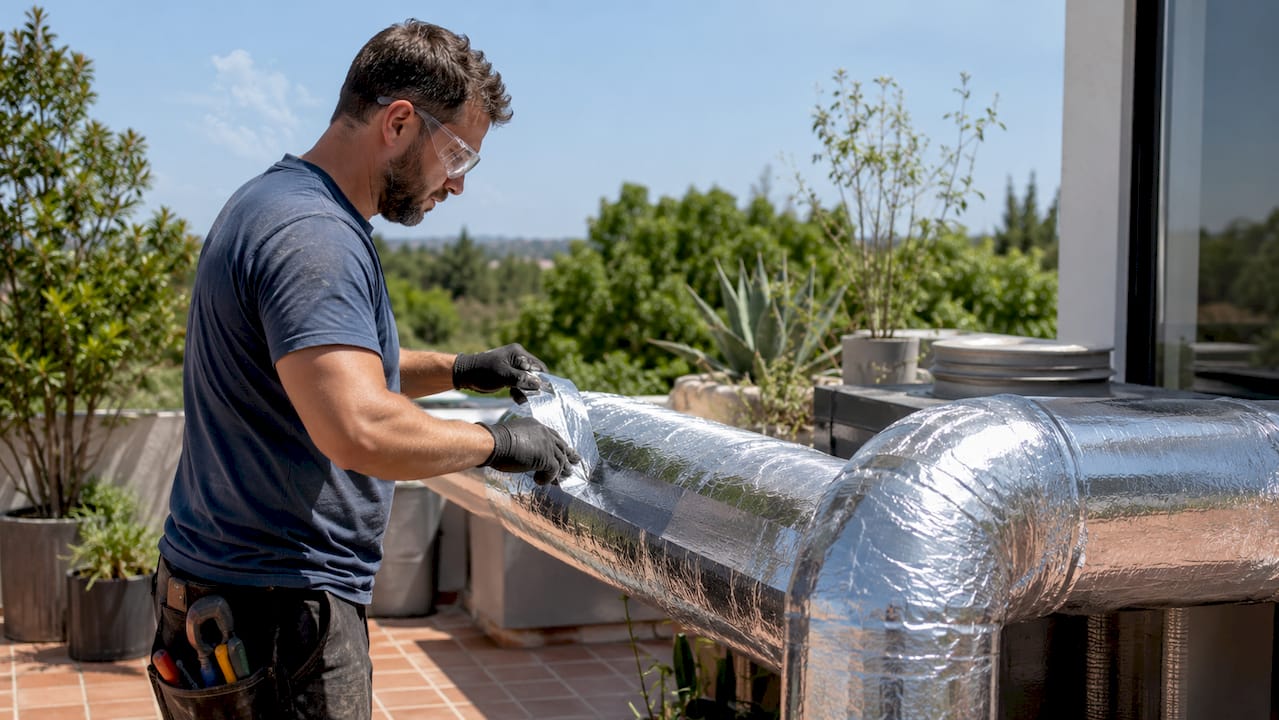
Ductwork is where the losses get especially costly. Duct systems in average U.S. homes lose 25%–40% of HVAC heating and cooling energy due to poor or absent insulation. That means nearly half of what your system produces never reaches the rooms you’re trying to condition. Insulating ducts properly, especially those running through unconditioned attic spaces, closes that gap immediately.
Attic insulation standards give you a concrete target to aim for. The Department of Energy recommends attic insulation at R-49 minimum, with R-60 as the ideal for most moderate to cold climates. R-value measures thermal resistance. A higher number means more resistance to heat flow, which translates directly to lower HVAC workload.
Here is what proper insulation does for your system in practical terms:
- Reduces heat gain in summer so your air conditioner reaches setpoint faster and cycles off sooner
- Minimizes heat loss in winter so your heating system doesn’t run continuously to offset envelope losses
- Lowers peak demand on your equipment, which extends compressor and blower motor life
- Cuts duct energy losses by keeping conditioned air at the right temperature from air handler to register
- Supports consistent room temperatures throughout the home, eliminating hot and cold spots
Pro Tip: If your HVAC system is short-cycling or struggling to maintain temperature on mild days, check your attic insulation depth before calling for a system repair. Insufficient insulation is often the root cause.
What insulation materials work best for HVAC applications?
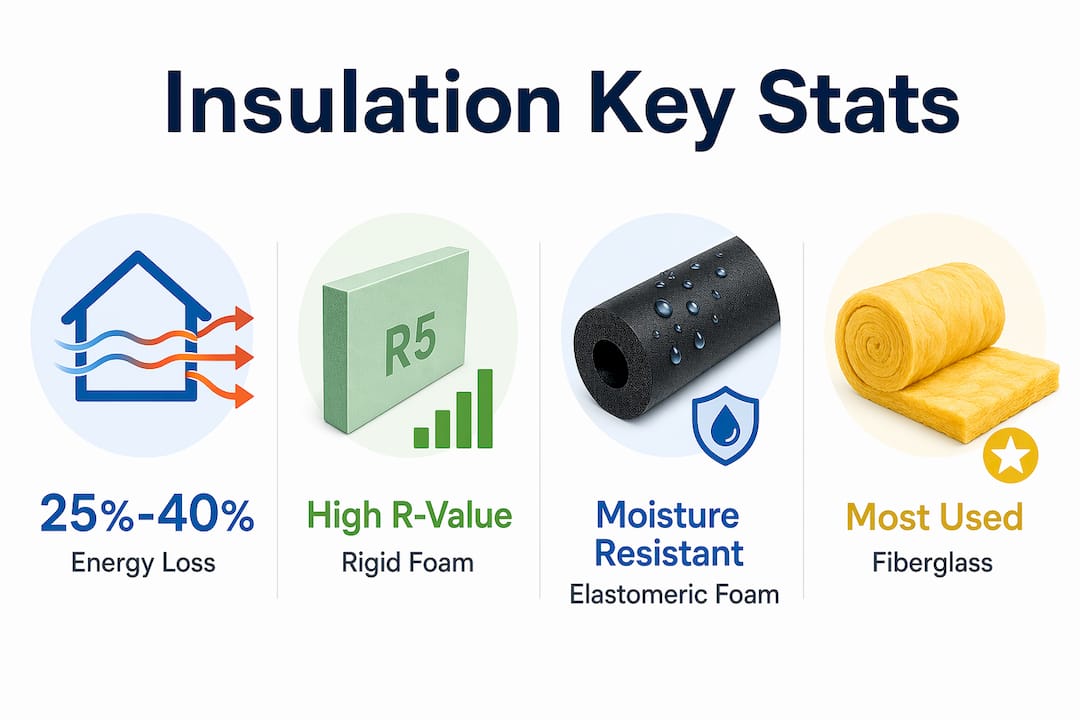
Not every insulation material suits every part of your HVAC system. The right choice depends on where the insulation goes, what temperature the surface runs at, and how much moisture exposure it faces. Here is a comparison of the most common insulation types for HVAC applications:
| Material | Best Application | R-Value per Inch | Moisture Resistance | Key Benefit |
|---|---|---|---|---|
| Fiberglass batts/blankets | Attics, walls, duct wrap | R-2.9–R-3.8 | Moderate | Thermal comfort and acoustic dampening |
| Elastomeric foam | Refrigerant and chilled water pipes | R-3.7–R-4.0 | Excellent | Closed-cell vapor barrier |
| Rigid foam board | Basement walls, exterior sheathing | R-3.8–R-6.5 | Good | High R-value in thin profile |
| Reflective/radiant barrier | Attic rafters in hot climates | Varies | Good | Reflects radiant heat, not conductive |
Fiberglass insulation improves thermal comfort, moisture control, and dampens mechanical noise. It is the most widely used material for duct wrapping and attic applications. The catch is installation quality. Gaps, compression, or improper vapor facing can introduce dust, odors, and microbial growth into your airstream.
Elastomeric foam is the industry standard for chilled water and refrigerant pipes. Its closed-cell structure resists vapor diffusion, which prevents condensation from forming on cold pipe surfaces. In Florida’s humid climate, this matters enormously. A refrigerant line without elastomeric foam will sweat, drip, and eventually cause water damage to ceilings and structural framing.
Rigid foam boards, such as polyisocyanurate and extruded polystyrene (XPS), deliver the highest R-value per inch of any common insulation type. They work well on basement walls, exterior sheathing, and areas where space is tight. Reflective barriers are most effective in hot, sunny climates like Southwest Florida, where radiant heat from the sun drives attic temperatures well above 130°F on summer afternoons.
Pro Tip: In Southwest Florida, pair a radiant barrier on attic rafters with blown-in fiberglass or cellulose on the attic floor. The radiant barrier blocks solar heat gain from above, while the floor insulation stops what gets through from reaching your living space.
What are common insulation mistakes that hurt HVAC performance?
Poor insulation installation is often worse than no insulation at all because it creates a false sense of security. These are the mistakes that show up most often in homes with underperforming HVAC systems.
Compressing insulation during installation is the single most common error. Compressed insulation loses effectiveness drastically because the air pockets that provide thermal resistance are eliminated. Stuffing a thicker batt into a thinner cavity does not give you more R-value. It gives you less. Insulation must maintain its full loft to perform as rated.
Skipping or misplacing vapor retarders causes serious long-term damage. Without proper vapor retarders, insulation traps moisture against cold surfaces, leading to mold growth, corrosion, and structural deterioration. In humid climates, vapor retarders belong on the warm side of the insulation, facing the interior of the home.
Leaving refrigerant suction lines uninsulated is a mistake that costs homeowners in two ways. Uninsulated refrigerant suction lines reduce system efficiency and cause condensation that drips onto ceilings and structural elements. The suction line runs cold, and in humid air, moisture accumulates on its surface the same way a cold glass sweats on a summer day.
Additional mistakes that affect both performance and indoor air quality include:
- Gaps in duct insulation that allow heat to transfer at unprotected joints and seams
- Damaged or deteriorated duct liner that sheds fibers into the airstream
- Insulation installed over blocked soffit vents, which disrupts attic ventilation and traps heat
Pro Tip: Schedule an insulation inspection every five years, or after any major renovation. Settling, pest activity, and moisture intrusion can degrade insulation without any visible signs from inside the living space.
How does insulation affect indoor air quality and noise control?
The HVAC insulation benefits extend well beyond energy savings. Insulation directly shapes what you breathe and how much mechanical noise you hear inside your home.
Fiberglass internal duct liners reduce fan noise and the sound of air rushing through the system. This is why commercial buildings use lined ductwork near air handlers, where noise levels are highest. The same principle applies in residential settings. A properly lined and insulated duct system runs noticeably quieter than bare sheet metal.
Proper insulation improves indoor air quality by preventing microbial contamination and reducing dust infiltration. When duct insulation is damaged or improperly installed, fibers and particulates can enter the airstream. Moisture trapped in degraded insulation creates the conditions for mold and bacteria to grow inside ducts, which then circulates through your living space every time the system runs.
Vapor management is the piece most homeowners overlook. Without correct vapor retarders and sealed joints, insulation traps moisture against cold duct surfaces in humid climates. That moisture feeds mold colonies that are difficult to detect and expensive to remediate. For homes in Naples, Cape Coral, and Fort Myers, where outdoor humidity regularly exceeds 80%, this is not a theoretical risk. It is a common and preventable problem.
For homeowners concerned about air quality and HVAC health, the connection between insulation condition and what circulates through your home is direct. Degraded insulation is not just an energy problem. It is a health problem.
Key Takeaways
Proper HVAC insulation is the single most cost-effective upgrade a homeowner can make to reduce energy waste, protect equipment, and maintain healthy indoor air quality.
| Point | Details |
|---|---|
| Energy savings are significant | Well-insulated homes save 10%–50% annually on HVAC energy costs. |
| Duct losses are the biggest gap | Uninsulated ducts waste 25%–40% of all conditioned air before it reaches rooms. |
| Material choice matters | Elastomeric foam suits cold pipes; fiberglass works best for ducts and attics. |
| Installation errors are costly | Compressed insulation and missing vapor retarders cause efficiency loss, mold, and damage. |
| Insulation protects air quality | Properly installed insulation prevents microbial growth and reduces mechanical noise. |
Why homeowners consistently underestimate insulation’s impact
I have seen this pattern repeat across hundreds of HVAC assessments. A homeowner invests in a high-efficiency unit with a strong SEER2 rating, expecting their energy bills to drop significantly. They don’t. The equipment is doing its job. The building is not.
Insulation acts as the HVAC system’s silent partner. A 20 SEER2 unit installed in a poorly insulated home will perform like a 12 SEER2 unit in a well-insulated one. The equipment cannot overcome what the building envelope gives back. This is the insight that most equipment-focused conversations miss entirely.
What I tell every homeowner is this: check your insulation before you replace your system. If your attic is sitting at R-20 when it should be at R-49 or higher, no new equipment will fix your comfort or cost problems. The HVAC retrofit conversation should always start with the envelope, not the equipment.
Monitoring insulation condition is also something most homeowners skip after installation. Insulation settles, gets disturbed by pest activity, and absorbs moisture over time. A five-year check is not excessive. It is the minimum for a home in a humid climate. The payoff is lower bills, longer equipment life, and air you can actually trust.
— albert
How Ultraairswfl can help you get the most from your HVAC system
If your energy bills are higher than they should be or your system struggles to keep up on hot days, insulation is often the reason. Ultraairswfl serves homeowners across Naples, Cape Coral, and Fort Myers with full HVAC assessments that include duct insulation evaluation, refrigerant line inspection, and building envelope recommendations.
The team at Ultraairswfl brings the same expertise to insulation upgrades as they do to equipment installation and repair. Whether you need a full heating and cooling assessment or a targeted duct insulation improvement, the process starts with understanding exactly where your home is losing energy. Contact Ultraairswfl today to schedule your efficiency review and find out how much you could be saving.
FAQ
What is the role of insulation in HVAC systems?
Insulation acts as a thermal barrier that reduces heat transfer through the building envelope and ductwork, lowering the workload on your HVAC equipment. Homes with properly insulated systems save 10%–50% annually on energy costs.
How much energy do uninsulated ducts waste?
Duct systems in average U.S. homes lose 25%–40% of HVAC energy due to poor or absent insulation. That loss occurs before conditioned air ever reaches the rooms being heated or cooled.
What is the best insulation for refrigerant lines?
Elastomeric foam is the industry standard for refrigerant and chilled water pipes because its closed-cell structure resists vapor diffusion and prevents condensation. Uninsulated suction lines cause both efficiency loss and water damage from dripping condensate.
Does insulation affect indoor air quality?
Yes. Damaged or improperly installed duct insulation can introduce fibers, dust, and microbial contaminants into your airstream. Proper vapor retarders and sealed insulation joints prevent moisture buildup that leads to mold growth inside ducts.
What R-value should my attic insulation be?
The Department of Energy recommends a minimum of R-49 for attic insulation, with R-60 as the ideal for most climates. Higher R-values reduce heat gain in summer and heat loss in winter, directly lowering HVAC runtime and energy consumption.