
Southwest Florida homeowners face a tougher decision than most when evaluating air conditioning upgrade options. It’s not just about picking a unit with a high SEER rating and calling it done. Between Naples, Cape Coral, and Fort Myers, you’re dealing with humidity levels that expose every weakness in an undersized or poorly staged system. The wrong upgrade can leave you with a cold but clammy house, sky-high electric bills, or an AC that short-cycles its way to an early grave. This guide cuts through the noise and gives you the specific options, trade-offs, and decision criteria that actually matter in this climate.
Table of Contents
- Key takeaways
- 1. Understanding the key criteria before you choose
- 2. Single-stage AC systems
- 3. Multi-speed and variable-speed systems
- 4. Ductless mini-split systems
- 5. Air economizers and ventilation upgrades
- 6. Building automation systems and smart controls
- 7. Zoning upgrades
- 8. Comparing your upgrade options at a glance
- 9. How to decide which upgrade fits your home
- My honest take on air conditioning upgrades in Southwest Florida
- Ready to upgrade? Ultraairswfl can help
- FAQ
Key takeaways
| Point | Details |
|---|---|
| SEER2 alone isn’t enough | Efficiency ratings only deliver savings when sizing and ductwork are properly matched to your home. |
| Variable-speed systems win in humidity | Systems that modulate capacity control moisture far better than single-stage units in Florida’s climate. |
| Know when to replace, not repair | If repair costs exceed 50% of a new system’s price, replacement is almost always the smarter investment. |
| Smart controls multiply savings | A smart thermostat can cut cooling consumption by 10% to 15% on its own, with minimal upfront cost. |
| Professional sizing is non-negotiable | A Manual J load calculation prevents the oversizing and comfort problems that plague DIY upgrade decisions. |
1. Understanding the key criteria before you choose
Before you compare any air conditioning upgrade options, you need a clear picture of what actually drives a good decision. Skipping this step is how homeowners end up spending $12,000 on a premium system that still can’t keep the living room comfortable on a July afternoon.
Energy efficiency ratings are the starting point. SEER2 (Seasonal Energy Efficiency Ratio 2) is the current federal standard for central systems, and CEER (Combined Energy Efficiency Ratio) applies to window units. Higher numbers mean lower operating costs, but SEER2 ratings only translate to real efficiency when the system is properly sized and the ductwork provides correct airflow.
Sizing is where most upgrades go wrong. Manual J and Manual S are the industry standards for calculating your home’s actual cooling load and selecting properly matched equipment. Many jurisdictions now require compliant load calculations. Oversized systems cool fast but cycle off before they pull humidity out of the air, which is a serious problem in Southwest Florida.
Other criteria worth locking in before you shop:
- Ductwork condition: Leaky or undersized ducts undermine even the best equipment. Improper duct design causes short-cycling and humidity issues regardless of what unit sits on the pad outside.
- Budget brackets: Use the 50% rule and the $5,000 rule as repair-vs-replace guides. If repair costs exceed 50% of what a new system costs, or if your unit’s age multiplied by the repair cost exceeds $5,000, replacement makes more financial sense.
- Zoning needs: Larger homes or properties with multiple wings benefit from zoning upgrades that let different areas cool independently.
Pro Tip: Get a Manual J load calculation from your contractor before you agree to any equipment. If they quote you a new system without one, that’s a red flag worth acting on.
2. Single-stage AC systems
Single-stage systems are the most common and least expensive central AC upgrade option you’ll find. They operate at one speed: full blast or off. For a smaller, well-insulated home in a mild climate, that’s fine. In Southwest Florida, it creates a cycle where the system blasts cold air, hits the setpoint, shuts off, and then the humidity creeps back up before the next cycle starts.
These systems cost less upfront and are straightforward to install. If your budget is tight and your home is under 1,200 square feet, a single-stage unit from a reputable brand with a solid SEER2 rating is a workable starting point. Just understand the humidity trade-off going in.
3. Multi-speed and variable-speed systems
Variable-speed systems are the strongest performers for Southwest Florida’s climate, and the numbers back it up. These units operate between 30% and 100% capacity, running longer at lower speeds rather than blasting on and off. That longer runtime is exactly what pulls moisture out of the air.
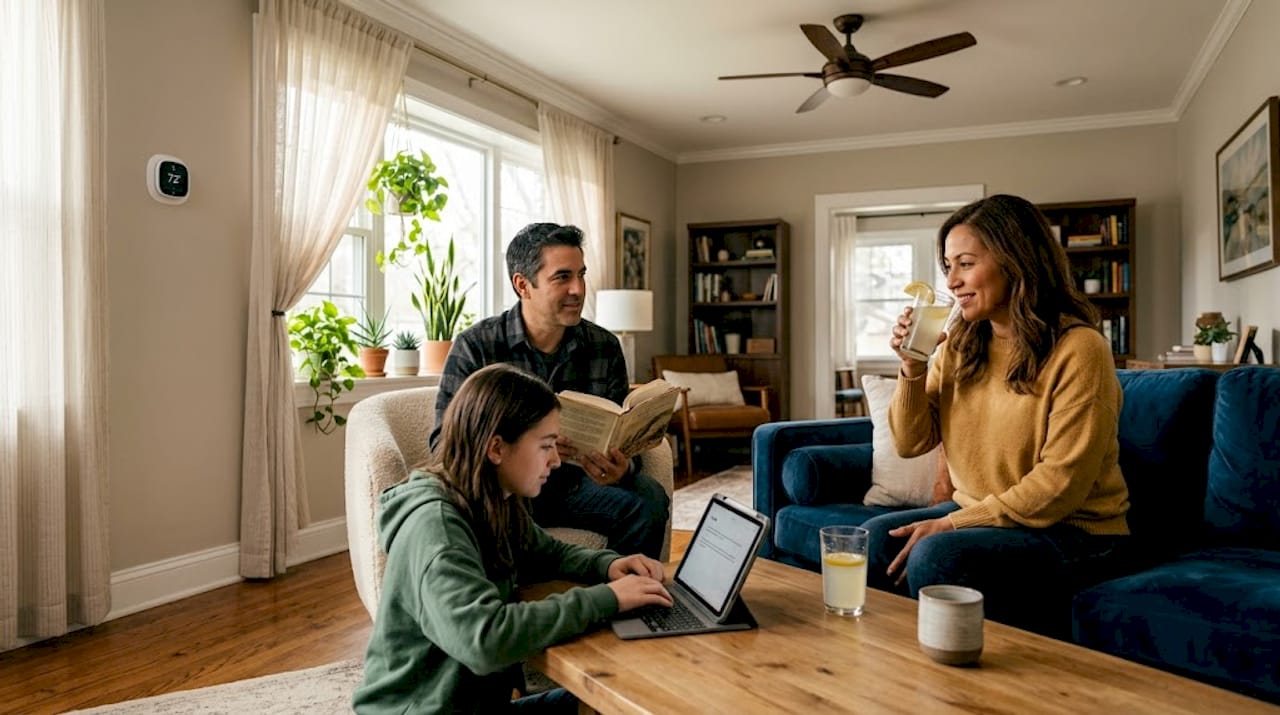
The comfort difference is noticeable. You get steadier temperatures, better humidity control, and quieter operation. The benefits of variable-speed systems are especially pronounced here because the system adapts to the load rather than overcooling and cycling off. The trade-off is cost. Premium variable-speed systems sit at the high end of the pricing range, and that’s a real number to plan for.
Pro Tip: Don’t just compare SEER2 ratings between a variable-speed and a single-stage unit. Ask your contractor to model the annual operating cost difference for your specific home size. The efficiency gap often pays for the price premium within three to five years in Florida.
4. Ductless mini-split systems
Ductless mini-splits are one of the best AC upgrade options for homes without existing ductwork, room additions, garages converted to living space, and older Florida homes where adding ducts would be prohibitively expensive. Each indoor air handler connects to an outdoor condenser and controls its zone independently.
Modern mini-splits are almost all variable-speed by design, so you get excellent humidity control baked in. Installation is less invasive than a full duct system and can often be completed in a single day per zone. The downside is aesthetics: wall-mounted air handlers aren’t for everyone. They also require regular filter cleaning by the occupant to maintain performance.
For property managers overseeing a portfolio of older properties in Cape Coral or Fort Myers, mini-splits are worth a serious look as a phased upgrade strategy.
5. Air economizers and ventilation upgrades
An air economizer pulls outdoor air into the system when outside conditions are cooler than inside, giving you free cooling without running the compressor. The DOE notes that economizers draw outdoor air without air conditioning and work best at night in mild conditions. In Southwest Florida, that window is narrower than in northern states, but evening and early-morning hours in the dry season still offer real savings potential.
Ventilation upgrades pair well with economizers and are especially useful for commercial properties and larger homes. Demand control ventilation (DCV) adjusts fresh air intake based on occupancy, so you’re not conditioning air in an empty conference room or vacation rental.
6. Building automation systems and smart controls
Building automation systems, commonly called BAS, give property managers and owners real-time visibility into HVAC performance across multiple zones or buildings. BAS enables ventilation adjustments and filter maintenance tracking while equipping facility staff to tune HVAC performance dynamically. For commercial properties in Naples or large residential estates, this level of control converts to measurable energy savings.
For typical homeowners, the practical equivalent is a smart thermostat. Smart thermostats save 10% to 15% on cooling consumption by learning your schedule and adjusting automatically. Installation typically runs $130 to $150. That’s one of the best return-on-investment upgrades you can make regardless of what system you’re running underneath it.
7. Zoning upgrades
Zoning divides your home into independently controlled areas using motorized dampers in the ductwork and separate thermostats for each zone. A two-story home in Fort Myers where the second floor bakes while the first floor is comfortable is a textbook case for zoning.
Zoning works best with variable-speed systems because the air handler can modulate output to match what each zone demands. Adding zoning to a single-stage system requires careful design to avoid pressure problems in the duct system. It’s not a project to take on without a contractor who genuinely understands duct engineering.
8. Comparing your upgrade options at a glance
Here’s a straight comparison of the most common air conditioning upgrade options to help you weigh trade-offs:
| System type | Efficiency | Upfront cost | Humidity control | Best for |
|---|---|---|---|---|
| Single-stage central AC | Moderate SEER2 | $8,500 to $12,000 | Limited | Small homes, tight budgets |
| Variable-speed central AC | High SEER2 | $15,000 to $25,000+ | Excellent | Most SW Florida homes |
| Ductless mini-split | High | $3,000 to $8,000 per zone | Excellent | Additions, older homes, no ducts |
| Smart thermostat add-on | Varies | $130 to $150 | N/A (controls existing system) | Any existing system |
| Zoning upgrade | High with variable-speed | $2,000 to $5,000+ | Good to excellent | Multi-story or large homes |
Central AC replacement costs range from roughly $8,500 for base units to over $25,000 for premium variable-speed systems, and Southwest Florida labor rates factor into that range. For detailed local pricing, the Naples AC cost guide on the Ultraairswfl website breaks down what you can expect to pay in this market specifically.
9. How to decide which upgrade fits your home
Matching an upgrade to your home comes down to four questions:
- How old is your current system? Units over 12 to 15 years old running on R-22 refrigerant should be replaced, not repaired.
- What’s your humidity complaint? If your home feels clammy even when it’s cool, you need a variable-speed or two-stage system, not just a higher SEER rating.
- Do you have ducts, and are they in good shape? Upgrading only the outdoor condenser rarely solves comfort problems. Integrated upgrades including ventilation and controls improve results significantly more than swapping equipment alone.
- What’s your budget horizon? If you’re planning to sell in two years, a smart thermostat and a basic unit might make more sense than a premium variable-speed investment.
For financing, HVAC financing options through Ultraairswfl make it possible to get into a variable-speed system without paying the full cost upfront. Monthly payments on a more efficient system often offset a meaningful portion of the financing cost through lower utility bills.
Pro Tip: Ask your contractor specifically for a Manual J load calculation in writing before any equipment is ordered. This single step prevents the oversizing problem that causes comfort issues in humid climates and is often overlooked even by experienced installers.
Pairing your AC upgrade with exterior shading can also reduce your home’s cooling load before you even size the new system. Awnings reduce heat gain meaningfully, which can let you spec a smaller, more efficient unit.
My honest take on air conditioning upgrades in Southwest Florida
I’ve reviewed a lot of HVAC upgrade decisions, and the pattern I keep seeing is homeowners chasing the highest SEER2 number without addressing the root cause of their discomfort. A 20 SEER2 single-stage system in an oversized configuration will still leave your home feeling muggy in August. The rating on the spec sheet doesn’t mean much if the system cycles off before it dehumidifies properly.
In my experience, comfort problems in humid climates come more from how a system stages and modulates than from its nameplate efficiency. Variable-speed technology solves this in a way that no single-stage upgrade can match, and that matters more in Southwest Florida than almost anywhere else in the country.
What I’d tell any homeowner here: prioritize staging and humidity control over raw efficiency numbers, get the Manual J calculation done before you commit to equipment size, and don’t skip the ductwork assessment. A $20,000 variable-speed system connected to leaky, undersized ducts is money poorly spent. The Florida HVAC trends for 2026 point clearly toward variable-speed and smart controls as the winning combination for this region. That’s not marketing. That’s just what the climate demands.
— albert
Ready to upgrade? Ultraairswfl can help
If you’re serious about upgrading your AC system in Southwest Florida, the next step is a professional assessment, not another hour of online research.
Ultraairswfl serves Naples, Cape Coral, and Fort Myers with full HVAC installation services covering new system installation, ductwork evaluation and repair, smart thermostat integration, zoning design, and ongoing maintenance. Their team performs proper Manual J load calculations on every installation, so you get a system sized for your actual home, not a ballpark guess. Flexible financing options are available, and the team can walk you through current rebates and incentives that apply to energy-efficient upgrades in Florida. Schedule a free consultation and find out exactly which upgrade makes sense for your home and budget.
FAQ
What is the best AC upgrade for humidity control in Florida?
Variable-speed central AC systems provide the best humidity control because they run longer at lower capacity, pulling moisture from the air more consistently than single-stage units. Ductless mini-splits also perform well for targeted zones.
How do I know when to replace instead of repair my AC?
Use the 50% rule: if repair costs exceed 50% of a new system’s price, or if your unit’s age multiplied by the repair cost exceeds $5,000, replacement is generally the smarter financial decision.
What does a Manual J load calculation do?
A Manual J calculation determines your home’s actual cooling load based on square footage, insulation, windows, and local climate, preventing the oversizing that causes short-cycling and humidity problems common in Southwest Florida.
Can a smart thermostat work with my existing AC system?
Yes. Most modern smart thermostats are compatible with existing central AC systems and can reduce cooling consumption by 10% to 15% for a typical installation cost of $130 to $150.
Are ductless mini-splits worth it in Southwest Florida?
For homes without existing ductwork, room additions, or older properties where duct installation is impractical, mini-splits are an excellent upgrade. They offer built-in variable-speed operation and zone-level humidity control at a reasonable per-zone cost.