
Your HVAC system works harder in Southwest Florida than almost anywhere else in the country. When it fails in August, the call is never cheap and the wait is never short. An annual hvac inspection guide built for this climate covers more than a filter swap — it gives you a documented picture of system health before the next brutal cooling season hits. Most surprise breakdowns and stubborn energy bills trace back to inspections that were skipped, rushed, or never asked the right questions.
Table of Contents
- What you need to prepare for an annual HVAC inspection
- Step-by-step process for an annual HVAC inspection
- Common mistakes to avoid and troubleshooting during HVAC inspections
- How to verify and measure the effectiveness of your HVAC inspection
- The overlooked impact of proper sizing and routine verification in HVAC longevity
- Professional HVAC service and maintenance plans in Southwest Florida
- Frequently asked questions
Key Takeaways
| Point | Details |
|---|---|
| Twice yearly inspections | Schedule HVAC maintenance in spring and fall to prepare for seasonal load changes and prevent costly breakdowns. |
| Filter and coil care | Regularly clean or replace filters and ensure coils are free of dirt to maintain airflow and efficiency. |
| Electrical testing matters | Proper inspections include measuring compressor and blower motor electrical values for accurate system health assessment. |
| Correct system sizing | Verify HVAC sizing with Manual J load calculations to prevent short cycling and improve comfort. |
| Energy savings | Consistent maintenance can lower energy costs by up to 30% with smart, ongoing care. |
What you need to prepare for an annual HVAC inspection
Before any technician sets foot on your property, preparation makes the visit faster, more thorough, and more useful to you. Start by locating your system’s model and serial number — usually on a label inside the air handler cabinet or on the outdoor unit. Pull any past maintenance records, even just photos of old invoices. Technicians use that history to spot patterns, like a filter that keeps clogging faster than expected or a coil that was last cleaned three years ago.
Many maintenance plans recommend two visits per year — one in spring before cooling season and one in fall before any heating demand. In Southwest Florida, the cooling visit carries more weight, but skipping the fall check means your heating components go untested until the first cold snap.
Use your HVAC maintenance checklist for Southwest Florida to walk through the components your technician should cover. Here is a quick reference to what a typical residential inspection includes:
Components covered in a standard annual inspection:
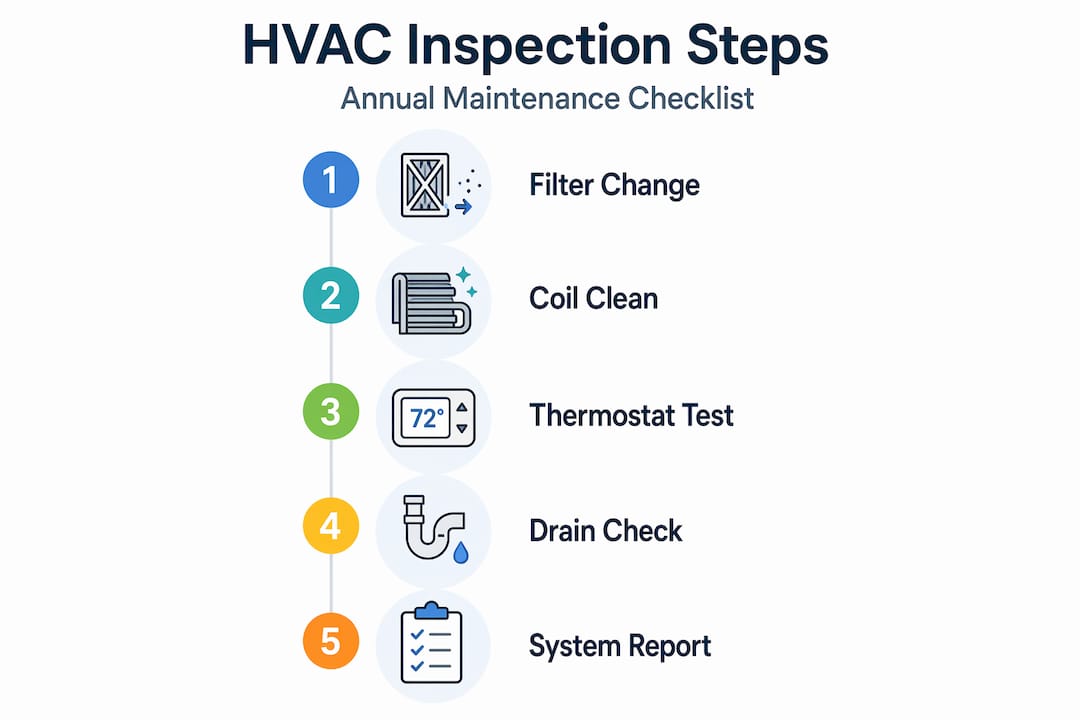
- Air filter condition and fit
- Evaporator coil (indoor unit)
- Condenser coil and fins (outdoor unit)
- Refrigerant charge and line condition
- Drain pan and condensate drain line
- Blower motor and belt
- Electrical connections, capacitors, and contactors
- Thermostat calibration and wiring
- Ductwork visible sections for leaks or damage
Recommended HVAC maintenance intervals at a glance:
| Task | Recommended interval |
|---|---|
| Air filter replacement | Every 1 to 2 months (cooling season) |
| Evaporator and condenser coil cleaning | Once per year (spring visit) |
| Condensate drain flush | Every 6 months |
| Refrigerant level check | Annually |
| Electrical component testing | Annually |
| Duct inspection | Every 2 to 3 years or if issues arise |
| Full system tune-up | Twice per year |
This table reflects your hvac maintenance schedule guide in a format you can actually hand to a technician and ask them to check off.
Step-by-step process for an annual HVAC inspection
With preparation complete, here is the detailed inspection and maintenance process — broken into what you handle yourself and what requires a licensed technician.
Homeowner tasks you can do before the visit:
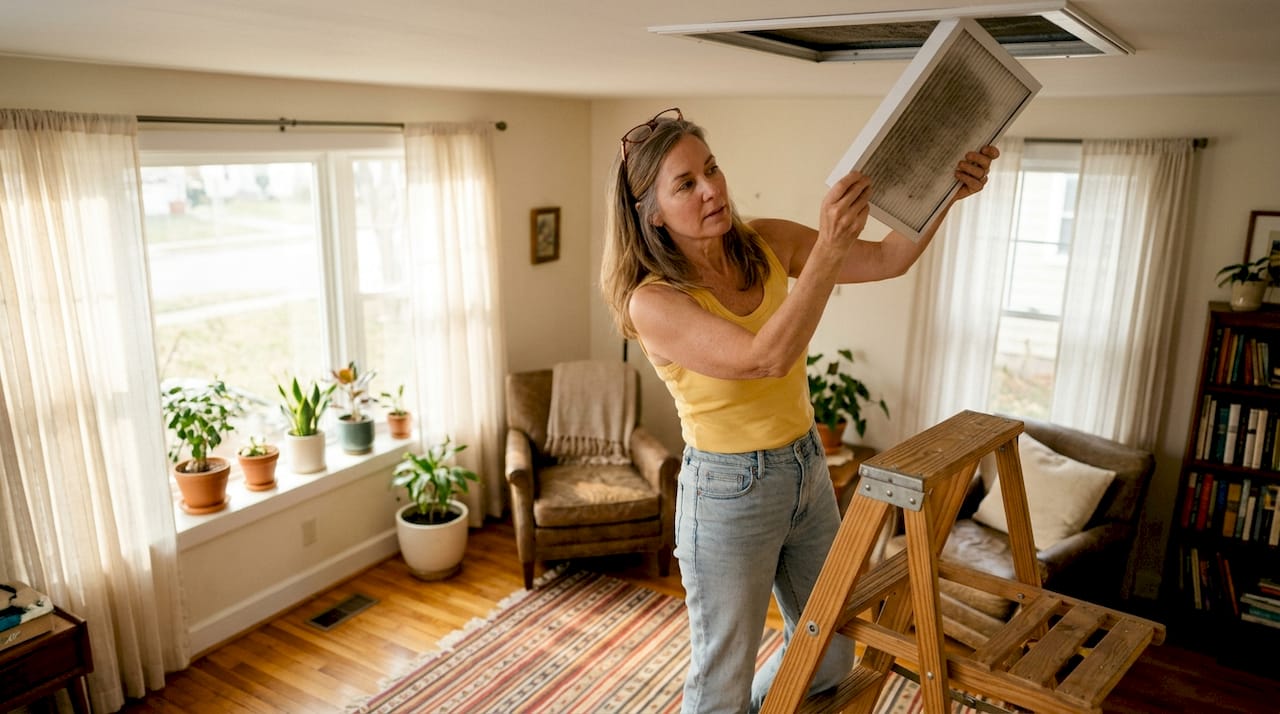
- Replace or inspect the air filter. During cooling season in Southwest Florida, check it every 30 days. A dirty filter forces the blower to work harder, reduces airflow across the coil, and can cause the system to freeze up.
- Clear debris from the outdoor condenser unit. Trim shrubs at least 12 inches away from all sides and remove leaves, dirt, or grass clippings from the fins.
- Check the condensate drain line for standing water or slime buildup. Pour a cup of diluted bleach solution into the access port to prevent algae growth. Clogged drains are among the most common service calls in this region during summer.
- Look at your thermostat settings and test that heating and cooling modes both respond correctly.
Technician tasks during a professional inspection:
- Inspect and clean the evaporator coil. Qualified maintenance covers coil cleaning and fin repair, which directly affects how efficiently the system transfers heat.
- Straighten bent condenser fins using a fin comb. Bent fins restrict airflow over the coil, which forces the compressor to run hotter and longer.
- Measure refrigerant charge. Too little refrigerant reduces cooling capacity; too much can damage the compressor.
- Test electrical components. Compressor amperage and blower motor voltage measurements tell you whether components are drawing normal current or starting to fail.
- Inspect capacitors and contactors, which are the small but critical electrical parts that start and run the compressor and fan motors.
- Verify thermostat calibration and check all safety switches and shut-offs.
“The difference between a real tune-up and a 15-minute visual check is whether the technician pulls out instruments and records numbers.”
Understanding the AC maintenance benefits for SWFL homes makes it easier to insist on a thorough inspection rather than a rushed once-over.
Homeowner vs. technician task comparison:
| Task | Homeowner | Licensed technician |
|---|---|---|
| Filter replacement | Yes | Yes (verify fit and rating) |
| Coil cleaning | No | Yes |
| Refrigerant check | No | Yes |
| Electrical testing | No | Yes |
| Drain line flush | Yes | Yes (deep clean) |
| Fin straightening | No | Yes |
Pro Tip: Ask your technician to show you the before-and-after amperage reading on the compressor. A unit drawing significantly above its rated amperage is a component under stress, often weeks away from failure.
Common mistakes to avoid and troubleshooting during HVAC inspections
Understanding the inspection process helps you avoid errors that quietly drain money and shorten equipment life.
The biggest mistakes homeowners and property managers make:
- Skipping the spring inspection because “the system ran fine last summer.” HVAC components degrade over winter even when idle.
- Using the wrong filter size or a filter with an MERV rating too high for the system’s airflow capacity. A filter rated MERV 13 or above in an older air handler can actually restrict airflow more than a dirty standard filter.
- Assuming no visible ice means the system is fine. Low refrigerant and weak airflow can cause intermittent freezing you never see.
- Skipping electrical testing during inspections. Capacitor failure is one of the most common summer service calls in Southwest Florida, and a simple capacitance meter reading during maintenance catches it early.
Incorrect HVAC sizing causes short cycling and poor dehumidification, particularly when a system is 50% to 100% oversized for the space it serves. In a humid climate like Naples or Fort Myers, a short-cycling unit never runs long enough to pull adequate moisture from the air, leaving rooms that feel sticky even at 74°F.
Troubleshooting signs to watch for between inspections:
- Uneven temperatures between rooms despite consistent thermostat settings
- Energy bills climbing without a change in usage or weather patterns
- The system short-cycling (turning on and off every few minutes)
- Musty or stale odors from vents, which often signal mold on the evaporator coil
- Condensate water pooling near the air handler
“If your home feels humid even when the AC is running, the problem is usually sizing or a dirty evaporator coil, not the thermostat.”
For more on common HVAC issues in Southwest Florida, local factors like salt air and humidity create wear patterns you will not find in HVAC guides written for northern climates.
Pro Tip: Track your monthly kilowatt-hour usage through your utility’s online portal and note it against your maintenance dates. Spikes that don’t match weather changes usually point to a specific system issue, giving your technician a concrete starting point.
How to verify and measure the effectiveness of your HVAC inspection
With inspection steps covered, here is how you confirm that maintenance actually delivered results rather than just a signed work order.
Four ways to verify inspection quality:
- Request instrument readings in writing. A professional inspection includes measured instrument data, not just visual checks. Ask for the compressor amperage, blower motor voltage, refrigerant pressure, and supply versus return temperature readings.
- Check the temperature split. Place a thermometer in the return air vent and one in the nearest supply vent. The difference should be between 16°F and 22°F. A split below that range typically signals low refrigerant, a dirty coil, or restricted airflow.
- Compare your next energy bill. Well-maintained HVAC systems can reduce energy costs by 30% annually. You should see a measurable difference in your July and August bills compared to the same period before maintenance.
- Keep a maintenance log. Record the date, technician name, and all measurements taken at each visit. This log becomes your best tool for spotting gradual performance decline across multiple seasons.
Key performance measurements to request after every inspection:
| Measurement | Acceptable range | What it reveals |
|---|---|---|
| Supply vs. return temperature split | 16°F to 22°F | Cooling efficiency and refrigerant charge |
| Compressor amperage | Within 10% of nameplate rating | Compressor health and electrical load |
| Blower motor amperage | Within nameplate specs | Airflow delivery and motor condition |
| Refrigerant pressures (suction/discharge) | Varies by refrigerant type | Charge level and potential leaks |
| Capacitor reading | Within 6% of labeled rating | Risk of startup failure |
Monitoring Florida HVAC efficiency trends also helps you set realistic expectations for what a well-maintained system should deliver in this climate versus what newer equipment can achieve.
Pro Tip: Take a photo of the technician’s instrument readings before they leave. It takes 10 seconds and creates an undeniable baseline for the next visit, removing any ambiguity about what changed between seasons.
The overlooked impact of proper sizing and routine verification in HVAC longevity
Most homeowners picture an annual inspection as a technician glancing at the filter, spraying the coils, and leaving a sticker on the unit. That version of maintenance is common. It is also not enough — especially in Southwest Florida.
The single biggest thing we see ignored during routine visits is system sizing validation. Oversizing is the most common HVAC failure cause, yet almost no standard maintenance checklist includes a review of whether the installed equipment actually matches the load requirements of the home. A system that was sized incorrectly at installation will continue to fail in the same predictable ways: short cycling, high humidity indoors, early compressor wear, and repair bills that seem random but follow a clear pattern.
Florida’s climate makes this worse than anywhere else. A system that runs short cycles never achieves the 15 to 20-minute run times needed to effectively remove moisture. You end up with a house that cools but never dries out, and that persistent humidity is what leads to mold growth, wood damage, and comfort complaints that a bigger AC will not fix.
The fix is not complicated. During any annual inspection, ask your technician whether the installed system capacity aligns with a Manual J load calculation for your home’s current conditions. Manual J is the industry-standard method for calculating exactly how much heating and cooling a specific building actually needs. If the answer is “we don’t do that during maintenance,” that is worth noting.
The second thing that gets skipped is measurement accountability. Technicians should deliver documented measurements, not just visual reports, because the whole point of preventive maintenance is catching degradation before it becomes failure. Numbers give you proof. Visual checks give you opinions.
Use the HVAC maintenance checklist for Southwest Florida as the baseline, and then push further. Ask for numbers. Ask about sizing. Ask what was measured, not just what was looked at. That shift in how you engage with your service provider is worth more than any individual repair, because it changes the standard of care your system receives year after year.
Professional HVAC service and maintenance plans in Southwest Florida
Knowing what a thorough inspection should include is valuable. Having a team that actually executes it is what keeps your system running through another Florida summer without surprises.
At Ultra Air Heating & Cooling, our maintenance plans are built specifically for Southwest Florida homes and commercial properties in Naples, Cape Coral, and Fort Myers. We schedule your spring and fall visits automatically, handle coil cleaning, fin repair, electrical testing, and drain line service, and provide written measurement reports after every visit. Monthly payment options make it easy to budget for consistent care rather than paying out-of-pocket for emergency repairs. If your current system has sizing or efficiency concerns, our team can also walk you through HVAC system upgrade options and zoning solutions that can reduce bills and improve room-by-room comfort. For new installations, our HVAC installation guide for Fort Myers covers everything you need to make a confident decision.
Frequently asked questions
How often should I have my HVAC system inspected in Southwest Florida?
Twice a year is recommended for preventive maintenance, once in spring before cooling season and once in fall before heating starts, to keep your system efficient and reliable year-round.
What are the most important components checked during an annual HVAC inspection?
Key components include air filters, evaporator coil, condenser coil and fins, refrigerant levels, electrical connections, and airflow measurements. Professional maintenance covers all of these to prevent breakdowns and maintain efficiency.
Why is HVAC system sizing important to check during an inspection?
Oversizing causes short cycling and poor dehumidification, wasting energy and creating persistent humidity problems, so confirming correct sizing prevents premature system failure and discomfort in Florida’s climate.
Can regular inspections help reduce my energy bills?
Yes. Proper HVAC maintenance can reduce energy costs by 30% annually, with the investment in regular service typically paying back within three to five years through lower utility bills and fewer emergency repairs.