
Air conditioning in Florida is not just about staying cool. It’s the system that keeps your home livable, your air dry, and your energy bills from spiraling out of control. Over 40% of household energy in Florida goes straight to cooling and dehumidification, a number that surprises most homeowners until they really think about the climate here. In Southwest Florida, your AC is working harder than almost anywhere else in the country. Understanding why, and how to make it work smarter, is the difference between a comfortable home and a constant struggle.
Table of Contents
- Why air conditioning is indispensable in Florida homes
- How air conditioning systems work and what matters most
- Getting sizing right: efficiency, comfort, and cost savings
- Air distribution, ductwork, and the hidden impact on efficiency
- What most Florida homeowners get wrong about AC (and how to get it right)
- Connect with the experts for lasting comfort
- Frequently asked questions
Key Takeaways
| Point | Details |
|---|---|
| Florida AC is vital | Air conditioning is essential for comfort, health, and property protection in Florida’s extreme climate. |
| Efficiency starts with sizing | Proper calculations and right-sized systems deliver optimal comfort and lowest energy costs. |
| Sealed ducts save money | Fixing duct leaks can reduce cooling costs by up to 30% and improve system performance. |
| High-SEER brings benefits | Upgrading to high-SEER or variable-speed units boosts comfort and can lower bills by 40%. |
| Maintenance keeps AC strong | Regular service and filter changes prevent breakdowns and extend system lifespan. |
Why air conditioning is indispensable in Florida homes
Florida sits in what building scientists classify as ASHRAE Climate Zones 1A and 2A. Translation: hot and humid, nearly year-round. This is not a climate where you crack a window on a nice day and call it good. Humidity levels regularly push into the 80 to 90 percent range, and that moisture does not just make you feel uncomfortable. It feeds mold, damages wood, warps flooring, and degrades insulation over time.
Your AC system is the first line of defense against all of that. It does two things simultaneously: it removes heat from the air inside your home, and it pulls moisture out. That second job, dehumidification, is where many homeowners underestimate what their system is doing. Without proper dehumidification, even a cooled home can feel sticky and suffocating.
Why Florida AC demands are so different from the rest of the country:
- Cooling season runs from roughly March through November, sometimes longer
- High outdoor humidity means indoor moisture must be actively managed every day
- Florida AC energy use exceeds 40% of total household energy consumption
- Mold can begin forming within 24 to 48 hours in unconditioned spaces
- HVAC systems here often run two to three times longer daily than in northern states
“In Florida’s hot-humid climate, air conditioning is not a luxury. It is the primary tool for maintaining a safe, healthy, and structurally sound home.”
Beyond comfort and health, a well-maintained system protects your property value. When AC units fail or underperform, moisture damage quietly accumulates behind walls and under floors, leading to repair costs that dwarf the price of a tune-up. Following solid energy-saving AC tips and keeping up with a consistent maintenance guide can prevent those costly surprises.
How air conditioning systems work and what matters most
You do not need an engineering degree to understand your AC. But knowing the basics helps you make better decisions and spot problems early.
Every central air conditioning system works on a refrigerant cycle. Refrigerant is a special fluid that absorbs heat from your indoor air at the evaporator coil, gets compressed to release that heat outside at the condenser coil, then expands again to start the cycle over. The result is warm air going out and cooler, drier air coming back in.
The four stages of the refrigerant cycle:
- Evaporation at the indoor coil pulls heat and humidity from your home’s air
- Compression raises the refrigerant pressure and temperature
- Condensation at the outdoor unit releases that heat into the outside air
- Expansion drops pressure so the refrigerant can absorb heat again
This cycle, along with your ductwork and refrigerant standards, is governed by the Florida Building Code Mechanical Volume, which sets minimum efficiency and installation requirements for all systems in the state.
Comparing common AC system types for Florida homes:
| System type | Best use case | Key advantage |
|---|---|---|
| Central split system | Most single-family homes | Whole-home coverage |
| Mini-split (ductless) | Additions, older homes | Zone control, no ducts needed |
| Heat pump | Homes needing heating too | Dual function, high efficiency |
| Packaged unit | Homes with limited attic space | Compact, all-in-one design |
Pro Tip: If your home uses ductwork, get it inspected every two years. Even small gaps in ducts can let conditioned air escape into the attic, forcing your system to work harder and run longer. Explore your HVAC system types to find the right fit for your home’s layout.
Getting sizing right: efficiency, comfort, and cost savings
This is where most Florida homeowners lose money without realizing it. System sizing is not about buying the biggest unit available. It is about matching your system’s capacity exactly to your home’s actual cooling load.
The industry standard for this is called a Manual J load calculation. A certified technician measures your home’s square footage, insulation levels, window placement, ceiling height, local climate data, and several other factors to determine exactly how much cooling capacity your home needs. Skipping this step and just guessing based on square footage alone is one of the most expensive mistakes a homeowner can make.
What happens when a system is oversized:
- It short-cycles, meaning it turns on and off too quickly to properly dehumidify the air
- Indoor humidity stays high even when the temperature reads correctly
- Frequent on/off cycling causes more wear on compressors and motors
- Energy bills rise because short bursts of operation are far less efficient than steady-state running
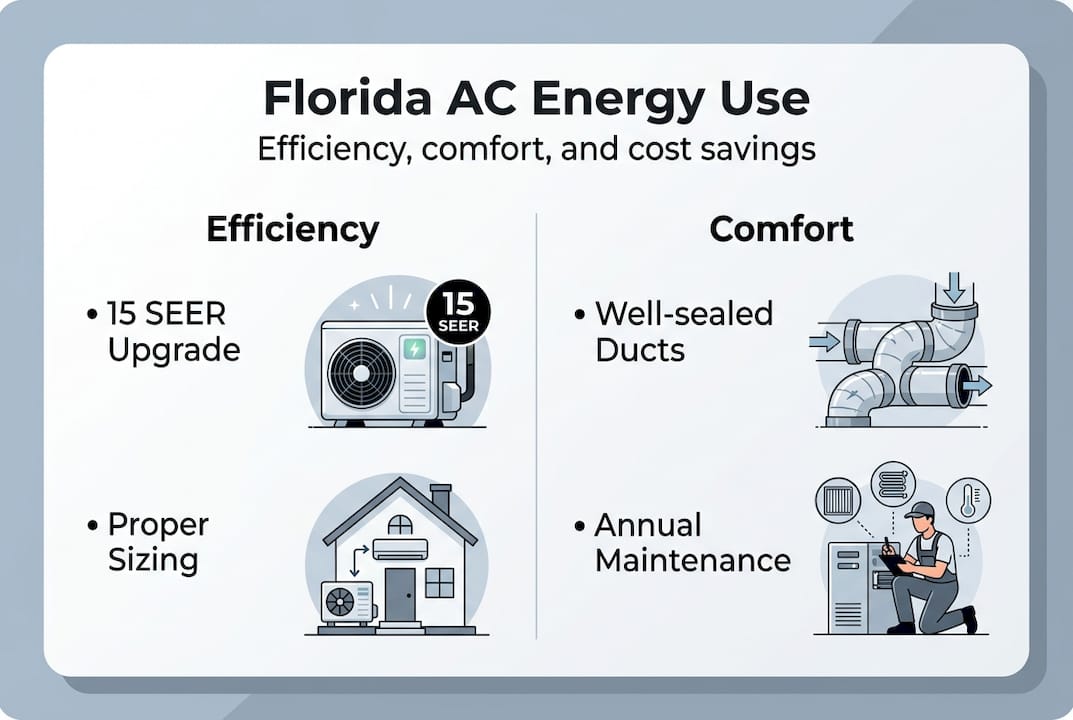
Upgrading to a 15 SEER system from an older unit can reduce cooling costs by up to 40%. In 2026, the Department of Energy’s minimum SEER2 rating for new systems in the Southeast is 14.3 to 15, depending on unit type. SEER2 is the updated efficiency measurement standard that reflects more realistic operating conditions.
Typical sizing guidelines for Florida homes:
| Home size (sq ft) | Estimated tonnage needed |
|---|---|
| 1,000 to 1,500 | 2 to 2.5 tons |
| 1,500 to 2,000 | 2.5 to 3 tons |
| 2,000 to 2,500 | 3 to 3.5 tons |
| 2,500 to 3,500 | 3.5 to 5 tons |
Pro Tip: These numbers are starting points, not final answers. Always insist on a proper AC sizing guide and Manual J calculation before any new system is installed.
Air distribution, ductwork, and the hidden impact on efficiency
You can have a perfectly sized, high-efficiency AC unit and still end up with hot rooms, high bills, and uneven comfort if your ductwork is leaking or poorly designed. This is one of the most overlooked problems in Florida homes.
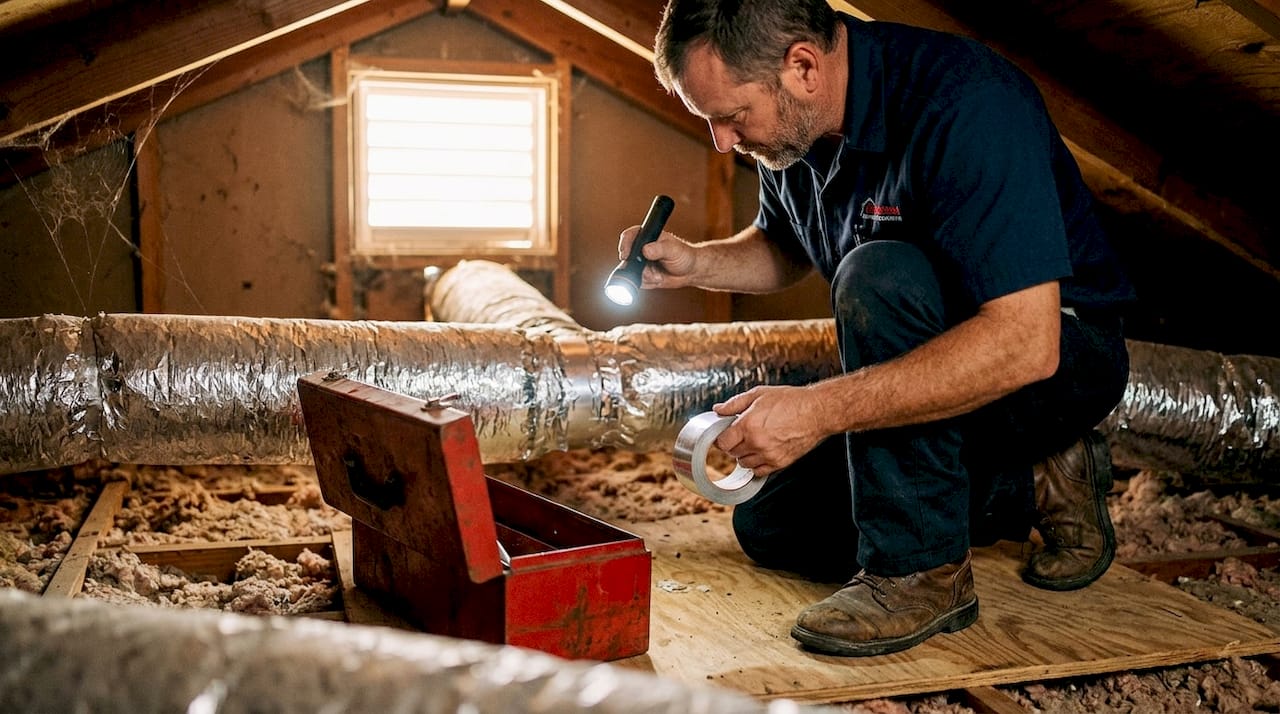
The Florida Building Code Energy Volume sets duct leakage limits at no more than 4 CFM25 per 100 square feet of conditioned area. CFM25 measures how much air escapes at a standard test pressure. In plain terms, your ducts should be nearly airtight. When they are not, duct sealing can save up to 30% on your cooling costs.
Signs your ductwork may be leaking:
- Some rooms are always warmer than others, even with the thermostat set the same
- Your system runs constantly but never seems to fully cool the home
- Unusually high energy bills compared to neighbors with similar homes
- Dust buildup around supply registers or visible gaps in duct connections
- A musty smell that lingers even after the system runs
“Leaky ducts are essentially air conditioning you paid for but never got to use. Every cubic foot escaping into the attic is money leaving your home.”
Fixing duct leaks is not always a massive project. A qualified technician can use mastic sealant or metal tape to seal joints and connections in accessible areas. Full duct replacement may be needed in older homes where flex ducts have deteriorated. Either way, the return on investment is significant. Pairing duct repairs with the steps in our AC maintenance checklist gives you a complete picture of where efficiency is being lost and where it can be recovered.
What most Florida homeowners get wrong about AC (and how to get it right)
After years of working in Southwest Florida homes, here is what we see repeatedly: homeowners think bigger is always better when it comes to AC. A contractor quotes a 4-ton unit for a home that really needs 3 tons, and the homeowner says yes because it sounds more powerful. That decision leads to years of sticky indoor air, higher bills, and a system that wears out faster than it should.
The research is clear. Properly sized, high-SEER systems with variable-speed technology outperform oversized single-stage units in every measurable way. Variable-speed systems modulate their output continuously, running at lower speeds most of the time and only ramping up when truly needed. This keeps humidity low, temperatures steady, and energy use minimal.
Regular maintenance is the other piece most homeowners skip. A system that does not get annual check-ups runs less efficiently, loses cooling capacity, and fails earlier. The fixes are simple: clean coils, fresh filters, checked refrigerant, tightened electrical connections. Following a clear DIY AC maintenance plan between professional visits keeps your system performing at its best. The homes we service that consistently feel great and have lower bills are not always the ones with the newest equipment. They are the ones that are sized correctly and maintained consistently.
Connect with the experts for lasting comfort
Now that you know how sizing, ductwork, efficiency ratings, and climate demands all connect, the next step is putting that knowledge to work in your actual home.
At Ultra Air Heating and Cooling, we help Naples, Cape Coral, and Fort Myers homeowners navigate every part of this process. From selecting the right system using our detailed best HVAC for Florida guidance to full installation with our Fort Myers HVAC installation guide, we handle it with care and precision. We also offer indoor air quality solutions for homeowners dealing with humidity, allergens, or air circulation issues. Reach out today and let us help you build a system that delivers comfort, efficiency, and reliability all year long.
Frequently asked questions
Why does air conditioning use so much energy in Florida homes?
Florida’s hot, humid climate means AC must cool and dehumidify constantly, and Florida cooling energy accounts for more than 40% of total household energy use.
What’s the best way to size an AC unit for my Florida home?
Always use a Manual J load calculation and confirm the new system meets the 2026 SEER2 minimum standards to avoid oversizing and efficiency losses.
Can sealing ductwork really save money?
Yes. Meeting FBC duct leakage standards through proper sealing can reduce your cooling costs by up to 30%.
What maintenance should I schedule for my AC system?
Plan for filter changes every one to two months and annual professional tune-ups to keep your system running at peak efficiency and extend its lifespan.
Are variable-speed AC systems worth the investment in SWFL?
Absolutely. Variable-speed, high-SEER systems deliver more consistent comfort, better humidity control, and lower energy bills, making them a smart long-term investment for Florida homes.