
It’s 3 p.m. in Naples, the sun is relentless, and your AC is blowing warm air. Your energy bill is already climbing, and the house feels like a sauna. Sound familiar? In Southwest Florida, AC runs 8 to 10 months per year, which means your system takes a beating that most homeowners in cooler states never deal with. This guide walks you through every practical troubleshooting step, from grabbing the right tools to knowing when to call a pro, so you can restore comfort fast and keep your costs under control.
Table of Contents
- Essential tools and preparation for AC troubleshooting
- Step-by-step guide to diagnosing common AC problems
- Energy efficiency and AC settings for Florida comfort
- When to call a professional and preventive maintenance tips
- Our take: What most AC troubleshooting guides miss in Florida
- Next steps: Expert help and high-efficiency solutions in Southwest Florida
- Frequently asked questions
Key Takeaways
| Point | Details |
|---|---|
| Prepare with the right tools | Gather basic tools and prioritize safety before starting any AC troubleshooting. |
| Diagnose common issues quickly | Recognize symptoms like noises or short-cycling to identify and fix problems fast. |
| Save with efficient settings | Set your thermostat at 78°F or above and maintain your unit to lower energy costs. |
| Prevent breakdowns proactively | Schedule annual tune-ups and perform regular maintenance to avoid expensive repairs. |
| Know when to call an expert | Complex or recurring AC issues require professional help for safe and lasting solutions. |
Essential tools and preparation for AC troubleshooting
Before you touch anything on your system, you need the right tools and a clear safety plan. Rushing into troubleshooting without preparation is how small problems become expensive ones.
Tools you’ll need:
- Flathead and Phillips screwdrivers
- Digital multimeter (tests voltage and continuity)
- Replacement air filter (correct size for your unit)
- Work gloves and safety goggles
- Flashlight or headlamp
- Fin comb (straightens bent condenser fins)
- Replacement capacitor or an AC capacitor kit as a backup
Safety is non-negotiable. Always shut off power at the thermostat first, then at the circuit breaker. Never open an electrical panel or capacitor housing while the unit is live. Capacitors store a charge even after power is cut, so discharge them carefully with an insulated screwdriver before handling.
Preparation steps before troubleshooting:
- Locate your circuit breaker panel and identify the AC breaker.
- Turn off the system at the thermostat, then flip the breaker.
- Clear at least two feet of space around the outdoor condenser unit.
- Locate your air handler and confirm filter access.
- Check for standing water near the air handler, which signals a clogged drain line.
A DIY maintenance checklist helps you stay organized so nothing gets missed. The AC maintenance benefits go well beyond comfort, including lower energy bills and longer system life.
Safety warning: Never attempt electrical repairs or refrigerant work on a powered unit. Refrigerant handling requires EPA certification and is not a DIY task.
A spring tune-up should include checking refrigerant levels, cleaning coils, and inspecting all electrical connections. This is the foundation of a reliable system in Florida’s climate.
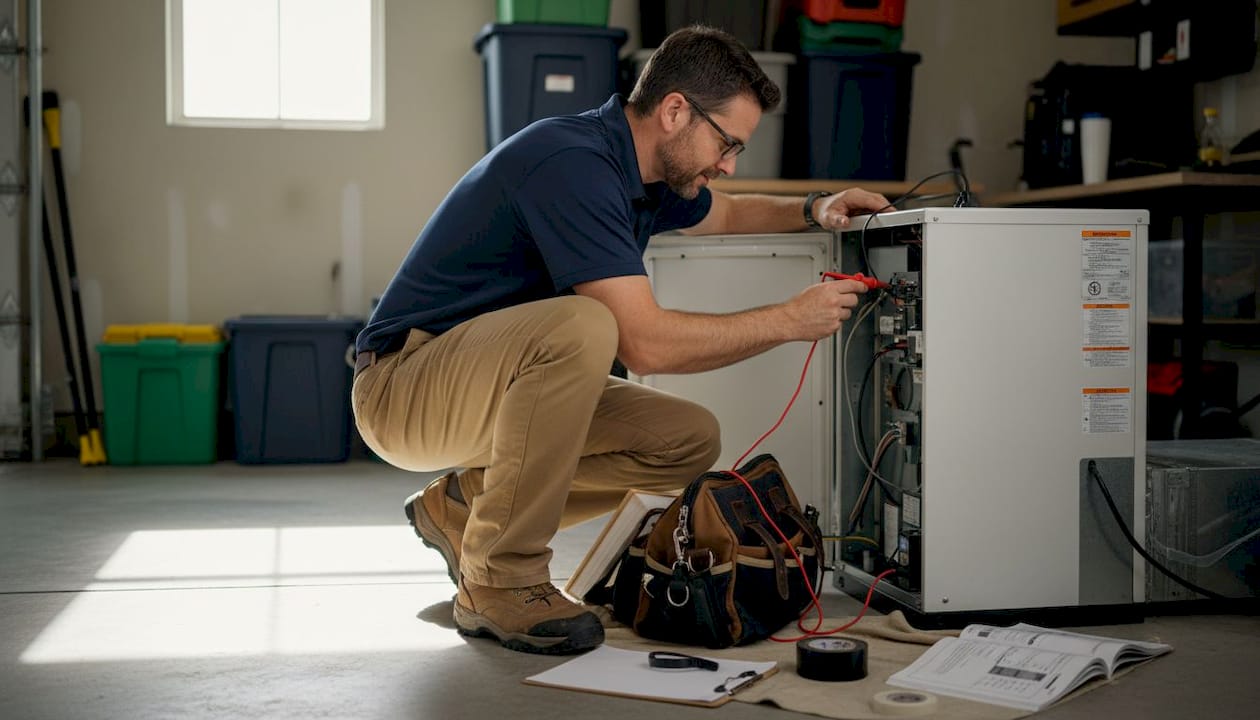
Pro Tip: Keep a spare filter and a matching capacitor in your utility closet. In Florida’s heat, a failed capacitor is one of the most common reasons a system stops cooling, and having one on hand can save you a miserable overnight wait for parts.
| Tool | Purpose |
|---|---|
| Digital multimeter | Tests voltage, checks capacitor and motor |
| Replacement filter | Restores airflow immediately |
| Fin comb | Straightens bent condenser fins |
| Capacitor kit | Quick swap for a failed start capacitor |
| Work gloves and goggles | Protects against sharp fins and electrical risk |
Step-by-step guide to diagnosing common AC problems
With your tools ready and power safely off, you can work through the most common AC failures in a logical order. Using your senses is the fastest way to narrow down the problem.
Pro Tip: Before anything else, walk the system. Listen for sounds, feel for airflow at vents, and smell for burning or musty odors. Your nose and ears will often tell you more than any meter.
Step-by-step diagnostic process:
- Check the filter first. A clogged filter is the single most common cause of poor cooling and short-cycling. Pull it out and hold it to light. If you can’t see through it, replace it now.
- Inspect the thermostat. Confirm it’s set to “cool” and the temperature is below room temperature. Replace batteries if the display is dim or unresponsive.
- Check circuit breakers. A tripped breaker will shut the system down entirely. Reset it once. If it trips again immediately, stop and call a professional.
- Listen for unusual sounds. Grinding or squealing points to a failing fan motor. Banging or rattling usually means loose parts inside the unit.
- Inspect the condenser unit outside. Look for bent fins, debris blocking airflow, or ice on the refrigerant lines. Ice usually means low refrigerant or severely restricted airflow.
- Check the condensate drain line. A clogged drain will trigger a float switch that shuts the system off. Flush it with a wet/dry vacuum or a cup of diluted bleach.
Here’s a quick breakdown of common symptoms and how to handle them:
| Symptom | Likely cause | DIY fix | Call a pro |
|---|---|---|---|
| Warm air from vents | Dirty filter or low refrigerant | Replace filter | Refrigerant leak |
| System won’t turn on | Tripped breaker or bad thermostat | Reset breaker, replace batteries | Repeated tripping |
| Short-cycling | Dirty filter or clogged condenser | Clean or replace filter | Oversized unit, electrical fault |
| Grinding or squealing noise | Failing fan motor | Tighten loose screws | Motor replacement |
| Water pooling near handler | Clogged drain line | Flush drain line | Cracked drain pan |
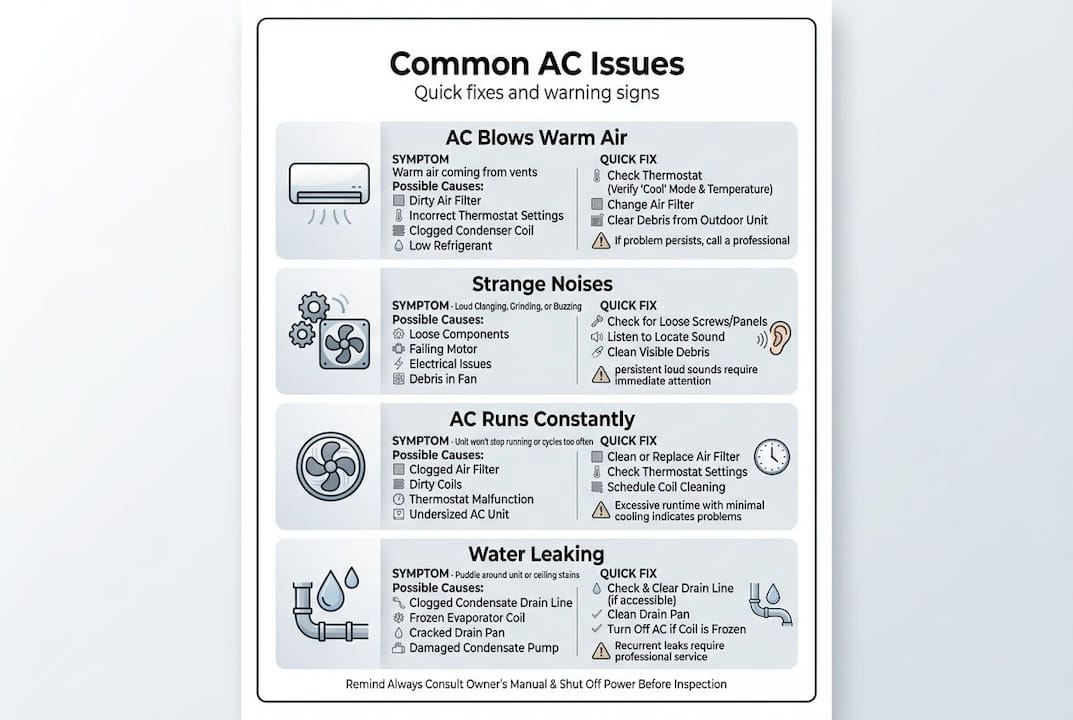
For a full breakdown of warning signs that go beyond basic troubleshooting, the AC repair warning signs page covers what to watch for before a small issue becomes a full breakdown.
Energy efficiency and AC settings for Florida comfort
Fixing the immediate problem is only half the job. Optimizing how your system runs will save you real money every month, especially in a climate where cooling accounts for over 40% of your utility bill.
Thermostat settings that actually work in Florida:
The most important number to know is 78°F. Setting your thermostat at 78°F saves roughly 8% on cooling costs for every degree you raise it above 72°F. That adds up fast over a Florida summer. Use a programmable or smart thermostat to raise the temperature automatically when you’re away and cool down before you return.
Avoid setting the thermostat extremely low when you get home. Dropping it to 68°F doesn’t cool the house faster. It just runs the system longer and wastes energy.
Understanding SEER2 ratings:
SEER2 is the efficiency rating for AC systems under updated 2023 federal test conditions. Florida’s minimum SEER2 standard is 14.3, but upgrading to a unit rated 15 to 20 or higher can cut cooling costs by up to 40% compared to older equipment. Check your unit’s data plate on the side of the condenser to find your current rating.
Quick efficiency wins you can do today:
- Shade your outdoor condenser unit with a fence or shrubs, keeping at least two feet of clearance
- Seal leaky duct connections with mastic sealant or metal tape
- Replace filters every 30 to 60 days during peak cooling season
- Schedule an annual tune-up before summer heat peaks
- Keep interior doors open to improve airflow balance across rooms
Explore efficient cooling choices for a deeper look at equipment upgrades, and check out 2026 HVAC efficiency trends for the latest options available in Southwest Florida.
Pro Tip: An oversized AC unit is one of the most expensive mistakes in Florida homes. A unit that’s too large will cool the space quickly but shut off before removing enough humidity, leaving you feeling clammy even at 74°F. Bigger is not always better.
When to call a professional and preventive maintenance tips
Some AC problems are genuinely fixable on your own. Others will cost you far more if you try to handle them without professional training.
Signs you need a professional right away:
- The circuit breaker trips repeatedly after resetting.
- You smell burning plastic or electrical odors near the air handler.
- There is ice on the refrigerant lines combined with warm air from vents.
- The system runs constantly but never reaches the set temperature.
- You hear loud banging, grinding, or hissing sounds that don’t stop.
Refrigerant leaks, electrical shorts, and compressor failures are not DIY repairs. Attempting them without the right tools and certifications can cause injury and void your equipment warranty.
Preventive maintenance steps every homeowner should follow:
- Replace air filters every 30 to 60 days
- Clear the condensate drain line monthly with diluted bleach
- Rinse condenser fins with a garden hose every season
- Check refrigerant line insulation for cracks or deterioration
- Schedule a professional AC maintenance visit every spring
“Proper sizing using Manual J load calculations is the single most important factor in system efficiency and comfort. An undersized or oversized unit will never perform correctly, regardless of how well it’s maintained.” Florida HVAC Authority
High SEER2 equipment combined with regular maintenance and sealed ductwork delivers the biggest long-term savings in Florida. A professional HVAC maintenance plan is the most reliable way to stay ahead of failures before the hottest months arrive.
Our take: What most AC troubleshooting guides miss in Florida
Most generic troubleshooting guides are written for homeowners who run their AC four months a year. In Southwest Florida, that advice simply doesn’t hold up. Florida AC operates nearly year-round, which means wear accumulates faster, filters clog sooner, and seasonal tune-ups matter far more here than anywhere else in the country.
The biggest mistake we see isn’t skipping a filter change. It’s ignoring unit sizing. Homeowners replace aging equipment with whatever fits the budget, and installers sometimes skip the Manual J load calculation that ensures the right fit. The result is a system that short-cycles, fails to control humidity, and burns out years ahead of schedule.
Efficiency also isn’t just a SEER2 number on a data plate. Leaky ducts, a shaded versus sun-baked condenser, and a well-calibrated thermostat all contribute just as much to your monthly bill. Explore Florida AC system options to understand which setup genuinely fits your home’s demands.
Investing in two professional checkups per year in this climate pays for itself in avoided repairs and lower bills. That’s not a sales pitch. It’s what the runtime data demands.
Next steps: Expert help and high-efficiency solutions in Southwest Florida
You now have a clear path from basic troubleshooting to long-term efficiency. When your system needs more than a filter swap, Ultra Air Heating & Cooling is ready to help homeowners and businesses across Naples, Cape Coral, and Fort Myers.
We offer repair, maintenance, and full system upgrades built for Florida’s demanding climate. Whether you’re looking at heating solutions for the cooler months, indoor air quality improvements to reduce humidity and allergens, or HVAC zoning for comfort across different areas of your home or building, our team brings the expertise to get it right the first time. Contact us today to schedule a diagnostic visit or request a free quote.
Frequently asked questions
What are the most common AC problems in Southwest Florida?
Dirty filters, faulty thermostats, refrigerant leaks, and electrical issues are the most frequent culprits. Unusual noises like grinding or squealing typically point to a failing fan motor, while banging usually means loose internal parts.
How often should I schedule AC maintenance in Florida?
At minimum, schedule a spring tune-up annually. Given that Florida systems run 8 to 10 months per year, many homeowners benefit from a second checkup in the fall to catch wear before winter.
What thermostat setting saves the most energy in Florida?
Setting your thermostat at 78°F or higher saves approximately 8% on cooling costs for each degree above 72°F. A programmable thermostat makes this automatic and effortless.
How can I tell if my AC is improperly sized?
If your system short-cycles, struggles to remove humidity, or never cools evenly, it may be the wrong size. Proper sizing uses Manual J load calculations and should be performed before any new installation.
What can I do before calling a professional?
Replace the filter, check thermostat settings and batteries, reset the circuit breaker once, and clear debris from the condenser. A dirty filter or clogged condenser causes many of the most common failures and is the first thing to rule out.
Recommended
- Step-by-step HVAC repair guide for SW Florida homes
- AC Blows Warm in Cape Coral? Troubleshooting Your SWFL Cooling Issues [2026] – Ultra Air Heating and Cooling
- Expert AC Repair in Naples, FL: Fast, Reliable Cooling Solutions – Ultra Air Heating and Cooling
- Emergency heating repair: Thames Valley homeowner’s guide