
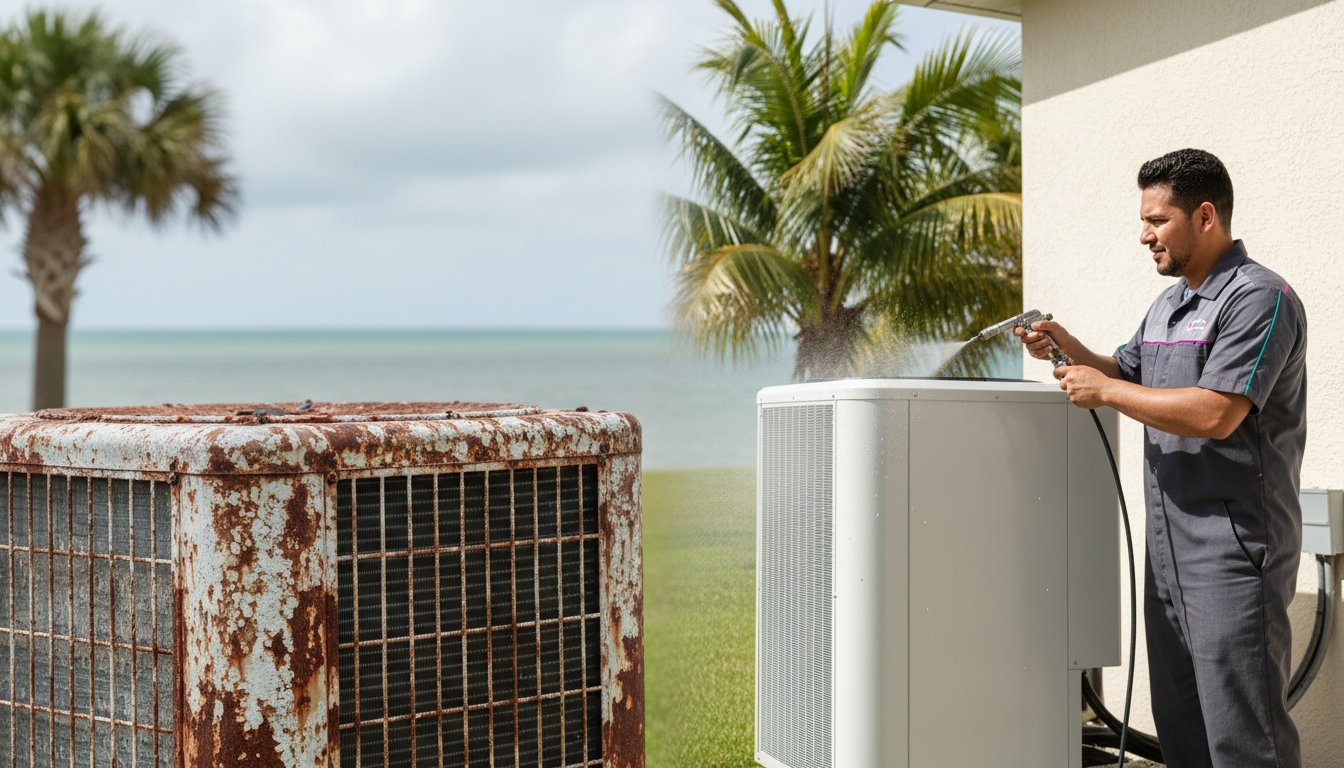
Did you know that while a standard air conditioner should last 15 years, a coastal unit in Southwest Florida often fails in as little as 36 months? Industry data shows that salt-laden air can corrode aluminum coils up to 10 times faster than inland environments. If you live within five miles of the Gulf, implementing salt air corrosion protection for HVAC Cape Coral isn’t just a luxury; it’s a survival requirement for your home. We understand the frustration of watching your energy bills climb while your cooling system struggles to keep up with the humidity. You shouldn’t have to face denied warranty claims or the stress of a premature system replacement just because you enjoy the coastal breeze.
At Ultra Air, we believe your peace of mind is just as important as your thermostat setting. This guide will show you how to shield your unit from the elements and extend its lifespan to 10 years or more. You’ll learn about specialized coil coatings, the Ultra approach to coastal maintenance, and the specific steps you can take today to beat the heat and protect your investment. We’ve gathered the technical expertise you need to keep your Southwest Florida home cool, efficient, and dependable for the long haul.
Key Takeaways
- Identify how the unique “salt fog” microclimate in Cape Coral and Naples accelerates metal destruction through aggressive electrochemical reactions.
- Learn why specialized coated coils outperform standard systems and provide the best salt air corrosion protection for HVAC Cape Coral coastal properties.
- Discover the proper “gentle rinse” technique to safely remove salt buildup and extend your condenser’s lifespan with a simple monthly habit.
- Explore Ultra Air’s localized approach to system design, ensuring your Southwest Florida home receives the “Ultra Service” it deserves to beat the heat.
The Hidden Threat: Salt Air Corrosion in Cape Coral & Naples HVAC Systems
Living in Southwest Florida means dealing with a beautiful but brutal environment. Salt air corrosion is a relentless chemical reaction between sodium chloride, moisture, and the vital metals in your AC unit. This process, often called The Science of Destruction, causes rapid oxidation that eats away at aluminum and copper. In Cape Coral, our 400 miles of canals create a unique “salt fog” microclimate. This moisture carries salt deep inland, far beyond the immediate beach, coating everything in its path.
At Ultra Air, we’ve seen brand-new systems show signs of failure in as little as 18 months. Without proper salt air corrosion protection for HVAC Cape Coral homes require, the outdoor condenser unit takes the brunt of the damage. Salt crystals settle on the condenser coils, fins, and electrical connections. This leads to microscopic pitting and eventual component failure. You don’t want to find yourself without cooling in the middle of July because a small wire corroded through. We focus on technical mastery to ensure your system survives these harsh conditions.
High-Risk Zones in Southwest Florida
Proximity to the Gulf is the biggest factor in how fast your system decays. If your home is within 5 miles of the water, your corrosion risk is 10 times higher than homes further inland. High-density areas like the Cape Coral Yacht Club, Vanderbilt Beach, and Bonita Beach face constant exposure to salt-laden winds. These wind patterns in Lee and Collier County drive corrosive particles through your unit’s protective casing every single hour. Even if you aren’t right on the sand, the canal system acts as a highway for salt air to reach your backyard. We’ve helped thousands of neighbors in these zones protect their investments and maintain Ultra comfort.
Signs Your AC is Already Corroding
You can often spot the damage before the system shuts down completely. Keep an eye out for these three red flags:
- The “White Powder” Effect: Look for a chalky, white substance on your outdoor coils. This is aluminum oxide, a clear sign the metal is breaking down.
- Brittle or “Shedding” Fins: Gently touch the thin metal fins on your outdoor unit. If they crumble or flake off like dry leaves, the structural integrity is gone.
- Recurring Refrigerant Leaks: Salt causes microscopic holes in copper tubing. If you’re refilling refrigerant every 6 to 12 months, corrosion is the likely culprit.
Identifying these issues early is the best way to beat the heat and avoid a total system replacement. Our certified technicians specialize in spotting these early warnings to provide the honest, efficient service you expect from a family-owned business. Investing in salt air corrosion protection for HVAC Cape Coral systems today saves you from the high cost of a premature breakdown tomorrow.
The Science of Destruction: How ‘Salt Fog’ Eats Your SWFL Air Conditioner
Living in Cape Coral means your HVAC system is under constant chemical attack. The primary culprit is “salt fog,” a fine mist of sodium chloride that travels miles inland. This mist triggers galvanic corrosion, an electrochemical process where salt acts as a conductor between the copper and aluminum components in your unit. This reaction causes the metals to trade electrons, which physically breaks down the structure of your condenser coils. It’s a slow, invisible process that turns a high-performance machine into a pile of brittle metal.
Salt is also hygroscopic, which means it actively pulls moisture from our humid SWFL air. This creates a permanent corrosive “poultice” on your coils. This layer of wet salt keeps your metal components in a state of constant decay, even on dry days. When this happens, your system loses its ability to shed heat effectively. Industry data shows that even moderate corrosion can force a unit to cost 20% to 40% more to operate every month. You might experience a functional failure where the unit looks intact from the outside, but the thermal bond between the fins and tubes has vanished. This leaves you with a system that runs constantly without actually cooling your home.
The Role of Humidity in SWFL
Southwest Florida stays at 80% humidity or higher for much of the year, which accelerates the oxidation process. While daytime salt spray is a concern, “salt dew” at night is the silent killer. As the temperature drops, moisture condenses on salt-crusted components to form a concentrated brine. This acidic liquid penetrates deep into your system, often leading to electrical component short-circuiting and total system lockouts. To avoid these costly breakdowns, you should consider Ultra service maintenance plans to keep your system clean and protected.
Why Standard Units Fail Faster Near the Gulf
Standard HVAC units use basic aluminum and copper alloys that aren’t designed for coastal zones. Salt particles are microscopic and easily bypass standard filters, settling on internal motors and sensitive control boards. Without specialized salt air corrosion protection for HVAC Cape Coral systems, a unit that should last 15 years might fail in just 6 years. This premature aging happens because standard alloys lack the protective coatings needed to resist the Gulf air. Standard factory warranties often exclude ‘acts of nature’ like salt corrosion. Investing in salt air corrosion protection for HVAC Cape Coral homes is the only way to ensure your warranty and your comfort remain intact.
Evaluating Coastal HVAC Options: Coated Coils vs. Standard Systems
Living near the Gulf means your air conditioner is under constant attack. Standard units often fail in just 5 to 7 years because of salt spray. To combat this, Ultra Air specializes in “Seacoast” or “Coastal” grade units from industry leaders like Daikin. These systems aren’t just standard boxes with a different sticker. They are engineered specifically to survive the SWFL environment.
Choosing the right salt air corrosion protection for HVAC Cape Coral homes involves looking at how the coils are treated. Factory-applied coatings, such as Phenolic or Epoxy finishes, create a barrier between the metal and the salt. We see these units lasting up to 50% longer than their uncoated counterparts. It’s the difference between a system that rusts out in five years and one that provides Ultra comfort for over a decade.
Factory-Applied vs. After-Market Coatings
Factory-applied E-Coat technology uses an electro-deposition process. The manufacturer submerges the entire coil in a protective bath to ensure total coverage. This is the gold standard for protection. If you already have a newer unit, after-market sprays are an option. You must have these applied by a professional, though. Amateur spray jobs often bridge the fins, which restricts airflow and forces your compressor to work harder. Our technicians ensure the coating protects the metal without sacrificing your SEER rating or efficiency.
Is the Investment Worth It for Your Home?
We believe in transparency when it comes to your home’s budget. While coastal-grade units have a higher upfront price, your cost per year is significantly lower. A standard unit might cost more in frequent part replacements and early system failure. Investing in protection keeps your Expert AC Repair in Cape Coral visits focused on routine tuning rather than expensive coil swaps. We recommend these configurations because they reduce customer anxiety and provide long-term peace of mind.
The benefits extend to your property value as well. In the Southwest Florida real estate market, a protected HVAC system is a major selling point. Home inspectors in the Cape Coral and Naples area look specifically for coil corrosion during the due diligence process. A pristine, coated system can positively impact a home appraisal by demonstrating superior maintenance. As a Family Owned & Operated business, we want to help you beat the heat with a system that actually lasts. Our goal is to provide a solution that works as hard as you do.
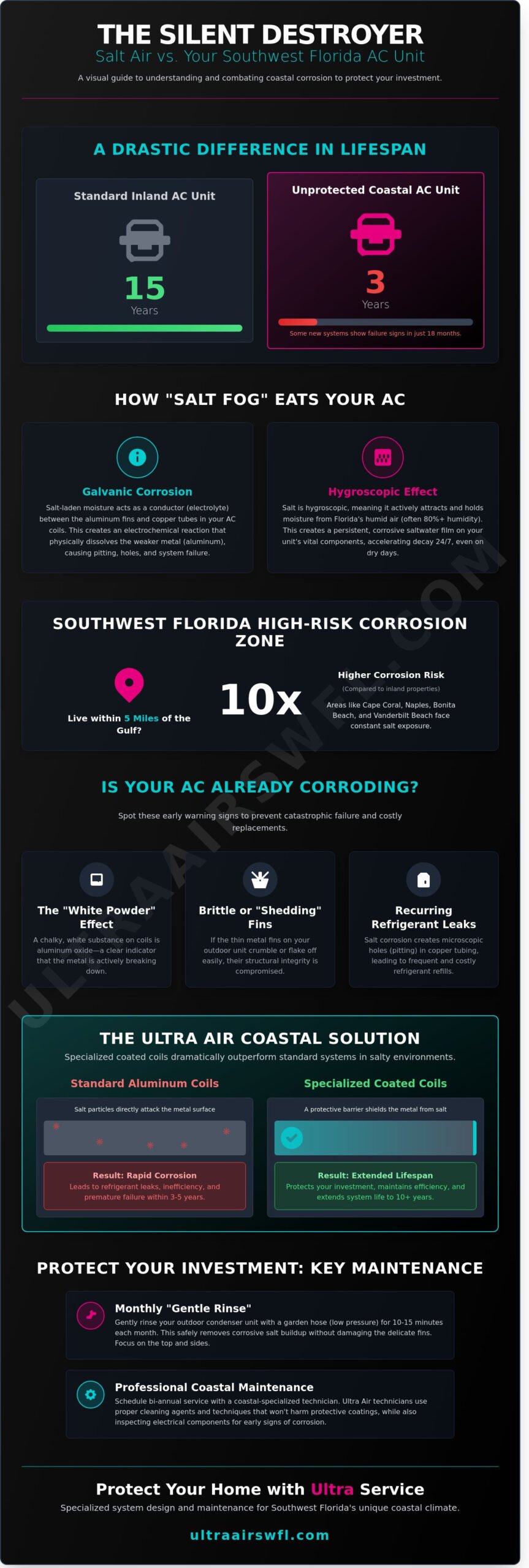
5 Expert Maintenance Steps to Stop Corrosion and Extend AC Life
Living near the Gulf means your AC unit fights an invisible battle 24/7. Effective salt air corrosion protection for HVAC Cape Coral systems requires a proactive approach. We’ve identified five critical steps to keep your system running cool despite the salty breeze. These aren’t just suggestions; they’re essential tasks for any SWFL homeowner who wants to avoid a premature system replacement.
- The Monthly Bath: Rinse your exterior unit every 30 days. This removes salt crystals before they have a chance to bond to the metal surfaces.
- Maintain Airflow Clearance: Keep at least 24 inches of space around your condenser. Clearing away weeds, bushes, and debris prevents moisture from being trapped against the unit cabinet.
- Neutralize the Salt: Use professional-grade salt-neutralizing solutions annually. These chemicals dissolve deep-seated mineral deposits that standard water cannot touch.
- Monitor Refrigerant Levels: Watch for subtle changes in cooling speed. Early corrosion often presents as a tiny drop in efficiency before a total breakdown occurs.
- Biannual Inspections: Professional eyes find pitting that most homeowners miss. Catching a microscopic leak now can save you from a total evaporator coil failure later.
The Proper Rinsing Technique
Your garden hose is a powerful tool, but you must use it correctly to avoid damage. High-pressure washers are the number one enemy of AC fins. They carry enough force to flatten the delicate aluminum, which chokes your system and causes the compressor to overheat. Stick to a standard spray nozzle on a medium setting. It’s enough to move the salt without bending the metal.
Use a top-down approach. Start at the top of the unit cabinet and flush the salt down toward the base. This ensures you aren’t just pushing salt deeper into the internal components. If you notice white, crusty scales that don’t wash away with water, it’s a sign that simple rinsing isn’t enough. You’ll need an expert to apply a specialized coil cleaner to restore the metal.
Professional Coastal Maintenance Plans
Our Ultra service coastal tune-ups go beyond a standard check-up. We use specialized treatments like Salt-Away to strip corrosive layers from the internal copper and aluminum. We also monitor refrigerant levels with precision. A 10% drop in pressure is often the first sign of a pinhole leak caused by the lack of salt air corrosion protection for HVAC Cape Coral units. Catching this early prevents a total system freeze-up.
A maintenance agreement offers 24/7 peace of mind for your family. We track your service history and ensure your system stays ahead of the SWFL humidity. You get reliable performance and lower energy bills while we handle the technical details. Let us help you beat the heat with a system that’s built to last in our unique environment.
Don’t let salt air destroy your investment. Schedule your Ultra maintenance tune-up today and protect your home’s comfort.
Ultra Air’s Coastal Protection: Shielding Your SWFL Home from the Elements
Ultra Air Heating and Cooling builds systems specifically for the 239 area code. We live where you live. Our technicians understand that the Gulf breeze carries more than just a cool wind; it carries salt that eats through standard metal components. Our “Ultra Service” philosophy means we treat your home like our own neighbor’s house. We don’t just install a box and leave. We provide the technical mastery required to keep your home cool despite the harsh coastal environment.
We partner with Daikin because their Coastal Systems are engineered for durability. These units often feature specialized coatings and materials designed to resist the pitting and oxidation common in Southwest Florida. Daikin offers superior corrosion warranties that provide up to 12 years of coverage on functional parts. This level of protection is vital for homeowners who want to avoid the 30 percent shorter lifespan typically seen in coastal HVAC units. Our specialized salt air corrosion protection for HVAC Cape Coral ensures your unit survives the harsh Gulf breeze for years to come.
The Ultra Air Difference in Southwest Florida
Being family-owned and operated gives us a unique perspective on the challenges in Lee and Collier County. We focus on “Ultra Comfort” through proactive, preventative care. We don’t believe in high-pressure sales. Instead, we offer honest, high-efficiency solutions that help you “Beat the Heat” without breaking the bank. Our team understands local building codes and the specific humidity levels that can trigger mold growth if your system isn’t calibrated correctly for the coast.
- Local Expertise: We know the salt-spray zones from Yacht Club Community Park to the Caloosahatchee.
- Technical Mastery: Our NATE-certified technicians use precision tools to measure coil degradation.
- Honest Pricing: We provide clear, upfront estimates with no hidden “coastal” fees.
Schedule Your Coastal AC Evaluation Today
Your AC is likely the most expensive appliance in your home. Don’t let the salt air destroy it from the inside out. When you book a coastal vulnerability assessment, we perform a multi-point inspection focused on corrosion. We check the condenser fins, the copper tubing, and the electrical connections for any signs of “white rust” or pitting. This isn’t a standard tune-up; it’s a specialized defense strategy for your investment.
We provide customized protection plans for homes across Naples, Bonita Springs, and Estero. Whether you are directly on the water or a few miles inland, salt still travels on the wind. Booking a professional assessment is the first step toward long-term salt air corrosion protection for HVAC Cape Coral. Contact Ultra Air today to secure your comfort and ensure your system is ready to face the elements. We are the cool-headed professionals you can trust to keep your SWFL home comfortable year-round.
Secure Your Comfort Against the Coastal Elements
Living in Southwest Florida means dealing with salt fog that can degrade standard aluminum fins in as little as 12 months. You don’t have to let the Gulf breeze destroy your investment. By choosing specialized coated coils and sticking to the maintenance steps outlined above, you’ll protect your unit from premature failure. Ultra Air has been Family Owned & Operated since 2018. We deliver the specialized salt air corrosion protection for HVAC Cape Coral residents trust to keep their systems efficient. Our team serves Cape Coral, Naples, and the surrounding SWFL areas with the calm authority of seasoned experts. We focus on technical mastery and honest results to give you total peace of mind. It’s time to prioritize your home’s climate; don’t let the salt air take it over.
Beat the Heat and Salt-Schedule Your Coastal AC Inspection Now!
We look forward to providing the Ultra service your family deserves.
Frequently Asked Questions
How far inland does salt air affect HVAC systems in Florida?
Salt air travels up to 10 miles inland during high-wind events and tropical storms. In Cape Coral, the 400 miles of canals bring brackish water deep into almost every residential neighborhood. If you see salt residue on your windows or smell the Gulf breeze, your condenser is at risk. We recommend salt air corrosion protection for HVAC Cape Coral systems to prevent the salt from eating through your sensitive metal components.
Can I spray my AC unit with a hose to remove salt?
Yes, you should rinse your outdoor condenser unit once a month using a low-pressure garden hose. This routine maintenance removes salt buildup before it can pit the metal. You must never use a pressure washer for this task. High-pressure streams will bend the delicate aluminum fins, which restricts airflow and causes the compressor to overheat. Always spray from the top down and avoid the electrical access panel.
How long does a standard AC unit last in Cape Coral?
A standard, unprotected AC unit in Cape Coral typically lasts between 3 and 7 years before salt air causes a major failure. While systems in inland states often reach 15 years, the SWFL environment is much more aggressive. At Ultra Air, we focus on extending that lifespan back toward 10 or 12 years. Our professional maintenance plans help you avoid premature replacements and keep your home cool year-round.
What is the best coating for AC coils in coastal areas?
Factory-applied E-coats or phenolic coatings are the most effective options for coastal protection. These coatings involve dipping the entire coil assembly into a protective bath to ensure 100 percent coverage of every fin and tube. For units already installed, our technicians can apply professional epoxy-based sprays. These aftermarket treatments provide a durable layer of defense without interfering with the unit’s ability to shed heat and maintain energy efficiency.
Does salt air corrosion void my HVAC warranty?
Most standard manufacturer warranties contain specific clauses that exclude damage caused by corrosive environments or coastal conditions. If your coils fail due to salt pitting, the manufacturer may deny your claim. Because we are a family owned and operated business, we understand how to document your regular maintenance. This paper trail is vital when we advocate for your warranty coverage and helps ensure you receive the Ultra service you expect.
Are ‘Coastal Grade’ AC units really worth the extra money?
Coastal-grade units are a necessary investment for any homeowner living within 5 miles of the Gulf or the Caloosahatchee River. These systems use specialized materials like coated coils and stainless steel hardware to survive the salt air. While they cost more upfront, they prevent you from needing a full system replacement every 5 years. It’s the most reliable way to beat the heat while maintaining lower monthly energy bills.