

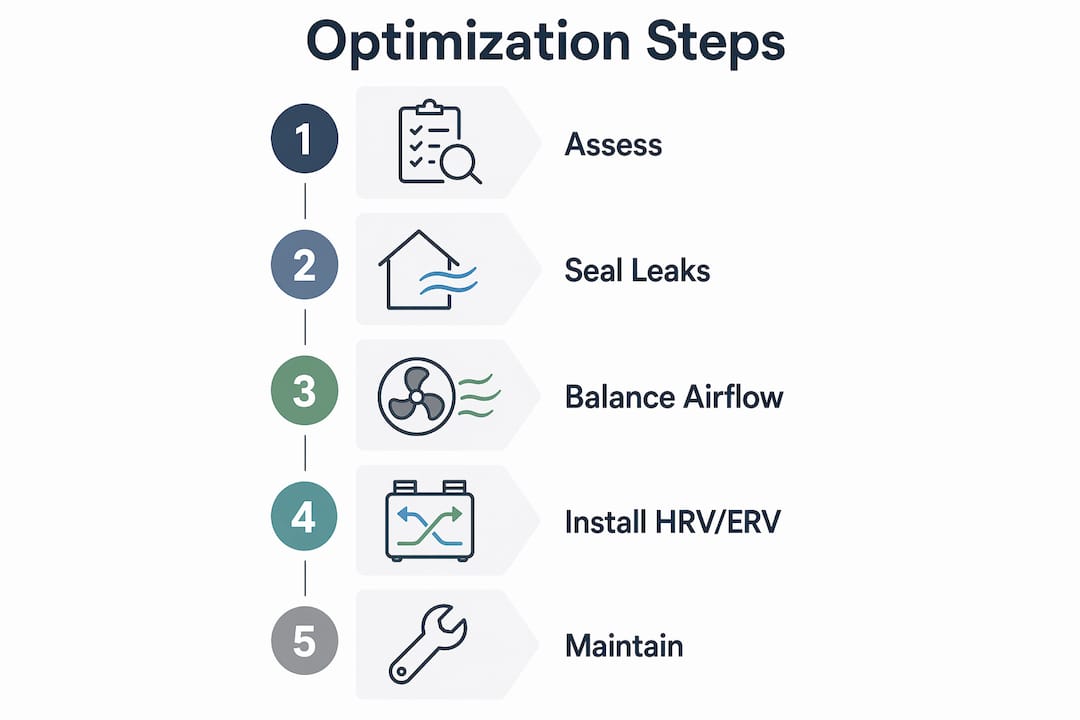
Ventilation system optimization is the process of adjusting and upgrading your ventilation setup to improve indoor air quality while reducing energy use. Industry standards like ASHRAE 62.2 and the International Mechanical Code set the baseline for residential ventilation performance, but most homes fall short of those targets without active attention. A well-tuned system removes pollutants, controls humidity, and cuts utility bills at the same time. This ventilation system optimization guide covers every major step, from diagnosing current performance to installing energy recovery technology and building a maintenance routine that holds results.
How to assess your current ventilation system performance
The first step in any airflow optimization guide is knowing what you are working with. Most homeowners skip this step and jump straight to upgrades, which means they fix the wrong problems. A proper assessment measures actual airflow rates, checks duct integrity, and identifies indoor air quality warning signs before any money is spent.
Signs your system needs attention:
- Persistent musty odors or visible condensation on windows
- Rooms that feel stuffy even with the HVAC running
- Elevated humidity readings above 50% indoors
- Uneven temperatures between rooms
- Allergy or respiratory symptoms that improve when you leave the house
Hidden duct leaks often require specialized pressure testing beyond visual inspections to detect and quantify, especially when airflow is inconsistent with the original design. A blower door test combined with duct pressurization testing gives you a clear picture of where air is escaping. CO2 monitors are also useful. A reading above 1,000 parts per million in an occupied room signals that fresh air exchange is too low.
Pro Tip: Rent or borrow a digital manometer before calling a contractor. Measuring static pressure at your air handler tells you whether your fan is working within its rated range, which narrows down the diagnosis quickly.
Professional diagnostics from a qualified HVAC technician can confirm whether the issue is duct leakage, fan sizing, or control settings. Ultraairswfl offers full system assessments for homeowners in Naples, Cape Coral, and Fort Myers who want a clear baseline before committing to any upgrades.
What energy-efficient technologies improve ventilation?
Heat recovery ventilators (HRVs) and energy recovery ventilators (ERVs) are the most effective technologies for improving ventilation without spiking energy costs. Both devices exchange stale indoor air for fresh outdoor air while transferring heat between the two airstreams. The key difference is that ERVs also transfer moisture, making them better suited to humid climates like Southwest Florida.
HRV and ERV systems recover 70–80% of exhaust air energy when integrated correctly. That recovery rate means you bring in fresh air without throwing away the energy you spent conditioning it.
| Technology | Best climate | Moisture transfer | Typical use case |
|---|---|---|---|
| HRV | Cold, dry climates | No | Northern states, winter heating |
| ERV | Hot, humid climates | Yes | Florida, Gulf Coast, summer cooling |
| Exhaust-only fan | Any climate | No | Spot ventilation, bathrooms |
| Supply fan | Mild climates | No | Tight homes needing fresh air |
Both HRVs and ERVs require regular filter cleaning, typically every one to three months, to maintain their efficiency. A clogged core drops recovery rates and can push the unit into negative pressure, which defeats the purpose entirely.
Pro Tip: In Southwest Florida, choose an ERV over an HRV. Bringing in dry winter air with an HRV in a humid coastal climate can cause moisture imbalances that lead to mold growth inside the ductwork.
Demand-controlled ventilation using CO2 or occupancy sensors cuts energy use by matching ventilation rates to actual occupancy. This is especially valuable in properties with variable occupancy, like vacation rentals or multi-unit buildings.
How do duct sealing and balancing improve efficiency?
Duct leakage is the single most overlooked source of energy waste in residential ventilation. When supply ducts leak into unconditioned spaces like attics or crawl spaces, you lose conditioned air before it reaches the room. When return ducts leak, they pull in unconditioned air that your system then has to treat.

Over-exhausting caused by hidden duct leaks can nearly double energy use and create pressure imbalances that push pollutants from one area to another. That pressure swing is what causes backdrafting in gas appliances and pulls attic air into living spaces.
Effective duct sealing methods include:
- Mastic sealant applied at all joints and connections
- Metal foil tape rated for HVAC use (not standard duct tape, which fails within months)
- Aeroseal duct sealing, an internal pressurized process that seals leaks from the inside out
- Insulating ducts in unconditioned spaces to prevent thermal losses
The results of proper sealing can be dramatic. One large restoration project sealed 63,000 CFM of duct leaks, which reduced exhaust by 75% and saved $241,671 annually, with a payback period under four years. That scale applies to commercial buildings, but the principle holds for any home with significant leakage.
Ventilation systems drift from their original design over time. Rebalancing supply-to-exhaust ratios after sealing prevents excessive pressure swings and stops pollutants from transferring between zones.
System rebalancing means adjusting dampers and fan speeds so that supply airflow and exhaust airflow are within the designed ratio for each zone. An integrated design approach that addresses duct sizing, fan placement, and controls at the same time reduces lifecycle costs by roughly 5% compared to fixing each element separately. Ultraairswfl technicians use duct blaster testing and flow hood measurements to verify balance after any sealing work.
Smart controls and maintenance tips to optimize operation
Smart ventilation controls are the most cost-effective upgrade most homeowners have not made yet. A programmable or sensor-driven controller adjusts fan speed and run time based on actual conditions rather than a fixed schedule. That shift alone can cut ventilation energy use significantly without reducing air quality.
Recommended steps to maintain peak performance:
- Replace HVAC filters every 60–90 days, or more often if you have pets or allergy sufferers in the home. MERV 13 filters capture fine particulates that lower-rated filters miss.
- Clean exhaust fan grilles in bathrooms and kitchens every three months. Dust buildup on fan blades reduces airflow by a measurable amount and makes the motor work harder.
- Set bathroom exhaust fans to run at a minimum of 50 CFM and kitchen range hoods to at least 100 CFM to control moisture and cooking byproducts effectively.
- Install a humidity sensor to trigger exhaust fans automatically when indoor humidity climbs above 50%.
- Schedule a professional inspection annually to check fan motor condition, duct connections, and control calibration.
Pro Tip: Pair a smart thermostat with your ventilation controls. When the thermostat detects occupancy, it can trigger the ERV or HRV to ramp up fresh air delivery. When the house is empty, it dials back. That coordination is where the real energy savings show up.
HVAC automation through occupancy sensors and CO2 monitors gives property managers a way to manage ventilation across multiple units without manual intervention. The system responds to actual conditions rather than assumptions about when people are home.
What else affects indoor air quality beyond ventilation?
Ventilation improvement handles dilution and exhaust, but source control is equally important. Removing or reducing pollutant sources cuts the load your ventilation system has to manage, which means better air quality at lower fan speeds.
Key measures to complement ventilation:
- Switch to low-VOC cleaning products, paints, and adhesives. Volatile organic compounds off-gas continuously and ventilation alone cannot keep pace with a heavy source.
- Use air purifiers with true HEPA filters for particulates and activated carbon filters for gases. HEPA captures particles but activated carbon is required for gaseous pollutants like formaldehyde or cooking fumes.
- Keep indoor humidity between 30–50%. Humidifiers that are not cleaned regularly can aerosolize dust, mold, and bacteria, making air quality worse rather than better.
- Fix water leaks and dry wet materials within 24–48 hours to prevent mold colonization.
- Avoid idling vehicles in attached garages. Carbon monoxide migrates through shared walls faster than most homeowners expect.
For homeowners managing asthma or respiratory conditions, the indoor air quality checklist from Ultraairswfl covers disease-specific ventilation and filtration priorities in detail.
Key Takeaways
Optimizing your ventilation system requires sealing duct leaks, balancing airflow, installing energy recovery technology, and maintaining filters and controls on a consistent schedule.
| Point | Details |
|---|---|
| Assess before upgrading | Use pressure testing and CO2 monitoring to identify real problems before spending money. |
| HRVs and ERVs recover energy | These units reclaim 70–80% of exhaust air energy, cutting costs without reducing fresh air. |
| Duct sealing pays back fast | Sealing leaks reduces energy waste and corrects pressure imbalances that drive pollutant transfer. |
| Smart controls match real demand | CO2 and occupancy sensors adjust ventilation to actual conditions, cutting unnecessary energy use. |
| Source control reduces the load | Low-VOC products and proper humidity management reduce what your ventilation system has to remove. |
What I have learned from years of watching ventilation systems fail
The most common mistake I see is treating ventilation as a set-and-forget system. Homeowners install a new ERV or seal their ducts and assume the job is done. Two years later, clogged filters and drifted dampers have erased most of the gains. Preventive maintenance is not optional. It is the mechanism that keeps every other improvement working.
The second mistake is over-exhausting. Property managers in particular tend to run exhaust fans at maximum capacity because it feels safer. In reality, natural ventilation in older buildings rarely meets modern standards, and aggressive exhaust without balanced supply creates negative pressure that pulls in unfiltered outdoor air through gaps in the building envelope. That air bypasses every filter and control you have installed.
The trend I am most excited about is the integration of occupancy-based controls with whole-home energy management. When your ventilation system talks to your thermostat and your solar inverter, you get a system that responds to real conditions rather than fixed schedules. That integration is where the next generation of energy savings will come from, and the technology is available right now for most homes.
— albert
Ultraairswfl can help you get your ventilation right
Ventilation improvements deliver the best results when a qualified technician confirms the diagnosis and sizes the solution correctly. Ultraairswfl serves homeowners and property managers across Naples, Cape Coral, and Fort Myers with full HVAC assessments, ERV and HRV installation, duct sealing, and system balancing.
Property managers looking to address ventilation across multiple units can start with the office HVAC installation guide for a structured approach to system planning. Homeowners ready to understand the full picture of what their indoor air quality costs them can review why indoor air testing matters before scheduling a consultation. Ultraairswfl offers flexible financing options and transparent assessments so you know exactly what you are getting before any work begins.
FAQ
What is ventilation system optimization?
Ventilation system optimization is the process of adjusting airflow rates, sealing duct leaks, upgrading controls, and maintaining equipment so your system delivers the air quality and energy efficiency it was designed for.
How do I know if my ventilation system needs improvement?
Persistent odors, high indoor humidity above 50%, uneven temperatures, and worsening allergy symptoms are the clearest signs that your system is underperforming and needs a professional assessment.
What is the difference between an HRV and an ERV?
An HRV transfers heat only, making it suited to cold climates, while an ERV transfers both heat and moisture, making it the better choice for hot, humid climates like Southwest Florida.
How often should I replace my HVAC filters?
Replace filters every 60–90 days under normal conditions. Homes with pets or allergy sufferers should change filters more frequently, and MERV 13 rated filters provide significantly better particulate capture than standard options.
Can duct sealing really save that much money?
Yes. Sealing significant duct leakage reduces exhaust volume, corrects pressure imbalances, and cuts the energy your system wastes conditioning air that never reaches the living space, with payback periods as short as four years in documented cases.