

A regular HVAC tune-up is a scheduled preventive maintenance service that keeps your heating and cooling system running at peak efficiency, prevents unexpected breakdowns, and lowers your monthly energy bills. For homeowners and property managers in Southwest Florida, understanding why regular tune ups matter is the difference between a system that lasts 15 years and one that fails in 8. Preventive maintenance best practices recommend at least one tune-up per year for residential systems, and twice yearly for units running year-round in high-demand climates. Skipping this service does not save money. It delays costs while multiplying them.
What does a typical HVAC tune-up include?
A professional HVAC tune-up covers far more than a filter swap. A thorough service visit addresses every component that affects airflow, refrigerant balance, electrical safety, and mechanical wear.
A standard tune-up typically includes:
- Air filter replacement or inspection to restore airflow and protect internal components
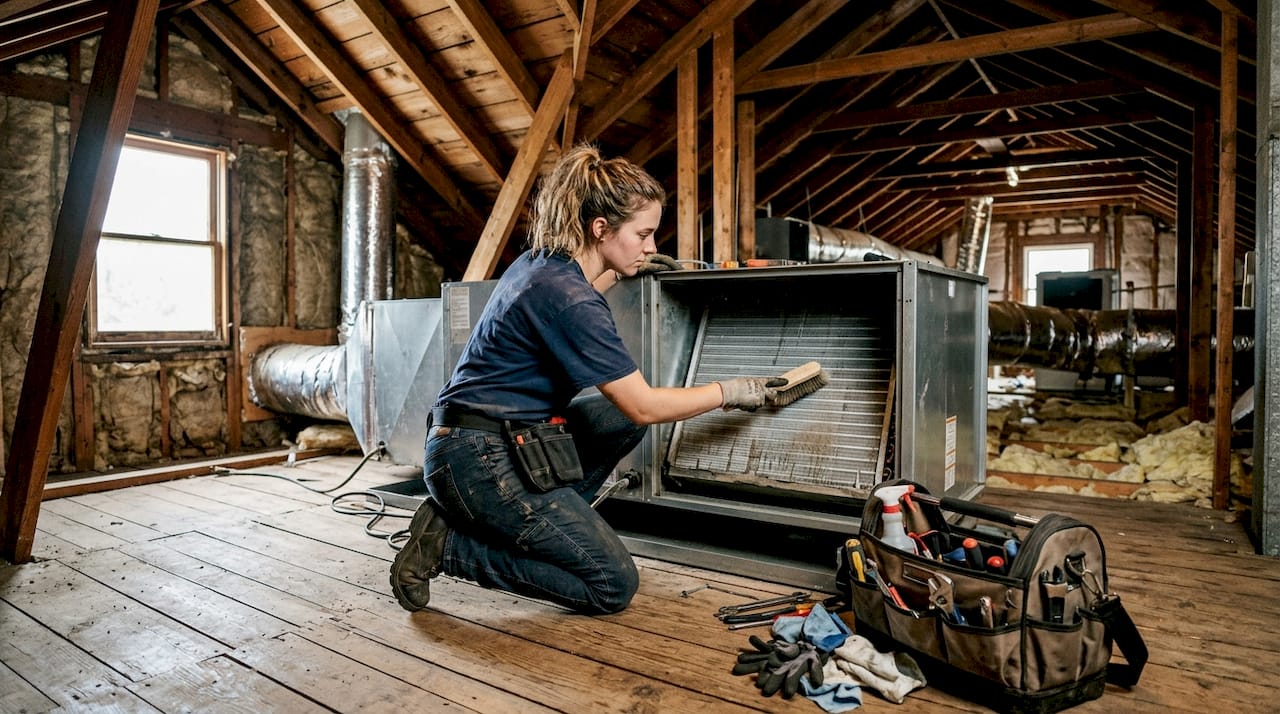
- Evaporator and condenser coil cleaning to remove dirt buildup that forces the system to work harder
- Refrigerant level check with verification of sub-cooling and superheat values to confirm optimal charge
- Electrical connection inspection to catch loose wiring, corroded contacts, or failing capacitors
- Thermostat calibration to confirm accurate temperature readings
- Blower motor and belt inspection to detect wear before it causes a failure
- Condensate drain flush to prevent water damage and mold growth
The tune-up process differs slightly by system type. A heat pump requires checks on reversing valve operation and defrost cycles. A gas furnace adds a heat exchanger inspection and burner cleaning. A ductless mini-split needs filter cleaning at each air handler plus a check of the refrigerant line set.
One task that separates a quality tune-up from a rushed one is coil cleaning. Thorough coil cleaning prevents airflow restrictions that negate the efficiency gains promised by the service. A technician who only rinses the coil surface leaves behind compacted debris that continues to restrict airflow.
Pro Tip: Ask your technician to verify sub-cooling and superheat readings after the refrigerant check. These two numbers confirm that refrigerant charge and airflow are both correct. A system can have the right amount of refrigerant and still perform poorly if airflow is restricted.
How do tune-ups improve system performance and energy efficiency?
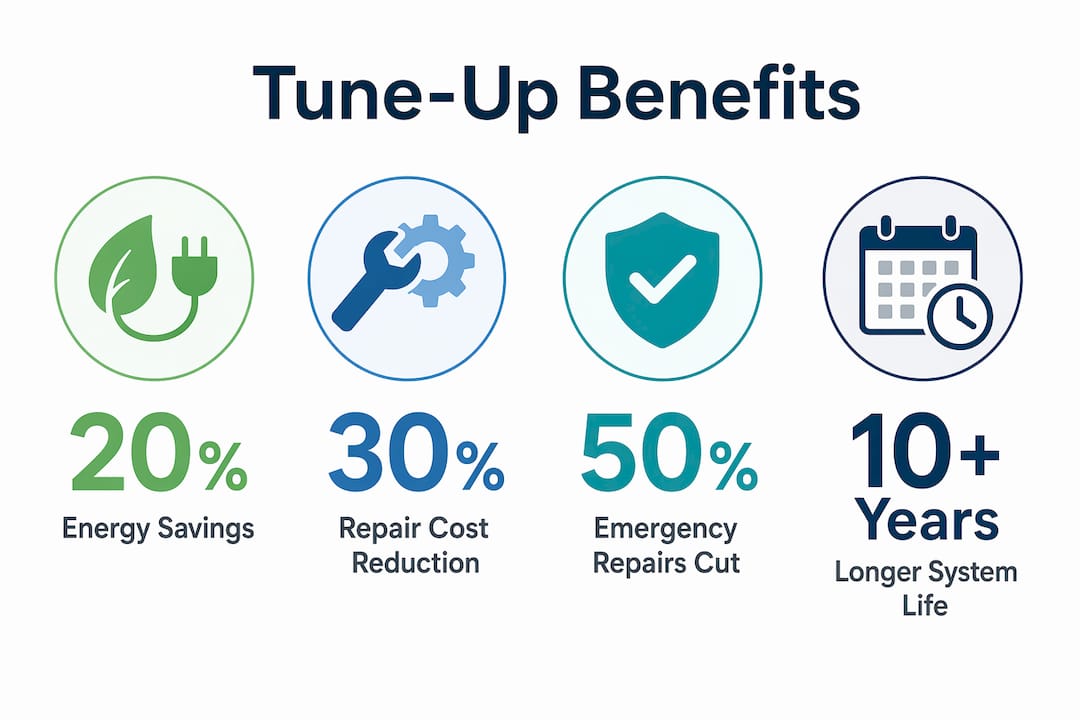
Neglecting routine maintenance reduces operational capacity by 20% and significantly increases energy consumption as the system strains to compensate. That 20% capacity loss means your system runs longer cycles to reach the same temperature, driving up your utility bill every month.
A tune-up restores performance through four specific corrections:
- Airflow restoration. A clean filter and clean coils allow the system to move the volume of air it was designed to move. Restricted airflow forces the blower motor to work harder and reduces the system’s ability to transfer heat.
- Refrigerant balance. Verifying sub-cooling and superheat values confirms the refrigerant charge is correct. An overcharged or undercharged system loses efficiency and stresses the compressor.
- Electrical efficiency. Tight connections and a healthy capacitor reduce the electrical draw at startup. A weak capacitor causes the compressor to draw excess current every time it starts, which adds up across hundreds of daily cycles.
- Mechanical friction reduction. Lubricating moving parts like the blower motor bearings reduces friction, which lowers energy consumption and slows component wear.
Routine maintenance saves money by reducing waste, repair costs, and downtime while promoting greater system efficiency. For a Southwest Florida home running its AC nine or ten months a year, those savings compound quickly. A system restored to full capacity after a tune-up costs less to run every single day.
The benefits of AC maintenance for homes in the region are especially significant because high humidity and year-round heat place constant demand on every component.
What are the risks and costs of skipping regular tune-ups?
Skipping a tune-up does not pause the wear on your system. It accelerates it. Preventive maintenance reduces unplanned downtime, lowers repair costs, and improves equipment safety. The inverse is equally true: no maintenance means more downtime, higher repair bills, and shorter equipment life.
The most common consequences of skipping service include:
- Emergency repair calls at peak summer rates, often two to three times the cost of a scheduled visit
- Compressor failure caused by low refrigerant, dirty coils, or electrical stress that went undetected
- Frozen evaporator coils from restricted airflow, which can flood the drain pan and damage ceilings or flooring
- Carbon monoxide risk in gas furnaces when a cracked heat exchanger goes uninspected
- Mold growth in a clogged condensate drain that backs up into the air handler
The most persistent myth among homeowners is that a working system needs no service. By the time an HVAC system shows audible or visible failure symptoms, damage to critical components has already occurred. The compressor does not announce its decline. It simply fails, usually on the hottest day of the year.
“No symptoms means no problems” is the most expensive belief in home maintenance. HVAC systems degrade silently. Dirty coils, low refrigerant, and failing capacitors cause no noise and no visible warning until the system stops. By that point, a $150 tune-up has become a $1,500 repair or a $4,000 compressor replacement.
For property managers, the financial risk extends beyond repair costs. A failed AC unit in a rental property triggers tenant complaints, potential lease disputes, and emergency contractor premiums. The clean air inside your home also suffers when a neglected system circulates dust, mold spores, and debris through the ductwork unchecked.
How do tune-ups contribute to longer system lifespan and consistent comfort?
A well-maintained HVAC system lasts significantly longer than a neglected one. The shift from reactive to planned maintenance is especially critical for property managers who need to avoid tenant complaints and the financial risk of sudden equipment failure.
The table below shows how maintenance frequency affects key system outcomes:
| Maintenance frequency | Average system lifespan | Emergency repair likelihood | Monthly energy cost trend |
|---|---|---|---|
| Annual tune-up | 15–18 years | Low | Stable or decreasing |
| Every 2–3 years | 10–13 years | Moderate | Gradually increasing |
| No scheduled service | 7–9 years | High | Steadily increasing |
One of the most underused practices in residential HVAC care is trend analysis. A failing compressor or motor can be detected months before breakdown by monitoring refrigerant pressures and electrical draws over time during routine tune-ups. A technician who records these values at each visit can spot a compressor drawing more current than it did six months ago. That data point triggers a repair before a failure.
Consistent comfort is the direct result of a system that performs as designed. When coils are clean, refrigerant is balanced, and airflow is unrestricted, the system reaches setpoint temperature faster and holds it more steadily. Homeowners notice fewer hot spots. Tenants stop calling about uneven temperatures. The HVAC maintenance checklist for Southwest Florida homes covers exactly these performance checkpoints.
Pro Tip: Ask your technician to log refrigerant pressures and electrical draw readings at every visit. After two or three tune-ups, you will have a trend line that reveals developing problems months before they cause a breakdown.
Monitoring HVAC health between service visits, through regular filter checks and watching for unusual sounds or rising energy bills, extends the value of each professional tune-up.
Key Takeaways
Regular HVAC tune-ups are the single most cost-effective action a homeowner or property manager can take to protect system performance, lower energy costs, and prevent expensive emergency repairs.
| Point | Details |
|---|---|
| Capacity loss without service | Skipping maintenance reduces system capacity by 20%, raising energy costs every month. |
| Coil cleaning is non-negotiable | Thorough evaporator coil cleaning restores airflow and delivers the efficiency gains a tune-up promises. |
| Silent failure is the real risk | HVAC systems degrade without warning signs; damage is often severe by the time symptoms appear. |
| Trend analysis prevents breakdowns | Logging refrigerant pressures and electrical draws over time catches failing components months early. |
| Planned maintenance extends lifespan | Systems on annual service schedules last 15–18 years versus 7–9 years with no scheduled care. |
What I have learned after years of watching HVAC systems fail
The homeowners who call for emergency repairs in july are almost never the ones who skipped service once. They are the ones who skipped it for three or four years while the system kept running. That is the trap. A system that runs is not the same as a system that runs well, and the gap between those two states is where the expensive failures hide.
The most common mistake I see is treating a tune-up as optional when the budget gets tight. A tune-up is not a luxury service. It is the inspection that tells you whether your $5,000 compressor is six months from failure. Skipping it to save $150 is a false economy that I have watched cost homeowners many times that amount.
For property managers, the math is even clearer. One emergency AC call during a heat wave, with after-hours labor and expedited parts, can cost more than two full years of scheduled maintenance across an entire property. The tune-up advantages go beyond the equipment. They protect your relationship with tenants and your operating budget at the same time.
My strongest advice: find a technician who records system data at every visit, not just one who checks boxes on a form. The difference between a technician who logs refrigerant pressures and one who does not is the difference between catching a problem in march and replacing a compressor in august.
— albert
Ultraairswfl keeps your HVAC system performing all year
Ultraairswfl serves homeowners and property managers across Naples, Cape Coral, and Fort Myers with professional HVAC tune-up services designed to protect system performance and lower energy costs. Their technicians inspect, clean, and test every critical component, then document system readings so you have a data record at every visit.
Whether you manage a single-family home or a portfolio of rental properties, Ultraairswfl’s maintenance programs are built around the same principle: planned care costs far less than emergency repairs. Their team also supports indoor air quality improvements and can guide you through the full range of efficiency upgrades available for Southwest Florida homes. For property managers evaluating larger system needs, the office HVAC installation guide covers everything from equipment selection to ongoing maintenance planning.
FAQ
How often should an HVAC system get a tune-up?
Most residential HVAC systems need at least one professional tune-up per year. Systems in high-demand climates like Southwest Florida benefit from twice-yearly service, once before the cooling season and once before heating season.
What happens if you skip HVAC maintenance for several years?
Neglecting maintenance reduces system capacity by 20% and accelerates component wear. By the time visible symptoms appear, damage to critical parts like the compressor has already occurred, turning a preventable repair into a costly replacement.
Does a tune-up actually lower my energy bill?
A tune-up restores airflow, corrects refrigerant balance, and reduces electrical draw at startup. Each of these corrections directly reduces the energy the system uses to reach and hold your set temperature.
How long does a professional HVAC tune-up take?
A thorough tune-up typically takes 60–90 minutes. Services that take less than 45 minutes rarely include full coil cleaning, refrigerant verification, or electrical load testing.
Can a tune-up extend the life of an older HVAC system?
Regular maintenance extends system lifespan significantly. Well-serviced systems commonly reach 15–18 years of reliable operation, while neglected systems often fail within 7–9 years.