

Geothermal heating is defined as a method of using the earth’s stable underground temperature to heat and cool buildings through a heat pump system. Unlike a furnace that burns fuel to create heat, a geothermal heat pump moves existing heat between the ground and your home. The U.S. Department of Energy and the EPA both recognize geothermal heat pumps as among the most energy-efficient heating and cooling technologies available. The ground below the frost line holds a near-constant temperature of 50°F to 70°F year-round across most of the U.S. That thermal stability is the foundation of the entire system.
How do geothermal heat pump systems work?
A geothermal heat pump system has three main parts: the ground loop, the heat pump unit inside your home, and the distribution system that delivers conditioned air or water.
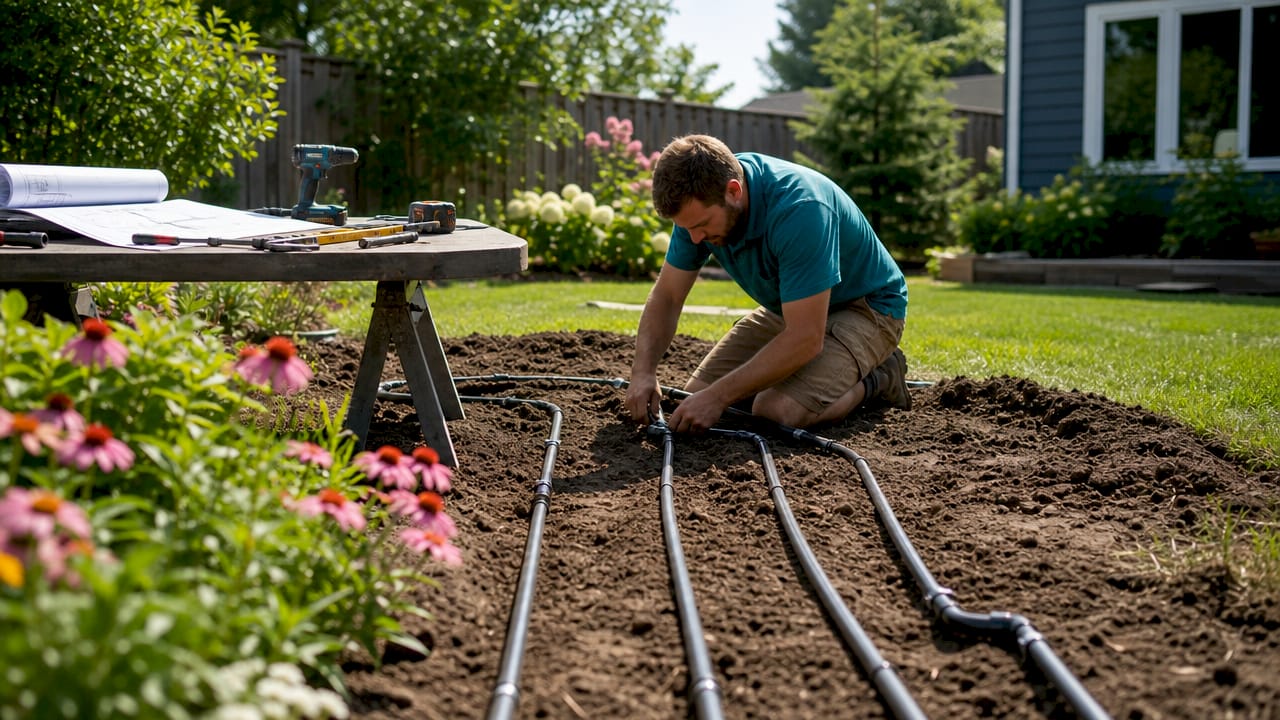
The ground loop is a network of pipes buried in your yard or drilled vertically into the earth. A water-based fluid circulates through those pipes, absorbing heat from the ground in winter and releasing heat into the ground in summer. The fluid carries that thermal energy back to the heat pump unit inside your home, where a refrigerant cycle concentrates and transfers it to your air or water distribution system.
The key metric for measuring this efficiency is the Coefficient of Performance, or COP. A geothermal system achieves a COP between 3.0 and 5.0, which means it delivers 300% to 500% efficiency by moving heat rather than generating it. A standard electric resistance heater maxes out at 100% efficiency. That gap explains why geothermal systems cut energy bills so dramatically.
Two loop configurations exist for most residential installations:
- Closed-loop horizontal: Pipes are buried in trenches 4 to 6 feet deep across a large yard area. This is the lower-cost option when space allows.
- Closed-loop vertical: Pipes are drilled straight down 150 to 400 feet. This suits smaller lots but requires specialized drilling equipment.
- Open-loop: Uses groundwater from a well as the heat exchange fluid, then returns it. This works only where local regulations and water quality permit.
- Pond or lake loop: Pipes are submerged in a nearby body of water. Less common but effective where geography allows.
Pro Tip: Ask your installer to perform a soil thermal conductivity test before finalizing your loop design. Soil type directly affects how efficiently the ground absorbs and releases heat, and skipping this step is one of the most common causes of undersized systems.
What are the primary benefits of geothermal heating?
Geothermal heating systems deliver advantages that compound over time. The upfront cost is higher than a conventional HVAC unit, but the long-term financial and environmental returns are substantial.
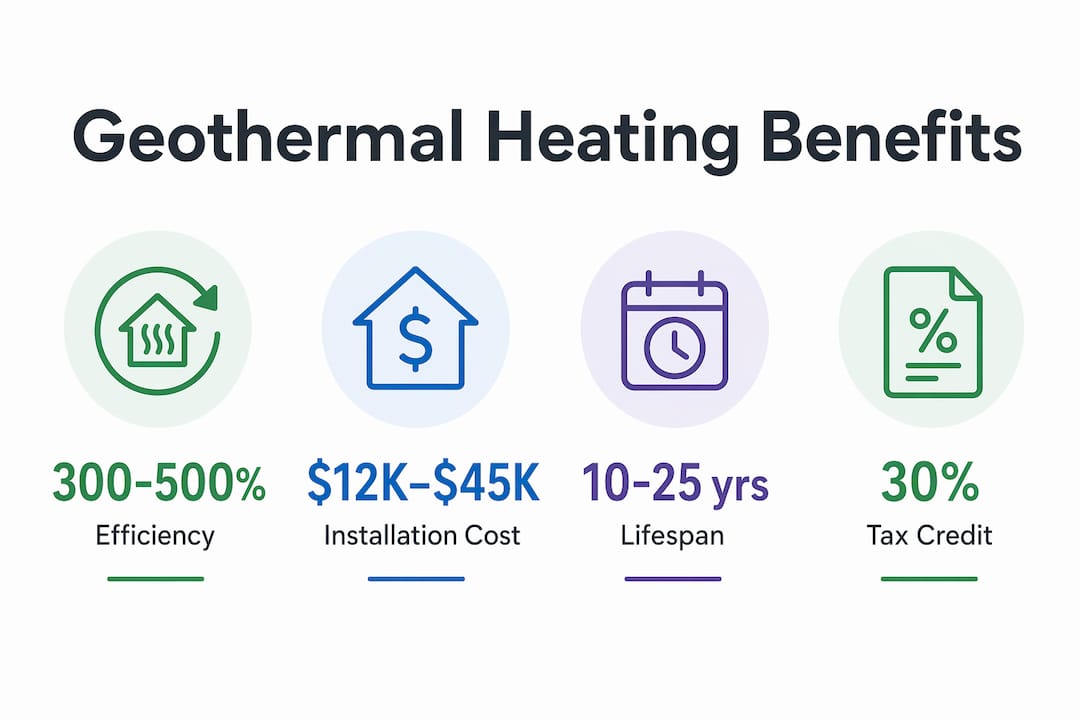
The efficiency numbers alone make a strong case. A COP of 3.0 to 5.0 means homeowners typically recover their initial investment in approximately 4 to 7 years compared to traditional HVAC systems. That payback period shortens further when you factor in the federal tax credit.
Key benefits for homeowners and property developers include:
- Federal tax credit: Most U.S. geothermal heat pump installations qualify for a 30% federal tax credit, which directly reduces net installation cost.
- Long system lifespan: Indoor heat pump units last up to 24 years, and buried ground loops last 50 years or more. That roughly doubles the lifespan of a conventional outdoor HVAC unit.
- Lower emissions: The system uses electricity to move heat, not to burn fuel. Paired with renewable electricity, it produces near-zero direct emissions.
- Quiet operation: No outdoor compressor unit means no noise in your yard or on your roof.
- Effective in warm climates: In Southwest Florida, geothermal systems reduce cooling costs by using the cooler ground temperature as a heat sink instead of the hot summer air. This is a benefit many Florida homeowners overlook.
The eco-friendly HVAC options available today make geothermal one of the strongest long-term investments in home comfort. Ground loops use high-density polyethylene pipe rated for a 50-year service life, and many manufacturers back them with warranties to match.
What are the key installation considerations?
Installation is where most homeowners pause, and rightly so. The decisions you make at this stage determine whether your system performs at its peak for decades or underperforms from day one.
1. Choose the right loop type for your property.
Horizontal loops cost less but require a large open yard. Vertical loops suit smaller lots but need specialized drilling, which raises upfront costs. Your lot size and local geology will narrow the choice quickly.
2. Size the system correctly.
Incorrect ground loop sizing causes thermal depletion or freezing of the loop fluid, both of which destroy efficiency. A qualified installer uses your home’s heating and cooling load calculations alongside site-specific soil data to size the system properly.
3. Understand the upfront cost range.
Residential geothermal installations typically cost between $12,000 and $45,000, depending on home size and loop complexity. That range is wide because soil conditions, loop type, and local labor rates all vary significantly.
4. Account for soil and climate conditions.
Sandy or dry soils conduct heat less efficiently than moist clay soils. Your installer should conduct a thermal conductivity assessment to confirm the ground loop design matches your site’s actual conditions.
5. Plan for warranty and lifespan expectations.
Indoor units carry manufacturer warranties typically ranging from 10 to 25 years. Ground loops, made from HDPE pipe, often carry a 50-year warranty. Review both before signing any installation contract.
| Component | Typical lifespan | Warranty range |
|---|---|---|
| Indoor heat pump unit | Up to 24 years | 10–25 years |
| Ground loop (HDPE pipe) | 50+ years | Up to 50 years |
| Conventional outdoor HVAC | 12–15 years | 5–10 years |
Pro Tip: Get at least two bids from certified geothermal installers and ask each one to show you their load calculation methodology. A bid without load calculations is a red flag.
For a detailed look at the heat pump installation process in Southwest Florida, Ultraairswfl covers the full scope of what homeowners should expect before, during, and after installation.
How is geothermal heating used beyond individual homes?
Geothermal technology is not limited to single-family homes. District-scale geothermal systems are a growing application that serves entire neighborhoods or commercial developments from a shared ground loop network.
District geothermal loops provide affordable, efficient heating and cooling beyond individual homes. Pilot projects in Massachusetts and Michigan have demonstrated that community-wide systems reduce per-household costs and improve overall efficiency compared to isolated residential installations. The shared infrastructure spreads drilling and installation costs across many properties, which lowers the barrier to entry for each participant.
For property developers, this trend opens a practical path to building energy-efficient communities without requiring each homeowner to fund a full individual installation. Key advantages of district-scale systems include:
- Lower per-unit installation cost through shared infrastructure
- Centralized maintenance that reduces individual homeowner responsibility
- Stronger negotiating power with equipment suppliers due to project scale
- Potential for integration with solar or other renewable energy sources at the community level
The growth of community geothermal systems signals a shift in how developers and municipalities think about building-scale energy. For homeowners buying into new developments, asking whether a district geothermal option exists is now a worthwhile question.
Key Takeaways
Geothermal heating is the most energy-efficient heating and cooling method available to homeowners, delivering 300%–500% efficiency by moving heat from the earth rather than generating it.
| Point | Details |
|---|---|
| Core technology | Geothermal heat pumps move heat between the ground and your home using a buried loop system. |
| Efficiency advantage | Systems achieve a COP of 3.0–5.0, far exceeding conventional HVAC efficiency. |
| Financial return | A 30% federal tax credit and 4–7 year payback period make the investment financially sound. |
| Long system life | Indoor units last up to 24 years; ground loops last 50+ years with HDPE pipe warranties. |
| Installation planning | Correct loop sizing and soil assessment are critical to avoiding efficiency loss or system failure. |
Why geothermal heating deserves more serious attention
Most homeowners I speak with focus on the sticker price and stop there. That reaction is understandable, but it misses the point entirely. A $30,000 geothermal installation that lasts 24 years and cuts your energy bill by more than half is a fundamentally different financial decision than a $6,000 conventional unit that needs replacing in 12 years and costs more to run every month.
The misconception I see most often is that geothermal only makes sense in cold climates. That is simply wrong. In Southwest Florida, the ground stays cooler than the summer air for months at a time. A geothermal system uses that cooler ground as a heat sink, which makes it more efficient at cooling than a standard air conditioner working against 95-degree outdoor air. The efficiency advantage in warm climates is real, and it is consistently underestimated.
The other thing I would push back on is the idea that geothermal is a niche technology for early adopters. District-scale systems are now operating in American communities, federal tax credits are in place, and HDPE ground loops carry 50-year warranties. The technology is mature. What is still catching up is homeowner awareness. If you are planning a new build or a major HVAC replacement in the next two years, geothermal deserves a serious evaluation, not a quick dismissal based on upfront cost alone.
— albert
Ultraairswfl’s heating expertise for Southwest Florida homeowners
Geothermal heating is a long-term investment, and getting the installation right from the start determines whether you see the efficiency gains the technology promises.
Ultraairswfl serves homeowners and property developers across Naples, Cape Coral, and Fort Myers with professional heating system installation, maintenance, and guidance. The team at Ultraairswfl helps you evaluate whether geothermal is the right fit for your property, walks you through loop type selection, and handles system sizing with proper load calculations. For homeowners ready to move from research to action, the heating solutions page covers the full range of services available, including geothermal heat pump installation and ongoing maintenance support.
FAQ
What is geothermal heating in simple terms?
Geothermal heating uses the earth’s stable underground temperature to heat and cool your home through a heat pump and buried pipe loop. The system moves heat rather than generating it, which is why it runs at 300%–500% efficiency.
Is geothermal heating worth the cost?
Most residential systems qualify for a 30% federal tax credit, and homeowners typically recover the investment in 4 to 7 years through energy savings. With indoor units lasting up to 24 years and ground loops lasting 50 or more, the total cost of ownership is lower than conventional HVAC over the system’s life.
Does geothermal heating work in warm climates like Florida?
Geothermal systems work effectively in warm climates because the ground stays cooler than summer air, making it a more efficient heat sink for cooling. Southwest Florida homeowners can see meaningful reductions in cooling costs compared to standard air conditioning systems.
What is the difference between horizontal and vertical ground loops?
Horizontal loops are cheaper but require a large yard for trenching; vertical loops cost more due to specialized drilling but suit smaller properties. Your lot size and soil conditions determine which option is feasible for your installation.
How long does a geothermal heat pump system last?
The indoor heat pump unit lasts up to 24 years, while the buried ground loop made from HDPE pipe lasts 50 years or more. Both components typically carry manufacturer warranties that reflect those lifespans.