
Indoor air quality (IAQ) is the measure of pollutant levels and ventilation conditions inside a building, and investing in its improvement is one of the highest-return decisions a homeowner or business owner can make. Humans spend about 90% of their time indoors, where pollutant concentrations run 2 to 5 times higher than outdoors. That gap between perceived safety and actual exposure is the core reason why invest in indoor air quality is a question worth taking seriously. Poor IAQ drives respiratory illness, lost workdays, and higher energy bills. The EPA and ASHRAE both recognize IAQ as a measurable, manageable risk, not a background concern.
Why invest in indoor air quality for your health?
Improving IAQ produces direct, measurable health outcomes. The most well-documented benefits include fewer asthma attacks, reduced allergy symptoms, and lower rates of cardiovascular stress from airborne particulates. These are not minor quality-of-life improvements. They represent real reductions in medical visits and prescription costs for families and employees alike.
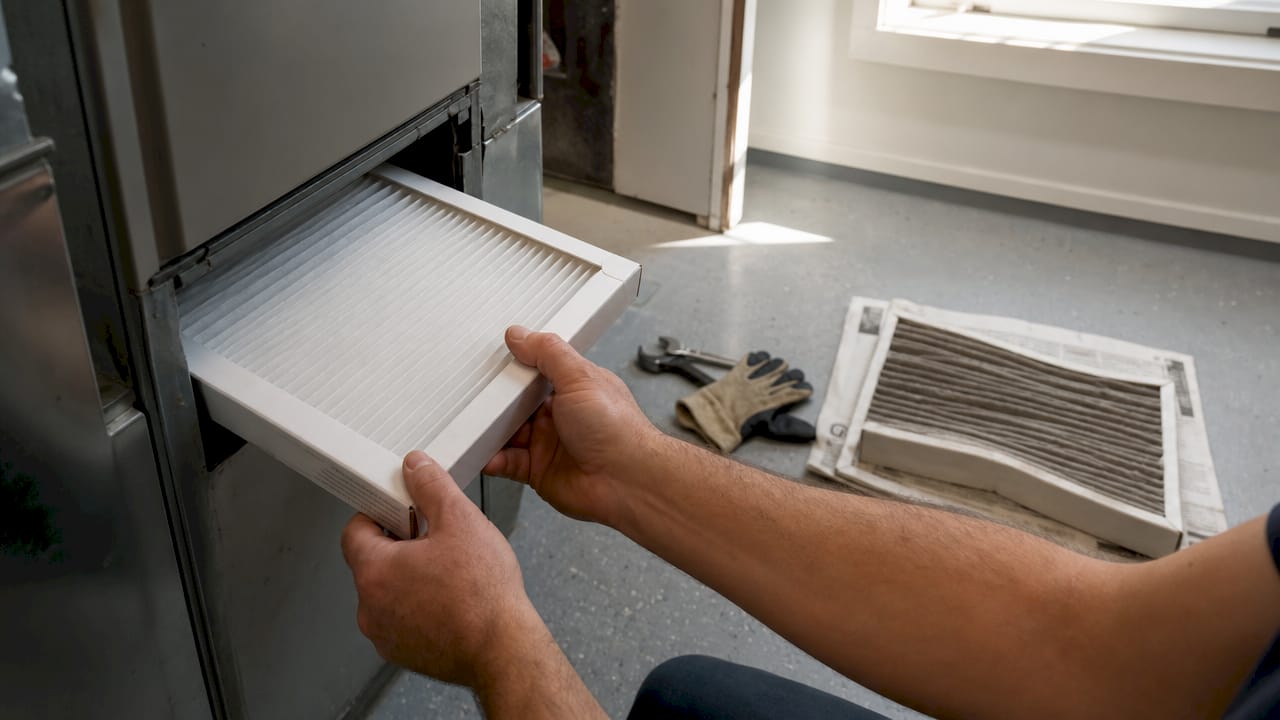
Vulnerable populations feel the difference most sharply. Children, elderly adults, and people with existing respiratory or cardiovascular conditions face the highest risk from indoor pollutants like volatile organic compounds (VOCs), mold spores, fine particulate matter (PM2.5), and carbon monoxide. HEPA air filtration reduces bedroom particulate matter by 50% to 80%, with consistent respiratory and cardiovascular improvements reported in occupants. That level of reduction costs approximately $0.16 to $0.24 per day to maintain. For households with asthma sufferers, that math is straightforward.
Sick building syndrome is another measurable cost of poor IAQ. Occupants in poorly ventilated spaces report headaches, fatigue, eye irritation, and difficulty concentrating. These symptoms disappear when they leave the building, which is the diagnostic signal. Improved ventilation can reduce sick leave by up to 130%, a figure that reframes IAQ investment as a workforce management tool, not just a comfort upgrade.
Key health benefits of IAQ investment include:
- Reduced frequency and severity of asthma and allergy episodes
- Lower exposure to VOCs from paints, adhesives, and cleaning products
- Decreased particulate matter linked to cardiovascular stress
- Protection against mold and biological contaminants
- Fewer sick building syndrome complaints in commercial spaces
Pro Tip: If occupants consistently feel better on weekends or after vacations, the building itself is likely the source of their symptoms. That pattern is a strong signal to schedule an IAQ assessment before investing in any single device.
How does IAQ investment improve energy efficiency and cut costs?
Poor indoor air quality and high energy bills share a common root: an HVAC system working harder than it should. Clogged filters, inadequate ventilation, and dirty ductwork force the system to run longer cycles to move the same volume of conditioned air. That extra runtime shows up directly on the utility bill.
Poor IAQ costs the U.S. economy up to $168 billion per year from medical expenses and lost productivity combined. That number makes individual building-level investment look modest by comparison. The economic case for IAQ improvement is not speculative. It is grounded in workforce output, healthcare utilization, and energy consumption data.
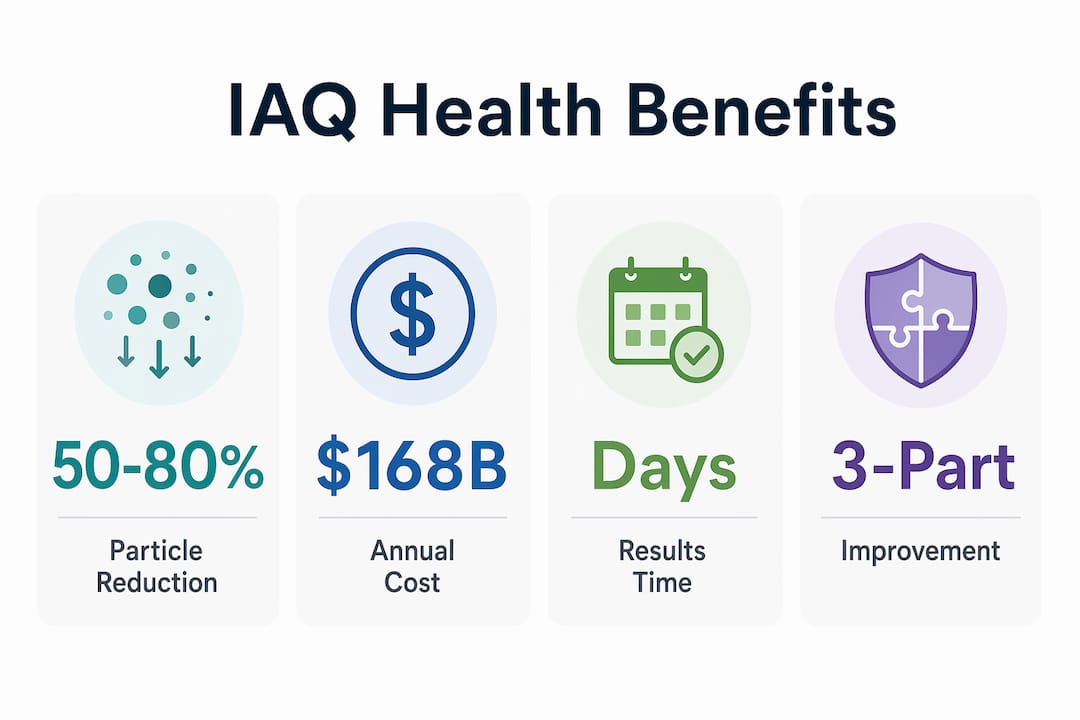
The return on investment is faster than most owners expect. Research from Lawrence Berkeley National Laboratory shows that IAQ improvements boost workplace performance by 10% and reduce absenteeism and sick building syndrome by over one-third, with economic benefits exceeding costs by nearly 60 times and payback within 24 months. For a business running 20 employees in a single office, that payback timeline is compelling.
The steps that deliver the strongest energy and cost returns follow a clear sequence:
- Seal and insulate ductwork. Leaky ducts waste conditioned air before it reaches occupied zones, forcing longer run times and higher bills.
- Upgrade filtration to MERV 13 or higher. Better filters capture more particulates without the pressure drop of HEPA in residential systems, keeping airflow efficient.
- Install CO2 and environmental sensors. CO2 levels above 1,000 ppm signal inadequate ventilation. Sensor data gives you a precise, zone-level picture of where the HVAC system is underperforming.
- Switch to demand-controlled ventilation. Ventilating only when and where occupancy requires it cuts energy use without compromising air quality.
- Schedule annual HVAC maintenance. Clean coils, calibrated controls, and fresh refrigerant charge keep the system running at rated efficiency.
Pro Tip: Request an energy audit alongside your IAQ assessment. The two evaluations share most of the same data points, and bundling them often cuts the combined cost by a meaningful margin.
What practical steps improve indoor air quality at home and at work?
The most effective IAQ improvements follow a three-part framework: source control, ventilation, and filtration. Addressing only one of the three produces limited results. A systems approach is required because HVAC fan capacity and building envelope quality directly affect how well filtration and ventilation perform.
Source control
Source control means eliminating or reducing the pollutants before they enter the air. Common sources include VOC-emitting paints and adhesives, gas appliances without proper exhaust, carpeting that traps allergens, and moisture that feeds mold. Switching to low-VOC products, sealing combustion appliances, and managing humidity below 60% address the problem at its origin. Masking odors with fragrances worsens IAQ by adding VOCs and hiding the underlying ventilation or moisture problem. Air fresheners are not a solution. They are a symptom of a problem that needs a mechanical fix.
Ventilation and filtration upgrades
Ventilation brings in outdoor air to dilute indoor pollutants. Filtration removes particles from recirculated air. Both matter, and neither fully substitutes for the other. For residential settings, upgrading to a higher-rated HVAC filtration system and adding a whole-home energy recovery ventilator (ERV) covers both functions without dramatically increasing energy use. For commercial buildings, demand-controlled ventilation tied to CO2 sensors delivers the best balance of air quality and energy efficiency.
Monitoring and verification
| Monitoring Tool | What It Measures | Best Use Case |
|---|---|---|
| CO2 sensor | Ventilation adequacy | Offices, classrooms, meeting rooms |
| Particulate monitor | PM2.5 and PM10 levels | Homes near traffic or construction |
| VOC sensor | Chemical off-gassing | New construction, recently renovated spaces |
| Humidity sensor | Moisture and mold risk | Basements, bathrooms, crawl spaces |
Real-time monitoring turns IAQ from a guessing game into a data-driven decision. Homeowners can use consumer-grade monitors to spot trends. Facility managers can use zone-level CO2 data to justify HVAC system upgrades and pursue building certifications like WELL or LEED.
Pro Tip: Place a CO2 monitor in the room where your household spends the most time. If readings consistently exceed 1,000 ppm with windows closed, your ventilation rate is too low for the occupancy level.
How does IAQ investment support long-term public health and building resilience?
Managing indoor air quality has shifted from a comfort issue to a public health infrastructure priority, comparable in importance to water sanitation. That shift reflects decades of research showing that the built environment shapes population health outcomes at scale. Schools with poor ventilation produce lower test scores. Offices with inadequate filtration produce more sick days. The connection between building quality and human performance is no longer theoretical.
The COVID-19 pandemic accelerated this shift dramatically. Building operators who had already invested in HEPA filtration, ultraviolet germicidal irradiation (UVGI), and demand-controlled ventilation were better positioned to reduce airborne transmission and maintain occupancy. Those investments did not become obsolete after the pandemic. They remain active defenses against influenza, respiratory syncytial virus (RSV), and future pathogens.
“Indoor air quality is increasingly considered a foundational public health infrastructure, critical for protecting vulnerable populations and pandemic preparedness.” — Health Policy Watch
Tenant satisfaction and long-term asset value also respond to IAQ investment. Commercial tenants increasingly ask for IAQ data and certifications before signing leases. Residential buyers in Southwest Florida pay attention to HVAC age, filtration quality, and humidity control. Buildings that can demonstrate verified IAQ performance attract and retain occupants more reliably than those that cannot. Policy trends reinforce this. ASHRAE Standard 62.1 and 62.2 set minimum ventilation rates for commercial and residential buildings, and those standards have tightened consistently over the past decade.
Key Takeaways
Investing in indoor air quality delivers measurable health, financial, and operational returns that far exceed the upfront cost of filtration, ventilation, and monitoring upgrades.
| Point | Details |
|---|---|
| Health impact is immediate | HEPA filtration reduces bedroom particulates by 50%–80%, with documented respiratory and cardiovascular improvements. |
| Economic ROI is fast | IAQ improvements pay back within 24 months and can reduce sick leave by up to 130%. |
| Systems approach is required | Adding a single air purifier without addressing HVAC capacity and source control produces limited results. |
| Monitoring drives decisions | CO2 sensors above 1,000 ppm identify ventilation gaps and justify targeted HVAC upgrades. |
| IAQ is now infrastructure | Building certifications, tenant expectations, and ASHRAE standards all treat IAQ as a core building performance metric. |
What I’ve learned after years of watching IAQ investments play out
Most homeowners and business owners come to IAQ investment the wrong way. They buy a portable air purifier after someone in the household starts coughing, or they spray air freshener in a musty conference room and call it solved. Neither approach addresses the actual problem. The purifier moves air through a filter in one corner of a room. The fragrance adds VOCs while hiding the moisture or ventilation failure underneath.
What actually works is treating IAQ as a building system, not a product category. The HVAC unit, the ductwork, the envelope, the filtration, and the ventilation rate all interact. Fixing one without understanding the others often creates new problems. I’ve seen homeowners install high-MERV filters that their aging air handler couldn’t pull air through, which reduced airflow and made comfort worse while doing nothing for air quality.
The other misconception I run into constantly is the idea that outdoor air is always the solution. In Southwest Florida, outdoor air in summer carries heat, humidity, and pollen. Pumping more of it inside without conditioning it first trades one problem for three others. The right answer is a balanced ventilation strategy that accounts for local climate conditions, occupancy patterns, and the specific pollutant sources in the building.
My honest recommendation: start with a professional IAQ assessment before spending a dollar on equipment. The data from that assessment tells you exactly where to invest and in what order. Skipping that step is how people spend money on solutions to problems they don’t have.
— albert
Ultraairswfl’s heating and air quality solutions for Southwest Florida
Homeowners and business owners in Naples, Cape Coral, and Fort Myers have a direct path to better indoor air through Ultraairswfl’s HVAC and IAQ services.
Ultraairswfl provides heating and cooling solutions that integrate filtration upgrades, ventilation improvements, and system maintenance into a single service relationship. Whether the priority is reducing allergens, cutting energy costs, or preparing a commercial space for better occupant health, the team brings local expertise and verified equipment to every job. Ultraairswfl also offers IAQ solutions for Naples homeowners with guidance tailored to Southwest Florida’s climate. Contact Ultraairswfl to schedule an assessment and get a clear picture of where your building stands.
FAQ
What is indoor air quality and why does it matter?
Indoor air quality (IAQ) measures the concentration of pollutants and the adequacy of ventilation inside a building. It matters because indoor pollutant levels run 2 to 5 times higher than outdoors, directly affecting health and productivity.
How quickly do IAQ improvements show results?
Health improvements from filtration upgrades can appear within days for allergy and asthma sufferers. Economic returns from reduced absenteeism and energy savings typically pay back within 24 months, according to Lawrence Berkeley National Laboratory research.
Are portable air purifiers enough to improve indoor air quality?
Portable air purifiers help but are not sufficient on their own. Effective IAQ improvement requires a systems approach that addresses HVAC capacity, source control, and ventilation alongside filtration.
What CO2 level signals a ventilation problem?
CO2 readings above 1,000 ppm in an occupied space indicate that ventilation is inadequate for the number of people present. That threshold is the standard trigger for HVAC review and potential upgrade.
How does IAQ investment affect energy bills?
Proper filtration, duct sealing, and demand-controlled ventilation reduce the workload on HVAC systems, which lowers runtime and energy consumption. Buildings with poor IAQ typically run HVAC systems harder and longer, which raises utility costs directly.