

Air balancing is the process of adjusting an HVAC system so every room receives the correct volume of conditioned air, eliminating hot and cold spots while reducing energy waste. Most homeowners in Southwest Florida never hear the term until their utility bills spike or one bedroom stays stuffy no matter how low they set the thermostat. The fix is rarely a new unit. It is almost always a distribution problem. Understanding proper airflow is the first step toward a home that feels right in every room, not just the one closest to the air handler.
What is air balancing and why does it matter?
Air balancing is defined as the systematic testing and adjustment of an HVAC system’s airflow to match the designed cubic feet per minute (CFM) at every supply and return vent. The industry term you will hear from technicians is “test and balance,” or TAB. Both phrases describe the same goal: getting the right amount of air to the right place at the right time.
The consequences of skipping this step are real. Unbalanced airflow forces your system to run longer cycles to compensate for rooms that never reach the set temperature. That extra runtime adds wear to the compressor, blower motor, and heat exchanger. It also shows up on your power bill every month.
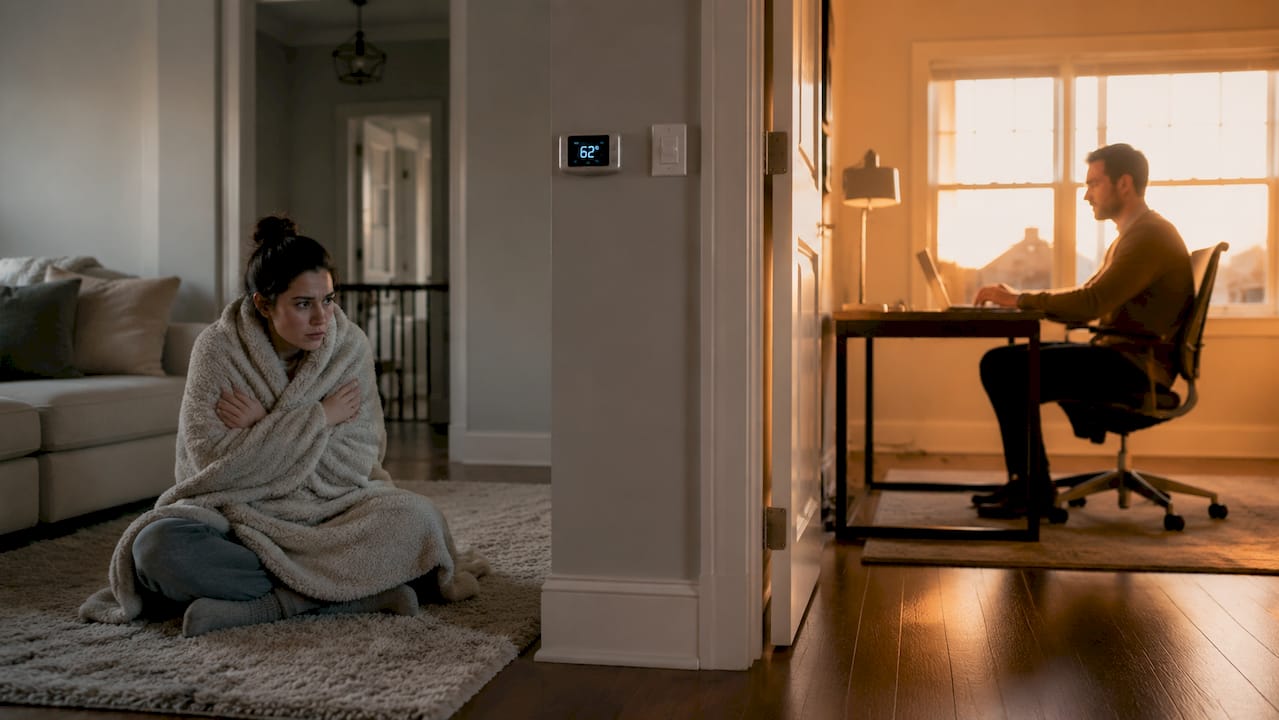
Air balancing experts emphasize that the problem is almost always about distribution, not equipment capacity. A correctly sized unit paired with poorly adjusted ductwork will still leave your back bedroom feeling like a sauna in July.
Pro Tip: If two rooms in your home feel noticeably different in temperature, that gap is your first clue. A temperature difference of 2°F or more between rooms is the standard industry threshold for confirming an airflow imbalance.
How unbalanced airflow damages your system
Unbalanced airflow does not just affect comfort. It creates pressure imbalances inside the duct system that strain every component downstream. When supply air cannot return to the air handler efficiently, static pressure rises. High static pressure forces the blower motor to work harder, shortening its lifespan. Over time, this strain translates into repair bills that dwarf the cost of a single balancing visit.
What are common air balancing techniques and tools?
Professional technicians use a specific set of tools and methods to measure and correct airflow. Understanding these methods helps you have a smarter conversation with any HVAC contractor you hire.
-
Flow hood measurement. A flow hood is placed over each supply and return register to measure the actual CFM delivered. The technician compares this reading to the system’s design specifications to identify which rooms are over- or under-supplied.
-
Manometer and static pressure testing. A manometer measures air pressure at different points in the duct system. High static pressure readings signal restrictions, leaks, or blocked return paths that need correction before damper adjustments will hold.
-
Damper adjustment. Dampers in duct branches are the primary tool for redirecting airflow. They sit inside the ductwork, usually near the air handler, and can be partially closed to reduce flow to over-supplied rooms. The challenge is that dampers are often hidden above ceilings or inside walls, and they can lose calibration as duct pressure changes over time.
-
Blower speed calibration. Modern variable-speed air handlers allow technicians to adjust the blower’s output to match the total CFM the duct system can handle. This step is often skipped during standard tune-ups but makes a significant difference in whole-home comfort.
-
Duct blaster testing. A duct blaster pressurizes the duct system to locate leaks. Sealing those leaks before balancing prevents conditioned air from escaping into unconditioned attic or crawl space.
Pro Tip: Never close more than 20% of your home’s registers to redirect airflow. Closing too many registers raises static pressure enough to freeze the evaporator coil and burn out the blower motor. Use damper adjustments instead.
The role of return air paths
Return air paths are as important as supply vents, and most homeowners overlook them entirely. When interior doors are closed, rooms with supply vents but no return vent become pressurized. Air stops flowing in because it has nowhere to go. Blocked return paths create pressure walls that stop airflow completely. Simple fixes include cutting a 1-inch door undercut, installing transfer grilles above doors, or adding a jump duct between rooms.
Zoning systems as an advanced solution
For larger homes or properties with multiple floors, HVAC zoning offers a more precise solution. Zoning divides the home into independently controlled sections, each with its own thermostat and motorized dampers. This eliminates the need to compromise between rooms with different heat loads, such as a sun-facing master bedroom versus a shaded north-facing office.
Signs your HVAC system needs air balancing
Most homeowners notice these symptoms for months before connecting them to an airflow problem. Recognizing them early saves money and prevents equipment damage.
- Uneven temperatures between rooms. A gap of 2°F or more between any two rooms in the same zone is the clearest sign of imbalance.
- Rooms that never reach the set temperature. If your thermostat reads 74°F but one bedroom stays at 78°F, the supply CFM to that room is too low.
- High energy bills without a clear cause. An unbalanced system runs longer to compensate for poor distribution, driving up electricity costs.
- Excessive dust in certain rooms. Poor return airflow allows particulates to settle instead of being filtered out.
- Noisy ductwork. Whistling or banging sounds often indicate high static pressure caused by blocked or restricted airflow paths.
Simple checks you can do yourself
Before calling a technician, run through these steps. They cost nothing and sometimes resolve minor imbalances on their own.
Check and replace your air filter first. A clogged filter is the single most common cause of restricted airflow and costs under $20 to fix. Next, walk through the home and confirm every supply and return register is fully open and unobstructed by furniture or rugs. Open all interior doors to allow return air to circulate freely. Finally, use a simple digital thermometer to record temperatures in each room at the same time of day. This data gives a technician a clear starting point if professional service is needed.
For guidance on uneven cooling fixes specific to Southwest Florida homes, the climate and construction type matter more than most guides acknowledge.
What does professional air balancing cost?
Knowing what to expect financially removes the hesitation many homeowners feel about calling a professional.
| Service | Typical Cost | What’s Included |
|---|---|---|
| Diagnostic visit | $80–$200 | Airflow testing, filter check, basic report |
| Full-home balancing | $300–$800 | Flow hood testing, damper adjustment, blower calibration, final verification |
| Duct sealing (add-on) | $300–$1,000+ | Mastic or aerosol sealing of leaks found during testing |
| Zoning system installation | $2,000–$4,500 | Motorized dampers, zone controllers, multiple thermostats |
Professional balancing costs range from $300 to $800 for a full-house service, with diagnostic visits running $80 to $200. System complexity, duct accessibility, and home size all affect the final price. A single-story 1,500-square-foot home in Cape Coral costs less to balance than a two-story 3,500-square-foot home with multiple air handlers.
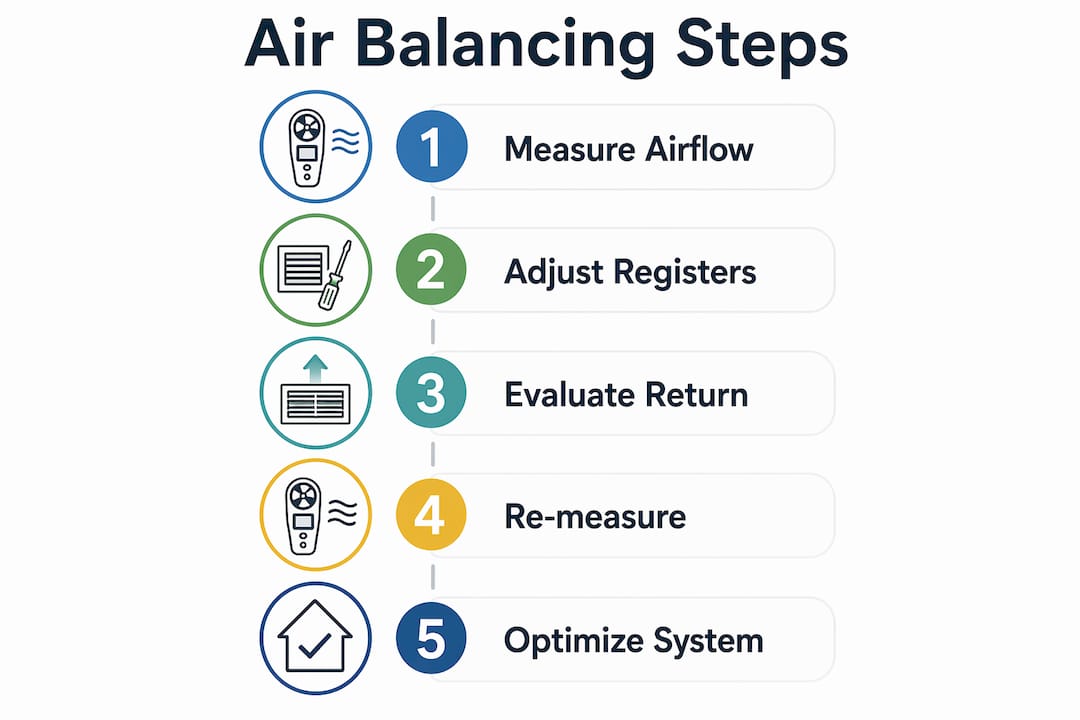
A qualified technician will follow a documented process: measuring airflow at every supply and return vent, checking static pressure, inspecting ductwork for leaks, adjusting dampers, calibrating blower speed, and verifying results within ASHRAE’s ±10% tolerance. Ask any contractor you hire to show you before-and-after CFM readings. That documentation proves the work was done correctly.
How air balancing improves efficiency and system life
The financial case for air balancing is straightforward. The U.S. Department of Energy estimates that typical residential ductwork loses 25%–40% of heating and cooling energy before it reaches living spaces. Professional balancing combined with duct sealing reduces that loss to 4%–5%. That is a dramatic recovery that shows up in lower monthly utility bills.
“Proper air balancing can extend system life by reducing strain and increase HVAC efficiency significantly, lowering energy consumption.” — HVAC Air Balancing Guide
Beyond energy savings, balanced airflow delivers these benefits:
- Longer equipment life. Reduced static pressure means the blower motor and compressor run within their designed parameters, extending service life by years.
- Better thermostat accuracy. When air reaches every room as designed, the thermostat reading actually reflects whole-home conditions rather than just the hallway where the sensor sits.
- Improved indoor air quality. Proper airflow keeps air moving through filters consistently, reducing dust, allergens, and humidity buildup in stagnant zones.
- More consistent comfort. Every room reaches and holds the set temperature, which matters especially in Florida’s long cooling season.
Balancing should be reevaluated after any major renovation, room addition, or equipment replacement. A new air handler or added square footage changes the entire pressure dynamic of the system.
Key takeaways
Air balancing is the most overlooked step in HVAC performance, yet it delivers some of the largest gains in comfort and efficiency available without replacing equipment.
| Point | Details |
|---|---|
| Air balancing definition | Adjusting HVAC airflow so every room receives the correct CFM for consistent temperature and efficiency. |
| Primary symptom | A temperature difference of 2°F or more between rooms confirms an airflow imbalance. |
| Register closure limit | Never close more than 20% of registers; excess closure causes coil freezing and motor failure. |
| Energy impact | Proper balancing and duct sealing reduces energy loss from 25%–40% down to 4%–5%. |
| Reevaluation triggers | Rebalance after renovations, room additions, or any HVAC equipment replacement. |
Why I think most homeowners solve the wrong problem
I have seen the same pattern repeat itself dozens of times. A homeowner complains that one room never cools down, and the first instinct is to buy a bigger unit. Oversized HVAC units actually make imbalance worse by delivering uneven airflow bursts that satisfy the thermostat before the far rooms ever reach temperature. The unit shuts off too soon, and the problem persists.
The real fix is almost always in the ductwork, not the equipment. I have watched a single damper adjustment transform a bedroom that had been uncomfortable for years. The homeowner had lived with it, assuming the layout of the house was just “the way it was.” It was not. It was a calibration problem with a $300 solution.
My honest advice: before you spend money on a new system, spend $150 on a diagnostic visit. Get the CFM readings. Look at where the air is actually going versus where it should go. That data will tell you whether you have a balancing problem, a duct leak, or a genuine equipment issue. Most of the time, it is the first two. For properties that have gone through renovations or equipment changes requiring rebalancing, this step is not optional. It is the difference between a system that works and one that just runs.
— albert
Get your home’s airflow professionally balanced by Ultraairswfl

If your home has rooms that never feel right no matter how you adjust the thermostat, the problem is almost certainly airflow distribution. Ultraairswfl serves homeowners and property managers across Naples, Cape Coral, and Fort Myers with professional HVAC diagnostics, duct sealing, damper adjustment, and zoning system installations. The team measures actual CFM at every vent, identifies exactly where your system is losing efficiency, and corrects it with documented before-and-after results. For commercial properties, the office HVAC installation guide covers balancing requirements for multi-zone commercial spaces. Residential clients can explore heating and cooling solutions or schedule a diagnostic visit directly. Stop guessing and start measuring.
FAQ
What is the air balancing definition in HVAC?
Air balancing is the process of testing and adjusting an HVAC system’s airflow so each room receives the correct volume of conditioned air, measured in cubic feet per minute (CFM). Technicians use flow hoods, manometers, and damper adjustments to match actual airflow to the system’s design specifications within ASHRAE’s ±10% tolerance.
How do I know if my home needs airflow balancing?
A temperature difference of 2°F or more between rooms is the primary indicator of an airflow imbalance. Other signs include rooms that never reach the set temperature, unusually high energy bills, and excessive dust accumulation in certain areas.
Can I balance my HVAC airflow myself?
You can take basic steps such as replacing the air filter, opening all registers, and keeping interior doors open to improve return air circulation. However, damper adjustments and CFM testing require specialized tools and professional training to avoid damaging the system.
How much does professional air balancing cost?
Professional air balancing typically costs $300–$800 for a full-home service, while diagnostic visits run $80–$200. Duct sealing and zoning system installations are additional services that may be recommended based on test results.
How often should air balancing be done?
Air balancing should be reevaluated after any major renovation, room addition, or HVAC equipment replacement. For most homes without significant changes, a professional check every three to five years keeps the system performing within its designed parameters.