
Air purification is the process of removing airborne contaminants from indoor spaces to protect your health and improve the quality of the air you breathe every day. The standard industry term for this process is indoor air filtration, and it covers everything from True HEPA mechanical filters to activated carbon systems that trap gases and odors. If you live in Southwest Florida, where humidity and outdoor allergens push indoors constantly, understanding how these systems work is the difference between guessing and making a smart decision for your home.
What is air purification and how does it work in your home?
Air purification works through a straightforward mechanical process. A fan inside the unit draws room air inward, forces it through one or more filter layers, and pushes the cleaned air back into the room. That cycle repeats continuously, gradually lowering the concentration of pollutants in the space.
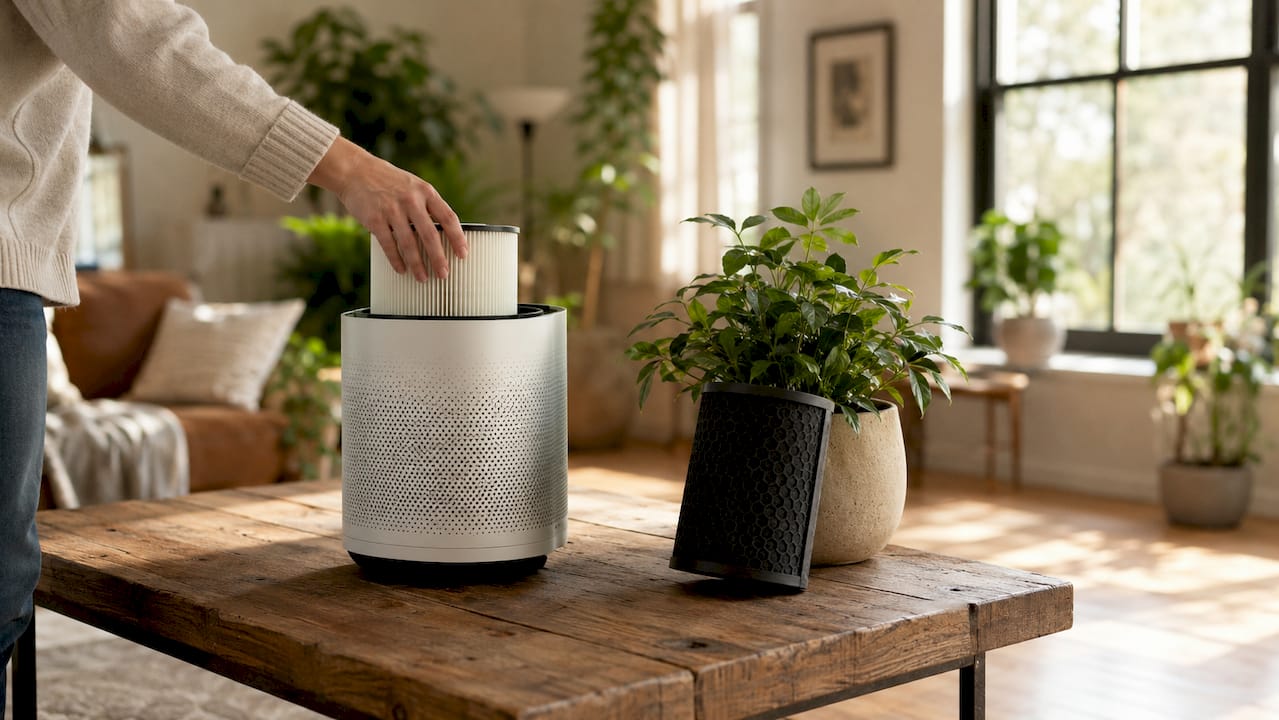
The two most important filter types are True HEPA and activated carbon. True HEPA filters capture solid particles: dust, pollen, pet dander, mold spores, and fine smoke particles. Activated carbon filters handle a completely different category, adsorbing gases, volatile organic compounds (VOCs), and odors through a chemical bonding process. Carbon filters must be replaced every three to six months because once the carbon is saturated, it stops working. A unit with only a True HEPA filter will not remove cooking smells or off-gassing from new furniture.
One thing air purifiers do not do is introduce fresh outdoor air or reduce carbon dioxide levels. Air purifiers recirculate indoor air through filters. If your home feels stuffy or CO2 is building up, that is a ventilation problem, and no purifier will fix it. Knowing this distinction saves you from buying a product expecting results it cannot deliver.
Here is what a typical air purifier targets:
- Particulates: Dust, pollen, pet dander, mold spores, and PM2.5 fine particles
- Biological contaminants: Bacteria and some viruses when combined with UV stages
- Gases and odors: Cooking fumes, VOCs, tobacco smoke (activated carbon required)
- Allergens: Dust mite debris, cockroach particles, and outdoor pollen carried indoors
Pro Tip: Run your air purifier on a medium or high setting for the first hour after cooking or cleaning, then drop it to low for continuous overnight operation. This targets peak pollution events without running the motor at full speed all day.
What are the proven benefits of air purifiers for homeowners?
The benefits of air purifiers are measurable, not just marketing claims. True HEPA purifiers reduce indoor PM2.5 concentrations by 25 to 56 percent in real homes when the unit is correctly sized for the room. That range matters: a unit that is too small for the space sits at the lower end, while a properly matched or slightly oversized unit reaches the higher end.
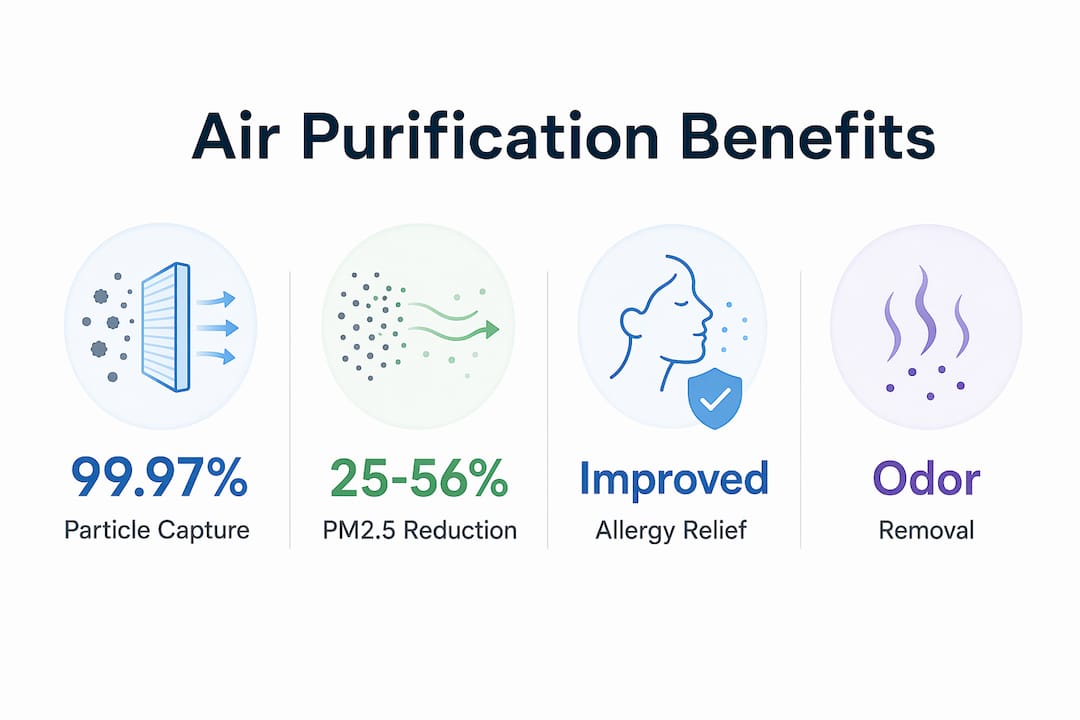
The American College of Allergy, Asthma and Immunology confirms that HEPA filters capture 99.97% of airborne particles at 0.3 microns, which is the most penetrating particle size. Particles at that size are too small for most standard HVAC filters to catch reliably. For households managing asthma or seasonal allergies, that level of filtration translates directly into fewer symptom flare-ups. You can find a detailed breakdown of how this connects to asthma management in this SWFL homeowner’s checklist.
The cognitive angle is newer and worth paying attention to. A study published in Scientific Reports found that HEPA purifier use improved cognitive performance in adults aged 40 and older by 12 percent after just one month, measured by faster completion times on a standardized cognitive test compared to a sham unit. The implication is that cleaner air does not just help your lungs. It helps your brain function better on a daily basis.
“Air purifiers are most effective when they are part of a broader indoor air quality strategy that includes source control and regular ventilation. Filtration alone cannot compensate for active pollution sources inside the home.”
That last point is the honest limitation. Air purifiers clean airborne particles only. Settled dust on shelves, mold growing behind a wall, or a gas stove producing combustion byproducts all require separate solutions. Purifiers are one layer of protection, not a complete fix.
Which air purification technologies should you trust or avoid?
Not all air purification systems are equal, and some actively cause harm. Here is a ranked breakdown of what the evidence actually supports.
- True HEPA (H13 grade): The gold standard for particulate removal. Certified True HEPA filters meet a specific performance threshold and are the most reliable technology for home use. Look for the H13 designation on the filter itself, not just the product box.
- Activated carbon combined with HEPA: The best combination for most homes. The HEPA layer handles particles while carbon handles gases and odors. Neither works as well without the other.
- UV-C light systems: Limited effectiveness when used alone. UV light can deactivate some biological contaminants, but only if the exposure time is long enough, which most consumer units do not achieve. UV works better as a supplement to HEPA, not a replacement.
- Ionizers: Ionizers release charged particles that attach to airborne pollutants, causing them to fall onto surfaces. The problem is that ionizers and ozone generators often emit ozone as a byproduct, which irritates the lungs and can worsen respiratory conditions. The California Air Resources Board has flagged multiple ionizer products for exceeding safe ozone thresholds.
- Ozone generators: Marketed as powerful air cleaners, ozone generators produce ozone at concentrations that are harmful to breathe. They are not appropriate for occupied living spaces under any circumstances.
Pro Tip: Before purchasing, search the product name alongside “CARB certified” to confirm it meets California’s strict ozone emission standards. California’s regulations are the toughest in the country, so CARB certification is a reliable safety signal regardless of where you live.
How to choose, size, and maintain an air purifier for real results
Choosing the right air purifier comes down to three factors: room size matching, filter type selection, and a realistic maintenance plan.
Matching CADR to your room
The Clean Air Delivery Rate (CADR) is the single most useful number on any air purifier’s spec sheet. It measures how much filtered air the unit delivers per minute. The CADR must meet or exceed the room’s square footage for meaningful air cleaning, and oversizing by 20 to 30 percent is advisable. A 300 square foot bedroom needs a CADR of at least 300, ideally 360 to 390. Buying a unit rated for 150 square feet and placing it in a 300 square foot room cuts its effectiveness roughly in half.
Filter replacement and ongoing costs
Consumer mistakes like neglecting filter replacement are the most common reason air purifiers underperform. A clogged HEPA filter restricts airflow and stops capturing particles efficiently. Annual filter replacement costs range from $20 to $100 depending on the brand and filter type. Carbon filters need replacement every three to six months, which adds to the budget. Factor these costs in before you buy.
| Feature | What to look for | Why it matters |
|---|---|---|
| CADR rating | Matches or exceeds room square footage | Determines actual cleaning speed |
| Filter type | True HEPA plus activated carbon | Covers both particles and gases |
| Filter replacement cost | $20 to $100 per year | Ongoing cost affects total value |
| Noise level | Below 50 dB on low setting | Allows overnight use without disruption |
| Certifications | CARB certified, Energy Star | Confirms safety and efficiency |
Placement and integration tips
- Place the unit in the room where you spend the most time, typically the bedroom
- Keep it away from walls and corners so air can circulate freely around the intake
- Close windows and doors while the purifier runs to prevent pulling in outdoor pollutants
- Combine purification with regular vacuuming using a HEPA-equipped vacuum to address settled dust
- For whole-home coverage, consider HVAC-integrated air quality solutions that filter air at the system level
Air purifiers work best as part of a broader strategy that includes source control and ventilation. Removing the source of pollution, whether that is a moldy bathroom, a gas range without a hood, or a pet sleeping on the bed, always outperforms trying to filter your way around it.
Key takeaways
Air purification delivers measurable health benefits when you choose the right technology, size it correctly, and maintain it consistently.
| Point | Details |
|---|---|
| True HEPA is the standard | Only True HEPA (H13) reliably captures 99.97% of particles at 0.3 microns. |
| CADR must match room size | Oversize by 20 to 30% for meaningful PM2.5 reduction of up to 56%. |
| Carbon filters handle gases | HEPA alone does not remove VOCs or odors; activated carbon is required. |
| Ionizers and ozone units carry risk | These technologies can emit harmful ozone and are not recommended for occupied homes. |
| Maintenance determines performance | Replace HEPA filters annually and carbon filters every three to six months. |
Why I think most people buy the wrong air purifier
I have seen the same pattern repeat with homeowners across Southwest Florida. They buy a sleek unit with impressive marketing language, place it in the corner of a large open living room, and wonder why their allergies are still flaring up in week three. The unit is usually undersized, often an ionizer or a hybrid with no real HEPA certification, and the filter has never been checked.
The honest truth is that the air purifier market is full of products that look credible but perform poorly. Ozone-emitting ionizers are still sold in major retail stores without clear warnings. UV-only units get positioned as high-tech solutions when the science on standalone UV for home use is thin at best. Consumers are left navigating marketing claims without a clear framework.
My recommendation is simple: start with a certified True HEPA unit rated for your actual room size, add activated carbon if you cook frequently or have pets, and set a calendar reminder for filter replacement. That combination, paired with good ventilation and regular cleaning, outperforms any expensive gadget promising to do it all. For homeowners in Naples, Cape Coral, or Fort Myers, the humidity and outdoor allergen load make this even more pressing. Getting this right is not complicated. It just requires ignoring the noise and focusing on what the evidence actually shows.
— albert
How Ultraairswfl can help you breathe cleaner air at home
Ultraairswfl works with homeowners across Naples, Cape Coral, and Fort Myers to assess indoor air quality and recommend the right filtration solutions for each home’s specific needs. Whether you need a standalone True HEPA unit for a bedroom, a whole-home filtration upgrade integrated with your existing HVAC system, or a professional air quality assessment, the team at Ultraairswfl brings the technical knowledge to match the right system to your space. Explore the full range of indoor air quality services or contact Ultraairswfl directly to schedule an in-home consultation and get a tailored recommendation backed by real HVAC expertise.
FAQ
What is air purification in simple terms?
Air purification is the process of removing dust, allergens, gases, and other contaminants from indoor air using filters or other technologies. The goal is to reduce your exposure to airborne pollutants that affect your health and comfort.
How does a True HEPA filter differ from a standard filter?
True HEPA filters capture 99.97% of particles at 0.3 microns, including fine dust, pollen, and pet dander that standard HVAC filters miss. The H13 certification confirms the filter meets this specific performance threshold.
Do air purifiers help with allergies and asthma?
Yes. Correctly sized True HEPA air purifiers reduce indoor PM2.5 concentrations by 25 to 56 percent, which directly lowers allergen exposure. Clinical evidence supports improvements in allergy and asthma symptoms with consistent use.
Can an air purifier remove odors and cooking smells?
A True HEPA filter alone cannot remove odors or gases. You need an activated carbon filter in combination with HEPA to adsorb VOCs, cooking fumes, and pet odors effectively.
How often do air purifier filters need to be replaced?
HEPA filters typically need replacement once a year, while activated carbon filters require replacement every three to six months. Skipping replacements reduces the unit’s effectiveness significantly and can restrict airflow through the system.