
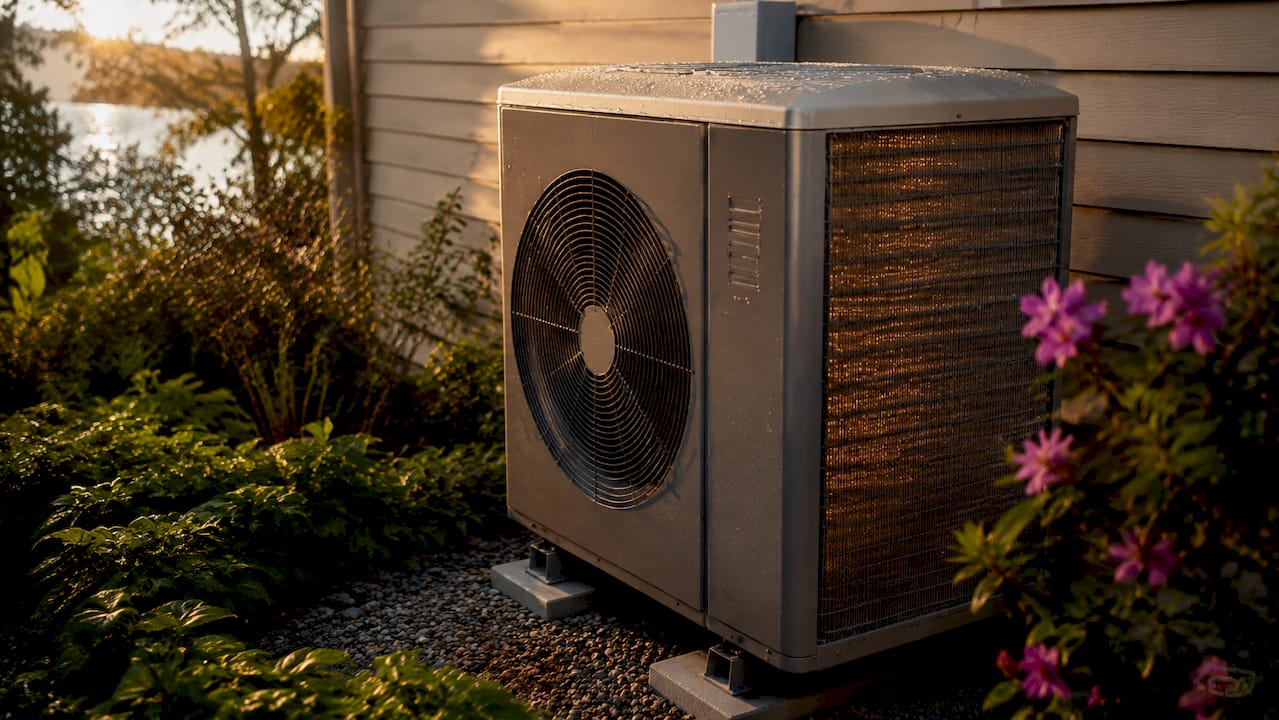
A heat pump is defined as a climate control system that moves heat from one place to another rather than generating it, making the role of heat pumps in cooling one of the most energy-efficient approaches available to homeowners today. During summer, a heat pump extracts heat from your indoor air and transfers it outside, dropping your interior temperature without burning fuel to create cold air. This is the same principle used by your refrigerator, scaled up to handle an entire home. Natural Resources Canada and American Standard both confirm that modern heat pump cooling systems deliver performance comparable to dedicated central air conditioners, while also handling your winter heating needs from a single unit.
How do heat pumps work in cooling mode?
Heat pumps don’t create cooling. They move heat outdoors using a reversible refrigeration cycle, which is the core mechanic that separates them from a standard furnace-and-AC setup. A component called a reversing valve switches the direction of refrigerant flow, turning the system from a heater into a cooler with no additional hardware required.
Here is how the cooling cycle runs step by step:
- Warm indoor air passes over the indoor coil, which contains cold refrigerant. The refrigerant absorbs the heat from the air.
- The refrigerant carries that absorbed heat to the compressor, which pressurizes it and raises its temperature further.
- The hot refrigerant moves to the outdoor coil, where a fan blows outdoor air across it. The heat releases into the outside air.
- The refrigerant cools back down, expands through the expansion valve, and returns indoors to repeat the cycle.
- As a bonus, the indoor coil also pulls moisture from the air as it cools, reducing humidity alongside temperature.
Air-source heat pumps, the most common type in Southwest Florida homes, use outdoor air as the heat sink. Ground-source heat pumps, sometimes called geothermal systems, exchange heat with the earth instead, which stays at a more stable temperature year-round. Ground-source units tend to run at higher efficiency in extreme heat, though their installation cost is significantly higher.
Pro Tip: If your home already has central ductwork, an air-source heat pump can replace both your AC and furnace without major renovation, using the existing duct system for delivery.
What are the benefits of heat pump cooling vs. traditional air conditioners?
The most direct comparison between heat pumps and central air conditioners comes down to efficiency ratings and system versatility. American Standard reports that comparable heat pump and AC models carry SEER2 ratings of roughly 22.4 and 23.6 respectively. That gap is small enough that cooling performance is functionally identical for most homeowners, while the heat pump adds full heating capability.
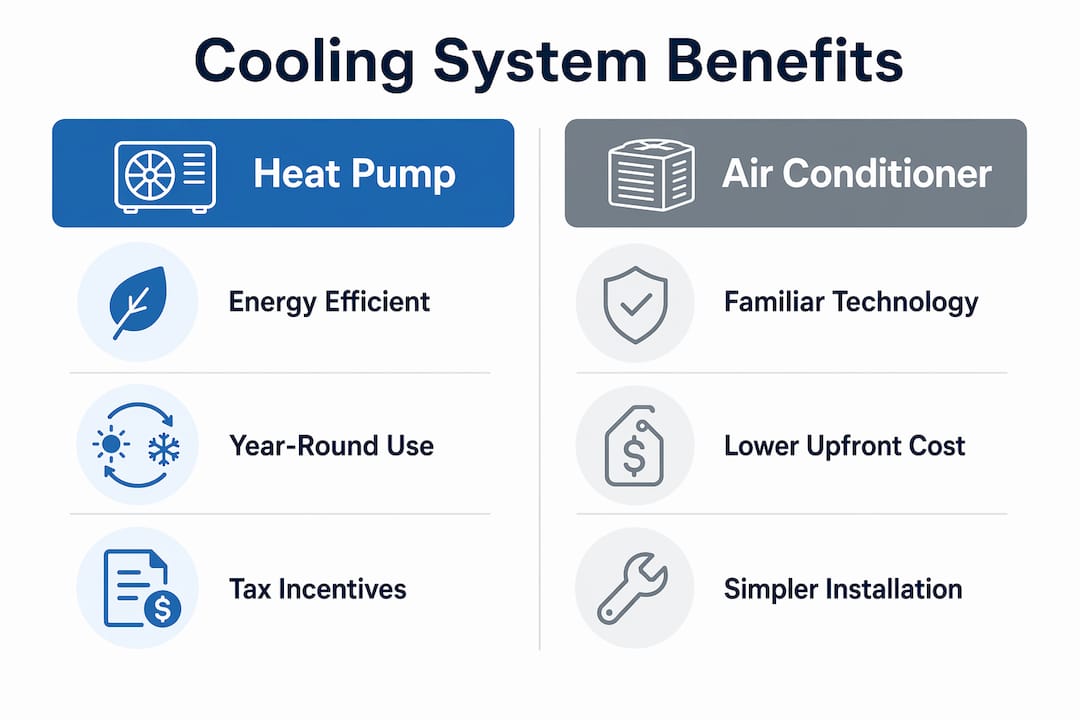
The real financial advantage shows up over time. Because a heat pump transfers heat rather than burning gas or resistance-heating air, it uses less electricity per unit of comfort delivered. That efficiency translates directly to lower monthly utility bills, especially in climates like Southwest Florida where cooling runs for eight or more months per year.
Here is a side-by-side look at how the two systems compare across the factors that matter most to homeowners and property managers:
| Factor | Heat pump | Central AC only |
|---|---|---|
| Cooling efficiency (SEER2) | ~22.4 | ~23.6 |
| Heating capability | Yes, year-round | No, separate system needed |
| Equipment footprint | One outdoor unit | Outdoor unit plus furnace |
| Humidity control | Yes, especially with variable-speed | Yes, standard |
| Federal tax incentives | Up to 30% via IRA credits | Limited |
| Best climate fit | Mild to hot, with hybrid option for cold | Any climate |
Tax incentives deserve a specific mention. The Inflation Reduction Act provides credits of up to 30% on qualifying heat pump installations, which meaningfully reduces upfront cost. That policy shift has accelerated adoption across the Sun Belt, where cooling demand is highest.
Pro Tip: Check your energy-efficient cooling options before buying. Choosing the right SEER2-rated model impacts your comfort as much as the technology itself, so match the rating to your local climate and home size.
What advanced features improve heat pump cooling performance?
Modern heat pump cooling solutions have moved well beyond the single-speed systems of a decade ago. The features below represent the current standard in quality residential equipment, and each one has a measurable effect on comfort and operating cost.
- Variable-speed compressors. Variable-speed technology allows the system to run at partial capacity most of the time, matching actual cooling demand instead of cycling on and off at full power. The result is steadier temperatures, lower noise, and better humidity removal.
- Variable-speed air handlers. The indoor fan adjusts its speed to match the compressor, which keeps airflow consistent and prevents the temperature swings common with single-speed systems.
- Enhanced dehumidification modes. Several manufacturers, including Carrier and Lennox, offer dedicated dehumidification settings that slow the airflow across the indoor coil, pulling more moisture from the air without over-cooling the space.
- Zone control compatibility. Ducted heat pumps pair with HVAC zoning systems to deliver different temperatures to different areas of a home simultaneously, which is particularly useful in multi-story properties or homes with large open-plan areas.
- Ductless mini-split configurations. Homes without existing ductwork can use multi-zone mini-split heat pumps, where a single outdoor unit connects to multiple indoor air handlers in different rooms. Each room gets independent temperature control.
- Quiet operation. Variable-speed outdoor units typically run at 55 to 60 decibels at low capacity, which is quieter than a normal conversation. That matters in bedroom areas and for properties with close neighbors.
The combination of variable-speed operation and zone control is where the biggest efficiency gains appear. A system that runs continuously at 40% capacity uses far less electricity than one that blasts at 100% for ten minutes and then shuts off, even if the total cooling output is the same.
How do climate and home factors shape heat pump cooling?
The role of heat pumps in cooling is consistent across climates, but the full system design depends heavily on where you live and how your home is built. Heat pumps remain effective for cooling in virtually all U.S. climates. The cold-weather limitation that gets discussed in the media applies only to heating mode in extreme winter temperatures, not to summer cooling.
For homeowners in cold northern states, a dual-fuel or hybrid setup pairs a heat pump with a gas furnace. The heat pump handles cooling all summer and heating down to about 35°F, then the furnace takes over during deep freezes. In Southwest Florida, that hybrid setup is unnecessary. The heat pump handles both seasons without backup.
“Before installing a ducted heat pump, have a contractor assess your existing ductwork. Leaky or undersized ducts can reduce cooling delivery by 20 to 30 percent, turning a high-efficiency system into a mediocre one.” The Switch Is On makes this point directly: duct sealing and sizing is one of the most overlooked steps in a heat pump upgrade.
For homes without ducts, ductless mini-splits are the practical answer. They require only a small hole in the wall for the refrigerant line and can be installed in a single day per zone. Property managers overseeing multi-unit buildings often find mini-splits easier to manage because each unit operates independently, so one system failure does not affect the whole building.
Smart home integration adds another layer of efficiency. Pairing a heat pump with a smart thermostat like Ecobee or Google Nest allows the system to pre-cool the home during off-peak electricity hours and coast through peak-rate periods. Researchers have also demonstrated that coupling heat pumps with thermal storage reduces peak cooling power demand significantly, which lowers both utility bills and grid strain. That technology is moving from commercial buildings into high-end residential installations now.
For anyone planning a retrofit or new installation, the Cape Coral installation guide from Ultraairswfl covers local sizing considerations and permit requirements in detail.
Key takeaways
Heat pumps cool a home by extracting indoor heat and rejecting it outside, delivering efficiency and year-round comfort that a standalone air conditioner cannot match.
| Point | Details |
|---|---|
| Core cooling function | Heat pumps transfer heat outdoors rather than generating cold, making them inherently efficient. |
| Comparable efficiency to AC | SEER2 ratings for heat pumps and central AC are nearly identical, with heat pumps adding heating capability. |
| Variable-speed advantage | Variable-speed compressors maintain steadier temperatures and remove more humidity than single-speed units. |
| Ductwork matters | Leaky or undersized ducts undermine cooling delivery; assess and seal before installation. |
| Climate flexibility | Heat pumps cool effectively in all U.S. climates; cold-weather limitations apply only to heating mode. |
Why heat pumps are the smarter long-term cooling choice
I have spent years watching homeowners in Southwest Florida replace aging AC units with identical models, then wonder why their bills keep climbing. The honest answer is that a straight AC replacement is a missed opportunity. Every time you swap out a cooling-only system, you are locking in another decade of paying separately for heating and cooling when one system could handle both at lower total cost.
What changed my thinking on heat pumps was watching variable-speed technology mature. Early heat pumps had a reputation for inconsistent comfort, and that reputation was partly earned. Today’s systems from manufacturers like Carrier, Trane, and Mitsubishi Electric hold room temperature within half a degree of the setpoint and run so quietly that homeowners forget the system is on. That is a fundamentally different experience from the old on-off cycling of a single-speed unit.
The one area where I see homeowners make avoidable mistakes is skipping the energy audit before installation. A heat pump in a poorly insulated home with leaky ducts will underperform regardless of its SEER2 rating. Get the building envelope right first. Seal the ducts, add attic insulation if needed, and then size the heat pump to the actual load. That sequence produces the results the marketing materials promise.
The market is moving in one direction. Federal incentives, rising gas prices, and improving technology all favor heat pumps over conventional systems. Homeowners who make the switch now lock in lower operating costs and a system that qualifies for tax credits. Those who wait will pay more for the same outcome later.
— albert
Ready to upgrade your home’s cooling system?
If you are weighing a heat pump installation or want to know whether your current setup is leaving efficiency on the table, Ultraairswfl serves homeowners and property managers across Naples, Cape Coral, and Fort Myers with professional assessments and full installation services.
The team at Ultraairswfl sizes systems to your actual home load, evaluates existing ductwork, and handles permits so you do not have to. Whether you need a ducted whole-home system or a ductless mini-split for a specific zone, the right solution starts with an honest assessment. Visit the heating solutions page to explore options, or use the HVAC upgrade guide to understand what a full system replacement involves before you call.
FAQ
Can a heat pump fully replace a central air conditioner?
Yes. A whole-house heat pump replaces both central AC and furnace heating using existing ductwork, delivering comparable cooling performance with the added benefit of year-round climate control from one system.
How efficient is a heat pump for cooling compared to AC?
SEER2 ratings for heat pumps run around 22.4, compared to roughly 23.6 for a comparable central AC unit. The difference in real-world cooling cost is minimal, while the heat pump covers heating as well.
Do heat pumps work well in hot climates like Florida?
Heat pumps are highly effective for cooling in hot climates. The cold-weather performance limitation applies only to heating mode in extreme winter temperatures, which is not a factor in Southwest Florida.
What is the benefit of a variable-speed heat pump for cooling?
Variable-speed compressors run at partial capacity to match actual demand, which produces steadier temperatures, quieter operation, and better humidity removal than single-speed systems cycling on and off.
Do I need to replace my ductwork when installing a heat pump?
Not always, but a contractor should inspect and seal existing ducts before installation. Proper duct sealing and sizing is critical to getting full cooling efficiency from the new system.