

UV-C germicidal irradiation is the technology behind UV lights in HVAC systems, using a specific wavelength of ultraviolet light to destroy the DNA and RNA of mold, bacteria, and viruses before they circulate through your home. For homeowners in Naples, Cape Coral, and Fort Myers, where humidity rarely lets up, this matters more than in most parts of the country. Southwest Florida’s climate creates near-perfect conditions for microbial growth inside air handlers and on evaporator coils. Understanding the role of UV lights in HVAC systems gives you a direct path to cleaner air, lower energy bills, and a longer-lasting system.
How do UV lights work in HVAC systems to improve indoor air quality?
UV-C light disrupts microorganisms’ DNA and RNA inside HVAC units, preventing microbial reproduction and stopping pathogens from spreading through conditioned air. This is not filtration. Traditional air filters trap particles mechanically, but they do nothing to neutralize living organisms that pass through or grow on wet surfaces inside the unit. UV-C kills at the source.
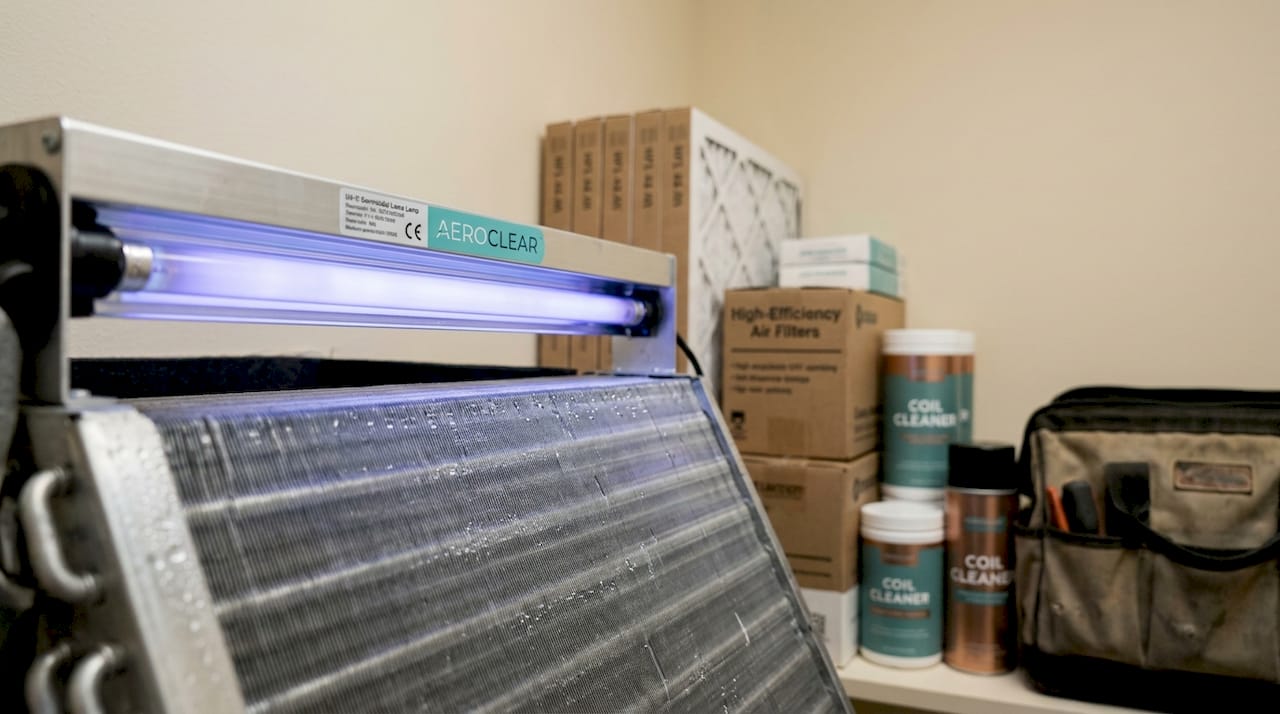
The most effective placement for UV lamps is near the evaporator coil, drain pan, and air handler. These are the wettest, darkest parts of your HVAC system and the areas most prone to mold and bacterial biofilm. When UV-C lamps shine continuously on these surfaces, microbial colonies cannot establish themselves.
Here is what UV-C targets inside your system:
- Mold spores that colonize coil fins and drain pans in humid conditions
- Bacteria including Legionella and other airborne pathogens
- Viruses circulating through ductwork during air distribution cycles
- Allergens produced by microbial activity, including VOCs and mycotoxins
- Biofilm that builds up on wet surfaces and degrades heat-transfer efficiency
UV-C does not replace your air filter. It works alongside filtration to address what filters cannot: living organisms that grow on surfaces and reproduce between filter changes.
Pro Tip: Ask your HVAC technician to show you exactly where the UV lamp is positioned relative to the evaporator coil. Line-of-sight exposure to the coil surface is what makes the difference between a lamp that works and one that just glows.
What are the main types of UV lights for HVAC systems?
Three distinct UV-C applications exist for residential and commercial HVAC use, and they serve different purposes. Choosing the right one depends on your goals, your home’s layout, and your budget.
| UV-C Type | Primary Target | Best Use Case | Approximate Cost |
|---|---|---|---|
| Coil sterilization UV | Evaporator coil and drain pan surfaces | Preventing biofilm, mold, and efficiency loss | $200 to $400 installed |
| Air-stream UV | Airborne pathogens in circulating air | Reducing viruses and bacteria in living spaces | $300 to $700 installed |
| Upper-room UV-C | Ceiling-level air disinfection zone | Occupied commercial or large residential spaces | Varies by system size |
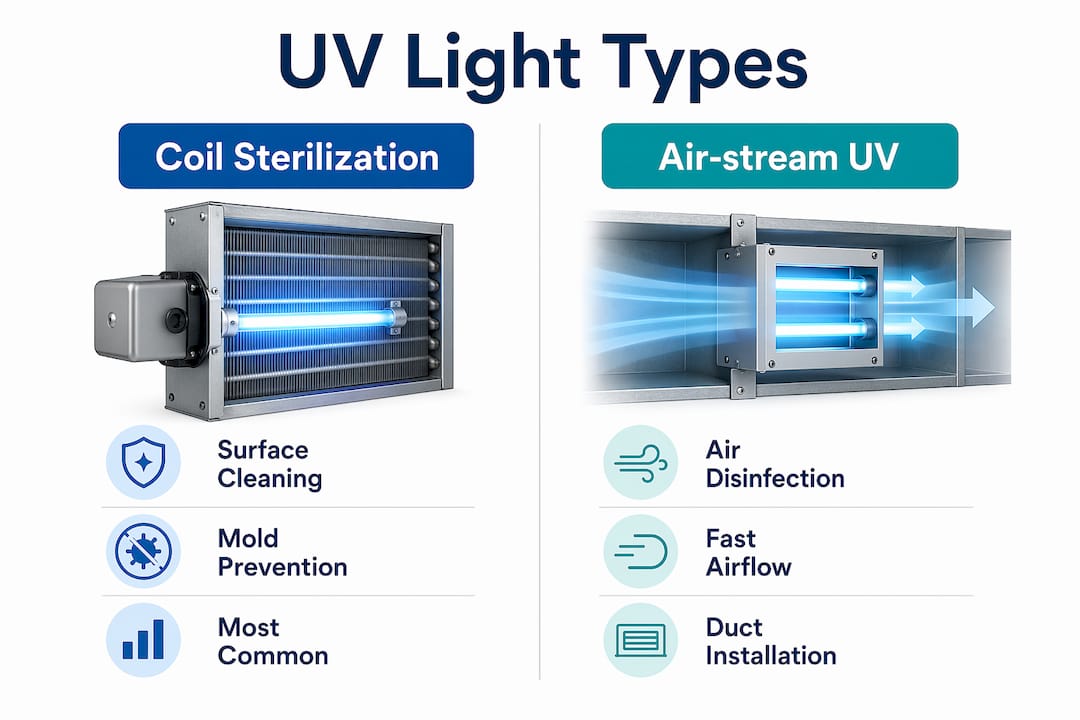
Coil sterilization UV is the most common residential choice in Florida. The lamp mounts inside the air handler and shines continuously on the coil and drain pan. UV-C coil systems neutralize microorganisms on coils and drain pans, preserving heat-transfer efficiency and extending equipment life. In a humid climate, this is the single highest-value UV application you can add.
Air-stream UV systems mount in the ductwork and irradiate air as it passes through. Because air moves quickly, these systems require higher-intensity lamps to deliver an effective germicidal dose. They are better suited for homes where occupants have respiratory sensitivities or where airborne pathogen control is a priority beyond surface sterilization.
Upper-room UV-C creates a germicidal irradiance zone near the ceiling for continuous airborne pathogen inactivation without exposing occupants. Recommended irradiance targets run between 30 and 50 µW/cm² for effective disinfection in occupied spaces. This approach is more common in schools, clinics, and large open-plan homes than in standard single-family residences.
UV-C installation costs range from approximately $200 to $700, varying by system type and complexity. That range reflects real differences in lamp intensity, mounting hardware, and labor. A coil UV system in a standard air handler costs less than a dual-lamp air-stream setup in a large home.
Pro Tip: If your primary concern is mold on coils and musty odors, a coil sterilization UV system is the most cost-effective starting point. If you want whole-home pathogen reduction, pair it with an air-stream unit in the return duct.
What UV light benefits does HVAC get in humid Southwest Florida?
Southwest Florida’s combination of heat, moisture, and year-round AC use creates conditions that accelerate microbial growth inside HVAC systems faster than in most U.S. climates. Your system runs almost continuously from April through October, keeping the evaporator coil perpetually wet. Without UV-C, that coil becomes a breeding ground.
The specific advantages UV lights deliver in this environment include:
- Mold prevention on coils and drain pans. UV-C coil sterilization is highly valuable in humid climates to maintain HVAC efficiency by deferring costly maintenance cycles. A clean coil transfers heat the way it was designed to, while a biofilm-coated coil forces your compressor to work harder.
- Energy savings from cleaner coils. Cleaner coils promote better airflow and require less energy to maintain temperature control. In a home where the AC runs 10 to 12 hours a day, even a modest efficiency gain adds up across a full cooling season.
- Odor elimination. That musty smell common in Florida homes during summer is almost always microbial. UV-C eliminates the organisms producing it, not just the odor itself.
- Reduced allergen load. Mold spores and bacterial byproducts are among the most common indoor allergens in Southwest Florida. Continuous UV exposure keeps their concentrations lower between filter changes.
- Equipment longevity. Biofilm buildup accelerates corrosion on aluminum coil fins. UV-C keeps fins cleaner, which extends the service life of your air handler and delays expensive coil replacements.
For property managers overseeing multiple units in Naples or Fort Myers, these benefits compound. Fewer emergency service calls, lower energy costs per unit, and reduced tenant complaints about air quality all trace back to a single UV lamp running continuously inside each air handler. You can also explore preventing mold in HVAC ducts as a complementary strategy for full-system protection.
How should you install and maintain UV lights in your HVAC system?
Getting UV-C right is not a DIY project. Proper UV-C performance depends on lamp geometry, line-of-sight exposure, and adequate airflow speed through the irradiated zone. A misaligned lamp can reduce disinfection effectiveness significantly, which means you pay for a system that underperforms.
Follow this sequence for a successful installation and ongoing maintenance:
- Schedule a professional assessment. A qualified HVAC technician evaluates your air handler size, coil position, and airflow characteristics before selecting the right lamp type and wattage.
- Start with a coil cleaning. Continuous UV exposure is most valuable after an initial cleaning removes existing heavy microbial growth on coils and drain pans. Installing UV over a heavily fouled coil wastes lamp energy on organic buildup rather than active disinfection.
- Verify lamp placement and shielding. The technician should confirm the lamp has direct line-of-sight to the coil surface and that any UV-transparent quartz sleeve is properly seated to protect the lamp from moisture.
- Run the lamp continuously. UV lights should operate continuously to control microbial growth effectively. Turning them off allows regrowth to begin within days in a humid Florida environment.
- Replace lamps on schedule. Most UV-C lamps lose significant germicidal output after 9,000 to 12,000 hours of operation, roughly one to two years depending on run time. The lamp may still glow but no longer deliver an effective UV dose.
- Clean the quartz sleeve annually. Dust and residue on the sleeve block UV output. A quick wipe during your annual HVAC tune-up keeps output at rated levels.
- Request irradiance documentation. Ask your technician to record the lamp model, placement measurements, and installation date. This creates a maintenance baseline and confirms the system was installed to specification.
For homeowners weighing the full cost picture, the 2026 UV light installation guide for Cape Coral breaks down pricing by system type and what to expect from a professional installation in Southwest Florida.
Pro Tip: Set a calendar reminder for lamp replacement at the 12-month mark. The lamp will still appear to work, but UV-C output degrades well before the bulb burns out. Replacing on schedule is the only way to guarantee continuous protection.
Key takeaways
UV-C germicidal irradiation works in HVAC systems by targeting microbial DNA at the source, making it the most direct tool available for improving indoor air quality and protecting system efficiency in humid climates.
| Point | Details |
|---|---|
| UV-C targets the source | UV light destroys microbial DNA on coils and in airflow, not just trapping particles like filters do. |
| Coil UV is the top Florida choice | Coil sterilization UV prevents biofilm buildup that degrades heat transfer in high-humidity environments. |
| Run it continuously | Turning UV lights off allows rapid microbial regrowth, eliminating the protection you paid for. |
| Installation quality determines results | Lamp placement and line-of-sight to the coil surface directly control how effective the system is. |
| Annual lamp replacement is non-negotiable | UV-C output degrades before the bulb fails visually, so scheduled replacement maintains germicidal effectiveness. |
Why UV lights are the most underutilized HVAC upgrade in Southwest Florida
After years of working with homeowners across Naples, Cape Coral, and Fort Myers, I have seen the same pattern repeatedly. Homeowners invest in high-MERV filters, programmable thermostats, and duct sealing, and then wonder why their home still smells musty in August or why their energy bills keep climbing. The answer is almost always the coil.
The evaporator coil in a Florida home is wet for most of the year. No filter addresses what grows on that surface between service visits. UV-C does. What surprises most homeowners is how quickly the results show up. Within a few weeks of a properly installed coil UV system, the musty odor that seemed like a permanent feature of summer disappears.
The misconception I hear most often is that UV lights are a luxury add-on for people who are overly concerned about air quality. That framing gets it backwards. In a climate where your AC runs nearly year-round, UV-C is maintenance infrastructure. It keeps the most expensive component in your system clean between the visits you are already paying for.
UV germicidal lights for SWFL homes are worth the investment when installed correctly and maintained on schedule. The technology is not new, but the application in residential HVAC has matured significantly. Modern coil UV systems are reliable, low-maintenance, and sized for standard residential air handlers. The question is not whether they work. The question is whether your installation was done right.
— albert
Improve your home’s air quality with Ultraairswfl
Ultraairswfl installs and services UV-C germicidal systems across Naples, Cape Coral, and Fort Myers, with technicians who understand exactly how Southwest Florida’s humidity affects your HVAC equipment. Every installation includes proper lamp placement verification, coil condition assessment, and documentation so you know the system is performing as designed.
Whether you are dealing with musty odors, rising energy bills, or concerns about airborne pathogens, Ultraairswfl’s indoor air quality services cover the full range of UV-C solutions for residential and commercial properties. Contact Ultraairswfl today to schedule an assessment and find out which UV system fits your home and budget.
FAQ
What does UV-C light actually do inside an HVAC system?
UV-C light destroys the DNA and RNA of mold, bacteria, and viruses on coil surfaces and in circulating air, preventing microbial reproduction. It works continuously as long as the lamp is running, targeting organisms that standard air filters cannot neutralize.
Are UV lights worth it for HVAC systems in Florida?
Yes, particularly for coil sterilization. Florida’s year-round humidity accelerates biofilm growth on evaporator coils, which reduces efficiency and causes odors. UV-C keeps coils cleaner between service visits, lowering energy use and extending equipment life.
How often do HVAC UV lamps need to be replaced?
Most UV-C lamps should be replaced every 9,000 to 12,000 hours of operation, which typically means once every one to two years. The lamp may continue to glow after this point, but germicidal output drops below effective levels.
Can I install a UV light in my HVAC system myself?
Professional installation is strongly recommended. Lamp placement relative to the coil, line-of-sight geometry, and proper shielding all affect performance. A misaligned lamp delivers significantly less disinfection than a correctly installed one.
Do UV lights replace air filters in HVAC systems?
No. UV-C and air filters serve different functions. Filters capture airborne particles mechanically, while UV-C neutralizes living organisms on surfaces and in airflow. The two technologies work best together, not as substitutes for each other.