
Most homeowners and renters spend a lot of time thinking about their HVAC system itself but very little time thinking about the accessories that make it perform well. The result? Filters that go unchanged for months, humidity that makes 72°F feel like 80°F, and systems that work twice as hard as they need to. Getting the right must-have HVAC accessories in place is one of the most cost-effective ways to improve your indoor air quality, extend your system’s life, and stay comfortable year-round without calling for service every season.
Table of Contents
- Key takeaways
- How to choose must-have HVAC accessories
- 1. Properly fitted air filters
- 2. Whole-room dehumidifiers
- 3. Humidifiers for dry climates or winter heating
- 4. Smart thermostat with filter change reminders
- 5. Outdoor condenser maintenance kit
- 6. Coil fin comb
- 7. Filter subscription or a stock of replacement filters
- 8. Carbon monoxide and air quality monitors
- Comparing the impact of each accessory
- Choosing accessories for your specific home
- My honest take on HVAC accessories after years in the field
- How Ultraairswfl can help you get this right
- FAQ
Key takeaways
| Point | Details |
|---|---|
| Filter fit beats filter type | A filter sealed flush on all sides does more for air quality than a premium filter with gaps around the edges. |
| Humidity control is not optional | Pairing filtration with a dehumidifier or humidifier fills the comfort gap that filters alone cannot close. |
| Reminders need manual resets | Smart thermostat filter alerts are estimates and must be reset manually after each filter change to stay accurate. |
| Match accessories to your home | Pet owners, allergy sufferers, and large-home occupants need shorter filter intervals and larger humidity control units. |
| DIY and professional care work together | Basic maintenance accessories handle routine upkeep, but professional service catches what DIY misses. |
How to choose must-have HVAC accessories
Before you buy anything, it helps to have a framework. The HVAC accessories market is full of products that sound useful but only matter if they fit your system, your home size, and your actual habits.
Here are the criteria that matter most:
- Filter compatibility and fit. Your filter must match the exact dimensions of your system’s filter slot and sit flush with no air gaps on any side. A filter must be sealed on all sides to prevent air bypass, which degrades air quality and puts extra wear on the system. This is the single most important criterion and the most commonly ignored one.
- Maintenance schedule alignment. Choose accessories you will actually maintain on schedule. Fiberglass filters need replacement roughly every 30 days, while pleated filters last 60 to 90 days and thicker media filters can go 6 to 12 months depending on conditions.
- Humidity control needs. If your home runs dry in winter or humid in summer, a filter alone will not fix how the air feels. Humidity accessories are not a luxury upgrade. They are part of the baseline comfort equation.
- Home size and layout. A dehumidifier sized for 300 square feet will be useless in a 1,200-square-foot open floor plan. Match the unit’s capacity to the actual space.
- Ease of use and reminders. If you have a busy schedule or you rent, choose accessories with clear maintenance cues so nothing slips through the cracks.
Pro Tip: Before purchasing any HVAC accessory, pull out your system’s manual or check the filter slot dimensions with a tape measure. Buying the wrong size is the fastest way to waste money and damage air quality.
1. Properly fitted air filters
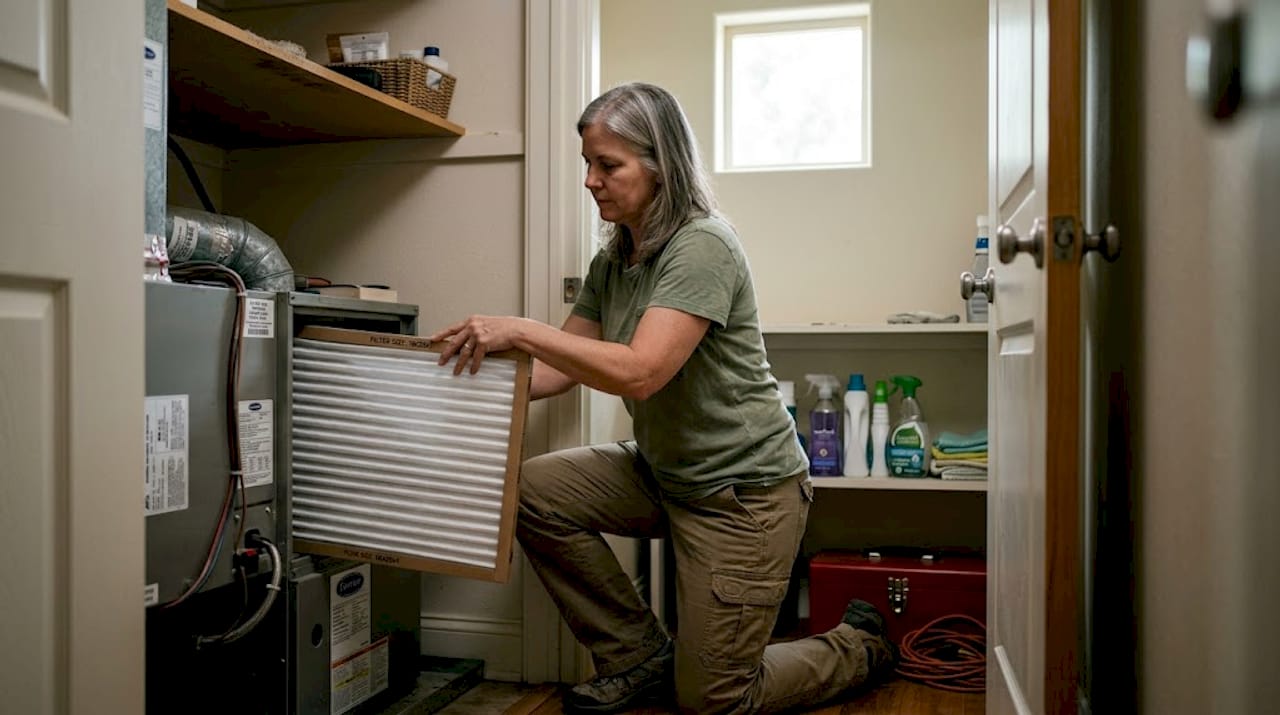
The air filter is the most fundamental of all the must-have cooling equipment and heating accessories you will ever buy. It protects the blower, the coil, and your lungs. But the type of filter matters far less than most people think. What matters is fit.
Replacing a dirty filter improves your system’s energy efficiency by 5 to 15%, reducing strain on the blower motor caused by restricted airflow. That is a meaningful return for a $10 to $30 purchase made every one to three months. The real role of HVAC filtration is protecting airflow and system components first, and improving air quality second. Understanding that priority helps you choose the right filter for your situation.
Pro Tip: After installing a new filter, run your hand along all four edges of the filter slot while the system is running. If you feel air movement, the filter is not sealed. Fix it before walking away.
2. Whole-room dehumidifiers
In humid climates, including most of Southwest Florida, a dehumidifier is not optional equipment. It is essential HVAC equipment that works alongside your air conditioner to make your home actually feel comfortable at the temperature your thermostat shows.
Experts recommend pairing filtration with humidity management for balanced indoor air quality. A portable dehumidifier rated around 25 pints handles spaces up to 300 square feet, while a 50 to 70-pint unit works for 300 to 700 square feet. For larger homes, a whole-house unit integrated with the HVAC system is the most effective path. You can find detailed sizing guidance in this dehumidifier installation guide if you want to get specific about capacity.
3. Humidifiers for dry climates or winter heating
While dehumidifiers get a lot of attention in hot, wet climates, humidifiers are equally important for homes in dry conditions or during winter when forced-air heating strips moisture from the air. Dry indoor air causes static electricity, cracked wood floors, irritated sinuses, and makes cold air feel even colder than it is.
Humidity control is one of the most overlooked factors in residential HVAC comfort, and it has a direct impact on how effective your heating system feels. A whole-home humidifier connected to your furnace or air handler is the cleanest solution. Portable console humidifiers work well for single rooms or smaller spaces.
4. Smart thermostat with filter change reminders
A smart thermostat does not replace your HVAC system. It gives you control and visibility you would not otherwise have. Filter change reminders are one of the most practical features, and they are more nuanced than they appear.
Smart thermostats provide reminders based on time elapsed or runtime hours, with intervals ranging from 30 to 90 days or 100 to 400 runtime hours depending on your settings. However, many systems do not auto-reset after a filter change. You have to reset the reminder manually every time, or the timing drifts and the alert becomes meaningless. For renters especially, thermostat maintenance alerts are the most accessible and high-value tool available since they require no installation and no hardware purchase beyond the thermostat itself.
5. Outdoor condenser maintenance kit
Your outdoor condenser unit is exposed to debris, dirt, leaves, grass clippings, and whatever else the yard throws at it. A condenser that cannot breathe works harder, costs more to run, and fails sooner. Keeping it clear is one of the lowest-effort, highest-return maintenance habits you can build.
Maintaining at least 2 feet of clearance around the outdoor unit and cleaning the coils regularly keeps airflow optimal and efficiency high. A basic outdoor maintenance kit typically includes a coil cleaning spray, a fin comb for bent aluminum fins, and a soft brush. These are top HVAC gadgets in the sense that they are inexpensive and genuinely extend system life.
6. Coil fin comb
Bent fins on your condenser or evaporator coil restrict airflow just like a clogged filter does. A fin comb costs less than $15 and straightens those fins back into alignment, restoring the airflow the manufacturer designed the system around. This is one of the more overlooked HVAC maintenance accessories in DIY toolkits, but HVAC technicians use them routinely for good reason.
7. Filter subscription or a stock of replacement filters
The biggest reason filters do not get changed on time is not laziness. It is that the right filter is not in the house when the reminder goes off. Keeping a three to six-month supply of the correct filters on hand removes that friction entirely.
Filter subscriptions through major retailers let you set delivery intervals that match your replacement schedule. You order once, set the frequency, and the filters show up before you need them. It is a simple system that makes timely filter changes a default behavior rather than a task that requires active effort.
8. Carbon monoxide and air quality monitors
If your home has gas-powered heating equipment, a carbon monoxide detector near the unit is non-negotiable. Beyond CO, whole-room air quality monitors that track particulate matter, VOCs, humidity, and CO2 give you real data on what your HVAC system is and is not addressing. You can find more context on what these sensors reveal in this overview of HVAC safety equipment for homeowners.
Comparing the impact of each accessory
Different accessories deliver different types of value. Here is a practical comparison to help you prioritize your spending:
| Accessory | Primary benefit | Cost range | DIY-friendly? |
|---|---|---|---|
| Fitted air filter | Airflow protection, air quality | $10 to $30 per unit | Yes |
| Dehumidifier (portable) | Humidity comfort, mold prevention | $150 to $350 | Yes |
| Whole-home humidifier | Dry air relief, winter comfort | $200 to $600 installed | Partial |
| Smart thermostat | Scheduling, filter reminders | $100 to $300 | Yes |
| Condenser maintenance kit | System longevity, efficiency | $20 to $50 | Yes |
| Fin comb | Airflow restoration | $10 to $15 | Yes |
| Filter subscription | Consistent replacement schedule | Varies by filter | Yes |
| Air quality monitor | Whole-home health visibility | $50 to $200 | Yes |
The accessories at the top of that table do the most for system performance and air quality. Humidity control and filtration together accomplish what neither can do alone. Treating only filtration while ignoring humidity leaves significant comfort gaps that no filter upgrade will close.
Choosing accessories for your specific home
Not every home needs the same setup. Your household, climate, and habits should drive the final selection of your HVAC accessories guide checklist.
- Pet owners and allergy sufferers. Switch to pleated filters and shorten the replacement interval to every 30 to 45 days. Pet dander and allergens clog filters faster, and the HVAC system’s role in allergy relief depends entirely on a clean, properly sealed filter doing its job.
- Humid climate homes. Size your dehumidifier to the largest open space in the home, not the smallest room. In Southwest Florida, the humidity management challenge is year-round, not seasonal.
- Renters. Focus on portable options you can take when you move: a portable dehumidifier, a smart plug-in air quality monitor, and a filter subscription set to your unit’s filter dimensions. Learn how to access and reset your thermostat’s filter reminder if the unit has one.
- Large homes over 2,000 square feet. Consider a whole-home humidity solution rather than stacking portable units. Multiple small dehumidifiers running simultaneously cost more to operate than one correctly sized whole-home unit.
- Outdoor unit exposure. If your condenser sits near trees, grass, or heavy landscaping, add a coil cleaning schedule to your spring and fall maintenance routine.
Pro Tip: Set a recurring calendar reminder on your phone to check your condenser clearance every April and October. Seasonal debris buildup happens gradually and is easy to miss until the system starts struggling.
My honest take on HVAC accessories after years in the field
I have seen homeowners spend $80 on a premium MERV-13 filter and then slide it into a slot with a quarter-inch gap on one side. The filter does almost nothing at that point. Air takes the path of least resistance, and bypassed air carries every particle that filter was supposed to catch. The fit matters more than the filtration rating, full stop.
The second thing I see constantly is thermostat filter reminders that trigger every 90 days regardless of whether anyone changed the filter at day 45 or day 120. The alert becomes background noise and people stop trusting it. Reset it every single time you swap a filter. Treat it like resetting a smoke alarm after a false trigger. It only works if the timing is honest.
What I tell every homeowner I work with is this: humidity and filtration are not competing priorities. They are partners. You can have a spotless filter and still feel miserable in a home running at 70% relative humidity. Combining both approaches is the only way to genuinely improve comfort, not just improve the numbers on your system’s spec sheet.
— albert
How Ultraairswfl can help you get this right
If you are ready to move beyond the basics and get a system that actually performs the way you expect, Ultraairswfl is built for exactly that. The team at Ultra Air Heating & Cooling serves Naples, Cape Coral, and Fort Myers with everything from new HVAC installation in Fort Myers to indoor air quality testing and full humidity control solutions.
If you are unsure which accessories your system actually needs, or if you want a professional to evaluate your current setup, Ultraairswfl can help you skip the guesswork. Explore their heating solutions or schedule a consultation to get personalized recommendations for your home. The right accessories, properly installed, make every season more comfortable.
FAQ
How often should HVAC air filters be replaced?
Fiberglass filters need replacement every 30 days, pleated filters every 60 to 90 days, and thicker media filters every 6 to 12 months depending on conditions and household factors like pets.
Do I need a dehumidifier if my AC already runs?
Yes. Your air conditioner removes some moisture, but combining filtration with humidity control delivers the balanced indoor air quality that an AC alone cannot achieve, especially in humid climates.
Why does my thermostat still show a filter reminder after I changed the filter?
Most smart thermostats do not automatically reset their filter reminders. You need to manually reset the alert after each filter change so the timing reflects the actual installation date.
What is the correct clearance around an outdoor condenser unit?
Maintain at least 2 feet of clear space around the condenser on all sides, free of debris, plants, and obstructions, to keep airflow unrestricted and the unit running efficiently.
Are HVAC accessories worth it for renters?
Absolutely. Portable accessories like dehumidifiers, air quality monitors, and filter subscriptions require no permanent installation and travel with you. Learning to use thermostat maintenance alerts correctly gives renters the most accessible path to better HVAC performance.