
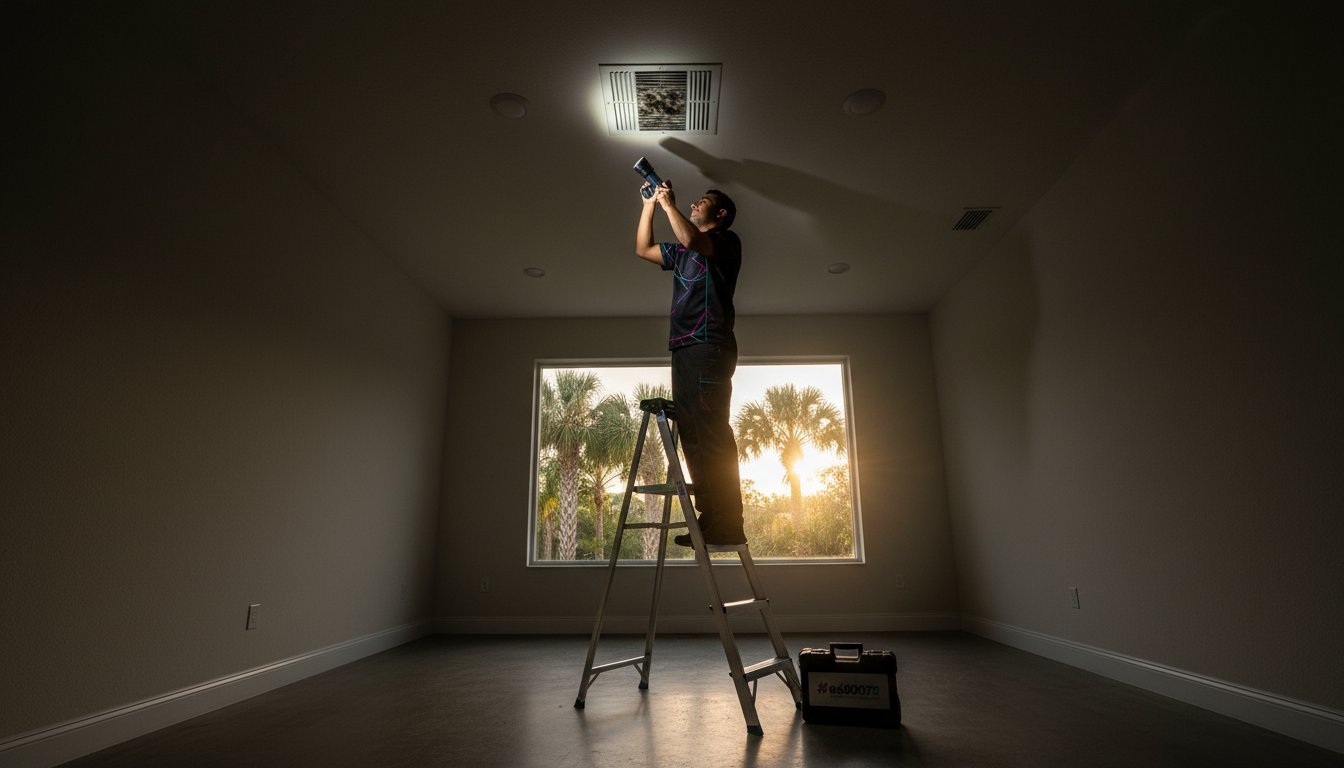
Last Tuesday, a family in Naples noticed a faint, earthy smell every time their AC kicked on, but they brushed it off as typical SWFL humidity. Within 72 hours, their toddler’s minor cough turned into a persistent wheeze that required an urgent care visit. If you have noticed dark spots on your registers or feel like your allergies never take a season off, you are likely seeing the first signs of mold in air vents Florida home systems frequently develop during our brutal summers. High humidity levels above 60 percent create a breeding ground for spores that can quickly compromise your indoor air quality.
We understand the anxiety of feeling like your own home is making you sick. You deserve to breathe clean, crisp air without worrying about hidden contaminants. This guide will teach you how to identify the seven warning signs of HVAC mold growth and provide a clear, professional path to fixing the problem. We are going to show you exactly what to look for so you can regain your peace of mind and maintain that signature Ultra comfort in every room.
Key Takeaways
- Learn why Southwest Florida’s 70% humidity makes your HVAC system a prime target for mold and what it means for your indoor air quality.
- Recognize the 7 specific signs of mold in air vents Florida home owners need to watch for, from “wet dog” smells to irregular black spotting.
- Find out why seasonal residents face unique risks when leaving AC units at high temperatures and how to prevent stagnant air issues.
- Master the “Smear Test” and other pattern recognition techniques to confidently tell the difference between common dust and active mold.
- See how professional duct cleaning and UV technology provide the Ultra protection your family needs to breathe easy in SWFL.
Why Mold in Air Vents is a Unique Threat to Florida Homes
Mold in your HVAC system is more than a simple cleaning chore. It consists of fungi that thrive by consuming organic matter like dust, skin cells, and pollen trapped within your ductwork. For these spores to colonize, they require a consistent moisture source. In a Southwest Florida climate, your air conditioner provides that moisture every time it runs. If you identify the signs of mold in air vents Florida home owners often overlook, you’re looking at a biological growth that is actively feeding on the debris inside your ventilation system.
Leaving this issue unaddressed in a closed home is a recipe for disaster. Because Florida homes are tightly sealed to keep the heat out, trapped spores can cause rapid structural damage to drywall and ceiling joists. At Ultra Air, we’ve seen how quickly a small colony can turn into a full-scale remediation project. As a Family Owned & Operated business, we prioritize stopping this growth before it compromises your home’s integrity and your family’s health.
The SWFL Humidity Factor
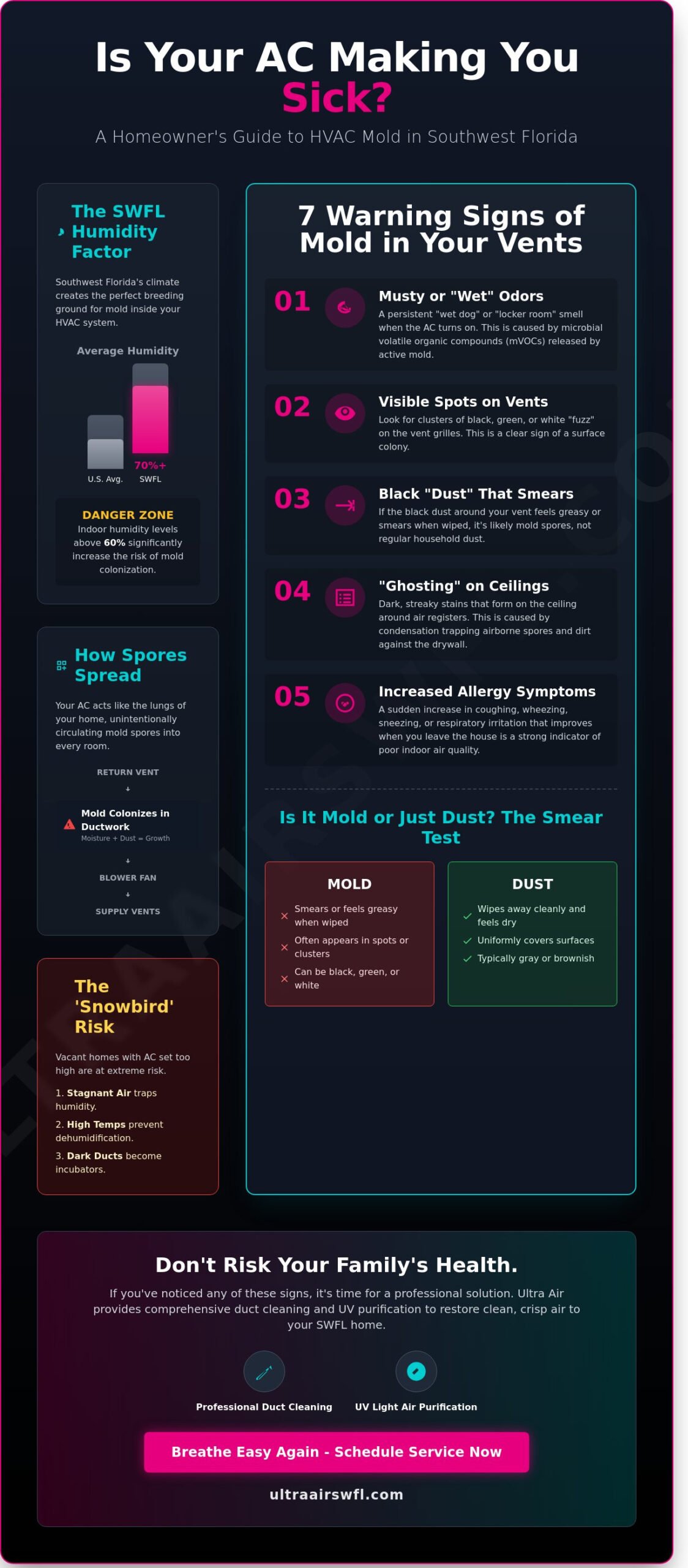
Humidity levels in Cape Coral and Naples frequently exceed 70%, which is significantly higher than the national average. This external moisture puts an incredible strain on your cooling system. When the scorching 90-degree Florida heat hits your cold metal ductwork, it creates a “sweating” effect known as the dew point. This condensation provides the exact environment Indoor mold needs to flourish. Anytime your indoor humidity levels climb above 60%, you have entered the primary danger zone for active mold growth and spore colonization. Keeping your system optimized is the only way to Beat the Heat and keep moisture under control.
How Your AC System Spreads Spores
Your HVAC system acts as the lungs of your home. It constantly breathes air in through the return vents and pushes it back out through the supply registers. This creates a high-speed delivery system for microscopic contaminants. When mold takes root in one section of your ducts, the blower motor acts as a fan that scatters spores into every room of the house. We often tell our customers that mold is rarely a localized problem. If you see visible signs of mold in air vents Florida home inspections usually reveal that the growth has already spread deep into the main trunk lines. This mechanical distribution is why a single spot of growth on a vent cover usually points to a system-wide contamination. Our Ultra service technicians use technical mastery to identify these hidden colonies before they spread through your entire living space.
The Essential Checklist: 7 Signs of Mold in Air Vents
Living in Southwest Florida means your air conditioner is the heart of your home. It works hard to combat the 90 degree heat and intense humidity. Because our systems run almost 24/7, they are susceptible to moisture buildup. Recognizing the early signs of mold in air vents Florida home owners often overlook can save you from expensive remediation and health issues. If you suspect your indoor air quality is compromised, use this checklist to identify the problem before it spreads.
Sensory Signs: Smell and Sight
Your nose is often the first tool in your diagnostic kit. When the AC kicks on, pay attention to the initial blast of air. A dusty smell is common after a system has been off, but a persistent “wet dog” or “locker room” odor is a classic fungal indicator. This musty scent is caused by microbial volatile organic compounds (mVOCs) released as mold grows. Unlike household dust, which smells dry and earthy, mold has a damp, pungent profile that lingers in the fabric of your furniture and curtains.
Next, perform a visual inspection of your vent grilles. Look for “fuzz” or clusters of black, green, or white spots on the plastic or metal slats. A major red flag is “black dust” that appears around the edges of the vent. If you try to wipe it away and it feels greasy or smears rather than lifting off like dry debris, you are likely looking at active spore growth. According to the EPA guide to mold, controlling moisture is the most effective way to prevent these colonies from taking over your ductwork.
Keep an eye out for “ghosting” on your ceilings. These are dark, streaky stains that form around the air registers. They occur when condensation forms on the cool vent surface, trapping spores and soot against the drywall. This moisture often signals that your system is not dehumidifying properly, creating a perfect petri dish inside your walls.
Health and Performance Indicators
Your family’s physical health provides critical data about your home’s environment. Mold spores are microscopic. They travel through your ducts and into your living spaces every time the fan runs. If you or your children experience sneezing, itchy eyes, or chronic headaches that miraculously improve after you leave the house for more than 3 hours, your HVAC system is the likely culprit. This “sick building” effect is a definitive sign that the air circulating through your vents is contaminated.
Mold also impacts the mechanical efficiency of your unit. Growth on the evaporator coils or inside the ductwork creates friction and restricts airflow. This restriction forces your system to run longer cycles to reach your thermostat setting, which can increase your monthly energy bills by 15% or more. In severe cases, the lack of airflow causes the AC unit to “freeze up,” leading to ice formation on the coils and a total loss of cooling.
- Standing Water: Check your primary drain pan for stagnant water or sludge.
- Excessive Condensation: Look for “sweating” on the exterior of your ductwork or air handler.
- High Indoor Humidity: If your indoor hygrometer consistently reads above 60%, mold is likely present.
We believe every SWFL family deserves to breathe clean, crisp air. If you notice these warning signs, our expert technicians can perform an Ultra comfort inspection to identify the source and restore your peace of mind. Don’t let a small moisture problem turn into a major restoration project. We are here to help you stay cool and healthy.
The ‘Snowbird’ Risk: Mold in Vacant SWFL Properties
Leaving your home for the summer shouldn’t mean returning to a costly remediation project. Many seasonal residents in Bonita Springs and Estero make the mistake of setting their AC to 80°F or higher to save on utility bills. This creates a stagnant environment where humidity levels quickly spike above 70%. When air stops moving, moisture clings to the dust inside your ductwork. This is often why homeowners discover the first signs of mold in air vents Florida home upon their return in October.
Summer storms in SWFL frequently cause power outages. Even a brief four-hour loss of cooling during a July heatwave can trigger a massive mold bloom if the baseline humidity is already high. We see this often in vacant properties where there is no one to reset a tripped breaker or check the system. The EPA guide to mold in your home confirms that controlling moisture is the most critical factor in preventing growth. Without active dehumidification, a closed-up home becomes a greenhouse for spores.
Optimal Away Settings for Florida Residents
The ‘Goldilocks’ range for a vacant Florida home is 77°F to 79°F. This range is cool enough to pull moisture from the air without running up an enormous bill. A smart, programmable thermostat is your first line of defense. It allows you to monitor your home’s status from your phone anywhere in the world. Many residents make the mistake of using old mechanical humidistats. These dials are often inaccurate by 10% or more, leading to accidental moisture buildup. “To keep your property safe, you must ensure your indoor humidity never exceeds a 55% threshold while you are away.”
The Role of Dehumidifiers in Seasonal Homes
Standard AC units are built to manage temperature, but they often struggle with the extreme latent heat loads found in Naples estates. When the AC reaches its target temperature, it shuts off, leaving the humidity to rise. A dedicated whole-home dehumidifier works alongside your HVAC system to pull gallons of water from the air every day, regardless of the temperature. This setup provides the Ultra comfort and peace of mind seasonal residents deserve. You can learn more about maintaining the ideal humidity in house to protect your drywall, furniture, and air quality. As a Family Owned & Operated business, we know how to beat the heat and keep your home dry while you are up north.
Mold vs. Dust: How to Tell the Difference
Identifying the signs of mold in air vents Florida home owners often encounter starts with a simple visual inspection. Dust is a universal reality in Southwest Florida, but mold is a biological threat. You can usually tell them apart by looking at the growth pattern. Dust settles in a uniform, thin layer across the bottom of the vent. Mold grows in irregular, organic clusters that look like circular blooms or fuzzy patches. These colonies often appear on the ceiling of the duct or the back of the vent cover where condensation collects.
Try the smear test. Use a gloved finger or a damp cloth to wipe a small section. Dust is dry, gray, and wipes away completely. Mold is often slimy or sticky. It typically leaves a stubborn stain behind, even after the surface material is removed. For a deeper look, use the flashlight test. Shine a high-lumen light into the duct at an angle. If you see “fuzz” growing against the direction of the airflow, it isn’t just debris. While these DIY checks help, professional lab testing is the only way to confirm specific species. Studies show that 45% of indoor air quality issues in humid climates stem from undetected growth within the HVAC system.
Common Misidentifications
Not every dark spot is a danger. Black soot from paraffin candles often accumulates on vent louvers, creating a ghosting effect that mimics black mold. Similarly, old fiberglass insulation fibers can break loose and clump together, looking remarkably like white mold growth. However, you shouldn’t assume it’s just dust in a humid environment like Cape Coral. When indoor humidity levels exceed 60%, dust becomes the perfect food source for spores to take root.
Why DIY Cleaning is Often Dangerous
Many homeowners reach for a bottle of bleach, but this is a mistake. The EPA confirms that bleach is 0% effective at killing mold on porous surfaces like duct liners. It actually introduces more moisture into the system, which can accelerate growth. Scrubbing your vents without professional containment is also risky. A single disturbed colony can release millions of spores into your breathing zone in seconds. This cross-contaminates your entire home. Harsh household chemicals also risk melting or corroding sensitive duct components, leading to expensive repairs later.
Don’t let poor air quality compromise your family’s health. Our Ultra service team provides the expert inspection you need to breathe easy again. As a Family Owned & Operated business, we help you Beat the Heat and protect your indoor air quality with professional solutions.
Ultra Solutions: Restoring Air Quality in Your SWFL Home
Living in Southwest Florida means battling humidity levels that often exceed 90 percent. When you spot the signs of mold in air vents Florida home owners shouldn’t wait for the problem to spread. You need a partner who understands the local climate and the technical demands of high-performance HVAC systems. At Ultra Air, we don’t just wipe away the visible spots; we provide professional duct cleaning that removes the biological source. We use specialized agitation tools and HEPA-filtered vacuums to ensure spores aren’t just recirculated through your living room. Our family-owned and operated team treats your home like our own, prioritizing technical mastery and honest advice.
The “Ultra Air” approach focuses on total indoor air quality management. We look at your system as a complete ecosystem. Removing mold is the first step, but preventing its return is where we provide the most value. Investing in preventative maintenance is a smart financial move. Industry data suggests that professional remediation for a mold-infested home can cost five to ten times more than a standard maintenance plan. By catching moisture issues early, we keep your energy bills low and your peace of mind high.
Advanced Air Purification Technologies
We install UV Germicidal Lights directly near your AC coil, which is the dampest part of your unit. These lights operate 24/7 to neutralize mold spores and bacteria before they ever enter your ductwork. Studies from organizations like the EPA show that indoor air can be 2 to 5 times more polluted than outdoor air. To combat this, we recommend HEPA filtration systems that capture 99.97 percent of particles. You can learn more about protecting your system by checking out this guide on air conditioning maintenance near me to stay ahead of the Florida heat.
Taking the Next Step for a Healthy Home
If you notice a musty odor or see dark spotting on your registers, it’s time for an “Ultra Service” inspection. During a professional air quality assessment, our technicians use specialized cameras to look deep inside your vents. We check for leaks, standing water, and organic growth that the naked eye can’t see. We provide a clear, no-pressure report on the health of your system. Don’t let poor air quality compromise your comfort or your health. Beat the Heat and the mold—contact Ultra Air today!
Take Control of Your Indoor Air Quality
Florida’s relative humidity frequently climbs above 70%, which is well beyond the 30 to 50% range recommended by the EPA for a healthy home. When moisture gets trapped in your HVAC system, mold can begin colonizing surfaces in as little as 24 to 48 hours. Identifying the specific signs of mold in air vents Florida home owners encounter, like persistent musty odors or black spotting, is vital for your family’s health. We’ve been Family Owned & Operated since 2018, serving neighbors across Cape Coral, Naples, and the entire SWFL region with technical precision. As Certified IAQ Experts, we don’t just guess; we provide the professional authority needed to restore your Ultra comfort. Don’t let hidden spores compromise your property’s value or your well-being. Our team is standing by to provide the honest, efficient service you need to breathe easy again. You can trust us to keep your home’s environment safe and clean for years to come.
Schedule your Ultra Air Quality Inspection today!
Frequently Asked Questions
Is it normal to have a little bit of black dust on my air vents?
No, black residue on your registers is rarely just household dust. In Southwest Florida, 90% of these dark spots are either biological growth or soot from candles and incense. This buildup indicates that your filtration system isn’t catching fine particles effectively. It’s a signal that your indoor air quality needs an Ultra service check. Our technicians can identify if it’s simple dust or a more serious biological issue.
Can mold in air vents make me sick even if I can’t see it?
Yes, mold spores are microscopic and can trigger respiratory issues even when hidden from view. The EPA reports that indoor air is often 2 to 5 times more polluted than outdoor air. If you notice persistent sneezing or watery eyes, these are common signs of mold in air vents Florida home owners shouldn’t ignore. We prioritize your health by identifying these invisible threats quickly and accurately.
How much does it cost to have mold professionally removed from vents in Florida?
Professional remediation costs depend on the severity of the infestation and the size of your HVAC system. According to HomeAdvisor, the national average for mold removal ranges from $1,100 to $3,300. Because every SWFL home is different, we provide a detailed inspection first. This ensures you get an honest assessment of the work needed to restore your Ultra comfort without any high-pressure sales tactics or hidden fees.
Will running my AC on ‘Fan Only’ mode help prevent mold growth?
No, running your fan in the “On” position actually increases the risk of mold growth. This setting prevents moisture from draining off the evaporator coils, which can raise your home’s humidity by 15% in a single cycle. You should keep your thermostat set to “Auto” so the system can properly dehumidify your air. It’s a simple change that protects your ductwork from excess moisture and organic growth.
What is the best humidity level to prevent mold in a Cape Coral home?
You should keep your home’s relative humidity between 30% and 50% for maximum safety. The Florida Department of Health states that mold growth is significantly inhibited when levels stay below 60%. We recommend using a digital hygrometer to monitor these numbers daily. Maintaining this balance is the most effective way to beat the heat and guarantee a healthy environment for your family in the SWFL area.
Should I use an at-home mold test kit for my HVAC system?
We don’t advise using these kits because they are notoriously unreliable and often produce false positives. Most petri dish tests will grow mold simply because spores exist naturally in the air, but they don’t tell you the concentration. If you’re looking for signs of mold in air vents Florida home inspections by a certified technician provide the technical mastery and accuracy these DIY kits lack.
Can I clean mold out of my own air vents with vinegar?
You can use a mixture of 50% white vinegar and 50% water to clean surface growth on metal vent covers. Vinegar’s acetic acid kills approximately 82% of mold species on non-porous surfaces. However, you shouldn’t attempt to clean the inside of your ducts yourself. If mold has reached the porous insulation or flexible ducting, it requires professional equipment and specialized cleaners to remove it safely.
How often should I have my ducts cleaned in Southwest Florida?
You should have your ductwork inspected every 3 to 5 years to maintain peak efficiency and air quality. In our humid climate, 1 in 4 local homes may require more frequent attention due to pet dander or recent renovations. As a family owned and operated business, we ensure your system delivers Ultra service year-round. It’s the best way to catch problems early and keep your monthly energy bills low.