
If your living room feels like a sauna while the bedroom stays freezing, your thermostat isn’t broken. It’s just not built for how real homes work. Traditional single-thermostat HVAC systems treat every room the same, even when sun exposure, occupancy, and insulation vary wildly from one space to the next. HVAC zoning fixes this by giving you independent control over different areas of your home or building. In this guide, we’ll walk you through exactly how zoning works, what it costs compared to alternatives, and whether it’s the right move for your Southwest Florida property.
Table of Contents
- What is HVAC zoning?
- How does HVAC zoning compare to multiple systems?
- Real-world benefits of HVAC zoning
- Is HVAC zoning right for you? Key considerations
- A Southwest Florida perspective on HVAC zoning
- Next steps: Optimize your comfort with expert help
- Frequently asked questions
Key Takeaways
| Point | Details |
|---|---|
| Zoning defined | HVAC zoning creates separate comfort areas in your building with individual controls. |
| Cost advantage | Zoning costs 60-70% less upfront than adding multiple HVAC systems. |
| Better comfort | Zoning helps eliminate hot and cold spots by addressing rooms with unique temperature needs. |
| Ideal situations | Homes under 4000 sq ft with uneven temperatures benefit most from zoning. |
| Local benefits | In Southwest Florida, HVAC zoning can improve energy savings and manage humidity more efficiently. |
What is HVAC zoning?
HVAC zoning is a system that divides your home or commercial space into separate sections, called zones, each with its own temperature control. Instead of one thermostat dictating the climate for your entire property, each zone responds to its own settings. The result is a more precise, efficient, and comfortable environment throughout the building.
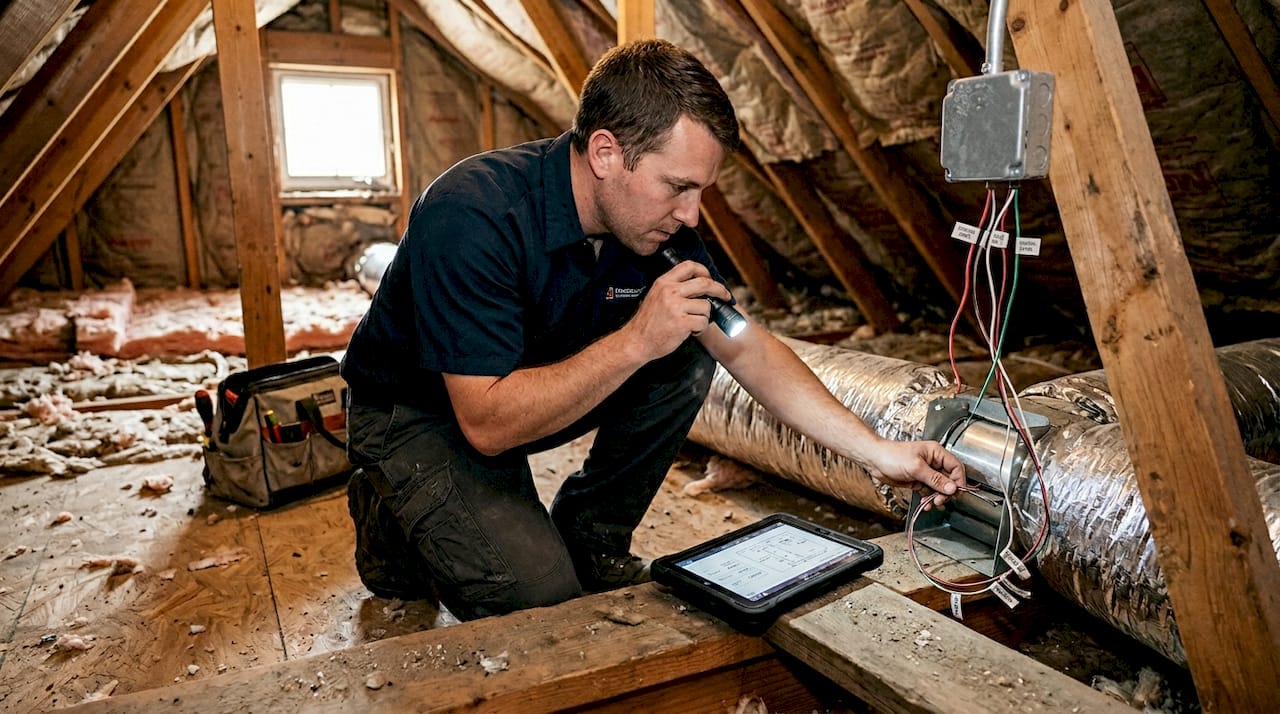
The system works with your existing HVAC unit. Zoning uses one HVAC unit and controls comfort in multiple areas, which means you’re not paying to install a second or third full system. Three core components make this possible:
- Zone dampers: Motorized flaps inside your ductwork that open or close to direct airflow to specific zones.
- Multiple thermostats: Each zone gets its own thermostat, so occupants can set temperatures independently.
- Zone control panel: The brain of the operation. It receives signals from each thermostat and tells the dampers where to send conditioned air.
This setup is especially useful for properties with varied temperature needs, like a two-story home where heat rises to the upper floor, a house with a sun-drenched Florida room, or a commercial space where the server room needs constant cooling while the lobby doesn’t. If you’re already exploring energy-efficient cooling options for your home, zoning is one of the most targeted upgrades you can make.
Pro Tip: When your installer sets up your zones, label each thermostat clearly, such as “Master Bedroom,” “Main Floor,” or “Office.” It sounds simple, but clear labeling prevents confusion and makes daily adjustments much faster.
Zoning isn’t a niche luxury upgrade. It’s a practical solution for any property where comfort varies from room to room, which honestly describes most homes in Southwest Florida.
How does HVAC zoning compare to multiple systems?
Once you understand how zoning works, the natural question is: why not just install a second HVAC unit? It’s a fair question, and the answer usually comes down to cost, complexity, and what your home actually needs.
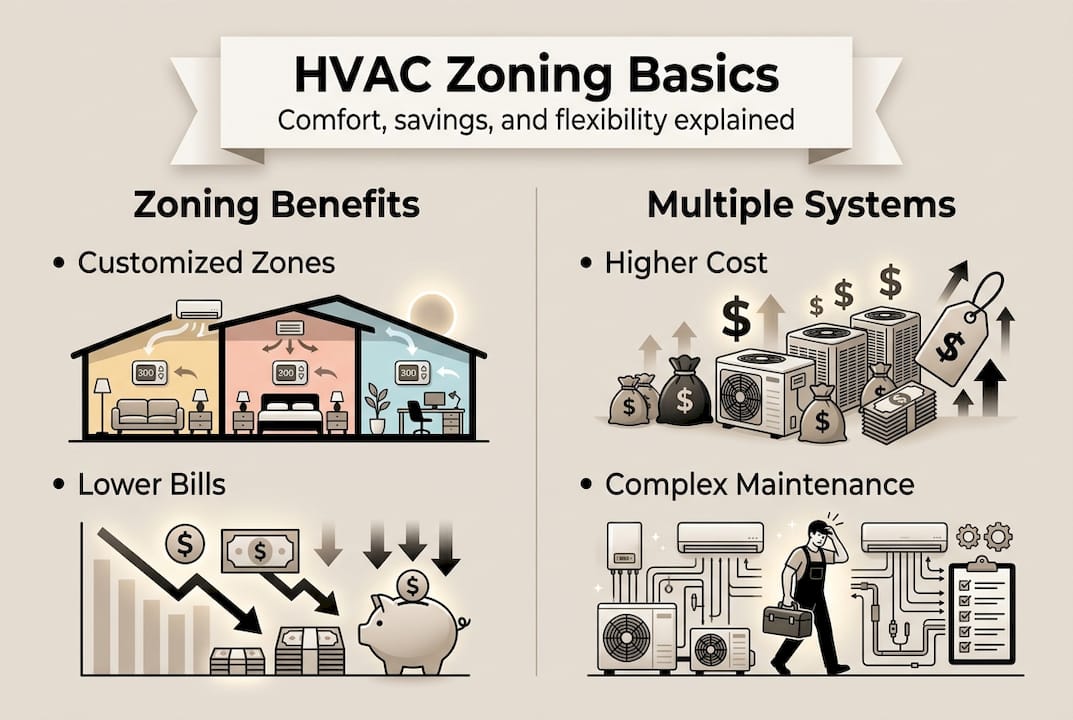
Here’s a direct comparison to help you decide:
| Feature | HVAC zoning | Multiple systems |
|---|---|---|
| Upfront cost | Lower (60-70% less) | Significantly higher |
| Installation disruption | Minimal | Major construction |
| Maintenance complexity | One system to service | Two or more systems |
| Best suited for | Homes under 4,000 sq ft | Larger or multi-unit properties |
| Energy efficiency | High, with targeted airflow | Variable, depends on usage |
| Flexibility | Adjustable zones | Fixed by system placement |
Zoning is 60-70% cheaper upfront than installing multiple full systems, making it the smarter financial choice for most homes under 4,000 square feet.
For most Southwest Florida homeowners, that cost difference is significant. Installing a second full HVAC system means buying a second unit, running new ductwork or refrigerant lines, and paying for a larger installation job. Zoning adds dampers and thermostats to what you already have.
That said, multiple systems do have their place. Very large homes, multi-unit commercial buildings, or properties where one system would be pushed beyond its capacity might genuinely benefit from separate units. Following best HVAC practices in Southwest Florida means matching the solution to the actual problem, not over-engineering it.
For heating specifically, the same logic applies. Whether you’re dealing with the occasional cool nights we get in Naples or Fort Myers, or managing a commercial property year-round, pairing zoning with the right HVAC heating solutions keeps your system efficient without the overhead of running multiple units.
Pro Tip: If your comfort issues are limited to one or two rooms, zoning is almost always the faster, less invasive fix. You don’t need to tear up walls or install new equipment outside to solve a problem in your guest bedroom.
Real-world benefits of HVAC zoning
The numbers make a strong case for zoning, but the day-to-day experience is where it really earns its place. Here’s what Southwest Florida homeowners and property managers actually notice after a zoning upgrade:
- No more hot and cold spots. Set the master bedroom cooler at night without freezing out the living room. Zones let you match the temperature to how each space is actually used.
- Lower energy bills. Why cool an empty guest room all day? Zoning lets you reduce or shut off airflow to unused spaces, which cuts energy waste directly.
- Less strain on your equipment. When your system isn’t fighting to balance an entire home from one thermostat, it runs more efficiently and experiences less wear over time.
- Better fit for complex layouts. Multi-story homes, additions, rooms with large windows, or spaces with high ceilings all create uneven heating and cooling. Zoning addresses each of these individually.
For Southwest Florida properties specifically, zoning pairs well with energy-saving cooling solutions because our climate demands so much from HVAC systems. The combination of intense sun, high humidity, and long cooling seasons means your system runs hard. Anything that reduces unnecessary runtime adds up fast on your utility bill.
Humidity is a real factor here too. Rooms with more sun exposure or poor ventilation tend to feel more humid, and zoning lets you direct more conditioned air to those areas without overcooling the rest of the house. Pairing zoning with strong indoor air quality solutions can also help manage moisture levels throughout your home.
The comfort and energy efficiency gains from zoning are especially pronounced in Florida’s climate, where air conditioning runs nearly year-round. Even modest efficiency improvements translate into real savings over a 12-month cooling season.
Is HVAC zoning right for you? Key considerations
Not every home needs zoning, and not every home is set up for it without some prep work. Here’s a straightforward framework to help you evaluate your situation:
- Check your property size. Zoning is best for homes under 4,000 sq ft with variable comfort needs. If your home is significantly larger, a second system might make more sense.
- Assess your current ductwork. Zoning works best with existing ductwork in good condition. Older or poorly designed ducts may need updates before dampers can be added effectively.
- Identify your comfort pain points. Do you have specific rooms that are always too hot or too cold? A second floor that bakes in the afternoon? These are clear signals that zoning would help.
- Set a realistic budget. Zoning costs less than a second system, but it’s still an investment. Get a quote that includes dampers, thermostats, and the control panel.
- Think about your long-term goals. If energy savings are a priority, zoning combined with a smart thermostat setup can give you detailed control over your usage.
When talking to an HVAC professional, ask specifically about your duct condition, whether your current unit has enough capacity for zoning, and how many zones make sense for your layout. These questions help you get a realistic picture before committing.
For guidance on picking the right setup from the start, it helps to review tips on choosing the right AC for your home. And once zoning is installed, staying on top of service visits is critical. The AC maintenance benefits are even more pronounced with a zoned system because each component, including dampers and the control panel, needs to stay in good working order.
Pro Tip: Combine zoning with a regular maintenance schedule to maximize energy savings. A well-tuned system with properly functioning dampers uses significantly less energy than one that’s overdue for service.
A Southwest Florida perspective on HVAC zoning
After years of working in Southwest Florida’s climate, one thing stands out clearly: zoning isn’t a luxury upgrade for high-end homes. It’s a practical solution for any property dealing with uneven comfort, and in this region, that’s almost every property.
The biggest myth we hear is that zoning is overkill for a modest home. In reality, a 1,800-square-foot house with a Florida room, a second floor, or west-facing windows often benefits from zoning more than a large, well-insulated home up north. Our humidity levels and relentless sun create temperature and moisture imbalances that a single thermostat simply can’t manage well.
Older homes in Naples, Cape Coral, and Fort Myers sometimes need ductwork updates before zoning performs at its best. Skipping that step is the most common mistake we see. Pairing a zoning upgrade with insulation improvements and duct sealing gives you the full benefit of the system.
For homeowners considering alternatives like ductless options, mini split installation insights are worth reviewing. Sometimes the right answer is a hybrid approach. But for most homes in this region, zoning delivers outsized returns on both comfort and monthly savings.
Next steps: Optimize your comfort with expert help
If uneven temperatures or high energy bills have been frustrating you, zoning could be the fix you’ve been putting off. The good news is that getting started doesn’t require a major renovation.
At Ultra Air Heating & Cooling, we specialize in custom zoning solutions designed for Southwest Florida homes and commercial properties. From assessing your current setup to installing dampers and smart thermostats, our team handles every step. We also offer energy-efficient cooling experts consultations, heating solutions for year-round comfort, and indoor air quality services to keep your home healthy and comfortable. Reach out today to schedule a free assessment and get personalized recommendations for your property.
Frequently asked questions
How much does HVAC zoning cost compared to installing separate systems?
HVAC zoning is typically 60-70% less expensive upfront than installing multiple systems for homes under 4,000 square feet, making it the more budget-friendly path to customized comfort.
Can HVAC zoning help lower my energy bills?
Yes. By reducing energy waste through targeted heating and cooling only in occupied zones, most homeowners see a noticeable drop in monthly utility costs.
Is my home a good candidate for HVAC zoning?
Homes under 4,000 sq ft with variable comfort needs, multiple stories, room additions, or persistent hot and cold spots are strong candidates for zoning rather than adding a second system.
Does HVAC zoning require major construction work?
Most zoning upgrades use your existing ductwork and simply add zone dampers and thermostats, so the installation is far less disruptive than installing an entirely new HVAC system.